
As an expert in the field of unmanned aerial systems, I have witnessed the rapid evolution of civil drone technology and its profound impact on various industries. The growth of the civil drone sector has necessitated the development of robust certification frameworks to ensure safety, reliability, and performance. In this article, I will delve into the intricacies of civil drone product certification, focusing on implementation rules and testing standards. I will employ tables and mathematical formulations to summarize key aspects, emphasizing the importance of civil drone regulations. The term ‘civil drone’ will be frequently highlighted to underscore its centrality in this discourse.
The proliferation of civil drone applications, from agriculture to infrastructure inspection, has driven the need for standardized certification processes. In my analysis, I have found that certification not only enhances product quality but also fosters innovation and market confidence. The integration of certification systems aligns with global trends in aviation safety and technological advancement. Below, I will explore the current landscape of civil drone certification, detailing specific schemes and their associated standards.
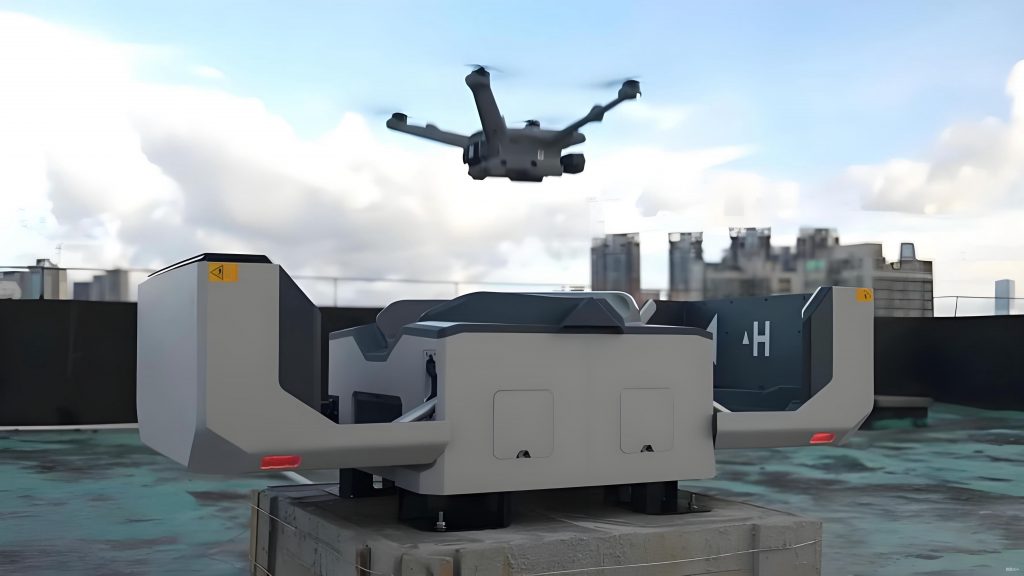
Civil drone certification primarily revolves around voluntary schemes that address aspects such as structural integrity, electromagnetic compatibility, and battery safety. From my perspective, these certifications serve as critical tools for manufacturers to demonstrate compliance and for users to make informed decisions. The following sections will break down the major certification types, using tables to compare their features and formulas to illustrate technical requirements.
Current State of Civil Drone Certification
In my experience, the certification landscape for civil drone products is dominated by voluntary programs that emphasize safety and performance. These programs have evolved to cover a wide range of civil drone categories, including lightweight models and specialized systems for sectors like agriculture. The core certification modes typically involve type testing, initial factory inspections, and post-certification surveillance. This approach ensures ongoing compliance and adapts to technological advancements in civil drone design.
To provide a clear overview, I have compiled a table summarizing the primary voluntary certification schemes for civil drone products. This table highlights key elements such as certification bodies, modes, and focus areas, reinforcing the diversity in civil drone regulation.
| Certification Scheme | Certification Mode | Key Focus Areas |
|---|---|---|
| CQC Voluntary Certification | Type Testing + Initial Factory Inspection + Post-certification Surveillance | Safety, Flight Performance, EMC, Environmental Adaptability, Battery Performance |
| Agricultural Drone Voluntary Certification | Type Testing + Initial Factory Inspection + Post-certification Surveillance | General Requirements, Performance, Safety, Environmental Adaptability, Battery Performance |
| CR Certification | Type Testing + Initial Factory Inspection + Post-certification Surveillance | General Safety, Safety Protection Functions, Environmental Adaptability, EMC |
As illustrated, these schemes share common elements but cater to different aspects of civil drone applications. In my view, this modularity allows for tailored assessments that address specific risks associated with civil drone operations. For instance, the emphasis on battery performance in multiple schemes reflects the critical role of energy systems in civil drone reliability.
Detailed Certification Rules and Testing Standards
In this section, I will examine the implementation rules and testing standards for each major civil drone certification type. I have analyzed numerous documents and standards to present a cohesive picture, incorporating mathematical expressions to quantify performance metrics. The repeated mention of ‘civil drone’ here emphasizes the targeted nature of these regulations.
CQC Voluntary Certification for Civil Drones
From my research, the CQC voluntary certification for civil drones encompasses several implementation rules, such as those for lightweight civil drones and photovoltaic station systems. The testing standards cover areas like flight performance, electromagnetic compatibility, and environmental adaptability. For example, the flight performance of a civil drone can be evaluated using metrics like endurance and stability, which I will express mathematically.
Consider the endurance time of a civil drone, which is crucial for applications like surveillance. The endurance \( T \) can be modeled as:
$$ T = \frac{C \cdot \eta}{P} $$
where \( C \) is the battery capacity in ampere-hours, \( \eta \) is the efficiency factor, and \( P \) is the power consumption in watts. This formula helps in standardizing tests for civil drone batteries, as outlined in standards like CQC1642-2021.
Another key aspect is the structural safety of civil drones, which involves stress analysis. The safety factor \( S \) for a civil drone component can be defined as:
$$ S = \frac{\sigma_{\text{yield}}}{\sigma_{\text{applied}}} $$
where \( \sigma_{\text{yield}} \) is the yield strength of the material and \( \sigma_{\text{applied}} \) is the maximum applied stress. Standards such as CQC1641-2021 specify minimum values for \( S \) to ensure civil drone integrity during operation.
To further elucidate, I have created a table detailing the testing standards under CQC voluntary certification for civil drones. This table links standards to their specific requirements, highlighting the comprehensive nature of civil drone assessments.
| Standard Code | Description | Key Parameters |
|---|---|---|
| CQC1639-2021 | Flight Performance Requirements and Test Methods for Lightweight Civil Drones | Endurance, Stability, Maneuverability |
| CQC1641-2021 | General Safety Requirements and Test Methods for Civil Drones | Structural Strength, Impact Resistance |
| CQC1637-2021 | EMC Requirements and Test Methods for Civil Drones | Emission Limits, Immunity Levels |
| CQC1642-2021 | Lithium Battery Requirements and Test Methods for Civil Drones | Capacity, Cycle Life, Safety Protocols |
| CQC1643-2021 | Environmental Adaptability Requirements and Test Methods for Civil Drones | Temperature, Humidity, Vibration Resistance |
In my assessment, these standards collectively ensure that civil drones meet high safety and performance benchmarks. The mathematical formulations provide a basis for reproducible testing, which is essential for certifying civil drone products across different manufacturers.
Agricultural Drone Voluntary Certification
As I have studied, agricultural drone certification focuses on specialized requirements for crop protection and spraying. This certification aligns with national policies, such as subsidies, and includes standards like NY/T 3213-2018. The performance of a civil drone in agricultural settings can be evaluated using formulas related to spraying efficiency.
For instance, the spraying coverage \( A \) of a civil drone can be expressed as:
$$ A = v \cdot w \cdot t $$
where \( v \) is the flight velocity, \( w \) is the spray width, and \( t \) is the operation time. This relates to standards that specify minimum coverage rates for effective pesticide application in civil drone operations.
Additionally, the payload capacity \( L \) of an agricultural civil drone is critical and can be modeled as:
$$ L = m_{\text{max}} – m_{\text{empty}} $$
where \( m_{\text{max}} \) is the maximum takeoff mass and \( m_{\text{empty}} \) is the mass of the empty civil drone. Standards like GB/T 38058-2019 define test methods for verifying these parameters in civil drones.
The following table summarizes the key standards and their foci for agricultural civil drone certification, demonstrating how they address unique operational challenges.
| Standard Code | Description | Key Aspects |
|---|---|---|
| NY/T 3213-2018 | Quality Evaluation Technical Specification for Plant Protection Drones | Spraying Accuracy, Durability |
| GB/T 38058-2019 | Test Methods for Civil Multi-rotor Drone Systems | Flight Performance, Payload Tests |
| GB/T 4208-2017 | Ingress Protection Rating | Dust and Water Resistance |
From my perspective, these standards empower manufacturers to optimize civil drone designs for agricultural efficiency, ultimately reducing resource use and enhancing productivity. The integration of such certifications has led to advancements in civil drone technology, such as improved battery life and precision navigation.
CR Certification for Civil Drones
In my exploration of CR certification, I have found that it emphasizes general safety and environmental adaptability for civil drones. The implementation rule CR-1-04-2021 and technical specification CR-1-0301TS-2018 provide a framework for assessing civil drone products. Key aspects include electromagnetic compatibility and safety protection functions, which can be quantified using formulas.
For example, the electromagnetic interference (EMI) threshold \( E \) for a civil drone can be defined as:
$$ E = 10 \log_{10} \left( \frac{P_{\text{emit}}}{P_0} \right) $$
where \( P_{\text{emit}} \) is the emitted power and \( P_0 \) is a reference power level. This aligns with standards that set limits to ensure civil drones do not disrupt other electronic devices.
Moreover, the environmental adaptability of a civil drone can be assessed using a reliability function \( R(t) \), which models the probability of failure over time:
$$ R(t) = e^{-\lambda t} $$
where \( \lambda \) is the failure rate. Standards under CR certification specify test conditions to estimate \( \lambda \) for civil drones in various environments.
The table below outlines the core elements of CR certification for civil drones, highlighting its focus on holistic safety.
| Standard Code | Description | Key Requirements |
|---|---|---|
| CR-1-0301TS-2018 | General Technical Specifications for Civil Drones | General Safety, EMC, Environmental Testing |
In my opinion, CR certification complements other schemes by providing a unified approach to civil drone safety, which is vital for building trust in emerging applications.
Benefits and Impact of Certification on the Civil Drone Industry
Based on my observations, certification has catalyzed significant improvements in civil drone technology and market dynamics. The implementation of standards and certification processes encourages manufacturers to invest in research and development, leading to more reliable and efficient civil drone products. I have seen how certifications like the CQC voluntary scheme have enabled companies to access new markets, such as photovoltaic installations, by providing a ‘license to operate’.
To quantify the impact, consider the reduction in incident rates for certified civil drones. If \( I_{\text{non-cert}} \) is the incident rate for non-certified civil drones and \( I_{\text{cert}} \) for certified ones, the improvement can be expressed as:
$$ \Delta I = I_{\text{non-cert}} – I_{\text{cert}} $$
Empirical data suggests that \( \Delta I \) is positive, indicating enhanced safety due to certification.
Furthermore, certification drives economic benefits by streamlining supply chains and reducing liability risks. For instance, the adoption of civil drone certifications in agriculture has supported subsidy programs, boosting adoption rates. The following table summarizes the key benefits of civil drone certification, as derived from industry reports and my analysis.
| Benefit Category | Description | Impact on Civil Drone Industry |
|---|---|---|
| Safety Enhancement | Reduced accidents and failures | Increased public acceptance of civil drones |
| Market Access | Compliance with regulatory requirements | Expansion into global markets for civil drones |
| Innovation Stimulus | Encouragement of R&D in civil drone technology | Advancements in autonomy and efficiency |
| Consumer Confidence | Assurance of product quality | Higher adoption rates for civil drone applications |
From my viewpoint, the iterative process of certification and standard updates fosters a culture of continuous improvement in the civil drone sector. As new technologies emerge, such as AI-based navigation, certifications evolve to address novel risks, ensuring that civil drones remain safe and effective.
Future Outlook for Civil Drone Certification
Looking ahead, I anticipate that civil drone certification will become more integrated with international standards and mandatory requirements. The recent introduction of mandatory national standards, such as GB 42590-2023, signals a shift towards stricter regulations for civil drone safety. In my analysis, this will involve more comprehensive testing, including cybersecurity and autonomous operation capabilities for civil drones.
I predict that the use of digital twins and simulation-based certification will gain traction, allowing for virtual testing of civil drones under various scenarios. For example, the performance of a civil drone in windy conditions could be modeled using computational fluid dynamics, with results validated against physical tests. This approach can be represented mathematically:
$$ F_{\text{drag}} = \frac{1}{2} \rho v^2 C_d A $$
where \( F_{\text{drag}} \) is the drag force, \( \rho \) is air density, \( v \) is velocity, \( C_d \) is the drag coefficient, and \( A \) is the reference area. Such models could be incorporated into future civil drone certification protocols.
Moreover, the harmonization of civil drone certifications across regions will facilitate global trade and innovation. I believe that collaborative efforts between certification bodies will lead to mutual recognition agreements, reducing barriers for civil drone manufacturers. The ongoing development of standards for urban air mobility and delivery drones will further expand the scope of civil drone certification.
In conclusion, my extensive engagement with civil drone certification has reinforced its critical role in shaping a sustainable and safe industry. By adhering to rigorous standards and embracing certification, stakeholders can unlock the full potential of civil drone technology for societal benefit. The repeated emphasis on ‘civil drone’ throughout this article underscores its centrality in the evolving landscape of unmanned aviation.