
In recent years, the rapid expansion of the civil drone industry has positioned it as a cornerstone of the emerging low-altitude economy. As a high-technology sector with broad applications and significant industrial influence, civil drones are recognized as a strategic and priority industry in many countries. However, the proliferation of civil drones has raised concerns about safety, including incidents such as collisions, crashes, and unauthorized flights, which threaten public security, personal safety, and national interests. In this context, standardization plays a pivotal role in guiding the design and manufacturing of civil drones, ensuring compliance with safety regulations, providing benchmarks for testing, and safeguarding public and consumer interests. This article systematically examines the current state of international and national standardization for civil drones, with a focus on the mandatory safety requirements outlined in GB 42590-2023. By analyzing key standards and proposing recommendations, I aim to support the high-quality development of civil drone standardization, addressing common safety issues and fostering innovation in this dynamic field.
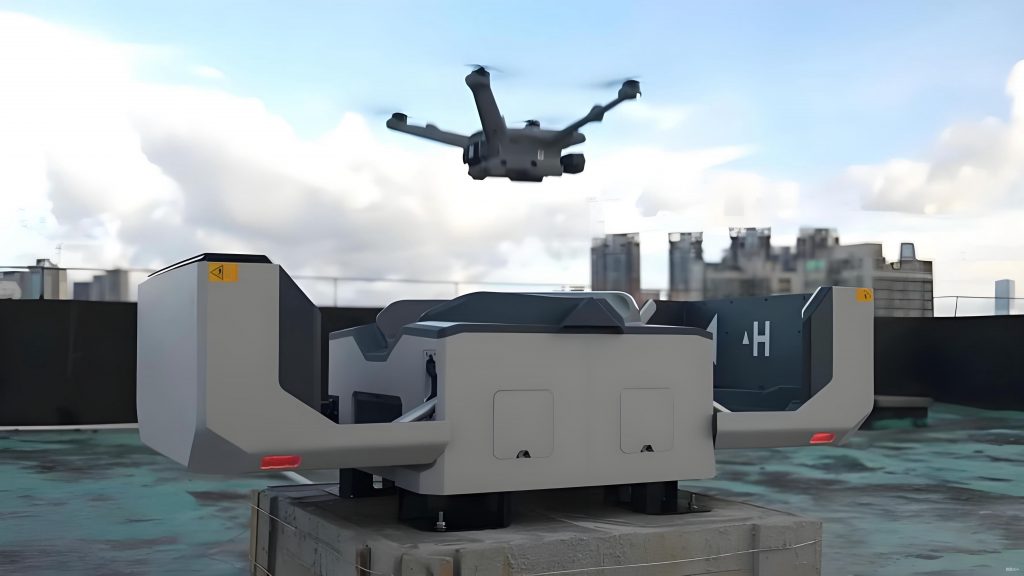
The importance of standardization for civil drones cannot be overstated. A comprehensive framework ensures that civil drone products meet essential safety and performance criteria, facilitating market秩序 and enhancing international competitiveness. For instance, standards for civil drones cover aspects such as structural integrity, energy systems, and electromagnetic compatibility, which are critical for mitigating risks associated with their operation. Moreover, as civil drones become more integrated into various sectors—including agriculture, surveillance, and logistics—the need for robust standards becomes increasingly urgent. This article delves into the evolution of civil drone standardization, highlighting the efforts of international bodies like the International Organization for Standardization (ISO) and national authorities such as the National Standardization Administration of China. By exploring the core indicators and testing methods of key standards, I provide insights into how standardization can address the challenges facing the civil drone industry, ultimately contributing to its sustainable growth.
To begin, it is essential to understand the global landscape of civil drone standardization. The ISO, through its technical committee ISO/TC 20/SC 16 on Unmanned Aircraft Systems (UAS), has been at the forefront of developing international standards for civil drones. Established in 2014, this committee focuses on classification, design, manufacturing, operation, maintenance, and safety management for civil drones. With participation from numerous countries, including China as a key member, ISO/TC 20/SC 16 has published several standards specifically targeting micro, light, and small civil drones. These standards provide a foundation for ensuring the safety and interoperability of civil drones worldwide. For example, they address issues like vibration testing, rotor blade safety, and flight performance, which are crucial for the reliable operation of civil drones. The following table summarizes some of the key ISO standards relevant to civil drones, illustrating the scope and focus of international efforts.
| Standard Number | Standard Name | Publication Date |
|---|---|---|
| ISO 5309:2023 | Vibration Test Methods for Small and Light Civil Drones | 2023-12 |
| ISO 5312:2023 | Evaluation and Test Methods for Rotor Blade Sharp Edges on Human Injury in Civil Drones | 2023-10 |
| ISO 5332:2023 | Test Methods for Civil Drones in Low-Pressure Environments | 2023-10 |
| ISO 5286:2023 | Flight Performance Test Methods for Fixed-Wing Civil Drones | 2023-10 |
| ISO 24354:2023 | General Requirements for Payload Interfaces in Civil Drones | 2023-08 |
| ISO 4358:2023 | Test Methods for Multi-Rotor Civil Drones | 2023-05 |
| ISO 24352:2023 | Technical Requirements for Energy Systems in Small Civil Drones | 2023-05 |
| ISO 24355:2023 | General Requirements for Flight Control Systems in Small and Light Multi-Rotor Civil Drones | 2023-05 |
| ISO 21895:2020 | Classification of Civil Drones | 2020-02 |
These ISO standards for civil drones often incorporate mathematical models to define safety parameters. For instance, the vibration test methods might involve equations to quantify resonant frequencies, which can be expressed as $$ f_n = \frac{1}{2\pi} \sqrt{\frac{k}{m}} $$ where \( f_n \) is the natural frequency, \( k \) is the stiffness, and \( m \) is the mass of the civil drone component. Similarly, performance tests for civil drones may use formulas to calculate flight endurance based on energy consumption rates: $$ E = P \times t $$ where \( E \) is the energy used, \( P \) is the power, and \( t \) is time. Such equations help standardize testing procedures for civil drones, ensuring consistency across different products and manufacturers.
Turning to the national level, China has made significant strides in civil drone standardization, driven by the “Unmanned Aircraft System Standard System Construction Guide.” This guide outlines a framework for civil drone standards, encompassing management and technical dimensions. The management aspect includes application objects, lifecycle stages, and classification of civil drones, while the technical side covers grading, platform configurations, and system hierarchies. This structured approach has led to the development of numerous national standards for civil drones, including both mandatory and voluntary specifications. Key standards address areas such as identity recognition, geofencing, and safety requirements, which are essential for regulating the civil drone market. The table below provides an overview of selected Chinese national standards for consumer-grade civil drones, demonstrating the breadth of coverage in areas critical to civil drone safety and performance.
| Standard Number | Standard Name | Implementation Date |
|---|---|---|
| GB/T 44091-2024 | Product Identification Requirements for Civil Drones | 2024-12-01 |
| GB/T 43551-2023 | Identity Recognition – 3D Spatial Position Coding for Civil Drones | 2024-07-01 |
| GB/T 43570-2023 | Identity Recognition – General Requirements for Civil Drones | 2024-07-01 |
| GB/T 43370-2023 | Technical Specifications for Geofencing Data in Civil Drones | 2024-03-01 | GB 42590-2023 | Safety Requirements for Civil Drones | 2024-06-01 (adjusted for key clauses) |
| GB/T 41300-2022 | Unique Product Identification Code for Civil Drones | 2022-10-01 |
| GB/T 39567-2020 | General Specification for Brushless Servo Motor Systems in Multi-Rotor Civil Drones | 2021-07-01 |
| GB/T 38996-2020 | General Requirements for Flight Control Systems in Light Small Fixed-Wing Civil Drones | 2021-02-01 |
| GB/T 38911-2020 | General Requirements for Flight Control Systems in Light Small Unmanned Helicopter Civil Drones | 2021-02-01 |
| GB/T 38931-2020 | General Safety Requirements for Light Small Civil Drones | 2021-02-01 |
| GB/T 38909-2020 | Electromagnetic Compatibility Requirements and Test Methods for Civil Drones | 2021-02-01 |
| GB/T 38930-2020 | Wind Resistance Requirements and Test Methods for Civil Drones | 2021-02-01 |
Among these, the mandatory standard GB 42590-2023, “Safety Requirements for Civil Unmanned Aircraft Systems,” stands out as a cornerstone for civil drone regulation in China. Enacted to support the “Interim Regulations on the Flight Management of Unmanned Aircraft,” this standard imposes strict safety criteria on civil drones, covering 17 key areas such as electronic fencing, remote identification, and emergency response. The early implementation of its core clauses in 2024 underscores the urgency of addressing civil drone safety. For example, the standard requires that light and small civil drones incorporate electronic fencing to prevent incursions into restricted areas, and it mandates remote identification to enhance traceability. Additionally, it sets forth requirements for structural strength, energy systems, and controllability, which are vital for minimizing risks associated with civil drone operations. To illustrate, the structural strength test might involve verifying that a civil drone can withstand loads up to 1.33 times its maximum takeoff weight without failure, which can be modeled using stress-strain relationships: $$ \sigma = \frac{F}{A} $$ where \( \sigma \) is the stress, \( F \) is the applied force, and \( A \) is the cross-sectional area. This ensures that civil drones remain intact under extreme conditions, protecting users and the public.
A detailed analysis of GB 42590-2023 reveals its comprehensive approach to civil drone safety. The standard specifies test methods and core indicators for each requirement, facilitating uniform assessment across the industry. For instance, the electronic fencing provision requires civil drones to detect potential conflicts with geographic boundaries and automatically execute flight plans, thereby reducing the likelihood of unauthorized flights. Similarly, the remote identification clause mandates that civil drones actively transmit identification data to regulatory platforms, enhancing oversight. The table below breaks down the key safety requirements from GB 42590-2023, highlighting their descriptions and implementation status, which are critical for understanding the practical implications for civil drone manufacturers and operators.
| Safety Requirement | Description | Early Implementation | Inclusion in Supervision |
|---|---|---|---|
| Electronic Fencing | Light and small civil drones must provide notifications or automatic flight plans when detecting conflicts with geographic boundaries. | Yes | Yes |
| Remote Identification | Light and small civil drones must actively report identification information via networks. | No | No |
| Emergency Response | Civil drones must have capabilities like hovering or returning home in case of data link loss or low power. | Yes | Yes |
| Structural Strength | Civil drones must withstand specified loads without harmful deformation or failure. | Yes | No |
| Body Structure | Civil drones must avoid sharp edges that could cause injury, and rotor blades should minimize harm. | Yes | Yes |
| Whole Machine Drop | Civil drones with lithium-ion batteries must not explode or catch fire after a 10m free fall. | Yes | Yes |
| Power Energy System | Requirements for batteries and fuel systems to prevent fires, explosions, or leaks in civil drones. | Yes | No |
| Controllability | Flight control systems in civil drones must limit key parameters and ensure navigation accuracy. | No | No |
| Error Prevention | Mechanical interfaces in civil drones, like batteries and rotors, must have anti-error features. | Yes | Yes |
| Sense and Avoid | Civil drones without rotor guards must detect obstacles and take evasive actions. | Yes | Yes |
| Data Link Protection | Civil drones must use security measures to prevent unauthorized access to links. | No | No |
| Electromagnetic Compatibility | Civil drones must operate safely in electromagnetic environments without causing interference. | Yes | Yes |
| Wind Resistance | Civil drones must maintain flight safety in specified wind conditions. | Yes | No |
| Noise | Civil drones must report noise levels normalized to 1m distance using A-weighted sound pressure. | Yes | Yes |
| Lighting | Civil drones must have navigation lights, except for specific cases like daytime-only operations. | Yes | Yes |
| Identification | Civil drones must display unique codes and risk warnings on packaging. | Yes | No |
| User Manual | Civil drones must come with electronic or paper instructions. | Yes | No |
The implementation of GB 42590-2023 represents a shift from voluntary to mandatory certification for civil drones, reinforcing product safety. For example, the whole machine drop test for civil drones with lithium-ion batteries involves assessing the impact of a 10-meter fall, which can be analyzed using energy conservation principles: $$ mgh = \frac{1}{2}mv^2 $$ where \( m \) is mass, \( g \) is gravity, \( h \) is height, and \( v \) is velocity upon impact. This ensures that civil drones do not pose fire hazards in accident scenarios. Similarly, noise requirements for civil drones involve measuring sound pressure levels, which can be quantified as $$ L_p = 20 \log_{10} \left( \frac{p}{p_0} \right) $$ where \( L_p \) is the sound level in decibels, \( p \) is the measured pressure, and \( p_0 \) is the reference pressure. By standardizing these tests, GB 42590-2023 helps unify safety benchmarks for civil drones, promoting consumer confidence and regulatory compliance.
Despite these advancements, the civil drone industry faces ongoing challenges in standardization. Common safety issues, such as battery failures and software vulnerabilities, necessitate further research and development of specialized standards. For instance, lithium-ion batteries in civil drones require unique safety protocols compared to general electronics, as deformations can lead to in-flight failures. Similarly, the integration of advanced technologies like artificial intelligence and networking in civil drones introduces new risks, including data breaches and cyber-attacks. To address these, I propose several recommendations for enhancing civil drone standardization. First, accelerating research into共性 safety problems for civil drones is crucial. This involves developing dedicated standards for critical components like batteries and rotors, which could include performance equations such as $$ C = \frac{I \times t}{m} $$ for battery capacity \( C \), current \( I \), time \( t \), and mass \( m \), tailored to the high-demand environments of civil drones. Second, fostering the creation and revision of core technical standards for civil drones, particularly in areas like software security and data protection, will ensure that innovations do not compromise safety. Finally, strengthening the dissemination and implementation of standards for civil drones through training and capacity-building for testing agencies will enhance compliance and industry-wide adoption.
In conclusion, the standardization of civil drones is integral to their safe and sustainable integration into society. By building on international and national frameworks, and rigorously enforcing standards like GB 42590-2023, stakeholders can address emerging risks and harness the full potential of civil drones. As the industry evolves, continuous collaboration among governments, manufacturers, and researchers will be key to refining standards for civil drones, ensuring they remain responsive to technological advancements and societal needs. Through these efforts, civil drones can continue to drive economic growth while upholding the highest safety standards, ultimately benefiting users and the public alike.