
In recent years, I have observed a geometric growth in the number and scale of civil drones, which are unmanned aerial vehicles used for non-military purposes. This rapid expansion has brought immense benefits to various sectors, including logistics, agriculture, and entertainment, but it has also exposed significant regulatory gaps. As an analyst focusing on aviation law, I believe that addressing these issues is crucial to harnessing the potential of civil drones while mitigating risks. The absence of comprehensive legal frameworks has led to challenges in airspace management, safety, and privacy, making it imperative to explore robust regulatory solutions. In this article, I will delve into the concept, current state, hazards, regulatory dilemmas, and potential countermeasures for civil drones, using tables and formulas to summarize key points and emphasizing the term ‘civil drone’ throughout to maintain focus.
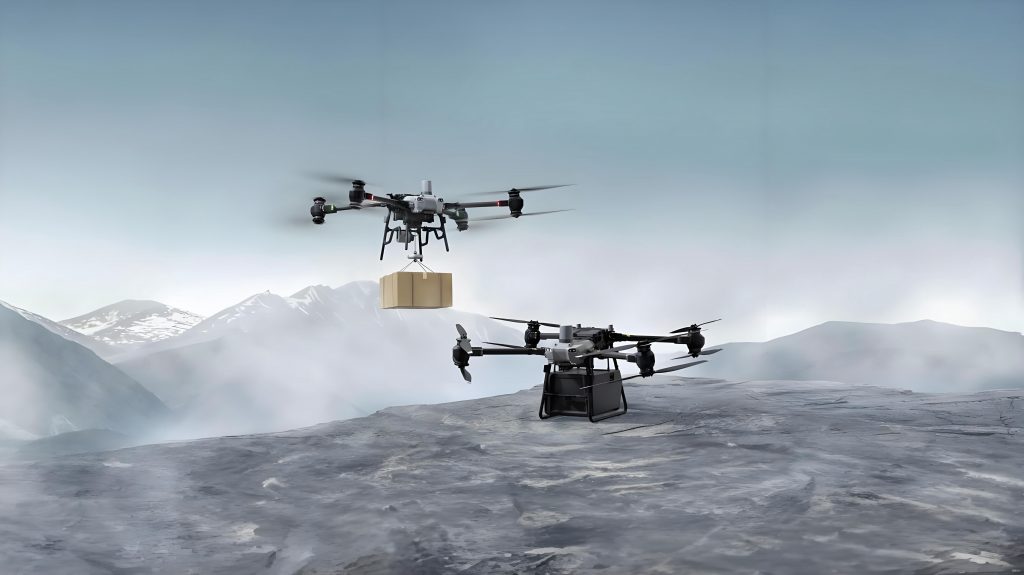
The concept of a civil drone refers to an unmanned aircraft operated without a pilot onboard, designed for civilian applications. Initially developed for military use, civil drones have proliferated into everyday life, driven by technological advancements and cost reductions. In my assessment, the global market for civil drones is expanding exponentially, with applications ranging from delivery services to environmental monitoring. For instance, in logistics, civil drones have enabled efficient parcel transport, as seen in cities where they handle thousands of flights annually. However, this growth is not without pitfalls; the lack of standardized regulations has resulted in operational ambiguities. To illustrate the development trends, I have compiled a table summarizing key aspects of civil drone evolution.
| Period | Key Developments | Impact on Civil Drone Usage |
|---|---|---|
| Early 2000s | Initial civilian adoption | Limited to hobbyist and research applications |
| 2010s | Technological democratization | Widespread use in commercial sectors like agriculture and photography |
| 2020s onwards | Integration with AI and IoT | Enhanced autonomy, leading to complex operations and increased risks |
From my perspective, the安全隐患 associated with civil drones are multifaceted and demand immediate attention. Firstly, civil drones can disrupt aviation秩序 by interfering with manned aircraft, leading to delays, diversions, or even accidents. I have analyzed numerous incidents where civil drones entered restricted airspace, causing significant economic and safety concerns. The probability of such events can be modeled using a risk formula: $$ R = P \times I $$ where \( R \) represents the risk level, \( P \) is the probability of a civil drone incident, and \( I \) denotes the impact severity. For example, if \( P = 0.05 \) for a mid-air collision in a high-traffic area and \( I = 100 \) (on a scale of 1 to 100 for damage), then \( R = 5 \), indicating a moderate risk that necessitates regulatory intervention.
Secondly, civil drones are increasingly exploited as tools for criminal activities. In my research, I have encountered cases where civil drones were used to transport illicit goods, such as drugs, due to their ability to evade ground surveillance. This highlights the need for stricter controls. The relationship between drone capabilities and misuse can be expressed as: $$ M = C \times O $$ where \( M \) is the misuse potential, \( C \) is the capability of the civil drone (e.g., payload capacity), and \( O \) is the opportunity for unlawful use. A higher \( M \) value, such as 0.8 on a normalized scale, suggests that civil drones with advanced features are more prone to abuse, underscoring the urgency for legal frameworks.
Thirdly, privacy侵犯 pose a serious threat, as civil drones equipped with cameras and sensors can intrude on personal spaces. I have studied how civil drones facilitate unauthorized surveillance, leading to data breaches and harassment. The erosion of privacy can be quantified using an invasion index: $$ I_i = \frac{F \times S}{D} $$ where \( I_i \) is the invasion index, \( F \) is the frequency of civil drone flights near private areas, \( S \) is the sensitivity of data collected, and \( D \) is the distance from subjects. For instance, if \( F = 10 \) flights per day, \( S = 0.9 \) (high sensitivity), and \( D = 50 \) meters, then \( I_i = 0.18 \), indicating a substantial privacy risk that requires legislative action.
| Hazard Type | Description | Potential Consequences | Relevance to Civil Drones |
|---|---|---|---|
| Aviation Disruption | Interference with manned aircraft operations | Flight delays, safety hazards, economic losses | High, due to increasing civil drone densities in shared airspace |
| Criminal Tool | Use in smuggling, attacks, or espionage | Law enforcement challenges, public safety threats | Moderate to high, as civil drones offer stealth and accessibility |
| Privacy Invasion | Unauthorized data collection and surveillance | Personal data breaches, psychological distress | High, exacerbated by advanced sensors on civil drones |
In my analysis of the current regulatory困境, I find that the absence of a cohesive legal system is a primary issue. Many countries, including my own observations, lack high-level laws specifically addressing civil drones. For example, existing aviation laws often treat civil drones as an afterthought, leading to enforcement gaps. The regulatory efficiency can be modeled as: $$ E_r = \frac{L_s \times E_f}{C_c} $$ where \( E_r \) is regulatory efficiency, \( L_s \) is the comprehensiveness of legal statutes, \( E_f \) is enforcement frequency, and \( C_c \) is the complexity of civil drone operations. If \( L_s = 0.3 \) (low due to fragmented laws), \( E_f = 0.5 \), and \( C_c = 0.8 \), then \( E_r \approx 0.19 \), indicating poor performance that hinders civil drone management.
Additionally, operational guidelines for civil drones are often impractical. I have reviewed policies that lack detailed implementation rules, making it difficult for authorities to monitor production, sales, and usage. This results in a regulatory vacuum where civil drones operate in a gray area. The gap between policy and practice can be expressed as: $$ G = P_i – A_c $$ where \( G \) is the governance gap, \( P_i \) is the policy intent score (e.g., 0.7 for well-meaning regulations), and \( A_c \) is the actual compliance rate (e.g., 0.2 due to unclear rules). Here, \( G = 0.5 \), highlighting a significant disconnect that needs bridging through better design.
Moreover,监管主体不明确 complicates matters, as multiple agencies may claim jurisdiction over civil drones without clear delineation. In my experience, this leads to overlaps and neglect, especially for low-altitude civil drones. The confusion can be summarized in a table to illustrate the fragmented oversight.
| Potential Regulatory Body | Claimed Authority Over Civil Drones | Challenges in Enforcement |
|---|---|---|
| Civil Aviation Authority | Oversight of airspace and safety standards | Limited resources for small civil drones; focus on larger aircraft |
| Law Enforcement Agencies | Management of public order and crime prevention | Lack of technical expertise in aviation matters |
| Sports Associations | Regulation of model aircraft, often confused with civil drones | Insufficient legal mandate for commercial civil drone activities |
To address these issues, I propose several监管对策 that could enhance the governance of civil drones. First,健全法律规制 is essential. I advocate for the enactment of dedicated legislation for civil drones, which would provide a clear legal foundation. This could include provisions for production standards, usage protocols, and penalty mechanisms. The effectiveness of such laws can be gauged using a compliance formula: $$ C_e = \frac{R_a \times P_d}{T_i} $$ where \( C_e \) is compliance effectiveness, \( R_a \) is regulatory awareness among users, \( P_d \) is the probability of detection for violations, and \( T_i \) is the time to implement reforms. For civil drones, if \( R_a = 0.6 \), \( P_d = 0.7 \), and \( T_i = 2 \) years, then \( C_e = 0.21 \), suggesting that sustained efforts are needed to improve outcomes.
Second,完善监管体系 should involve a holistic approach covering the entire lifecycle of civil drones, from production to disposal. I recommend establishing a coordinated mechanism among military, civil, and local authorities, as suggested in some proposals. This can be visualized through a regulatory framework equation: $$ F_r = \sum_{i=1}^{n} (W_i \times C_i) $$ where \( F_r \) is the framework robustness, \( W_i \) is the weight of each regulatory component (e.g., production controls), and \( C_i \) is the compliance level. For instance, if there are three components with weights 0.4, 0.3, 0.3 and compliance scores of 0.8, 0.6, 0.5, then \( F_r = 0.4 \times 0.8 + 0.3 \times 0.6 + 0.3 \times 0.5 = 0.65 \), indicating a moderate level of robustness that can be enhanced with iterative improvements.
Third,加强宣传教育 is vital to foster legal awareness and social responsibility among civil drone users. I have seen that many violations stem from ignorance rather than malice, so public campaigns could reduce incidents. The impact of education can be modeled as: $$ I_e = A \times B \times C $$ where \( I_e \) is the educational impact, \( A \) is awareness level, \( B \) is behavioral change rate, and \( C \) is coverage of campaigns. If \( A = 0.7 \), \( B = 0.5 \), and \( C = 0.8 \), then \( I_e = 0.28 \), demonstrating that consistent outreach can positively influence civil drone operations.
In conclusion, as civil drones continue to evolve and integrate into society, I am convinced that a balanced regulatory approach is necessary to maximize benefits and minimize harms. The journey toward effective governance requires collaboration, innovation, and perseverance. By implementing the strategies discussed—such as enacting specific laws, streamlining oversight, and promoting education—we can create a safer and more orderly environment for civil drones. This will not only support economic growth but also protect public interests, ensuring that civil drones serve as a force for good in the modern world.