
As I delve into the realm of civil drone technology, I recognize its transformative impact on modern society. Originating from military applications, civil drones have rapidly expanded into civilian sectors such as transportation, photography, and entertainment. This proliferation has spurred growth in upstream and downstream industries, making civil drones a significant consumer hotspot that influences various aspects of social and economic life. However, with this expansion comes a host of risks that necessitate robust legal frameworks for flight safety. In this analysis, I will explore the multifaceted risks associated with civil drones and propose comprehensive legal regulations to mitigate these challenges. My perspective is grounded in the need to balance innovation with safety, ensuring that the benefits of civil drone technology are harnessed without compromising public welfare.
The risks in the civil drone domain are diverse and complex, stemming from the integration of these devices into everyday activities. From my examination, I categorize these risks into social, personal, and economic dimensions, each requiring tailored regulatory approaches. For instance, unauthorized flights can lead to security breaches, while operational errors may result in accidents endangering individuals and property. As I outline these risks, I emphasize the importance of a proactive legal stance that addresses both current and emerging threats. Furthermore, the rapid evolution of civil drone technology means that regulations must be adaptive, incorporating feedback from stakeholders such as manufacturers, operators, and the public. By adopting a first-person lens, I aim to provide a nuanced understanding that highlights the urgency of effective governance in this dynamic field.
To begin, let me define civil drones within the context of aviation law. Civil drones, or unmanned aerial vehicles (UAVs), are aircraft operated without a pilot on board, encompassing remotely piloted and autonomous systems. According to recent regulations, these devices are subject to specific management protocols to ensure safe integration into airspace. However, the lack of detailed legislative provisions often leads to ambiguities in enforcement, as existing laws may not fully cover unique scenarios involving civil drones. For example, incidents like mid-air collisions or privacy invasions require specialized legal interpretations. In my view, a thorough risk assessment is crucial for developing targeted regulations that protect public interests while fostering innovation. This involves not only addressing immediate safety concerns but also anticipating future challenges in civil drone usage.
In the following sections, I will detail the classification of civil drone risks, discuss the principles for legal regulation, and propose specific measures to enhance flight safety. I will incorporate tables and mathematical formulas to summarize key points, ensuring a structured and analytical approach. The keyword “civil drone” will be frequently reiterated to maintain focus on the core subject. Additionally, I will include a visual element to illustrate the integrated management platform for civil drones, which plays a pivotal role in monitoring and control. Through this comprehensive exploration, I hope to contribute to the ongoing discourse on civil drone governance and inspire further research and policy development.
Overview of Civil Drone Risks
As I analyze the risks associated with civil drones, I observe that they arise from various operational contexts, including recreational, commercial, and industrial uses. The inherent characteristics of civil drones—such as their mobility, accessibility, and technological capabilities—amplify these risks. For instance, in high-altitude operations, civil drones can interfere with manned aircraft, leading to potential collisions. Similarly, in urban environments, they may invade personal privacy through unauthorized surveillance. From my perspective, the root causes of these risks include inadequate operator training, insufficient regulatory oversight, and the rapid pace of technological advancement. To quantify these risks, I often employ probabilistic models, such as the following formula for risk assessment: $$ R = P \times I $$ where \( R \) represents the risk level, \( P \) denotes the probability of an adverse event, and \( I \) signifies the impact severity. This equation helps in prioritizing regulatory efforts for civil drone activities.
Moreover, the legal landscape for civil drones is still evolving, with many jurisdictions struggling to keep up with innovation. In my experience, this lag creates loopholes that can be exploited, resulting in incidents like data breaches or airspace violations. For example, civil drones used in delivery services might inadvertently cross into restricted zones, posing national security threats. I believe that a systematic risk overview should integrate empirical data and stakeholder inputs to identify common vulnerabilities. The table below summarizes the primary risk categories and their implications for civil drone operations, based on my analysis:
| Risk Category | Description | Potential Impact |
|---|---|---|
| Social Security Risks | Unauthorized flights leading to airspace congestion, data espionage, or interference with critical infrastructure. | Compromised national security, disrupted public order, and economic losses. |
| Personal Safety Risks | Operator errors causing drone crashes, resulting in injuries or privacy invasions through illicit data collection. | Physical harm to individuals, violation of privacy rights, and legal liabilities. |
| Economic Security Risks | Damage to property or loss of assets due to drone malfunctions or accidents, affecting both operators and third parties. | Financial losses, insurance claims, and hindered industry growth. |
This table highlights the interconnected nature of civil drone risks, underscoring the need for a holistic regulatory approach. In my opinion, addressing these risks requires not only technical solutions but also legal frameworks that promote accountability and transparency. For instance, implementing real-time monitoring systems can reduce the probability of incidents, while strict penalties deter malicious use of civil drones. As I proceed, I will delve deeper into each risk category, drawing on examples and data to illustrate their significance in the civil drone ecosystem.
Classification of Civil Drone Risks
In my examination of civil drone risks, I categorize them into three main types: social security risks, personal safety risks, and economic security risks. Each category encompasses specific threats that demand targeted regulatory responses. I will elaborate on these based on my research and observations, using illustrative examples and quantitative measures where applicable.
Social Security Risks
From my perspective, social security risks posed by civil drones are among the most pressing concerns, as they can undermine public safety and national integrity. The decentralized nature of civil drone operations makes it challenging to enforce uniform controls, leading to instances of unauthorized flights. For example, civil drones flying near airports without approval can disrupt air traffic, as seen in several reported incidents where drones nearly collided with commercial aircraft. I estimate that the probability of such events increases with the number of unregistered civil drones, which can be modeled using a Poisson distribution: $$ P(X = k) = \frac{\lambda^k e^{-\lambda}}{k!} $$ where \( \lambda \) represents the average rate of unauthorized flights per unit time, and \( k \) denotes the number of incidents. This formula helps in predicting risk levels and allocating resources for surveillance.
Additionally, civil drones are vulnerable to cyber-attacks, where foreign entities might hijack control systems to access sensitive data. In my analysis, this risk is exacerbated by the lack of standardized encryption protocols in many civil drone models. I advocate for mandatory security certifications to mitigate such threats. The table below provides a breakdown of social security risks associated with civil drones, including their causes and recommended countermeasures:
| Risk Factor | Causes | Recommended Countermeasures |
|---|---|---|
| Airspace Intrusion | Failure to submit flight plans, lack of awareness about restricted zones. | Enhanced education, automated geofencing, and real-time alerts. |
| Data Breaches | Inadequate cybersecurity measures, malicious hacking. | Implementation of robust encryption, regular software updates. |
| Public Disorder | Misuse for illicit activities, such as smuggling or espionage. | Strict licensing requirements, collaboration with law enforcement. |
I believe that addressing these social security risks requires a collaborative effort between government agencies and civil drone manufacturers. By integrating advanced technologies like artificial intelligence, we can develop predictive models to identify potential threats before they materialize.
Personal Safety Risks
When it comes to personal safety, I find that civil drones pose significant hazards due to operator inexperience and mechanical failures. Many users lack formal training, leading to accidents where drones crash into people or property. For instance, a civil drone used for recreational photography might lose control and fall from a height, causing injuries. From my calculations, the kinetic energy of a falling civil drone can be substantial, given by: $$ KE = \frac{1}{2} m v^2 $$ where \( m \) is the mass of the drone and \( v \) is its velocity upon impact. This equation highlights the potential for severe harm, especially in densely populated areas.
Privacy invasions are another critical aspect of personal safety risks. Civil drones equipped with cameras can easily capture images or videos without consent, infringing on individual rights. In my view, this is particularly concerning in residential neighborhoods, where the expectation of privacy is high. I support the implementation of privacy-by-design principles in civil drone development, ensuring that data collection is transparent and consensual. The following table outlines common personal safety risks and mitigation strategies:
| Risk Type | Examples | Mitigation Strategies |
|---|---|---|
| Physical Injuries | Drone collisions with pedestrians, falling debris. | Operator training, safety certifications, and usage of parachute systems. |
| Privacy Violations | Unauthorized surveillance, data harvesting. | Legal penalties, privacy shields, and public awareness campaigns. |
| Psychological Impact | Fear or anxiety due to drone presence. | Community engagement, noise reduction technologies. |
I emphasize that personal safety risks can be reduced through comprehensive education and strict enforcement of regulations. By promoting responsible civil drone usage, we can minimize adverse effects on individuals.
Economic Security Risks
In my analysis, economic security risks related to civil drones primarily involve financial losses from accidents or litigation. For example, if a civil drone damages infrastructure during a delivery operation, the resulting repairs and legal claims can be costly. I often use cost-benefit analysis to evaluate these risks, expressed as: $$ CBA = \frac{\text{Benefits}}{\text{Costs}} $$ where a ratio less than 1 indicates that the risks outweigh the advantages. This approach helps policymakers in designing incentives for safe civil drone operations.
Moreover, the civil drone industry itself faces economic threats from regulatory uncertainty, which can stifle innovation and investment. From my observations, businesses may hesitate to adopt civil drone technologies if liability issues are not clearly defined. I recommend establishing insurance schemes and compensation funds to address these concerns. The table below summarizes economic risks and potential solutions:
| Economic Risk | Impact | Solutions |
|---|---|---|
| Property Damage | Destruction of assets, leading to insurance claims. | Mandatory insurance, asset tracking systems. |
| Business Disruption | Loss of revenue due to grounded fleets or legal disputes. | Expedited dispute resolution, contingency planning. |
| Market Instability | Fluctuations in drone-related investments. | Stable regulatory frameworks, public-private partnerships. |
I argue that a balanced approach to economic risks can foster a thriving civil drone market while safeguarding stakeholders’ interests. By integrating risk management into business models, companies can enhance resilience and sustainability.
Principles for Flight Safety Legal Regulation
As I formulate principles for regulating civil drone flight safety, I prioritize a balanced framework that accommodates diverse interests. Based on my research, I propose three core principles: balancing interests, integrating监管 with industry development, and combining guidance with enforcement. These principles are derived from a thorough analysis of existing policies and stakeholder feedback, ensuring they are practical and effective.
First, the principle of balancing interests requires that regulations protect public welfare without unduly restricting individual freedoms. For instance, while it is essential to mandate flight plans for civil drones to ensure airspace safety, these requirements should not be so burdensome that they discourage legitimate use. I often refer to a utility function to illustrate this balance: $$ U = \alpha S + \beta F $$ where \( U \) represents overall utility, \( S \) denotes safety levels, \( F \) signifies freedom of operation, and \( \alpha \) and \( \beta \) are weighting coefficients reflecting societal values. This equation helps in designing regulations that maximize social welfare for civil drone activities.
Second, the integration of监管 with industry development emphasizes that regulations should support, rather than hinder, innovation in the civil drone sector. From my perspective, this involves creating sandbox environments where new technologies can be tested under controlled conditions. I advocate for collaborative forums where manufacturers, regulators, and users can discuss challenges and solutions. The table below outlines key aspects of this principle:
| Aspect | Description | Implementation |
|---|---|---|
| Regulatory Sandboxes | Controlled testing zones for innovative civil drone applications. | Pilot programs, temporary exemptions from certain rules. |
| Stakeholder Engagement | Involving industry players in policy-making processes. | Advisory committees, public consultations. |
| Adaptive Frameworks | Laws that evolve with technological advancements. | Regular reviews, sunset clauses for outdated regulations. |
Third, the combination of guidance and enforcement ensures that regulations educate users about safe practices while penalizing violations. In my view, this dual approach fosters a culture of compliance among civil drone operators. For example, guidelines on privacy protection can be supplemented with fines for unauthorized data collection. I believe that transparency in enforcement actions is crucial for building public trust in civil drone governance.
Overall, these principles form the foundation of a resilient legal framework for civil drone safety. By adhering to them, regulators can address immediate risks while promoting long-term growth in the civil drone industry.
Specific Flight Safety Legal Regulations
In this section, I propose specific legal regulations to enhance civil drone flight safety, focusing on operator certification, flight plan审批, no-fly zones, and integrated management platforms. These measures are based on my analysis of best practices and emerging trends, and I will illustrate them with tables and formulas to clarify their implementation.
Operator Certification and Training System
I recommend establishing a comprehensive certification system for civil drone operators, similar to driver’s licensing for vehicles. This system should categorize operators based on the type of civil drone and its intended use, such as recreational, commercial, or agricultural. From my perspective, tailored training programs are essential to reduce accidents caused by incompetence. For instance, operators of heavy civil drones should undergo rigorous testing, while those using lightweight models might require basic safety courses. I propose a formula to determine the required training hours: $$ T = k \cdot W \cdot A $$ where \( T \) is the training duration, \( k \) is a constant based on risk level, \( W \) is the drone weight, and \( A \) is the application complexity. This ensures that certification requirements are proportional to the potential hazards.
Additionally, I advocate for periodic recertification to keep operators updated on new regulations and technologies. The table below summarizes the proposed certification tiers for civil drone operators:
| Certification Tier | Drone Type | Training Requirements | Validity Period |
|---|---|---|---|
| Basic | Micro/Lightweight Civil Drones (e.g., for recreation) | Online course on safety and regulations | 2 years |
| Advanced | Medium-Weight Civil Drones (e.g., for photography) | Practical flight test and written exam | 3 years |
| Professional | Heavy Civil Drones (e.g., for transport or agriculture) | Extensive training, including emergency procedures | 1 year (with annual reviews) |
I believe that this tiered approach will standardize operator qualifications and minimize risks associated with civil drone operations. By making certification accessible through online and offline channels, we can encourage compliance and improve overall safety.
Flight Plan审批 System
To streamline the flight plan审批 process for civil drones, I suggest simplifying application procedures and expanding access channels. In my experience, the current systems are often cumbersome, leading to non-compliance. By leveraging digital platforms, operators can submit plans efficiently, and authorities can conduct automated checks. I propose a risk-based审批 model where the approval time \( A_t \) is calculated as: $$ A_t = B_t + R_f \cdot D $$ where \( B_t \) is the base processing time, \( R_f \) is a risk factor derived from the drone’s specifications and flight path, and \( D \) is the complexity of the airspace. This formula ensures that high-risk civil drone flights receive closer scrutiny.
Moreover, I emphasize the need for real-time updates and notifications to operators regarding their flight status. The table below outlines the key components of an improved flight plan审批 system for civil drones:
| Component | Description | Benefits |
|---|---|---|
| Online Portal | Web-based platform for submitting and tracking flight plans. | Reduced paperwork, faster approvals. |
| Risk Assessment Algorithm | Automated tool evaluating flight paths for potential hazards. | Enhanced safety, prioritized reviews. |
| Mobile Integration | Apps for on-the-go submissions and alerts. | Increased accessibility for civil drone users. |
By implementing these changes, I am confident that compliance rates will improve, reducing unauthorized flights and enhancing airspace security for civil drones.
No-Fly Zones and Geofencing
I advocate for the clear delineation of no-fly zones for civil drones, using geofencing technology to enforce these boundaries. From my analysis, zones near airports, military facilities, and critical infrastructure should be strictly off-limits to prevent incidents. I support the use of satellite-based systems to alert operators when they approach restricted areas, with automatic return-to-home functions if violations occur. The effectiveness of geofencing can be measured using a compliance rate formula: $$ C_r = \frac{N_c}{N_t} \times 100\% $$ where \( C_r \) is the compliance rate, \( N_c \) is the number of compliant flights, and \( N_t \) is the total flights monitored. This metric helps in refining no-fly zone policies for civil drones.
Additionally, I recommend public education campaigns to raise awareness about no-fly zones, as many operators may unintentionally breach them due to ignorance. The table below lists common no-fly zones and corresponding enforcement measures for civil drones:
| No-Fly Zone Type | Location Examples | Enforcement Measures |
|---|---|---|
| Aviation Security Zones | Airports, helipads | Automatic altitude restrictions, fines for violations |
| National Security Areas | Military bases, government buildings | Signal jamming, legal prosecution |
| Privacy-Sensitive Zones | Residential areas, schools | Privacy alerts, community reporting mechanisms |
I believe that a combination of technology and education will significantly reduce incursions into no-fly zones, safeguarding public interests while allowing responsible use of civil drones.
Integrated Management Platform (UOM)
In my view, the development of an integrated management platform, such as the UOM (Unmanned Aircraft System Management Platform), is crucial for overseeing civil drone operations. This platform should facilitate real-time monitoring, data sharing, and incident response, creating a cohesive ecosystem for regulators and operators. I propose that it incorporate machine learning algorithms to predict potential conflicts and suggest corrective actions. For example, the platform could use a collision avoidance model: $$ P_c = 1 – e^{-\lambda t} $$ where \( P_c \) is the probability of collision, \( \lambda \) is the incident rate, and \( t \) is time. This allows for proactive interventions in civil drone traffic.
The UOM platform should also support “cloud control” capabilities, enabling authorities to take remote control of non-compliant civil drones in emergencies. Below is a visual representation of how such a platform integrates various components for effective civil drone management:
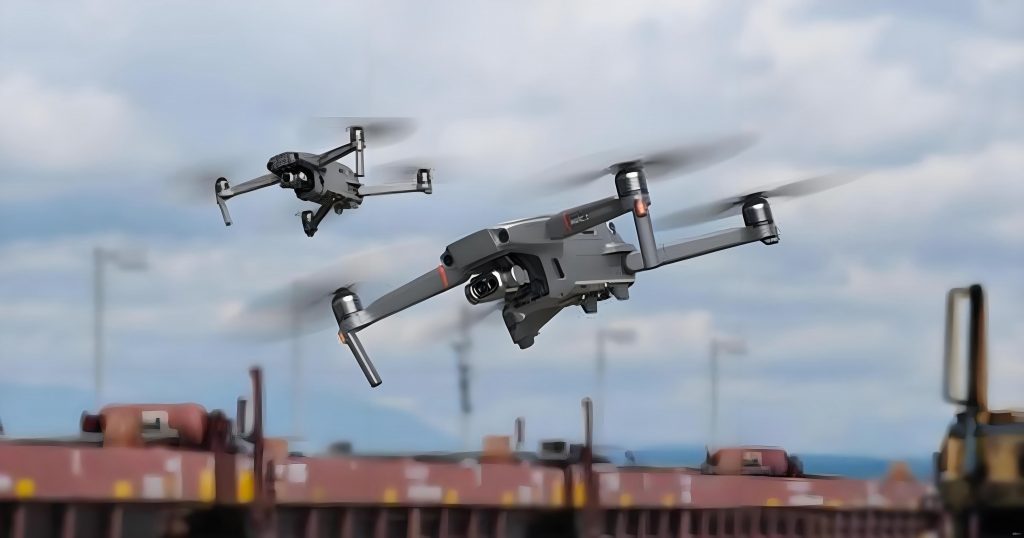
This diagram illustrates the synergy between data analytics, regulatory functions, and user interfaces, highlighting the platform’s role in enhancing civil drone safety. I encourage widespread adoption of such systems to build a sustainable low-altitude airspace management framework.
Conclusion
In conclusion, my analysis of civil drone risks and flight safety regulations underscores the need for a dynamic and inclusive approach. As I have discussed, risks in social, personal, and economic domains require targeted legal measures that balance innovation with protection. By implementing operator certification, streamlined审批 processes, no-fly zones, and integrated platforms, we can mitigate these risks while fostering the growth of the civil drone industry. I emphasize that regulations must evolve with technological advancements, incorporating stakeholder feedback to remain relevant. Ultimately, a proactive stance on civil drone governance will ensure that society reaps the benefits of this technology without compromising safety or privacy. I hope this exploration inspires further research and collaboration in shaping the future of civil drone regulations.