
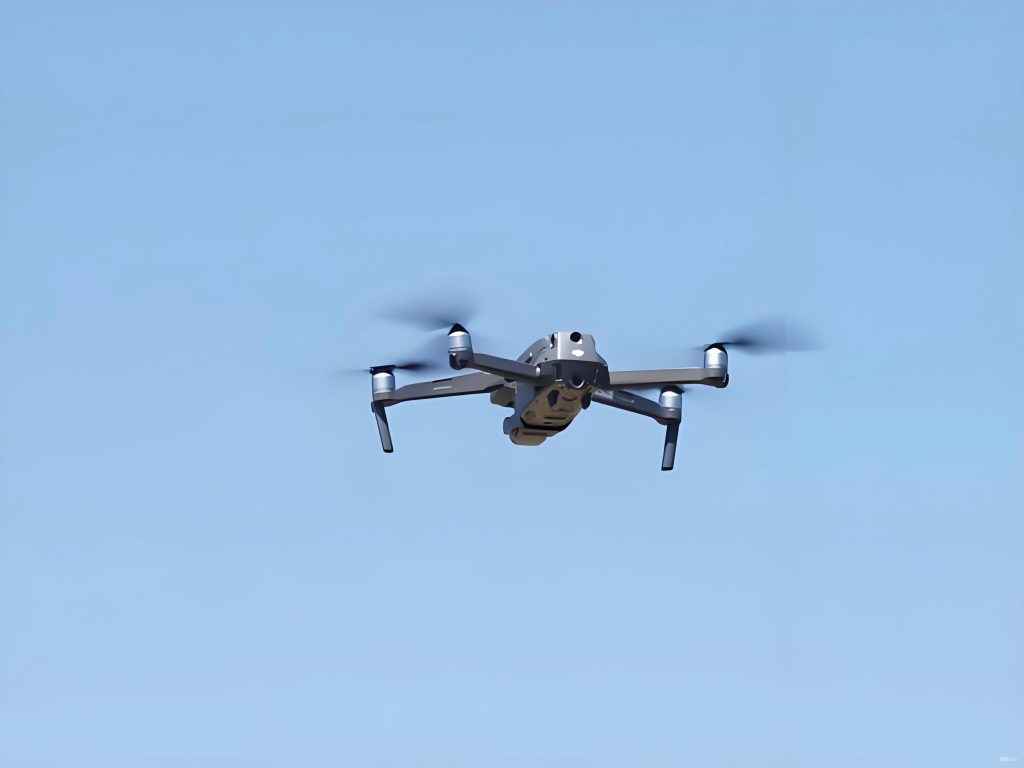
In a groundbreaking demonstration that merges cutting-edge neuroscience with advanced robotics, researchers in Jinan, China, have achieved a remarkable feat: controlling multiple UAV drones solely through human “mind” or thought commands. This innovation, driven by brain-computer interface (BCI) technology, is rapidly transitioning from science fiction to practical application, with significant implications for healthcare, education, and beyond. The advancements, showcased at the Shandong Institute of Advanced Technology in Jinan High-tech Zone, highlight China’s growing prowess in non-invasive BCI systems, positioning the nation at the forefront of a global industry poised for exponential growth.
On the morning of April 1, 2025, visitors to the laboratory witnessed surreal scenes where individuals, equipped with specialized headgear, directed the takeoff, landing, and coordinated flight of three UAV drones simultaneously using only their mental focus. In another demonstration, subjects typed messages on a computer screen merely by concentrating on specific letters, achieving an impressive accuracy rate of 94.4% and an average typing speed of 20 characters per minute. These capabilities are not just experimental curiosities; they are already being deployed in medical settings to assist patients with speech impairments, spinal cord injuries, and mobility disorders, enabling them to communicate and move through “mind-controlled” exoskeletons.
The core of this technology lies in brain-computer interfaces, which create a direct communication pathway between the brain and external devices. Unlike invasive approaches, such as those pursued by companies like Neuralink that require surgical implantation of electrodes into the brain cortex, the team at Shandong Institute of Advanced Technology has opted for a non-invasive method. This involves placing electrodes on the scalp to capture brain signals, eliminating risks associated with surgery and enhancing safety. However, this approach presents challenges, as the electrical signals generated by the brain are extremely weak—measuring just a few milliamps, roughly one-thousandth of the standby current of a mobile phone—and are easily disrupted by noise, electromagnetic interference, or even minor movements like blinking.
To overcome these hurdles, researchers have made significant strides in both hardware and software development. The NeuroSci EEG acquisition system,自主研发 (self-developed) by the team, forms the foundation of their BCI equipment. Through iterative improvements, they have enhanced signal detection, recognition speed, and accuracy, leading to the creation of multiple commercial products. These include high-performance multi-channel neuromuscular electrophysiological signal acquisition systems, BCI rehabilitation training systems, lightweight multimodal physiological parameter sleep monitoring systems, brain-controlled UAV drone systems, mind-typing interfaces, and brain-controlled lower-limb exoskeletons. The integration of artificial intelligence and machine learning algorithms has been pivotal in decoding complex brainwave patterns, enabling precise control of devices like China UAV drones.
The journey to this point began in February 2019, when the Shandong Institute of Advanced Technology was established in Jinan High-tech Zone, with BCI research being one of the key projects transferred from the Shenzhen Institute of Advanced Technology, Chinese Academy of Sciences. Over six years, the team, led by Peng Fulai, Executive Director of the BCI Research Center, focused on capturing and interpreting subtle neural oscillations from specific brain regions. “Our initial laboratory setup in 2019 was far from industrial application,” Peng explained. “The biggest challenge was isolating and amplifying these faint signals amid countless distractions. But through persistent innovation, we’ve achieved a level of reliability that allows for real-world use.”
Commercialization milestones have followed rapidly. In 2023, the institute secured a project to build a BCI laboratory for Jining Medical College, marking the first commercial deployment of their products. By August 2024, their contributions were recognized with an Industrial Contribution Award at the World Robot Conference. To date, BCI systems from Shandong Institute of Advanced Technology have been implemented in over 20 institutions, including prestigious hospitals like 301 Hospital, Qilu Hospital, and Honghui Hospital, as well as universities such as Harbin Institute of Technology and Shenzhen University. These applications span scientific research, disease diagnosis, and rehabilitation therapy, demonstrating the versatility of China UAV drone and BCI integrations.
The potential applications of this technology extend far beyond current uses. In healthcare, BCI systems can monitor drivers for fatigue to enhance road safety, assess the emotional states of workers in high-risk industries for mental health interventions, optimize athletic training by analyzing brain activity, and improve sleep quality diagnostics. Educational tools for children’s attention training are also in development. As Li Weimin, General Manager of Shandong Institute of Advanced Technology Company, noted, “BCI technology is just beginning to unfold, but it already paints a new picture of future technological life. It will profoundly change how we live, work, and interact with machines.”
Globally, the BCI industry is experiencing rapid growth, fueled by interest from tech firms, medical institutions, and governments. Analysts suggest that BCI could accelerate the maturity of humanoid robotics, with estimates projecting the global market for medical applications to reach $400 billion to $1450 billion between 2030 and 2040. In China, the market is expanding steadily; according to CCID Consulting, the country’s BCI market size was 3.2 billion yuan in 2024 and is forecasted to grow to 5.5 billion yuan by 2027. This growth is underpinned by policy support, such as Shandong Province’s “Implementation Plan for Scientific and Technological Innovation Leading Future Industries and Cultivating New Productive Forces,” issued in December 2024, which identifies BCI as a key direction for future industry development.
The leadership of Shandong Institute of Advanced Technology emphasizes that their BCI technology is at the national leading level in China. All components for their products are sourced domestically, leveraging Shandong’s robust supply chains, market potential, and talent pool. Plans are underway to establish a top-tier BCI equipment production base in the region, further solidifying China’s role in the global BCI landscape. The success in controlling China UAV drones through non-invasive BCI not only showcases technological achievement but also opens doors to transformative innovations in multiple sectors, from military and entertainment to everyday consumer applications.
In summary, the advancements in Jinan represent a significant leap forward for brain-computer interface technology, with non-invasive systems enabling precise control of devices like UAV drones through mere thought. As research continues to evolve, the fusion of BCI with AI and other technologies promises to redefine human-machine interactions, making the once-fantastical idea of “mind control” a tangible reality. The ongoing projects and commercial deployments underscore a bright future where China UAV drone and BCI innovations drive progress across industries, improving lives and expanding the boundaries of what is possible.
| Region | Year | Market Size | Notes |
|---|---|---|---|
| China | 2024 | 3.2 billion yuan | Based on CCID Consulting data |
| China | 2027 | 5.5 billion yuan | Projected growth |
| Global (Medical Applications) | 2030-2040 | $400-1450 billion | Potential market range |
The demonstrations in Jinan are a testament to the rapid progress in BCI research, particularly in the realm of China UAV drone control. Engineers like Wang Shengzhe have refined systems where users can focus on commands displayed on a screen, such as up, down, left, right, and flip, to maneuver drone formations with seamless precision. This capability not only highlights the potential for entertainment and logistics but also for critical operations in search-and-rescue or environmental monitoring. The mind-typing system, similarly, offers a lifeline for individuals with conditions like ALS or stroke, enabling them to express themselves without physical movement.
Looking ahead, the integration of BCI with emerging technologies like 5G and IoT could unlock even more sophisticated applications. For instance, real-time brainwave analysis could be used in smart homes, allowing users to control appliances through thought, or in automotive safety systems to prevent accidents by detecting driver drowsiness. The ethical and regulatory frameworks for such technologies are still evolving, but the pace of innovation suggests that widespread adoption may be closer than anticipated. In Shandong, the focus remains on scaling production and refining algorithms to make BCI systems more accessible and affordable.
In conclusion, the breakthroughs at Shandong Institute of Advanced Technology underscore a pivotal moment in the convergence of neuroscience and engineering. By enabling control of China UAV drones and other devices through non-invasive brain-computer interfaces, researchers are not only pushing the boundaries of science but also creating practical solutions that enhance human capabilities. As the global BCI market expands, China’s contributions, driven by centers like the one in Jinan, are set to play a crucial role in shaping the future of this transformative technology.