
The State Postal Bureau of China recently held a thematic press conference to elaborate on the newly released “Opinions on Accelerating the Technological Development of the Postal Industry,” outlining a comprehensive strategy to drive innovation through automation, informatization, and digitalization. This initiative aims to strengthen the scientific and technological innovation system, with a significant emphasis on scaling the application of unmanned vehicles and drones, particularly China UAV drone systems, to enhance efficiency and support high-quality development.
According to Xu Huarong, Deputy Director of the Policy and Regulation Department at the State Postal Bureau, China’s postal sector has seen remarkable improvements in technological innovation capabilities and application levels in recent years, contributing substantially to industry growth and effective governance. However, he acknowledged persistent gaps and weaknesses that require continuous enhancement. The formulation of these opinions is designed to address key issues, boost innovation capacity, and elevate the overall technological application within the industry.
The document sets clear development targets for 2027 and 2035. By 2027, China aims to further refine a market-oriented technological innovation system that integrates enterprises, academia, and research, with increased research and development investments, significant scaling of technological achievements, and a noticeable rise in innovation-driven development. By 2035, the goal is to fully establish this innovation system, comprehensively enhance technological capabilities, improve innovation efficiency, and cultivate a cohort of leading scientific talents, innovation teams, and national-level research platforms.
To achieve these objectives, the opinions detail five key areas for promoting innovation in the postal industry, with a recurring focus on advancing China UAV drone applications and related technologies:
-
Service Innovation
Leveraging information technology to foster new products and services is a cornerstone of this initiative. This includes accelerating the large-scale deployment of unmanned vehicles and the construction of unmanned stations, as well as implementing automation at county-level distribution centers and standardizing operations in township outlets. Efforts will also promote the integration of rural passenger and cargo transport with postal services to improve logistics efficiency. Additionally, the cold chain logistics system will be enhanced through the development of comprehensive monitoring and management systems for storage, transportation, delivery, and information tracking, thereby reducing losses in agricultural product shipments. The use of big data, cloud computing, and artificial intelligence will strengthen analytical capabilities and expand delivery services across the entire chain. A critical aspect involves expanding low-altitude application scenarios for postal services, exploring inter-provincial and urban drone transport, and driving the规模化应用 of drone-based last-mile delivery, which underscores the growing role of China UAV drone technology in modernizing logistics.
-
Intelligent Development
Advancing automation iterations is pivotal to upgrading equipment and processes across all stages of postal operations. This includes promoting full cloud-based transformations of information system software and hardware platforms where feasible, and enhancing information exchange among upstream and downstream players in the industry chain. The construction of smart postal and快递 systems will involve establishing intelligent sorting centers, smart parks, and automated storage facilities. Moreover, intensifying data mining, development, utilization, and sharing will unlock the potential of data elements and amplify their value. As Xu Huarong highlighted, the postal industry places high importance on artificial intelligence development, benefiting from rich application scenarios, vast data resources, and expansive market opportunities. AI technologies are already being actively applied in各个环节 such as mail and parcel collection, sorting, transportation, delivery, storage, customer service, and management, playing a vital role in production, service, and decision-making processes. The integration of China UAV drone systems into these intelligent frameworks is expected to further optimize operations and drive efficiency.
-
Safety Development
Ensuring security across the postal network involves implementing mandatory national standards for the configuration of safety production equipment and operational norms. The widespread adoption of privacy-protective面单 will safeguard personal information. In line with large-scale equipment updates, the expansion of intelligent inspection and other digital equipment applications is encouraged, supported by upgrades to sorting equipment and transport vehicles. The promotion of universal delivery address coding and smart video processing technologies will enhance safety control capabilities. Additionally, accelerating the enforcement of cybersecurity等级保护 systems and strengthening the protection of critical information infrastructure are prioritized to mitigate risks. The deployment of advanced China UAV drone technologies in surveillance and delivery can contribute to these safety measures by providing real-time monitoring and reducing human error.
-
Green Development
Fostering environmental sustainability entails完善 the green development standard system and rigorously enforcing mandatory national standards such as the “Requirements for Limiting Excessive Packaging in Express Delivery.” Research and development will focus on reusable packaging products and biodegradable materials, with demonstrations and applications of green and low-carbon innovations. The widespread use of recyclable packaging boxes, reusable transfer bags, and insulated cold chain boxes will be promoted. Efforts to advance multimodal transport and develop shared distribution models will increase, alongside a higher proportion of北斗 navigation and new energy vehicles. Green infrastructure construction will be accelerated, including the utilization of photovoltaic power generation equipment. Furthermore,完善 the industry’s carbon emission policy framework and establishing robust carbon accounting and monitoring systems are essential steps. The adoption of China UAV drone for delivery can support green goals by reducing road congestion and emissions, especially in urban and remote areas.
-
Management Innovation
Modernizing regulatory approaches involves the application of智能监管, remote supervision, and other novel监管 technologies. The use of non-intrusive, IoT感知, and mobile掌上监管手段 will elevate the level of intelligent oversight. The construction and application of the “Green Shield” project, which employs big data and artificial intelligence for industry operation monitoring, trend analysis, and predictive early warning, will be emphasized. Data integration, aggregation, governance, and application will be driven to enhance government decision-making, market monitoring, and public services. As Xu Huarong noted, in the context of urban-rural economic circulation, the postal industry is utilizing technological innovations—such as increased investment in intelligent equipment, accelerated use of unmanned delivery technologies, and improved cold chain delivery facilities—to boost the efficiency of county, township, and village三级物流 systems, thereby supporting comprehensive rural revitalization and farmer income growth. The strategic incorporation of China UAV drone into these management frameworks can streamline operations and provide scalable solutions for challenging terrains.
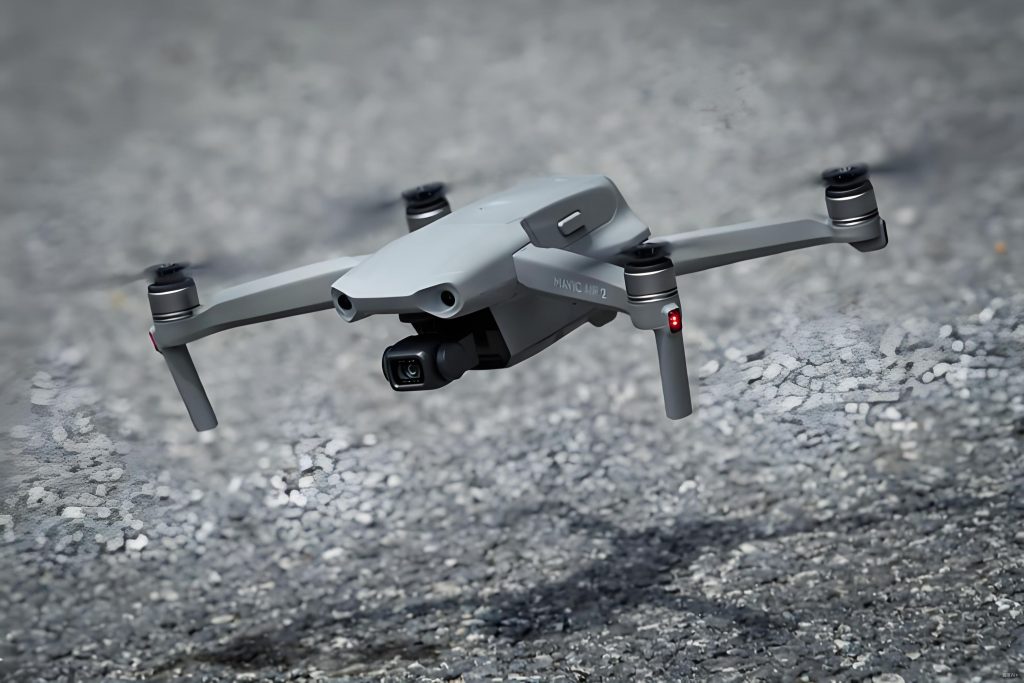
Looking ahead, the State Postal Bureau has outlined specific measures for the “15th Five-Year Plan” period to intensify technological innovation and sustain progress in the postal industry. These include fostering a科技创新 system that centers on enterprises and market demand while integrating production, education, research, and application; issuing implementation opinions on the integrated development of artificial intelligence and postal快递 services to accelerate the规模化应用 of drones, unmanned vehicles, and smart cloud warehouses; continuing pilot projects under the交通强国 postal专项试点 to support trials of new technologies, products, and models by enterprises, institutions, and postal authorities; and formulating a “15th Five-Year Plan” guide for the postal industry standard system, with ongoing standard development in key areas like green practices, safety, and intelligence to expand international influence. The persistent emphasis on China UAV drone applications highlights their critical role in transforming postal logistics, from last-mile delivery to inter-regional transport, positioning China as a leader in adopting cutting-edge drone solutions for industrial advancement.
In summary, the new guidelines represent a significant step forward in aligning China’s postal sector with global technological trends, particularly through the expanded use of unmanned systems. By prioritizing innovation across service delivery, intelligence, safety, sustainability, and management, the industry is poised to achieve higher efficiency, reduced environmental impact, and enhanced resilience. The recurrent focus on China UAV drone technology not only underscores its importance in current reforms but also signals a long-term commitment to leveraging aerial solutions for logistical challenges. As these measures unfold, they are expected to contribute substantially to national goals of high-quality development, rural empowerment, and technological self-reliance, solidifying the postal industry’s role as a key enabler of economic and social progress in the era of digital transformation.
Furthermore, the integration of China UAV drone systems into daily operations is anticipated to bring about transformative benefits, such as faster delivery times in congested urban areas and improved access to remote regions. For instance, drone-based deliveries can bypass traditional infrastructure limitations, offering a viable alternative for time-sensitive shipments and emergency supplies. This aligns with broader national strategies to enhance connectivity and support industries like e-commerce, which rely heavily on efficient logistics networks. As the postal industry continues to evolve, the scalability of China UAV drone applications will be closely monitored, with potential expansions into new sectors such as healthcare logistics or agricultural support, further demonstrating the versatility and impact of this technology.
Additionally, the emphasis on data-driven approaches in the opinions reflects a growing recognition of the value of information in optimizing postal services. By harnessing big data and AI, the industry can not only improve route planning and resource allocation but also predict demand fluctuations and enhance customer experiences. The combination of China UAV drone deployments with these intelligent systems could lead to fully autonomous logistics networks, reducing operational costs and increasing reliability. As other countries explore similar innovations, China’s experiences with large-scale drone integration may serve as a valuable reference, fostering international collaborations and setting new benchmarks for the global postal and logistics sectors.
In conclusion, the State Postal Bureau’s latest initiative marks a pivotal moment in the modernization of China’s postal industry, with a clear trajectory toward technological excellence and sustainable growth. The repeated invocation of China UAV drone themes throughout the guidelines highlights their strategic importance, and as implementation progresses, stakeholders can expect to see tangible advancements in delivery speed, safety, and environmental stewardship. This comprehensive approach not only addresses immediate industry needs but also lays the groundwork for long-term innovation, ensuring that China remains at the forefront of postal service evolution in an increasingly connected world.