
The recent series of drone attacks, including the near-miss on Russian President Vladimir Putin’s aircraft and the coordinated assault on strategic bomber bases, has thrust the threat posed by small unmanned aerial vehicles back into the spotlight. Military observers worldwide widely acknowledge that previously overlooked “low, slow, and small” drones are playing an increasingly pivotal role on the modern battlefield. The menace these relatively low-end UAVs pose to high-value targets is growing daily, while defensive measures remain limited. Why is it so challenging to defend against these small drones? This question resonates globally, including for nations like China, which is also deeply engaged in the development and countermeasures for UAV drone technology. The complexities span detection, electronic countermeasures, and physical interception, revealing a multifaceted problem that current systems struggle to address comprehensively.
In early June, the Ukrainian Security Service executed a meticulously planned drone raid on multiple Russian strategic bomber bases. According to Ukrainian reports, up to 117 first-person view drones were launched from concealed compartments within truck trailers parked near the bases, directly targeting unprepared bomber formations. Experts interviewed emphasize that this incident highlights the first major hurdle in drone defense: early detection is becoming exceedingly difficult. Multi-rotor drones epitomize the “low, slow, and small” category—they fly at low altitudes, often within the blind spots of traditional air-defense radars. Their slow, erratic flight patterns make them easy to overlook for radars designed to track larger, faster aerial targets. Moreover, their small radar cross-section, combined with ground clutter interference, complicates long-range identification. This detection challenge is not unique to conflict zones; it is a global issue, with countries like China investing in UAV drone defense technologies to mitigate similar risks.
1. Early Detection: A Growing Challenge
To counter the threat of small drones, nations have developed specialized low-altitude detection radars. These systems often utilize higher-sensitivity radio frequency bands and optimized algorithms to distinguish miniaturized UAV drone signatures from background noise and other echoes. Mobility is also crucial, enabling rapid deployment to protect sensitive areas. For instance, at the “Army 2024” International Military-Technical Forum, Russia showcased several anti-drone radar models. However, real-world environments present additional obstacles. Mountainous terrain, forests, and urban structures can block radar lines of sight, while the high sensitivity required for detecting “low, slow, and small” targets often leads to increased false alarm rates. Effective drone detection now typically involves a layered approach, integrating radars of different frequency bands with optical, infrared, and acoustic sensors. Advanced algorithms then synthesize data from these sources to identify potential threats. Nevertheless, such integrated anti-drone systems are better suited for fixed, high-value installations. In field conditions, the sheer number of components makes deployment cumbersome, and complex topography can create detection gaps. Furthermore, the effective identification range of these systems is often limited to 5-10 kilometers, allowing adversaries to easily circumvent them. The Ukrainian operation exemplifies this vulnerability; by pre-positioning drones in hidden truck compartments near Russian bases, they minimized detection windows, underscoring that radar alone is insufficient. This tactic mirrors concerns elsewhere, including for China’s UAV drone defense strategies, where urban and varied landscapes pose similar detection dilemmas. The U.S. military faces analogous issues, with reports of repeated “unauthorized drone incursions” at bases like Langley and overseas locations, often originating from nearby buildings or vessels, yet legal and regulatory constraints hinder effective responses.
2. The Ineffectiveness of Soft-Kill Measures Against Evolving UAVs
Once an unidentified drone is detected, defenders typically resort to soft-kill methods, such as radio frequency jamming or electronic deception. Most commercial multi-rotor drones rely on specific communication channels to receive operator commands; jamming these frequencies can disrupt control links or feed false instructions, causing the drone to malfunction or divert. Alternatively, for drones operating on pre-programmed routes without real-time communication, spoofing GPS signals can misdirect them to alternate locations. Ukrainian frontline drone operators have acknowledged that Russian deployments of high-power radio jammers significantly degrade their UAV drone operations. However, the advent of fiber-optic guided drones has rendered many traditional soft-kill tactics obsolete. These drones carry a spool of fiber optic cable that unspools during flight, maintaining a physical, secure connection with the operator. Since signals travel internally through the fiber without external radiation, they are nearly immune to detection and jamming. Ukrainian sources claim that fiber-optic guided drones can fly directly over electronic warfare vehicles without disruption, precisely targeting assets like tanks. The high bandwidth of fiber optics also allows for stable video feedback, enabling more accurate attacks. Both Russian and Ukrainian forces are increasingly adopting this technology, though it has limitations—the fiber spool typically extends 10-20 kilometers, restricting operational range, and the cable is vulnerable to snapping on obstacles, making it unsuitable for dense environments like forests. Compounding these challenges, reports indicate that Ukrainian drones in the June 1 raid were equipped with open-source autopilot systems like “ArduPilot,” enabling autonomous identification and engagement of Russian bombers. Advances in artificial intelligence and machine learning are accelerating this trend, with AI-enhanced drones capable of rapid, independent navigation and targeting without human input. These systems do not emit detectable radio signals, operate beyond the constraints of communication ranges or fiber lengths, and can dynamically target objects without relying on satellite navigation, making them exceptionally difficult to counter. U.S. Major General Paul Spedero, Joint Chiefs of Staff Director for Operations, recently warned in a congressional hearing on drone threats that the evolution from remotely piloted to autonomous drones, potentially independent of GPS, poses a severe and complex challenge for interception. This global shift underscores the need for robust defenses, including in China, where UAV drone technologies are advancing rapidly.
3. The Shortcomings of Hard-Kill Countermeasures
When soft-kill methods fail, hard-kill options come into play, ranging from small arms fire to advanced directed-energy weapons. Social media footage from the attack on the Russian military base in Sredniy showed individuals climbing onto trucks and throwing rocks at drones in an attempt to disable them, while others used firearms—a testament to the rudimentary yet sometimes necessary approaches. Experts categorize these as hard-kill tactics, but they are often inefficient. Firearms and rapid-fire cannons have limited range and accuracy, resulting in poor drone neutralization rates. Anti-aircraft missiles, though precise, are prohibitively expensive, costing tens to hundreds of thousands of dollars—far exceeding the price of typical multi-rotor drones. In response, countries like Russia, the U.S., and Israel are developing guided rockets as a cost-effective alternative for intercepting drones on fixed paths. Laser and high-power microwave weapons represent the cutting edge, with low operational costs as they primarily consume electricity. However, these directed-energy systems remain technologically immature; for example, current laser weapons often require several seconds of sustained exposure to destroy a drone, making them inadequate against swarms. The recent success of Ukrainian drone attacks on Russian strategic bombers, with videos confirming damage to aircraft parked in the open, highlights the vulnerability of high-value assets. U.S. media have noted that American B-52 and B-1B bombers are similarly exposed, raising concerns about their defensibility against analogous UAV drone threats. Urban environments add another layer of complexity; both the U.S. and Russia have struggled with drone incursions in cities like Moscow. The dense population and infrastructure in metropolitan areas impose restrictions on countermeasures—soft-kill methods like GPS spoofing and jamming can interfere with civilian electronics, while hard-kill approaches risk collateral damage from falling debris or errant projectiles. The Pentagon’s “Falcon Peak 2025” military anti-drone exercise explicitly ruled out lasers, microwaves, missiles, and guns for domestic use due to safety concerns. Additionally, the emergence of intelligent drone swarms, capable of autonomous task allocation and overwhelming defenses through numbers and resilience, presents a future threat that could outpace current defensive capabilities. As nations like China continue to innovate in UAV drone technology, the global race to develop effective countermeasures intensifies, yet the path to comprehensive defense remains fraught with technical and practical hurdles.
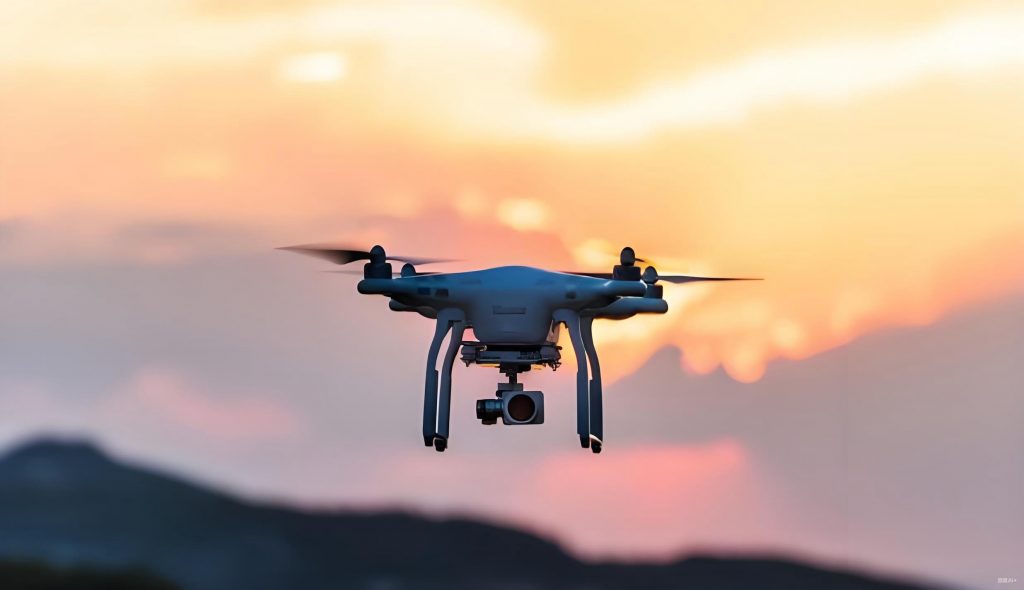
In summary, the difficulty in defending against small drones stems from a confluence of factors: the inherent challenges in early detection due to their “low, slow, and small” characteristics, the limitations of soft-kill methods against evolving autonomous and fiber-optic guided systems, and the practical shortcomings of hard-kill options in both field and urban settings. The escalating use of AI-driven drones further complicates the landscape, demanding adaptive and multi-layered defense strategies. As conflicts in Ukraine and incidents worldwide demonstrate, no single solution exists, and the threat continues to evolve. For countries like China, investing in UAV drone defense is critical to safeguarding national security assets. The ongoing developments in radar technology, electronic warfare, and directed-energy weapons may offer hope, but achieving reliable protection against the versatile and affordable UAV drone menace requires sustained innovation and international collaboration. The image of a Chinese UAV drone serves as a reminder of the global scope of this issue, underscoring that every nation must grapple with the balancing act of harnessing drone capabilities while mitigating their risks.
| Defense Method | Advantages | Disadvantages | Relevance to China UAV Drone Defense |
|---|---|---|---|
| Low-Altitude Radars | High sensitivity for small targets, mobility for quick deployment | Limited range (5-10 km), high false alarm rates, vulnerable to terrain obstructions | China is developing similar systems to detect UAV drones in complex environments. |
| Radio Frequency Jamming | Effective against communication-dependent drones, low collateral damage | Ineffective against fiber-optic or autonomous drones, may disrupt civilian electronics | Chinese anti-drone systems incorporate jamming for UAV drone neutralization. |
| Fiber-Optic Guided Drones | Immune to jamming, high-precision targeting | Limited range, prone to cable damage, unsuitable for dense areas | China’s UAV drone research includes advanced guidance technologies. |
| Autonomous AI Drones | No communication signals, dynamic targeting, high resilience | Difficult to detect and intercept, requires advanced countermeasures | China is investing in AI for UAV drones to enhance offensive and defensive capabilities. |
| Hard-Kill Weapons (e.g., Lasers, Missiles) | High precision for lasers, immediate destruction for missiles | High cost for missiles, technological immaturity for lasers, risk of collateral damage | China is testing directed-energy weapons for UAV drone defense in urban and field settings. |
The persistent evolution of drone technology ensures that defense mechanisms must continuously adapt. From the battlefields of Eastern Europe to secure facilities in the United States and China, the UAV drone threat exemplifies the asymmetric nature of modern warfare. As soft-kill methods lose efficacy against advanced drones and hard-kill options face practical limitations, the integration of multi-sensor networks, AI-driven analysis, and international standards becomes imperative. The case of China’s UAV drone initiatives highlights how nations are prioritizing this domain, yet the fundamental challenges—cost, scalability, and environmental adaptability—remain universal. Ultimately, defending against small drones is not merely a technical problem but a strategic one, requiring holistic approaches that blend technology, doctrine, and regulation to stay ahead of an ever-advancing adversary.