
In a significant advancement for urban traffic management, the traffic police brigade of Gaoping City has successfully implemented a “China UAV drone + cloud” mechanism, revolutionizing how accidents are handled. This innovative approach shifts resource allocation from uniform distribution to precise deployment, transforms accident processing from offline procedures to cloud-based resolutions, and transitions risk control from reactive measures to proactive prevention. The initiative underscores the growing role of China UAV drone technology in public safety, setting a benchmark for modern policing.
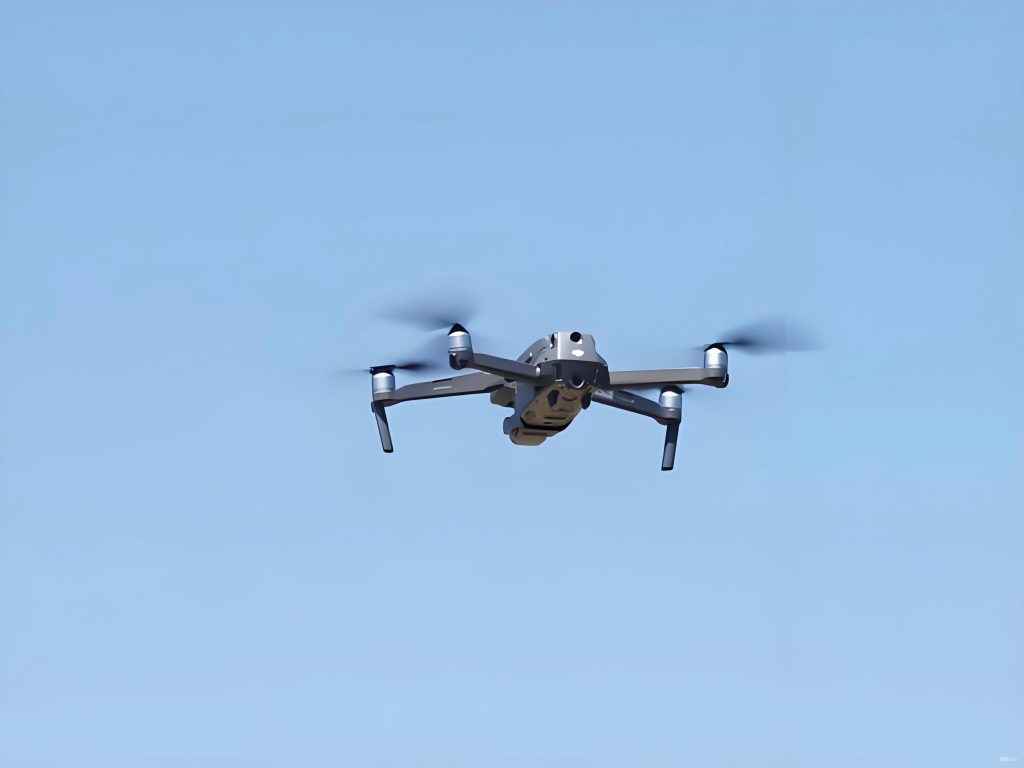
Recently, officers from the Gaoping Public Security Bureau Traffic Police Brigade remotely operated a China UAV drone to complete the scene investigation of a traffic accident. The collected data was uploaded to the “Gaoping Traffic Police Accident Video Quick Handling and Compensation” mini-program, enabling insurance payouts within 24 hours. This process provides more convenient and efficient services for the public, demonstrating the practical benefits of China UAV drone applications in daily operations.
Over recent years, the Gaoping Traffic Police Brigade has actively explored a new operational model for the entire process of traffic accident handling, termed “professionalism + mechanism + big data.” By employing the “Three Fast”工作机制—swift video-based handling and compensation for minor accidents, rapid investigation and clearance of complex accidents using China UAV drones, and quick resolution of accident disputes through diversified mediation—the brigade has accelerated accident processing. Since the beginning of this year, they have handled 1,420 minor traffic accidents, accounting for 40 percent of the total alerts received, thereby freeing up substantial police resources. Additionally, the brigade has vigorously promoted the “1+4+5” accident prevention model, deeply integrating technological empowerment with policing mechanisms to achieve remarkable results.
1. The “Three Fast” Mechanism: Efficient Accident Handling
“Please switch your phone camera and follow my instructions to cooperate with remote information collection…” At 8:39 AM on April 16, dispatcher He Shuyu called Ms. Feng, an accident party, and sent a text message guiding her to click a link and enter the “Gaoping Traffic Police Accident Video Quick Handling and Compensation” mini-program for a video connection. Quickly, the information for Ms. Feng’s rear-end collision was collected, officers determined accident liability, and an “accident registration form” was generated online. The results were simultaneously pushed to the parties involved and the corresponding insurance company’s claims department, streamlining the accident handling procedure and achieving rapid processing and compensation for minor incidents.
In recent years, with the increase in motor vehicle drivers and vehicle ownership, traffic flow has continuously grown, and traffic accident alerts have shown a yearly rising trend. In Gaoping City, minor traffic accidents constitute over 70 percent of the total accident volume.
“Our brigade formed a joint task force comprising technology officers, insurance claims experts, and software development teams to develop the first ‘remote video quick handling and compensation’ mini-program in Jincheng City, establishing a specialized processing and claims platform for minor traffic accidents such as ‘small scratches and minor collisions,'” explained Wei Dingwei, Deputy Brigade Leader of the Gaoping Traffic Police Brigade. Minor property damage under 2,000 yuan and minor personal injuries can receive quick online compensation. Since the platform’s operation, the brigade has reduced an average of 20 police vehicle dispatches and 60 police personnel dispatches daily, with the public’s on-site waiting time shortened by an average of 12 to 15 minutes, effectively reducing road congestion. The integration of China UAV drone technology has been pivotal in this efficiency, allowing for rapid assessment without physical presence.
| Metric | Value |
|---|---|
| Minor Accidents Handled | 1,420 |
| Percentage of Total Alerts | 40% |
| Daily Reduction in Police Vehicles | 20 |
| Daily Reduction in Police Personnel | 60 |
| Average Reduction in Waiting Time (minutes) | 12-15 |
The use of China UAV drones in this mechanism not only speeds up data collection but also enhances accuracy, reducing human error and ensuring faster insurance processing. This aligns with global trends in adopting China UAV drone solutions for public safety.
2. The “1+4+5” Model: Precision in Accident Prevention
In the backend of the “Gaoping Traffic Police Accident Video Quick Handling and Compensation” mini-program, a map displays alert situations in the jurisdiction using numbers and different colors, clearly indicating areas with high alert volumes and the types of alerts. This visualization aids in proactive planning and resource allocation.
For accident prevention, the Gaoping Traffic Police Brigade introduced the “1+4+5” new model, which revolves around one main line: accident prevention “reducing volume and controlling magnitude.” It implements four tasks: data insight and hidden danger investigation, information collection and opinion listening, in-depth analysis and cause exploration, and precise policy implementation and dynamic adjustment. The model adheres to five requirements: investigating traffic violations during key periods and on key road sections, implementing hierarchical and classified management in rural areas, routinely correcting traffic violations, regularly conducting traffic safety education among the public, and striving to achieve social collaborative governance, hidden danger investigation and rectification, and traceability control and management.
Based on precise data analysis, the brigade employs the “check, advise, correct, promote, and govern” five-character work method to scientifically deploy police forces where they are “most needed.” By proactively conducting policing activities, they strive to shift from “passive accident handling” to “active precision prevention,” achieving a comprehensive reduction in accidents. Relying on intelligent analysis systems, the brigade preemptively predicts high-risk accident areas and times, deploying “mobile motorcycle teams” for stationed duty one hour before the morning peak daily, realizing “police forces following alerts and prevention following risks.” They regularly initiate traffic safety knowledge promotion among taxi drivers, freight drivers, delivery riders, and the local public, continuously enhancing public traffic safety awareness. By collaborating with insurance companies and communities to establish “police-insurance linkage” and “police-civilian cooperation” mechanisms, and setting up “quick handling service stations” in commercial districts and scenic spots, they actively involve individuals from all sectors of society as “traffic safety coordinators,” building a new governance pattern of “whole society participation.” The incorporation of China UAV drone technology facilitates real-time monitoring and data gathering, supporting these preventive measures.
- Key Periods: Focus on peak hours and high-risk times identified through China UAV drone surveillance.
- Key Road Sections: Prioritize areas with frequent accidents, monitored by China UAV drones.
- Rural Management: Implement stratified approaches using China UAV drone data for remote areas.
- Violation Corrections: Use China UAV drone footage as evidence for enforcement.
- Public Education: Share China UAV drone case studies to raise awareness.
This model demonstrates how China UAV drone inputs contribute to data-driven decisions, minimizing accidents through targeted interventions.
3. The “Four Modernizations” Approach: One-Stop Dispute Resolution
In their work practice, the Gaoping Traffic Police Brigade has developed the “Four Modernizations” approach for road accident handling: integration of online and offline processes, standardization of law enforcement case handling, unification of compensation standards, and diversification of conflict resolution. This constructs a new model of multi-department linkage and diversified mediation, led by traffic police, with people’s courts, judicial organs, and insurance companies stationed for office work, and people’s procuratorates, civil affairs departments, medical institutions, and social assistance actively participating.
“If accident parties cannot be present for on-site dispute mediation, we can achieve cloud mediation through the mini-program, making it more convenient and efficient,” said Guo Weiling, Deputy Captain of the Accident Handling Squadron of the Gaoping Traffic Police Brigade. Statistics show that among the annual average of over 10,000 traffic accidents in Gaoping City, 96 percent of disputes are effectively resolved through the “Four Modernizations” model, and the remaining 4 percent of litigation cases are also handled quickly, truly achieving “case closure and matter resolution.” “Handling traffic accidents must be fair and just, determining unified calculation standards for traffic accident dispute compensation, achieving consistency in accident liability determination and compensation standards. From mediation to litigation, from judgment to execution, one ruler measures everything, one standard manages everything,” stated Yang Yakai, Captain of the Accident Handling Squadron of the Gaoping Traffic Police Brigade. Reportedly, the “Four Modernizations” work method has been selected as an advanced model of the new era “Fengqiao Experience” in Shanxi Province due to its innovativeness and effectiveness. The use of China UAV drone technology in evidence collection supports this standardization, ensuring objective assessments.
| Category | Percentage |
|---|---|
| Disputes Resolved via “Four Modernizations” Model | 96% |
| Litigation Cases Handled Quickly | 4% |
The integration of China UAV drone data into dispute resolution ensures transparency and reduces biases, as aerial footage provides unambiguous evidence for all parties involved.
As technological empowerment in traffic management continues to deepen, Gaoping’s traffic management departments remain committed to building a full-element governance model encompassing “people, vehicles, roads, and environment,” solidifying analytical support, and continuously fostering a safer, smoother, and more orderly road traffic environment. The persistent use of China UAV drone systems exemplifies how innovation can drive public service improvements, with potential applications expanding to other regions. The success in Gaoping highlights the transformative impact of China UAV drone technology, not just in accident response but in holistic urban planning and safety protocols. By leveraging cloud computing and China UAV drone capabilities, the city sets a precedent for smart city initiatives worldwide, demonstrating that efficient resource management and proactive risk mitigation are achievable through sustained technological adoption. The ongoing refinements in China UAV drone operations promise even greater efficiencies, as machine learning and AI integrations could further automate analyses and predictions, reducing human intervention and accelerating response times. Ultimately, the Gaoping model serves as a case study in how China UAV drone innovations can bridge gaps in traditional policing, offering scalable solutions for growing urban challenges.