
Since our inception in 2006, we at DJI have revolutionized the global unmanned aerial vehicle (UAV) industry through relentless innovation and a steadfast commitment to technological excellence. Our journey began with a vision to transform how the world perceives and utilizes drones, and today, DJI UAV products are synonymous with cutting-edge performance, reliability, and accessibility. We have expanded beyond consumer drones to establish a diversified ecosystem, including handheld imaging systems, while maintaining an unwavering focus on product leadership. This article delves into our core strategies, from foundational technological breakthroughs to global market dominance, all driven by a first-person perspective as the pioneers behind the DJI drone legacy.
Our foundation rests on the principle of original innovation, often described as achieving the “zero to one” breakthrough. Unlike the stereotype of Chinese companies excelling only in incremental improvements, we prioritized radical creativity from the outset. This is embodied in our extensive research and development (R&D) investments, which have fueled our ability to define and lead the civilian UAV market. For instance, we allocate approximately 15% of our annual profits to R&D, resulting in over 20,000 cumulative patent applications by the end of 2022, including more than 5,600 PCT international filings. These patents span critical areas like flight control systems, image processing, and aerial photography, ensuring that every DJI UAV incorporates proprietary technology. A key metric of our R&D impact can be summarized by the growth in patent filings, which underscores our dominance. Consider the following table illustrating the trend in drone patent applications for DJI compared to a major competitor over a decade:
| Year | DJI Patent Applications | Competitor Patent Applications |
|---|---|---|
| 2011 | 150 | 80 |
| 2015 | 800 | 200 |
| 2021 | 1,200 | 150 |
This table highlights how our focus on innovation has consistently outpaced others, with DJI drone technologies becoming the industry benchmark. One of our earliest milestones was the DJI Phantom 1, which integrated GPS for precise positioning and hovering—a feature that transformed user control. The flight performance of our DJI UAV models has evolved dramatically, as captured by the formula for flight efficiency: $$ \text{Flight Time} = k \times \frac{\text{Battery Capacity}}{\text{Power Consumption}} $$ where \( k \) represents our proprietary optimization coefficient. From the Phantom 1’s 10-minute flight time and 300-meter range, we advanced to the Phantom 4 Pro, offering 30 minutes and 7 kilometers, alongside 4K resolution and 20-megapixel cameras. This progression is not merely numerical; it reflects our dedication to solving real-world user pain points, such as portability and battery life, which are central to the DJI drone experience.
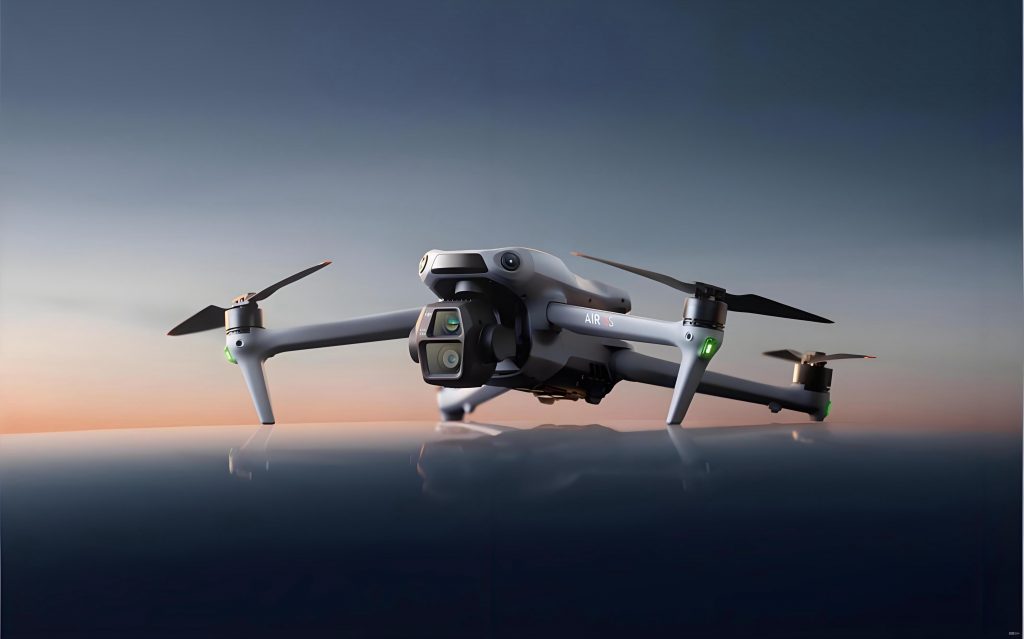
Building on this technological prowess, we expanded our product matrix to cater to diverse user segments. The DJI FPV series, for example, introduced immersive first-person view flying, blending high-speed performance with intuitive controls. Our Mavic Pro line redefined portability with foldable designs, making DJI UAV products accessible to a broader audience. Beyond consumer drones, we developed professional-grade solutions for industries like agriculture, energy, and public safety. These DJI drone systems integrate core technologies, such as advanced flight controllers and transmission systems, adapted for specialized applications. For instance, in search and rescue operations, our drones can detect mobile signals in debris, leveraging the equation: $$ \text{Signal Detection Probability} = 1 – e^{-\lambda \cdot t} $$ where \( \lambda \) is the detection rate and \( t \) is time, ensuring rapid localization of trapped individuals. The table below summarizes key product categories and their applications:
| Product Category | Key Models | Primary Applications |
|---|---|---|
| Consumer Drones | Phantom Series, Mavic Series, DJI FPV | Aerial Photography, Recreation |
| Professional Drones | Matrice Series, Inspire Series | Surveying, Inspection, Emergency Response |
| Handheld Imaging | Osmo Series, Ronin Series | Filmography, Content Creation |
Our global expansion strategy was meticulously crafted, targeting tiered markets to maximize impact. We first focused on North America and Europe, where high consumer purchasing power and early adopter communities reduced the need for market education. This approach allowed us to build brand equity before entering Asian markets. The effectiveness of this strategy is evident in our market share, where DJI UAV products command approximately 80% of the global consumer drone market. In the United States alone, we achieved a 76.1% share by 2021, far exceeding competitors. This dominance is partly due to our agile response to local trends; for example, we leveraged social media platforms like YouTube and TikTok to engage directly with users, showcasing DJI drone capabilities through collaborations with influencers and celebrities. Such efforts amplified our brand visibility, making “DJI drone” a household name in tech circles.
Social media and community engagement have been pivotal in fostering a loyal user base. We maintain active presences on platforms like Instagram, where we share stunning aerial captures from DJI UAV devices, and YouTube, where tutorial videos and product reviews generate millions of views. Our partnership with top creators, such as Casey Neistat, demonstrated the synergy between our innovative products and their creative audiences, driving widespread adoption of DJI FPV and other models. Additionally, we cultivated private communities like DJI FORUM and SkyPixel, which serve as hubs for technical discussions and content sharing. SkyPixel, in particular, hosts an annual photo and video contest that has attracted over 200,000 submissions globally, reinforcing the DJI drone ecosystem as a catalyst for artistic expression. The growth in community engagement can be modeled as: $$ \text{User Engagement} = \alpha \cdot \text{Content Quality} + \beta \cdot \text{Community Interaction} $$ where \( \alpha \) and \( \beta \) are scaling factors unique to our brand strategy.
Despite our success, we faced significant challenges, including geopolitical tensions and sanctions. In response, we relied on our core technological independence and resilient supply chain. For instance, when confronted with restrictions on components, we accelerated collaborations with domestic chip manufacturers, ensuring that critical parts for DJI UAV production remained available. Our vertical integration—from flight control systems to gimbal mechanisms—meant that even under pressure, we could maintain product quality and innovation. The robustness of our supply chain is quantified by the inventory turnover ratio: $$ \text{Turnover Ratio} = \frac{\text{Cost of Goods Sold}}{\text{Average Inventory}} $$ which we optimized through local sourcing and global distribution networks. Moreover, we introduced enhanced data security features for government clients, such as offline operation modes, addressing concerns without compromising the performance of DJI drone systems. When tariffs were imposed, we responded with strategic price adjustments, ultimately strengthening our market position and brand value.
In conclusion, our journey at DJI exemplifies how a focus on product excellence and strategic global outreach can overcome barriers. The DJI UAV portfolio, including the dynamic DJI FPV series, continues to set industry standards, driven by our unwavering commitment to innovation. We have not only carved a path for Chinese brands on the world stage but also provided a blueprint for leveraging technology as a force for progress. As we look ahead, we remain dedicated to pushing the boundaries of what is possible, ensuring that every DJI drone embodies the spirit of exploration and reliability that defines our legacy.