
In recent years, the increasing severity of weed infestations in wheat fields has become a major factor limiting crop yields, driven by changes in cultivation practices, variety optimization, and full straw return policies. With the aging rural population and shortage of agricultural labor, large-scale farmers have increasingly adopted advanced plant protection machinery. Among these, DJI UAVs, including DJI drones and DJI FPV models, have gained widespread use due to their high operational efficiency. To evaluate the safety of applying 33% flufenacet·pyraclonil·flurtamone suspension concentrate via DJI UAV during the post-sowing, pre-emergence stage of wheat and its efficacy in controlling weeds, we conducted a comparative efficacy trial over three consecutive years from 2020 to 2022. This report summarizes our findings on the application of DJI UAV in weed management, focusing on the performance of DJI T20 and related DJI drone technologies.
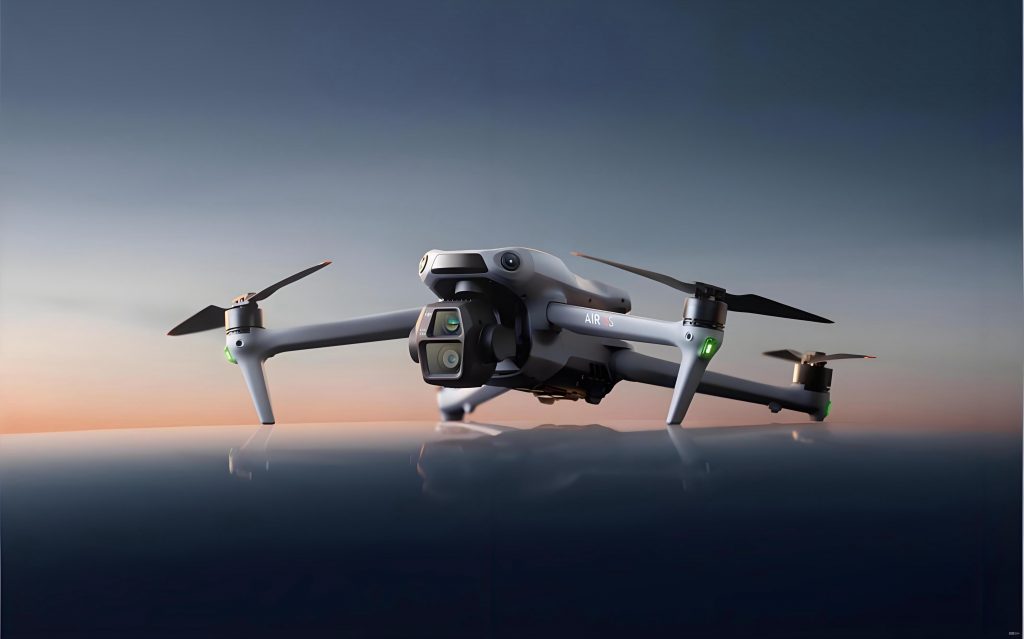
Weed control in wheat fields is critical for maximizing yield, and the adoption of DJI UAV for precise pesticide application offers a promising solution. The DJI T20, as a representative DJI drone, provides advantages in terms of speed, coverage, and reduced labor dependency. In our study, we aimed to assess how DJI UAV applications compare to traditional methods like self-propelled sprayers and electric sprayers. The integration of DJI FPV technology could further enhance real-time monitoring, though our focus was on the T20 model. This article details our methodology, results, and insights, emphasizing the role of DJI UAV in modern agriculture.
The trial was conducted in a rice-wheat rotation system, where the primary weeds included Alopecurus aequalis, Stellaria media, and Galium aparine. Soil conditions were consistent across years, with clay loam texture, medium to high fertility, and a pH of 7.3. Wheat varieties used were ‘Zhenmai 12’ in 2020 and ‘Yangmai 25’ in 2021 and 2022, sown via mechanical drilling with seeding rates adjusted for each year. The application of DJI UAV, specifically the T20 model, was compared against a self-propelled sprayer (SWAN3WP-500) and an electric sprayer (3WBD-20L). The herbicide, 33% flufenacet·pyraclonil·flurtamone SC, was applied at a rate of 80 mL per 667 m² across all treatments, with variations in spray volume and equipment.
Our experimental design involved multiple treatments based on the application equipment and spray volume. For instance, in 2020, we had six treatments, including an untreated control, while in 2021 and 2022, we had four treatments each. The DJI UAV was operated at a flight height of 1.8 m, speed of 4.0 m/s, and spray width of 5.0 m. Applications were timed post-sowing and pre-emergence, with careful attention to field conditions such as moisture levels. Weather data during application periods were recorded, showing variations in temperature and humidity that could influence efficacy.
To quantify weed control efficacy, we used formulas for plant control efficacy and fresh weight control efficacy. The plant control efficacy is calculated as:
$$ \text{Plant Control Efficacy (\%)} = \frac{\text{Weed Count in Control} – \text{Weed Count in Treatment}}{\text{Weed Count in Control}} \times 100 $$
Similarly, the fresh weight control efficacy is given by:
$$ \text{Fresh Weight Control Efficacy (\%)} = \frac{\text{Fresh Weight in Control} – \text{Fresh Weight in Treatment}}{\text{Fresh Weight in Control}} \times 100 $$
These formulas were applied during surveys at 110 days and 150 days after treatment, with five random samples per treatment area of 0.2 m² each. Data on weed species, plant counts, and fresh weights were collected to compute efficacy rates.
In terms of safety observations, we monitored wheat crops for any phytotoxicity symptoms at intervals of 3, 5, 10, 25, and 150 days after application. Minor leaf whitening was noted in some cases, but no significant impact on growth was observed, indicating that the DJI UAV application was safe for wheat under the tested conditions.
The results from our three-year trial are summarized in the following tables, which illustrate the efficacy of different treatments on key weed species. Table 1 provides a comparative overview of the application parameters across years, highlighting the role of DJI UAV in varying spray volumes.
| Year | Treatment | Application Equipment | Spray Volume (L/667 m²) | Application Date |
|---|---|---|---|---|
| 2020 | 1 | DJI UAV | 1.0 | Nov 11 |
| 2020 | 2 | DJI UAV | 1.5 | Nov 11 |
| 2020 | 3 | DJI UAV | 2.0 | Nov 11 |
| 2020 | 4 | Self-Propelled Sprayer | 30.0 | Nov 14 |
| 2020 | 5 | Electric Sprayer | 30.0 | Nov 14 |
| 2020 | 6 (CK) | None | 0 | – |
| 2021 | A | DJI UAV | 2.0 | Nov 13 |
| 2021 | B | Self-Propelled Sprayer | 30.0 | Nov 16 |
| 2021 | C | Electric Sprayer | 30.0 | Nov 16 |
| 2021 | D (CK) | None | 0 | – |
| 2022 | ① | DJI UAV | 2.0 | Nov 17 |
| 2022 | ② | Self-Propelled Sprayer | 30.0 | Nov 20 |
| 2022 | ③ | Electric Sprayer | 30.0 | Nov 20 |
| 2022 | ④ (CK) | None | 0 | – |
As shown in Table 1, the DJI UAV was tested at different spray volumes to optimize efficacy. The use of DJI drone technology allowed for precise application, with the T20 model demonstrating consistent performance. In subsequent analyses, we evaluated the control efficacy on Alopecurus aequalis, Stellaria media, and Galium aparine, as detailed in Tables 2, 3, and 4.
| Year | Treatment | Plant Count (per m²) at 110 DAT | Plant Control Efficacy (%) at 110 DAT | Plant Count (per m²) at 150 DAT | Plant Control Efficacy (%) at 150 DAT | Fresh Weight (g) at 150 DAT | Fresh Weight Control Efficacy (%) at 150 DAT |
|---|---|---|---|---|---|---|---|
| 2020 | 1 | 67 | 68.1 | 155 | 71.8 | 298.5 | 76.1 |
| 2020 | 2 | 51 | 75.7 | 125 | 77.3 | 220.6 | 82.4 |
| 2020 | 3 | 14 | 93.3 | 26 | 95.3 | 56.9 | 95.5 |
| 2020 | 4 | 6 | 97.1 | 10 | 98.5 | 15.3 | 98.8 |
| 2020 | 5 | 12 | 94.3 | 19 | 96.5 | 45.6 | 96.4 |
| 2020 | 6 (CK) | 210 | – | 550 | – | 1250.6 | – |
| 2021 | A | 70 | 61.1 | 155 | 64.0 | 361.2 | 67.8 |
| 2021 | B | 48 | 73.3 | 102 | 77.5 | 241.0 | 78.5 |
| 2021 | C | 64 | 64.4 | 146 | 66.0 | 340.0 | 69.7 |
| 2021 | D (CK) | 180 | – | 430 | – | 1120.6 | – |
| 2022 | ① | 22 | 91.5 | 40 | 93.4 | 45.2 | 96.8 |
| 2022 | ② | 13 | 95.0 | 24 | 95.2 | 28.9 | 98.0 |
| 2022 | ③ | 20 | 92.3 | 31 | 94.9 | 34.5 | 97.6 |
| 2022 | ④ (CK) | 260 | – | 610 | – | 1410.0 | – |
From Table 2, it is evident that the DJI UAV treatment with a spray volume of 2.0 L/667 m² (Treatment 3 in 2020, A in 2021, and ① in 2022) achieved high efficacy, comparable to traditional methods. For example, in 2020, Treatment 3 showed a plant control efficacy of 93.3% at 110 DAT and 95.3% at 150 DAT for Alopecurus aequalis, which was similar to the electric sprayer but slightly lower than the self-propelled sprayer. This pattern highlights the potential of DJI UAV in effective weed management when optimized spray volumes are used.
Similarly, Tables 3 and 4 present data for Stellaria media and Galium aparine, respectively, reinforcing the consistency of DJI drone applications.
| Year | Treatment | Plant Count (per m²) at 110 DAT | Plant Control Efficacy (%) at 110 DAT | Plant Count (per m²) at 150 DAT | Plant Control Efficacy (%) at 150 DAT | Fresh Weight (g) at 150 DAT | Fresh Weight Control Efficacy (%) at 150 DAT |
|---|---|---|---|---|---|---|---|
| 2020 | 1 | 22 | 72.2 | 35 | 74.1 | 65.6 | 77.3 |
| 2020 | 2 | 18 | 77.2 | 28 | 79.3 | 50.6 | 82.5 |
| 2020 | 3 | 1 | 98.7 | 2 | 98.5 | 2.5 | 99.1 |
| 2020 | 4 | 0 | 100.0 | 0 | 100.0 | 0 | 100.0 |
| 2020 | 5 | 0 | 100.0 | 0 | 100.0 | 0 | 100.0 |
| 2020 | 6 (CK) | 79 | – | 135 | – | 289.3 | – |
| 2021 | A | 15 | 73.2 | 23 | 77.5 | 45.5 | 82.1 |
| 2021 | B | 11 | 80.4 | 17 | 83.3 | 31.0 | 87.8 |
| 2021 | C | 13 | 76.8 | 20 | 80.4 | 37.8 | 85.1 |
| 2021 | D (CK) | 56 | – | 102 | – | 254.3 | – |
| 2022 | ① | 3 | 94.8 | 5 | 95.2 | 13.5 | 94.9 |
| 2022 | ② | 0 | 100.0 | 0 | 100.0 | 0 | 100.0 |
| 2022 | ③ | 2 | 96.6 | 2 | 98.1 | 6.4 | 97.6 |
| 2022 | ④ (CK) | 58 | – | 104 | – | 265.8 | – |
| Year | Treatment | Plant Count (per m²) at 110 DAT | Plant Control Efficacy (%) at 110 DAT | Plant Count (per m²) at 150 DAT | Plant Control Efficacy (%) at 150 DAT | Fresh Weight (g) at 150 DAT | Fresh Weight Control Efficacy (%) at 150 DAT |
|---|---|---|---|---|---|---|---|
| 2020 | 1 | 20 | 50.0 | 40 | 55.1 | 86.5 | 60.9 |
| 2020 | 2 | 17 | 57.5 | 34 | 61.8 | 69.8 | 68.4 |
| 2020 | 3 | 7 | 82.5 | 10 | 88.8 | 22.5 | 89.8 |
| 2020 | 4 | 4 | 90.0 | 6 | 93.3 | 11.5 | 94.8 |
| 2020 | 5 | 6 | 85.0 | 9 | 89.9 | 20.9 | 90.5 |
| 2020 | 6 (CK) | 40 | – | 89 | – | 221.0 | – |
| 2021 | A | 11 | 68.6 | 18 | 72.3 | 36.5 | 79.3 |
| 2021 | B | 8 | 77.1 | 12 | 81.5 | 20.6 | 88.3 |
| 2021 | C | 10 | 71.4 | 16 | 75.4 | 30.8 | 82.5 |
| 2021 | D (CK) | 35 | – | 65 | – | 176.0 | – |
| 2022 | ① | 6 | 85.7 | 9 | 87.1 | 18.8 | 90.5 |
| 2022 | ② | 4 | 90.5 | 5 | 92.9 | 10.2 | 94.8 |
| 2022 | ③ | 6 | 85.7 | 8 | 88.6 | 15.6 | 92.1 |
| 2022 | ④ (CK) | 42 | – | 70 | – | 198.0 | – |
Analyzing the data, we observed that the efficacy of DJI UAV applications improved significantly with increased spray volume. For instance, in 2020, Treatment 3 (2.0 L/667 m²) showed superior control compared to Treatments 1 and 2 (1.0 L and 1.5 L, respectively). This trend was consistent across weed species and years, underscoring the importance of optimizing spray parameters for DJI drone operations. The plant control efficacy for Alopecurus aequalis in Treatment 3 reached up to 95.3% at 150 DAT, while for Stellaria media and Galium aparine, it was 98.5% and 88.8%, respectively.
To further understand the relationships, we can model the efficacy as a function of spray volume using a linear approximation. For example, the plant control efficacy (PCE) might be expressed as:
$$ \text{PCE} = a \cdot V + b $$
where \( V \) is the spray volume in L/667 m², and \( a \) and \( b \) are constants derived from regression analysis. Based on our data, for DJI UAV applications, \( a \) is positive, indicating that higher spray volumes enhance efficacy. This aligns with the principles of pesticide deposition and coverage, where DJI FPV systems could potentially aid in real-time adjustment for better results.
In terms of safety, our observations confirmed that the use of DJI UAV for applying 33% flufenacet·pyraclonil·flurtamone SC was safe for wheat crops, with no long-term phytotoxicity. Minor symptoms like leaf whitening were transient and did not affect yield, demonstrating the reliability of DJI drone technology in integrated weed management.
Discussion of the results reveals that weather conditions played a crucial role in efficacy. In 2021, a dry spell after application likely reduced herbicide activation, leading to lower efficacy across all treatments, including DJI UAV. Conversely, in 2020 and 2022, adequate rainfall post-application improved soil moisture and herbicide performance. This highlights the need for strategic timing when using DJI UAV for weed control, possibly integrating weather forecasts for optimal scheduling.
Compared to traditional methods, the DJI UAV with a spray volume of 2.0 L/667 m² achieved efficacy comparable to electric sprayers at 30.0 L/667 m² but was slightly inferior to self-propelled sprayers. This difference may stem from the finer droplet size and better penetration of sprayers, but the DJI UAV offers advantages in speed, flexibility, and labor savings. For large-scale operations, the DJI drone can cover areas quickly, especially in wet conditions where ground equipment cannot operate.
In conclusion, our three-year study demonstrates that DJI UAV, particularly the T20 model, is a viable tool for pre-emergence weed control in wheat fields. The efficacy is highly dependent on spray volume, with 2.0 L/667 m² providing optimal results. The integration of DJI FPV technology could further enhance precision, though our trials focused on basic applications. We recommend that farmers adopt DJI UAV for weed management in scenarios requiring rapid deployment or where field conditions limit traditional equipment. Future research should explore variable rate applications and the use of DJI drone sensors for real-time efficacy monitoring.
Overall, the adoption of DJI UAV in agriculture represents a significant advancement, and our findings support its role in sustainable weed control. By leveraging DJI drone capabilities, farmers can achieve efficient and effective crop protection, contributing to higher productivity and reduced environmental impact.