
In recent years, the comprehensive implementation of the river chief system in various regions has emphasized the need for enhanced water resource protection, river and lake management, pollution control, environmental remediation, ecological restoration, and regulatory enforcement. A critical preliminary task in this system is the precise demarcation of river and lake boundaries, which requires accurate surveying and mapping. Unmanned Aerial Vehicles (UAVs), particularly DJI UAV models, have become indispensable tools in such projects due to their efficiency and precision. As a surveyor involved in multiple hydrographic projects, I have extensively utilized DJI drones, including the DJI Phantom 4 RTK and even experimented with the DJI FPV for specific scenarios, to achieve high-quality results. This article delves into the technical aspects, operational procedures, and outcomes of using DJI UAV technology in reservoir boundary demarcation, incorporating mathematical models, data analysis, and practical insights.
DJI drones, such as the DJI Phantom 4 RTK, are renowned for their compact size, lightweight design, and versatility across various applications. These DJI UAV systems offer simplified operation, high surveying accuracy, robust reliability, and cost-effectiveness. Their adaptability to diverse environmental conditions allows for consistent performance in different climates and terrains. One of the standout features is their ability to capture high-resolution imagery, facilitating the production of detailed mapping products like Digital Orthophoto Maps (DOMs) and 3D models. For instance, the DJI Phantom 4 RTK is equipped with a centimeter-level navigation system and a high-performance imaging sensor, making it ideal for low-altitude photogrammetry. In my experience, the integration of RTK positioning ensures minimal errors, while the user-friendly app for route planning enhances operational efficiency. Key specifications of this DJI drone include a camera model FC6310R, sensor size of 13.2mm × 8.8mm, image dimensions of 5472 × 3648 pixels, pixel size of 2.41 micrometers, and a focal length of 8.8mm. The multi-frequency, multi-system RTK GNSS provides positioning accuracies of $$ \sigma_v = 1.5 \, \text{cm} + 1 \, \text{ppm} \, (\text{RMS}) $$ for vertical and $$ \sigma_h = 1 \, \text{cm} + 1 \, \text{ppm} \, (\text{RMS}) $$ for horizontal measurements, with a flight endurance of approximately 20 minutes per sortie. These attributes make DJI UAVs superior to traditional surveying methods, reducing fieldwork time and improving data quality.
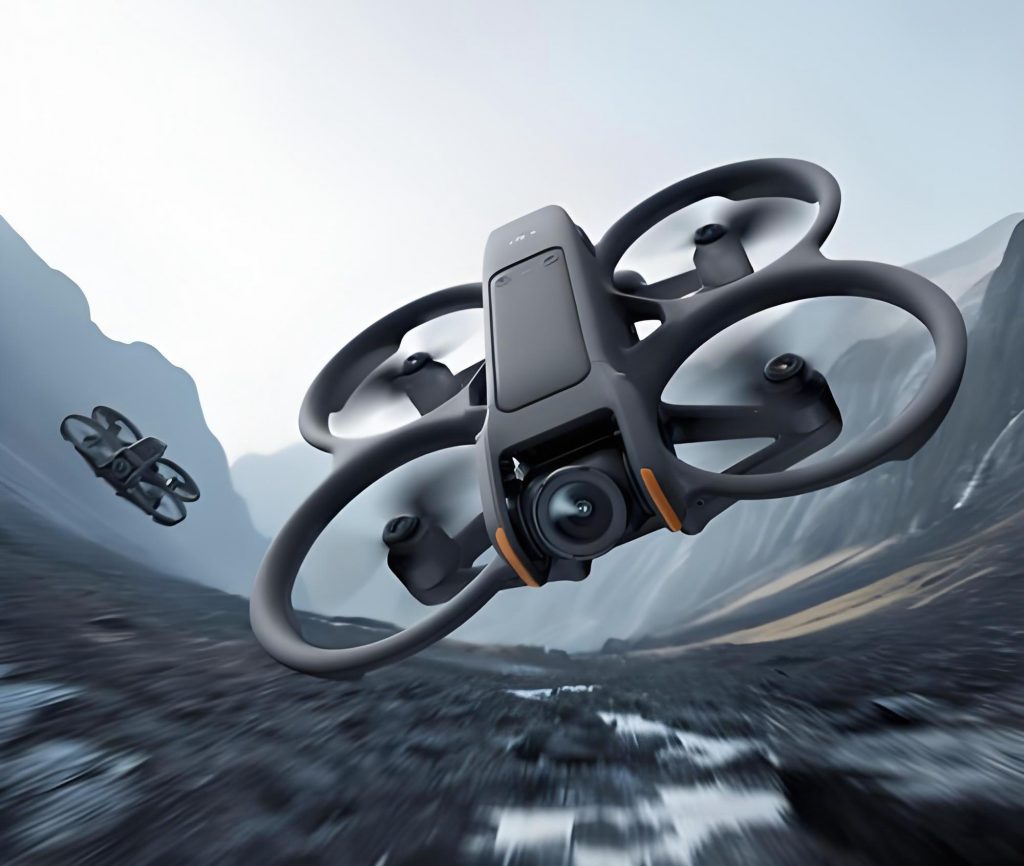
In a recent reservoir boundary demarcation project, similar to the one described, I employed the DJI Phantom 4 RTK to survey a medium-sized reservoir in a hilly region. The project aimed to define protection and management zones based on specific elevation contours, requiring outputs such as DOMs with resolutions better than 5 cm. The survey area covered the reservoir periphery, extending 50 meters beyond the crest elevation, 150 meters downstream from the dam toe, and 100 meters along the spillway. Coordinate systems adhered to national standards, including the 2000 National Geodetic Coordinate System and the 1985 National Height Datum. Hardware utilized included the DJI Phantom 4 RTK, a GNSS receiver for ground control, and high-performance computers. Software tools like LocaSpaceViewer, Agisoft PhotoScan Professional, Context Capture, and other surveying applications were used for data processing. This setup underscores the versatility of DJI drones in handling complex topographic challenges.
The operational workflow for DJI UAV-based surveying involves several methodical steps, as outlined in the flowchart. It begins with project preparation, including site reconnaissance and flight environment assessment. During reconnaissance, I assess terrain, identify takeoff and landing spots, and evaluate potential obstacles like buildings or electromagnetic interference. For example, in one project, the elevation ranged from 137m to 192m, with structures such as transmission towers posing minor risks. Weather conditions, such as wind speed and sunlight, are critical; I typically schedule flights between 10 AM and 2 PM to minimize shadows. The mathematical consideration for flight planning includes calculating the ground sampling distance (GSD) using the formula: $$ \text{GSD} = \frac{\text{focal length} \times \text{flight height}}{\text{sensor width}} $$. For a flight height of 120m, as set in this case, the GSD ensures the required resolution. Additionally, the flight parameters involve setting image overlap ratios; for DOM production, I use 80% forward overlap and 70% side overlap, which can be expressed as: $$ \text{Overlap}_{\text{along}} = 0.8 $$ and $$ \text{Overlap}_{\text{across}} = 0.7 $$. These values optimize data acquisition for subsequent processing.
Ground control points (GCPs) are pivotal for enhancing accuracy, especially in RTK-enabled DJI UAV operations. In this project, I deployed 38 GCPs using a network distribution strategy, such as the “double base point and line method,” with an average spacing of 200 meters. Each point was marked with an L-shaped target for clear identification, and measurements were taken using network RTK with a GNSS receiver. The precision requirements included multiple observations with planar discrepancies within 1 cm and elevation differences within 2 cm. The placement of GCPs follows principles like positioning them in areas with six or five overlapping images to maximize utility. To quantify the impact, the error propagation can be modeled as: $$ \sigma_{\text{total}}^2 = \sigma_{\text{GPS}}^2 + \sigma_{\text{imaging}}^2 $$, where $$ \sigma_{\text{GPS}} $$ represents GNSS errors and $$ \sigma_{\text{imaging}} $$ accounts for photogrammetric inaccuracies. This approach ensures that the DJI drone data aligns with geodetic frameworks, minimizing cumulative errors.
| Parameter | Value |
|---|---|
| Camera Model | FC6310R |
| Sensor Size | 13.2 mm × 8.8 mm |
| Image Dimensions | 5472 × 3648 pixels |
| Pixel Size | 2.41 μm |
| Focal Length | 8.8 mm |
| RTK Vertical Accuracy | 1.5 cm + 1 ppm (RMS) |
| RTK Horizontal Accuracy | 1 cm + 1 ppm (RMS) |
| Flight Time | ~20 minutes |
During the aerial survey phase, I conduct pre-flight checks on the DJI UAV, including battery status, RTK signal stability, and camera settings. The route is planned using dedicated apps, dividing the area into blocks for efficient coverage. In one instance, the survey area was split into northern and southern sections, each approximately 1.4 km², with flights conducted from suitable locations. Over 10 sorties, 2804 images were captured, demonstrating the high efficiency of DJI drones. The image data is then processed through a series of steps: first, extracting and converting coordinates using tools like LocaSpaceViewer to transform ellipsoidal heights to orthometric heights. This conversion involves the formula: $$ H_{\text{orthometric}} = H_{\text{ellipsoidal}} – N $$, where $$ N $$ is the geoid undulation. Next, software such as Agisoft PhotoScan Professional aligns the images, performs dense point cloud generation, and exports camera parameters for further analysis. The alignment accuracy is often evaluated using the root mean square (RMS) reprojection error, given by: $$ \text{RMS} = \sqrt{\frac{1}{n} \sum_{i=1}^{n} (x_i – \hat{x}_i)^2} $$, where $$ x_i $$ are observed points and $$ \hat{x}_i $$ are projected points.
For aerial triangulation and 3D modeling, I use Context Capture to process the data. This involves bundle adjustment, which integrates camera parameters, image data, and POS information to establish a spatially accurate model. The mathematical foundation lies in the collinearity equations: $$ x = -f \frac{X – X_0}{Z – Z_0} $$ and $$ y = -f \frac{Y – Y_0}{Z – Z_0} $$, where $$ (x, y) $$ are image coordinates, $$ f $$ is the focal length, and $$ (X, Y, Z) $$ are object space coordinates. The results from one project showed that the aerial triangulation achieved a high precision, with key statistics summarized in the tables below. For instance, the median number of key points per image was 16,443, and the overall RMS reprojection error was 0.55 pixels, indicating reliable matching. The positional uncertainties and residuals from checkpoints further validate the accuracy of the DJI UAV outputs.
| Metric | Value |
|---|---|
| Number of Images | 2804 |
| Ground Coverage | 6,646,500 m² |
| Average GSD | 32.326 mm/pixel |
| RMS Reprojection Error | 0.55 pixels |
| Key Points per Image (Median) | 16,443 |
| Tie Points | 811,648 |
| Direction | Min Error (m) | Avg Error (m) | Max Error (m) |
|---|---|---|---|
| X | 0.0022 | 0.0057 | 0.7242 |
| Y | 0.0023 | 0.0069 | 0.4646 |
| Z | 0.0014 | 0.0024 | 0.3800 |
The accuracy assessment involved comparing the aerial triangulation results with independent checkpoints. The residuals for planar and elevation components were computed, showing that the overall RMS errors were 0.0319 m horizontally and 0.0618 m vertically. These values comply with standards for 1:1000 scale mapping, as per relevant specifications. The error model can be expressed as: $$ \sigma_{\text{horizontal}} = \sqrt{\sigma_x^2 + \sigma_y^2} $$ and $$ \sigma_{\text{vertical}} = \sigma_z $$, where $$ \sigma_x $$, $$ \sigma_y $$, and $$ \sigma_z $$ are the standard deviations in each direction. In this project, the use of DJI drones without extensive ground control still met the required tolerances, but incorporating GCPs would further enhance precision. The final outputs included detailed DOMs and 3D models, which were validated for completeness and accuracy. For example, water bodies and terrain features were seamlessly integrated, and any gaps were corrected during model refinement.
In conclusion, the application of DJI UAVs, such as the DJI Phantom 4 RTK, in hydrographic surveying and boundary demarcation has proven to be a transformative approach. These DJI drones offer a blend of high precision, operational efficiency, and safety, significantly reducing the time and labor associated with traditional methods. In my experience, a typical project involving a DJI drone requires only one day for fieldwork and two days for data processing, compared to weeks with conventional techniques. The mathematical rigor in planning and processing, combined with the advanced capabilities of DJI UAV systems, ensures that outputs like DOMs and 3D models meet stringent accuracy requirements. Furthermore, the adaptability of DJI FPV models in dynamic environments highlights the evolving potential of this technology. As UAV technology continues to advance, the integration of more sophisticated algorithms and sensors will further elevate the role of DJI drones in geospatial projects, making them indispensable tools for modern surveying challenges.
To summarize the key points, the workflow with DJI UAVs involves meticulous planning, execution, and validation, all supported by robust mathematical models. The tables and formulas presented here illustrate the technical depth achievable with these systems. For instance, the error statistics and performance metrics underscore the reliability of DJI drones in producing survey-grade results. As I continue to explore applications in various terrains, the consistency of DJI UAV outputs reaffirms their value in achieving project objectives efficiently and accurately.