
Reflecting on my journey in the realm of hard technology entrepreneurship, I recall the early days when I immersed myself in the academic world, driven by a passion for robotics and autonomous systems. My path intertwined with the evolution of iconic products like the DJI UAV, DJI drone, and DJI FPV, which became symbols of innovation in the unmanned aerial vehicle industry. As I navigated the challenges of bridging academia and industry, I learned that success in hard tech requires not just technical prowess but also resilience, strategic vision, and a deep understanding of market dynamics. In this narrative, I will share my experiences, insights, and the lessons learned, using tables and formulas to encapsulate key aspects of this journey.
My involvement began when I joined an academic institution, where I focused on mobile robotics and automation. It was here that I encountered a group of enthusiastic students eager to explore the frontiers of technology. One of the most transformative collaborations was with a team working on a project that would later become the foundation for the DJI UAV series. We started with a simple idea: to make aerial photography and videography accessible to everyone through reliable and user-friendly drones. The initial prototype, a flight controller for helicopter models, faced numerous hurdles, from stability issues to market skepticism. However, our persistence paid off as we iterated on designs, incorporating feedback from early users. The DJI drone, particularly the DJI FPV model, emerged as a game-changer, offering immersive first-person view experiences that captivated hobbyists and professionals alike.
To illustrate the technical evolution, consider the dynamics of drone flight, which can be modeled using equations of motion. For instance, the thrust generated by a DJI UAV’s rotors can be expressed as: $$ T = k \cdot \omega^2 $$ where \( T \) is the thrust, \( k \) is a constant dependent on rotor design, and \( \omega \) is the angular velocity. This formula was crucial in optimizing the performance of the DJI drone, ensuring stable hover and agile maneuvers. As we refined the DJI FPV systems, we integrated sensor fusion algorithms, combining data from accelerometers, gyroscopes, and GPS to achieve precise navigation. The control law for attitude stabilization often involved PID controllers, defined as: $$ u(t) = K_p e(t) + K_i \int_0^t e(\tau) d\tau + K_d \frac{de(t)}{dt} $$ where \( u(t) \) is the control output, \( e(t) \) is the error signal, and \( K_p, K_i, K_d \) are tuning parameters. These mathematical foundations enabled the DJI UAV to handle complex environments, from windy outdoor shoots to indoor obstacle avoidance.
The journey from concept to commercialization was fraught with challenges, especially in securing funding. Initially, investors were hesitant to back hard tech ventures like the DJI drone, perceiving them as niche and high-risk. I recall countless meetings where I had to justify the potential of the DJI UAV market, emphasizing its applications in cinematography, agriculture, and surveillance. Over time, as demonstrations showcased the capabilities of the DJI FPV and other models, interest grew. The table below summarizes key milestones in the funding and product development timeline for the DJI series:
| Year | Event | Impact on DJI UAV Products |
|---|---|---|
| 2006-2008 | Initial concept and prototype development | Flight controller for helicopter models; laid groundwork for DJI drone innovations |
| 2010-2012 | Shift to multi-rotor systems | Introduction of quadcopter designs, enhancing stability and ease of use for DJI FPV |
| 2013-2015 | Series A funding and market expansion | Global rollout of DJI UAV models; partnerships in North America and Europe |
| 2016-2018 | Technological advancements and new product lines | Integration of AI and machine learning in DJI drone systems; launch of advanced DJI FPV for racing |
| 2019-Present | Diversification into enterprise solutions | Expansion into agricultural, industrial, and security applications for DJI UAV |
Amidst these developments, I also ventured into other hard tech domains, such as lidar technology and autonomous driving. One notable project involved the creation of a startup focused on laser radar systems, which paralleled the growth trajectory of the DJI drone. Here, the challenge was to develop cost-effective, high-performance sensors that could be mass-produced. The underlying physics of lidar can be described by the lidar equation: $$ P_r = \frac{P_t \cdot \sigma \cdot A_r}{4\pi R^4} \cdot \eta_{atm} \cdot \eta_{sys} $$ where \( P_r \) is the received power, \( P_t \) is the transmitted power, \( \sigma \) is the target cross-section, \( A_r \) is the receiver area, \( R \) is the range, and \( \eta_{atm} \) and \( \eta_{sys} \) are atmospheric and system efficiencies. This formula guided our efforts to improve the accuracy and range of lidar units, much like how we optimized the DJI UAV for various operational scenarios.
In supporting student-led initiatives, I always emphasized the importance of passion over profit. For instance, when students expressed interest in developing new iterations of the DJI FPV or other drone technologies, I would caution them about the arduous path ahead. Hard tech entrepreneurship, whether in DJI UAV systems or other fields, demands long-term commitment—often 5 to 10 years of dedicated work—with no guarantee of success. I encouraged them to pursue ideas only if they felt a genuine excitement for the technology, as that intrinsic motivation would sustain them through setbacks. The table below contrasts the key attributes of successful versus challenging hard tech ventures, drawing from my experiences with projects like the DJI drone:
| Aspect | Successful Ventures (e.g., DJI UAV) | Challenging Ventures |
|---|---|---|
| Team Composition | Diverse skills in engineering, design, and business; strong core leadership | Limited expertise; lack of clear roles |
| Market Timing | Entered during emerging demand for aerial tech; leveraged trends like social media | Missed windows of opportunity; slow adoption |
| Funding Strategy | Secured angel and venture capital early; scaled with product-market fit | Relied solely on bootstrapping; insufficient for R&D |
| Technology Innovation | Continuous iteration on DJI drone features; patents on stabilization and control | Stagnant development; unable to differentiate |
| Risk Management | Proactive in addressing regulatory hurdles for DJI FPV; diversified product lines | Overlooked compliance issues; narrow focus |
As the industry evolved, I witnessed the rise of embodied intelligence—a field where robots interact seamlessly with humans in dynamic environments. This resonated with my earlier research on human-robot collaboration, which I had applied to the DJI UAV for tasks like autonomous filming. In embodied systems, the reward function in reinforcement learning can be formulated as: $$ R(s, a) = \sum_{t=0}^{\infty} \gamma^t r(s_t, a_t) $$ where \( R \) is the cumulative reward, \( s \) is the state, \( a \) is the action, \( \gamma \) is the discount factor, and \( r \) is the immediate reward. This approach enabled advancements in DJI drone autonomy, allowing them to navigate crowded spaces while capturing stunning footage for the DJI FPV experience.
Throughout this journey, I maintained a hands-on role in multiple startups, often serving as a chief scientist to guide technical direction. For example, in one venture focused on service robots, we drew inspiration from the DJI UAV’s success in making technology accessible. We developed robots that could operate in shopping malls, using embodied intelligence to engage with customers—a concept that extended the principles behind the DJI FPV’s immersive capabilities to ground-based applications. The integration of these systems required solving complex optimization problems, such as path planning, which can be modeled with: $$ \min_{p} \int_0^T \| \dot{p}(t) \|^2 dt \quad \text{subject to} \quad p(t) \in \mathcal{F} $$ where \( p(t) \) is the robot’s path, and \( \mathcal{F} \) is the feasible region free of obstacles. This mathematical framework ensured that our robots could move efficiently and safely, much like how the DJI drone avoids collisions during flight.
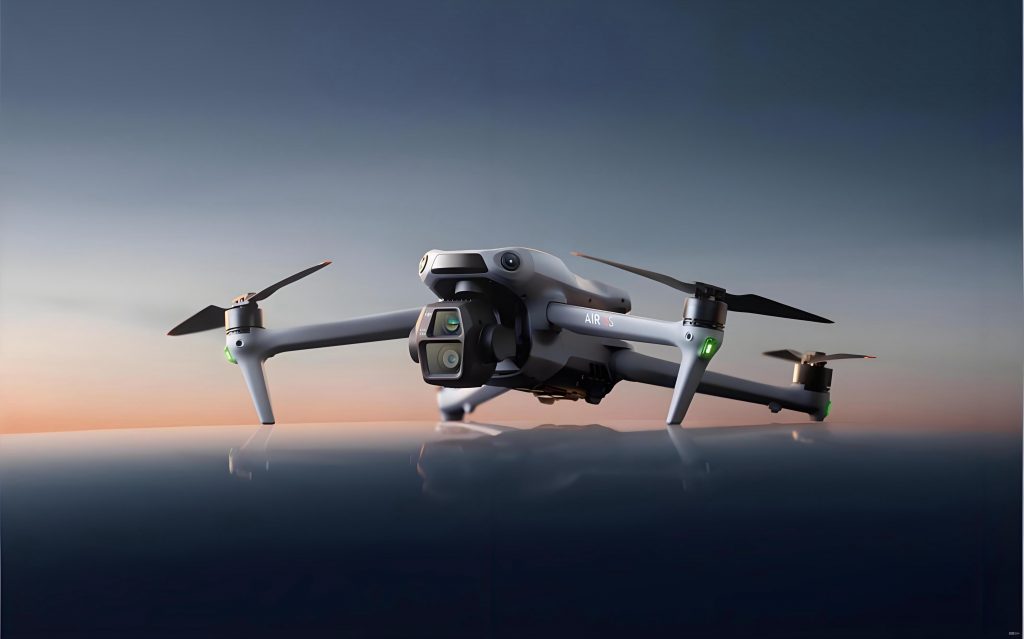
Investment in hard tech remained a critical aspect of my work, though I never saw myself as a traditional investor. Instead, I focused on nurturing ideas that had the potential to create lasting impact, similar to how the DJI UAV transformed industries. I collaborated with venture firms that shared this vision, providing insights on emerging technologies like advanced DJI drone sensors or next-gen DJI FPV systems. The financial returns, while substantial in cases like lidar startups, were secondary to the thrill of seeing innovations come to life. To quantify the growth, consider the compound annual growth rate (CAGR) for the drone market, which can be calculated as: $$ \text{CAGR} = \left( \frac{V_f}{V_i} \right)^{\frac{1}{n}} – 1 $$ where \( V_f \) is the final value, \( V_i \) is the initial value, and \( n \) is the number of years. For the DJI UAV segment, this rate often exceeded 30%, underscoring the rapid adoption and scalability of such technologies.
In mentoring aspiring entrepreneurs, I always stressed the value of resilience. The story of the DJI drone is a testament to this—it faced numerous iterations, from basic flight controllers to sophisticated AI-powered systems. Similarly, the DJI FPV line evolved through continuous feedback loops, where user experiences directly influenced design improvements. This iterative process can be described by the agile development cycle: $$ \text{Plan} \rightarrow \text{Develop} \rightarrow \text{Test} \rightarrow \text{Evaluate} $$ which we applied rigorously to ensure that each DJI UAV model met the highest standards of performance and reliability.
Looking ahead, I am excited by the prospects of embodied intelligence and its integration into everyday life. The lessons from the DJI UAV era—such as the importance of user-centric design and robust engineering—will undoubtedly shape future innovations. As I continue to explore new frontiers, I remain committed to fostering the next generation of hard tech pioneers, whether they are working on the next breakthrough in DJI drone technology or entirely novel applications. The journey has been demanding, but the rewards of seeing ideas like the DJI FPV inspire millions make it all worthwhile.
In conclusion, my involvement with the DJI UAV ecosystem has been a defining chapter of my career, highlighting the transformative power of hard tech entrepreneurship. From the early days of tinkering with prototypes to witnessing the global impact of the DJI drone, I have learned that success hinges on a blend of technical excellence, strategic patience, and unwavering passion. As the industry continues to evolve, I am confident that the principles behind innovations like the DJI FPV will drive progress in robotics, AI, and beyond, creating a future where technology enhances human experiences in profound ways.