
As an observer of the rapid evolution in unmanned aerial systems, I have witnessed the surge in first person view (FPV) drone popularity, particularly in China, where these devices have transformed from niche hobbies into widespread tools for racing, photography, and recreational use. The China FPV market has expanded dramatically, driven by the immersive experience of first person view flying, which offers users a real-time, panoramic perspective. However, this growth brings significant safety concerns, including privacy invasion, security risks, and regulatory gaps. In this article, I explore the challenges of FPV drone governance and propose a holistic countermeasure system that integrates technological innovations with legal frameworks. By emphasizing the need for a balanced approach, I aim to address the complexities of low-altitude security while fostering sustainable development in the FPV drone industry.
The rise of FPV drones, especially in China, has introduced unprecedented opportunities and threats. These drones, characterized by their high sensitivity, speed, and ease of assembly, allow users to experience first person view flight with minimal barriers to entry. Yet, the very features that make China FPV drones appealing—such as their ability to perform agile maneuvers and capture immersive footage—also render them prone to accidents and misuse. For instance, the lack of autonomous stabilization systems means that manual control errors can lead to crashes, posing risks to public safety. As I delve into this topic, I will analyze the inherent vulnerabilities of FPV drones and the pressing need for a coordinated response that combines advanced countermeasures with robust legal oversight. Through this lens, I will demonstrate how a technology-law embedded framework can reshape low-altitude governance, moving from reactive management to proactive, intelligent security systems.
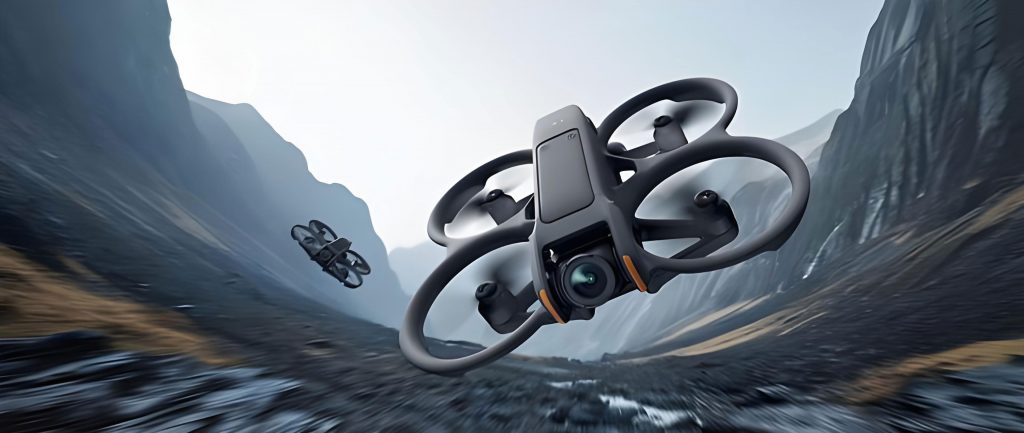
One of the most pressing issues with FPV drones is the risk to privacy, exacerbated by their first person view capabilities. These devices often come equipped with high-resolution cameras, facial recognition software, and thermal imaging, enabling intrusive surveillance that can penetrate private spaces. In the context of China FPV usage, this has led to concerns about data breaches and unauthorized monitoring, where fragmented information can be pieced together using mosaic theory to reconstruct personal data trails. For example, a FPV drone flying over residential areas might capture seemingly innocuous footage, but when aggregated, it could reveal sensitive patterns of behavior. To quantify this risk, consider the following formula for privacy invasion potential ($P_{inv}$):
$$P_{inv} = \sum_{i=1}^{n} \left( \frac{D_i \times S_i}{R_i} \right)$$
Here, $D_i$ represents data sensitivity, $S_i$ is the surveillance capability, and $R_i$ denotes regulatory controls. As $P_{inv}$ increases, so does the likelihood of harm, underscoring the need for technical safeguards like encryption and legal limits on data collection. The table below summarizes common privacy risks associated with FPV drones and examples of first person view-related incidents:
| Risk Type | Description | Example Involving FPV Drone |
|---|---|---|
| Unauthorized Surveillance | Use of cameras to monitor private areas without consent | A China FPV user films through windows in urban settings |
| Data Interception | Hacking into drone feeds to steal personal information | First person view footage is intercepted and used for blackmail |
| Thermal Imaging Intrusion | Non-physical penetration of private spaces via heat sensors | FPV drone with thermal tech maps indoor activities |
Beyond privacy, FPV drones pose significant safety risks due to technical and regulatory gaps. The rapid advancement of China FPV technology often outpaces legal frameworks, creating a “governance lag” where countermeasures struggle to keep up. For instance, the absence of standardized failure modes in FPV drones means that accidents—such as mid-air collisions or loss of control—can have cascading effects on public safety. This is compounded by the “game hunter” mentality, where remote operation reduces psychological barriers to harmful acts, increasing the potential for deliberate misuse. To model the probability of such incidents, we can use a risk assessment formula ($R_a$):
$$R_a = P_f \times C_f + P_m \times C_m$$
In this equation, $P_f$ is the probability of technical failure, $C_f$ is the consequence of failure, $P_m$ is the probability of malicious use, and $C_m$ is the consequence of malice. For FPV drones, $P_f$ might be high due to unstable assembly, while $P_m$ rises with easy access to first person view controls. The interplay between technology and law becomes critical here; without embedded legal standards, countermeasure systems may rely too heavily on technical fixes, leading to ethical dilemmas and accountability issues. As I have observed in China FPV cases, this can result in a “responsibility vacuum” where no single party—be it the manufacturer, operator, or regulator—is held accountable for incidents.
The security challenges of FPV drones are further magnified by governance difficulties. In many regions, including China, the lack of specialized laws for first person view devices leads to ambiguous enforcement and fragmented oversight. For example, FPV drone operators might bypass registration requirements by assembling kits from unregulated components, evading detection until an incident occurs. This is exacerbated by insufficient countermeasure infrastructure, such as inadequate radar detection or signal jamming capabilities, which fail to address the low-altitude threats posed by these agile drones. To illustrate the effectiveness of various countermeasures, consider the following efficiency metric ($E_c$) for a countermeasure system:
$$E_c = \frac{N_s}{N_t} \times \frac{1}{T_r}$$
Here, $N_s$ is the number of successful neutralizations, $N_t$ is the total attempts, and $T_r$ is the response time. A high $E_c$ indicates a robust system, but achieving this requires integrating multiple technologies, as shown in the table below comparing countermeasure options for FPV drones:
| Countermeasure Type | Technology Used | Effectiveness Against FPV Drone | Legal Considerations |
|---|---|---|---|
| Signal Jamming | Radio frequency interference | High for first person view control disruption | Must comply with spectrum regulations |
| Laser Destruction | Directed energy weapons | Moderate, but risks collateral damage | Subject to use-of-force laws |
| Net Capture | Physical interception | Low for high-speed China FPV models | Requires clear operational guidelines |
| AI-Based Detection | Sensor fusion and machine learning | High with multi-source data integration | Needs data privacy safeguards |
Building an integrated countermeasure system for FPV drones demands a focus on safety, precision, and adaptability. From my perspective, prioritizing risk prevention through technology-law embedding is essential. For instance, in China, establishing a “blacklist” for recurrent FPV offenders, combined with real-time monitoring using acoustic and electromagnetic sensors, can enhance proactive defense. The system should leverage multi-domain detection, as represented by the formula for detection coverage ($D_c$):
$$D_c = \int_{0}^{H} \left( \alpha \cdot S_a + \beta \cdot S_e + \gamma \cdot S_m \right) dh$$
Where $H$ is the altitude range, $S_a$ is acoustic sensor output, $S_e$ is electromagnetic signal strength, $S_m$ is optical data, and $\alpha$, $\beta$, $\gamma$ are weighting factors. This approach allows for comprehensive low-altitude surveillance, critical for mitigating first person view threats. Moreover, soft-kill methods like signal spoofing should be preferred over hard-kill options to minimize secondary risks, guided by legal principles of proportionality. For example, in sensitive areas, jamming a FPV drone’s control link might be more appropriate than destroying it, reducing potential harm to people and property.
The fusion of technology and law must be deepened to address the evolving landscape of FPV drones. In China FPV contexts, this means aligning market-driven innovations with regulatory needs, such as mandatory insurance for drone components and standardized training for operators. A key aspect is fostering multi-stakeholder collaboration, where government agencies, manufacturers, and users co-develop governance frameworks. To optimize resource allocation, we can use a cost-benefit model ($CB$) for countermeasure implementation:
$$CB = \frac{\sum (B_i \cdot W_i)}{\sum (C_j \cdot R_j)}$$
Here, $B_i$ represents benefits like reduced incidents, $W_i$ are weights for priority, $C_j$ are costs of technology deployment, and $R_j$ are risk reduction factors. By iterating this model, stakeholders can identify the most efficient strategies for first person view drone management. Additionally, continuous innovation in countermeasure technologies—such as adaptive algorithms for threat assessment—should be coupled with legal updates to ensure accountability. For instance, laws could mandate data encryption for all China FPV drones, reducing privacy risks while supporting technical advances.
In conclusion, the governance of FPV drones, particularly in the realm of first person view applications, requires a synergistic approach where technology and law are mutually reinforcing. As I have outlined, the China FPV sector exemplifies both the promises and perils of this technology, necessitating systems that are not only intelligent and efficient but also ethically grounded and legally sound. By embedding legal norms into technological designs—such as through automated compliance checks in drone firmware—we can create a resilient low-altitude security environment. This integration will enable a shift from fragmented management to holistic governance, where FPV drones can thrive safely and responsibly. The journey ahead involves relentless innovation and collaboration, but with a balanced framework, we can harness the potential of first person view flight while safeguarding public interests.