
In recent years, the use of first person view (FPV) drone technology, particularly in China FPV applications, has emerged as a captivating narrative tool for major thematic campaigns. As an enthusiast and researcher in aerial imaging, I have observed how these devices, often referred to as FPV drones or unmanned racing drones, transform visual storytelling through their unique capabilities. The core of this innovation lies in the combination of high-speed motion and the immersive first person view perspective, which together create a “visual surfing” effect—a dynamic experience that engages audiences in unprecedented ways. This article delves into the narrative characteristics of FPV drone aerial photography, drawing on examples from campaigns like those showcasing urban landmarks and historical sites in China. I will explore how high-speed imaging, the first person view, and narrative distortion contribute to this medium’s emotional impact and applicability, while incorporating tables and formulas to summarize key insights. Throughout, I emphasize the role of China FPV in pushing boundaries, and I aim to provide a comprehensive analysis that underscores the transformative potential of FPV drone technology in modern media.
The rise of FPV drone aerial photography in major thematic promotions, such as those highlighting urban development or historical milestones, can be attributed to its ability to capture attention through rapid, fluid movements. Unlike traditional drones, FPV drones operate at astonishing speeds, often exceeding 120 kilometers per hour, as seen in models like the DJI FPV. This speed, combined with the first person view from the pilot’s perspective, allows for a seamless exploration of spaces that would otherwise be inaccessible. In my analysis, I consider how this technology aligns with Marshall McLuhan’s idea that “the medium is the message,” where the FPV drone itself shapes the narrative experience. For instance, in campaigns like the “100-Second Journey Through 100 Years of Southern China,” the FPV drone’s footage not only documents locations but also evokes emotions, making it a powerful tool for storytelling. As I proceed, I will break down the elements of high-speed imaging, first person view immersion, and narrative compression, using empirical observations to illustrate their effects. Additionally, I will address the limitations and future prospects of FPV drone applications, particularly in the context of China FPV innovations.
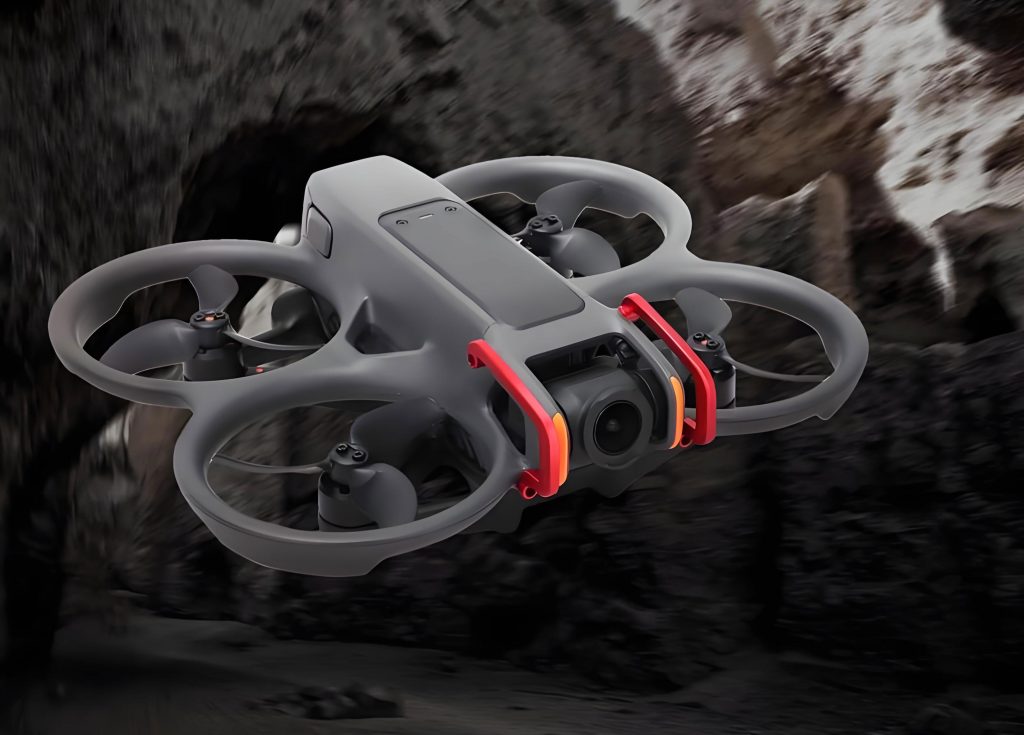
High-speed imaging is a defining feature of FPV drone aerial photography, enabling a transformation of static scenes into dynamic visual narratives. From my perspective, the rapid movement of the FPV drone allows it to “animate” stationary objects, such as historical buildings or natural landscapes, by scanning them at high velocities. This creates a sense of motion where none exists, a phenomenon known as the “illusion of movement” in visual psychology. For example, when an FPV drone flies past a towering structure like the Canton Tower in Guangzhou, it can ascend vertically and then dive downward, making the static tower appear as a moving model. This not only showcases the environment but also triggers emotional responses—awe during the ascent and thrill during the descent. The speed of the FPV drone can be quantified using basic kinematic equations. For instance, the distance covered by the drone in a given time can be expressed as:
$$s = v \cdot t$$
where \(s\) is the distance, \(v\) is the velocity of the FPV drone, and \(t\) is time. In cases where the drone accelerates, the equation extends to:
$$s = v_0 t + \frac{1}{2} a t^2$$
with \(v_0\) as initial velocity and \(a\) as acceleration. Such formulas help illustrate how the FPV drone’s high speed, often reaching up to 220 km/h in competitive settings, allows it to cover vast areas quickly, compressing spatial information into brief clips. This results in a blend of familiar and unfamiliar visual experiences, as audiences see well-known landmarks from new, high-speed angles. The emotional impact here is significant; studies in media psychology suggest that rapid visual stimuli can induce excitement and tension, making FPV drone footage ideal for themes of celebration and vitality. In the context of China FPV, this has been leveraged in campaigns to highlight urban achievements, where the high-speed scans metaphorically represent progress and energy.
| Speed Range (km/h) | Narrative Effect | Typical Use Cases |
|---|---|---|
| 120-150 | Moderate dynamism, suitable for scenic overviews | City tours, natural landscapes |
| 150-200 | High excitement, ideal for action-oriented scenes | Sports events, urban transformations |
| 200+ | Extreme intensity, used for dramatic highlights | Racing sequences, historical site flyovers |
The first person view aspect of FPV drone technology is another cornerstone of its narrative power, offering a sense of freedom and mastery over the visual space. As a practitioner, I have experienced how the first person view allows pilots to control the drone’s trajectory with precision, enabling complex camera movements like pushes, pulls, and rotations that were once difficult to achieve. This first person view perspective immerses the viewer in a virtual flight, as if they are navigating the environment themselves. In campaigns such as those exploring historical sites in Guangdong, the FPV drone often starts from a low angle and rises to a commanding height, then executes flips or dives that evoke a fighter jet-like sensation. This not only enhances engagement but also constructs montage sequences—a fundamental element of visual storytelling. For instance, a forward montage might combine wide shots, medium shots, and close-ups to guide the audience from an overall view to specific details, while a reverse montage builds suspense by starting with details and expanding to the broader context. The mathematical representation of these trajectories can be modeled using vector equations. Suppose the position of the FPV drone in 3D space is given by:
$$\vec{r}(t) = x(t)\hat{i} + y(t)\hat{j} + z(t)\hat{k}$$
where \(x(t)\), \(y(t)\), and \(z(t)\) describe the movement along different axes over time. By manipulating these functions, pilots can create smooth, flowing paths that define the narrative rhythm. The first person view thus transforms the FPV drone into a tool for spatial storytelling, where the audience feels in control of the journey. This is particularly evident in China FPV projects, where the technology has been used to navigate tight spaces, such as through narrow alleys or inside buildings, providing超现实的 perspectives that challenge conventional filming methods. The emotional resonance here is one of liberation and curiosity, aligning with the first person view’s ability to make viewers feel as if they are exploring uncharted territories.
| Montage Type | Shot Sequence | Emotional Impact | Example in China FPV |
|---|---|---|---|
| Forward Montage | Wide → Medium → Close-up | Clarity and focus | Red historical site tours |
| Reverse Montage | Close-up → Medium → Wide | Suspense and wonder | Landmark reveals in city campaigns |
Narrative distortion through temporal and spatial compression is a key characteristic of FPV drone aerial photography, which I refer to as “twisted narration.” In my observations, the high-speed nature of FPV drone footage often leads to a condensation of time and space, similar to fast-motion effects in film. This distortion means that the narrative structure does not align perfectly with real-world timelines, resulting in a summarized representation of events. For example, in a short clip, an FPV drone might traverse an entire cityscape in seconds, providing a panoramic overview rather than detailed insights. The information function here is primarily概括, as it offers a broad outline without delving into specifics. This can be expressed using information theory concepts, where the amount of information \(I\) conveyed per unit time might be approximated as:
$$I = \frac{H}{t}$$
where \(H\) represents the entropy or complexity of the visual content, and \(t\) is the time duration. For FPV drone footage, \(t\) is reduced due to high speed, leading to a higher \(I\) value per second, but with less detail. This makes FPV drone narratives suitable for short formats, such as promotional videos under 30 seconds, where the goal is to evoke quick emotional responses rather than in-depth understanding. However, this twisted narration also carries an opinion function, as it can create atmospheres of excitement and urgency. In psychological terms, the compression triggers arousal and tension, making it ideal for themes of joy and vitality, as opposed to somber topics. In China FPV applications, this has been used effectively in campaigns celebrating economic achievements or cultural festivals, where the fast-paced imagery mirrors the dynamism of progress. Yet, this approach has limitations; over-reliance on FPV drone footage alone can lead to superficial storytelling, so it is often combined with other techniques, such as static shots or historical photos, to enrich the narrative depth.
| Distortion Type | Narrative Impact | Psychological Effect | Applicability in Shorts |
|---|---|---|---|
| Temporal Compression | Summarized overview | Excitement and alertness | High, for quick impressions |
| Spatial Compression | Rapid environment scan | Moderate, requires complementation |
In conclusion, the narrative characteristics of FPV drone aerial photography, encapsulated by the concept of “visual surfing,” are fundamentally shaped by the interplay of high-speed imaging and the first person view perspective. From my analysis, it is clear that the FPV drone’s ability to transform static scenes into dynamic experiences, coupled with the immersive control offered by first person view technology, creates a unique storytelling medium that excels in evoking emotions like excitement and mastery. The distortion inherent in this approach, while limiting detailed narration, serves as a powerful tool for概括 and emotional amplification, particularly in short-format videos. As I reflect on the growth of China FPV in major thematic campaigns, I see a promising future where these technologies continue to innovate, offering fresh visual perspectives on familiar worlds. However, challenges such as high technical barriers and regulatory constraints remain, underscoring the need for skilled pilots and strategic planning. Ultimately, the FPV drone represents more than just a filming device; it is a narrative instrument that redefines how we perceive and engage with our surroundings, paving the way for new forms of expressive media in the digital age.
The integration of FPV drone technology into visual narratives highlights its potential beyond mere documentation. As I have discussed, the first person view immerses audiences in a participatory experience, while high-speed motion adds a layer of intensity that traditional methods lack. In the context of China FPV, this has enabled campaigns to capture the essence of rapid urbanization and cultural heritage in compelling ways. Looking ahead, I anticipate further advancements in FPV drone design and accessibility, which could democratize this tool for broader creative uses. By embracing these innovations, storytellers can continue to push the boundaries of imagery, transforming everyday scenes into extraordinary journeys. The journey of the FPV drone is just beginning, and its impact on narrative arts promises to be as dynamic as the flights it enables.