
In recent years, the rapid advancement of technology has profoundly transformed modern warfare, with unmanned aerial vehicles (UAVs) evolving from strategic support tools to central combat assets. Among these, first-person view (FPV) drones have emerged as a pivotal force due to their high maneuverability, low-altitude stealth, and cost-effectiveness. As an observer and analyst of military technology, I have witnessed how FPV drones are reshaping battlefield dynamics, offering real-time video transmission and precise control for missions ranging from reconnaissance to targeted strikes. This article delves into the technical characteristics, operational advantages, and typical applications of FPV drones, while addressing current challenges and outlining future trends. The integration of autonomous control, target recognition, and enhanced durability will be crucial for the next generation of FPV drone systems, particularly in the context of China FPV developments, which are increasingly influencing global military strategies.
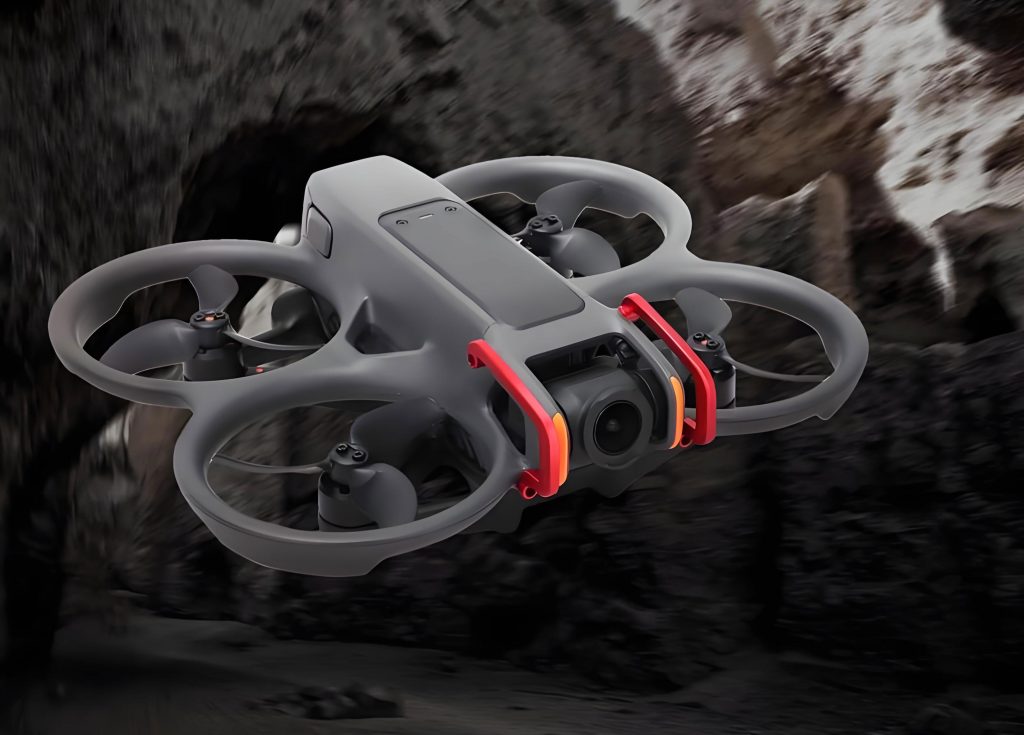
The structure of an FPV drone typically comprises several key components: the flight platform, camera and image transmission system, navigation and control system, warhead module, and ground control station. The flight platform, including the frame, motors, propellers, and battery, is designed for lightweight durability to optimize mobility and stability. Cameras with high resolution enable clear real-time video feeds, while the transmission system ensures low-latency communication. Navigation relies on sensors and GPS modules for accurate path execution, and the warhead can be customized with anti-armor or anti-personnel payloads. Ground control stations allow operators to interact via FPV goggles or terminals, facilitating real-time command adjustments. This modular design underpins the versatility of FPV drones, making them ideal for adaptive combat scenarios.
To quantify the performance of various FPV drone systems, Table 1 summarizes key parameters from notable models, highlighting their speed, endurance, and payload capacities. These metrics illustrate the trade-offs between agility and operational range, which are critical for mission planning. For instance, the Sky Knight drone achieves speeds up to 140 km/h with a 20-minute flight time, while the Swarm-2000 offers extended endurance of 40 minutes but at a lower maximum speed. Such variations emphasize the need for tailored designs based on specific tactical requirements, including those in China FPV initiatives that prioritize cost-efficiency and rapid deployment.
| Drone Model | Dimensions (mm) | Max Speed (km/h) | Endurance (min) | Range (km) | Payload (kg) |
|---|---|---|---|---|---|
| Sky Knight | Unknown | 140 | 20 | 12 | 2.5 |
| Dragon Fly | Unknown | 100 | 20 | 10 | ~2 |
| Hortensia | 300×300×150 | ~100 | 6-8 | 8 | 2 |
| Swarm-2000 | 400×400×200 | 150 | 40 | 20-40 | 2.5 |
| Spike Firefly | 80×80×400 | 70 | 15 | 0.5-1 | 3 |
| Khyzak REBOFF | ~600 (rotor diameter) | 120 | 20-30 | 5-10 | 1-2 |
The advantages of FPV drones stem from their unique design and capabilities. High maneuverability allows them to navigate complex terrains, such as urban environments or forests, with ease. Their small size and low flight altitude reduce detectability by radar and visual observation, enhancing stealth. Moreover, the first-person view control enables precise strikes, as operators can assess spatial relationships in real-time. Cost-effectiveness is another critical factor; for example, a typical FPV drone costs a fraction of traditional military UAVs, enabling mass deployment. This affordability, combined with their operational flexibility, positions FPV drones as a disruptive force in modern combat, particularly in asymmetric warfare where resources are constrained.
In terms of application modes, FPV drones excel in reconnaissance, precision strikes, electronic warfare, and cooperative operations. Reconnaissance involves real-time intelligence gathering behind enemy lines, as demonstrated in conflicts where drones identified troop movements and equipment positions. Precision strikes leverage the drone’s agility to target armored vehicles or infrastructure with high accuracy, often using RPG warheads for enhanced lethality. Electronic warfare applications include jamming enemy communications or intercepting hostile drones, while cooperative operations integrate FPV drones with other assets for synchronized attacks. Table 2 outlines common cooperative strategies, emphasizing how FPV drones complement ground forces and other UAVs to achieve tactical superiority.
| Scenario | Equipment Types | Implementation | Key Features |
|---|---|---|---|
| Reconnaissance-Strike | Recon UAV + FPV drone | Recon UAV relays intel, FPV drone executes strike, followed by damage assessment | High precision, efficient command chain |
| Swarm Attack | 5-12 FPV drones | Multiple drones饱和打击 high-value targets after recon identification | Overwhelming force, saturation tactics |
| Ground Support | FPV drone + ground units | Drones provide aerial cover and fire support during infantry advances | Enhanced troop safety, real-time intel sharing |
| Multi-UAV Coordination | FPV + recon + bomber UAVs | Coordinated roles: recon tracks targets, FPV strikes, bombers engage personnel | Flexible task allocation, adaptive to dynamic battles |
| Anti-Fortification | Multiple FPV drones | Sequential attacks: first drone breaches structures, subsequent ones deliver payloads | Effective against entrenched positions, ideal for counter-terrorism |
Despite their strengths, FPV drones face significant challenges. Limited payload and endurance restrict their operational scope, as batteries and warheads must be balanced against flight performance. In electronic warfare environments, jamming of GPS and communication signals can disrupt control, leading to mission failure. The high skill requirement for operators also poses a bottleneck, as training proficient personnel is time-consuming and costly. Additionally, counter-drone technologies, such as directed energy weapons and signal jammers, threaten their survivability. These issues highlight the need for technological innovations to enhance robustness and autonomy.
Looking ahead, the future development of FPV drones will focus on autonomy, intelligence, and resilience. Autonomous control systems can reduce reliance on human operators by incorporating path planning and decision-making algorithms. For instance, a path planning model can be expressed as minimizing the objective function: $$ J = \int_{t_0}^{t_f} \left( \| \mathbf{x}(t) – \mathbf{x}_{\text{target}} \|^2 + \lambda \| \mathbf{u}(t) \|^2 \right) dt $$ where $\mathbf{x}(t)$ is the drone’s state, $\mathbf{x}_{\text{target}}$ is the target position, and $\mathbf{u}(t)$ represents control inputs. This approach enables FPV drones to navigate dynamically while avoiding obstacles. Target recognition using AI models like YOLOv11 or CNNs will improve accuracy in cluttered environments, with detection probability modeled as: $$ P_{\text{detect}} = 1 – e^{-\alpha \cdot \text{IoU}} $$ where $\alpha$ is a sensitivity parameter and IoU (Intersection over Union) measures localization precision. Furthermore, advancements in battery technology, such as solid-state or hydrogen fuel cells, could extend endurance, while stealth coatings and anti-jamming communications (e.g., fiber-optic links) will enhance survivability.
Cluster and cooperative operations represent another frontier, where multiple FPV drones operate in a decentralized network. A distributed control law for swarm formation can be derived as: $$ \dot{\mathbf{x}}_i = \sum_{j \in \mathcal{N}_i} (\mathbf{x}_j – \mathbf{x}_i) + \mathbf{u}_{\text{leader}} $$ where $\mathbf{x}_i$ is the position of drone $i$, $\mathcal{N}_i$ is its neighbor set, and $\mathbf{u}_{\text{leader}}$ is the leader’s input. This facilitates robust coordination even in communication-denied environments. Multi-platform deployment, including air-based launches from carrier drones, will expand operational flexibility, though it requires adaptive control algorithms to manage launch dynamics. For example, a model predictive control (MPC) framework can stabilize the drone post-launch by solving: $$ \min_{\mathbf{u}} \sum_{k=0}^{N-1} \left( \| \mathbf{x}(k) – \mathbf{x}_{\text{ref}} \|^2_Q + \| \mathbf{u}(k) \|^2_R \right) $$ subject to dynamics constraints, ensuring quick recovery from disruptive forces.
In conclusion, FPV drones have cemented their role in modern warfare through their adaptability and cost-efficiency. However, overcoming limitations in endurance, electronic warfare vulnerability, and operational complexity is essential for future proliferation. By embracing autonomous technologies, intelligent targeting, and collaborative systems, the next generation of FPV drones will achieve greater integration into military ecosystems. As China FPV and global initiatives advance, these innovations will not only address current challenges but also unlock new tactical possibilities, reinforcing the transformative impact of first-person view drones on combat operations. The continuous evolution of FPV drone capabilities will undoubtedly shape the future of aerial warfare, emphasizing the importance of research and development in this dynamic field.