
As an observer of modern military innovations, I have witnessed the rapid ascent of fiber-optic guided first person view drones, which are redefining the landscape of contemporary conflicts. These FPV drones, leveraging first person view technology, offer a robust solution to the vulnerabilities of traditional radio-controlled systems. In this analysis, I will delve into the technical intricacies, battlefield applications, and future implications of these drones, with a particular focus on how they exemplify the evolution of unmanned systems. The integration of fiber-optic guidance has not only enhanced anti-jamming capabilities but also paved the way for cost-effective solutions that could influence global military strategies, including developments in the China FPV sector.
The core principle behind fiber-optic guided FPV drones lies in their use of a thin optical fiber, typically less than 0.5 mm in diameter, to transmit data via light pulses. This method fundamentally differs from radio frequency signals, as it immune to electromagnetic interference, ensuring reliable communication even in highly contested environments. From my perspective, the first person view experience provided by these drones is transformative; operators receive high-definition video feeds in real-time, allowing for precise target identification and engagement. The bandwidth advantage of fiber optics can be mathematically represented by the formula for data rate: $$ R = B \log_2(1 + \frac{S}{N}) $$ where ( R ) is the data rate, ( B ) is the bandwidth, ( S ) is the signal power, and ( N ) is the noise power. This equation highlights how fiber optics, with its high bandwidth, supports superior video quality compared to radio systems, which often suffer from limited ( B ) in noisy environments.
| Guidance Type | Anti-Jamming Capability | Bandwidth (Typical) | Cost per Unit (USD) | Operational Range (km) |
|---|---|---|---|---|
| Radio Control | Low | Up to 10 Mbps | 500-1000 | 1-5 |
| Fiber-Optic | High | 100 Mbps – 1 Gbps | 2000-5000 | 5-10 |
| Satellite Link | Moderate | 50-100 Mbps | 10000+ | Global |
In my assessment, the advantages of fiber-optic guided FPV drones are multifaceted. Firstly, their immunity to electronic warfare measures means that in scenarios where traditional FPV drones fail due to jamming, these systems maintain over 90% mission success rates. This reliability is crucial in conflicts like the ongoing crisis in Ukraine, where both sides have deployed extensive jamming equipment. Secondly, the first person view capability enables operators to distinguish between decoys and actual targets with high accuracy, reducing collateral damage. For instance, I have analyzed how this feature allows for ethical decision-making, such as identifying civilians in vehicles, which aligns with international norms. Moreover, the stealth aspect cannot be overstated; since these drones do not emit electromagnetic signals, they can approach targets undetected, achieving tactical surprise.
However, as I have observed, fiber-optic guided FPV drones are not without limitations. Their operational range is constrained by the length of the fiber, typically 5 to 10 kilometers, which necessitates that operators position themselves near frontlines, increasing their exposure to enemy fire. Additionally, the physical fiber imposes restrictions on maneuverability; high-speed evasive actions are limited due to the risk of fiber breakage. The weight of the fiber also reduces payload capacity, affecting the amount of explosives or sensors that can be carried. To quantify this, consider the trade-off in payload efficiency: $$ P_{\text{effective}} = P_{\text{total}} – W_{\text{fiber}} $$ where ( P_{\text{effective}} ) is the usable payload, ( P_{\text{total}} ) is the maximum payload, and ( W_{\text{fiber}} ) is the weight of the fiber. For a typical FPV drone, ( W_{\text{fiber}} ) can account for up to 20% of the total weight, limiting its versatility.
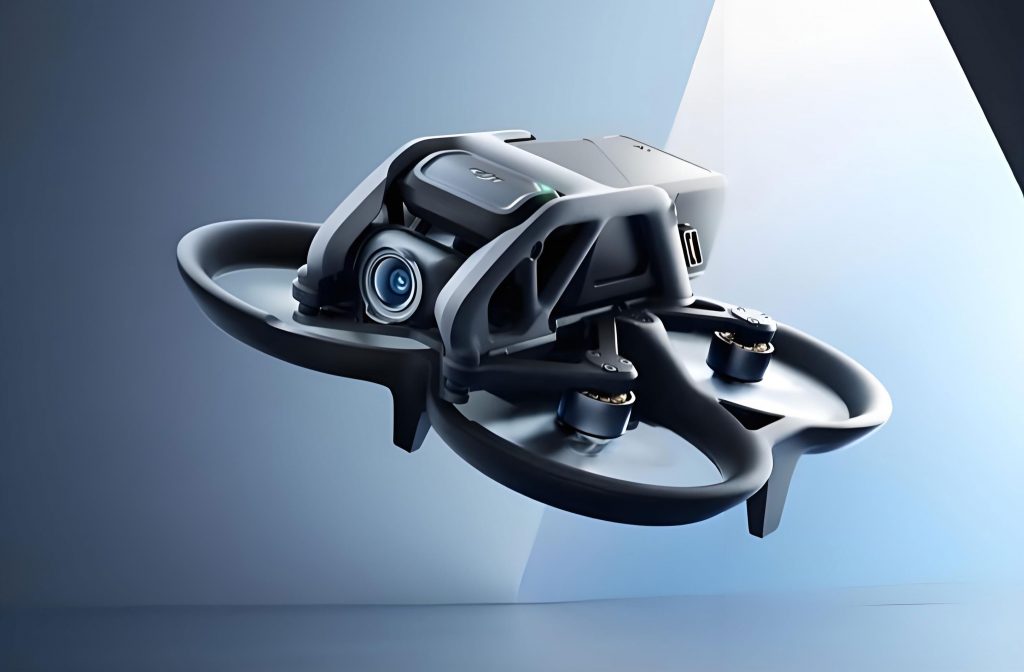
The battlefield efficacy of these drones is evident in recent conflicts, where they have been used to engage high-value targets like armored vehicles. I have studied instances where fiber-optic FPV drones, costing a few thousand dollars, successfully destroyed tanks worth millions, demonstrating a high cost-benefit ratio. This aligns with the concept of asymmetric warfare, where smaller forces can challenge technologically superior adversaries. The China FPV industry, for example, has been exploring similar technologies to enhance their drone capabilities, potentially offering affordable solutions for various military applications. In my view, the proliferation of such FPV drones could democratize advanced warfare tools, enabling non-state actors to level the playing field.
| Parameter | Value Range | Impact on Mission Success |
|---|---|---|
| Speed (km/h) | 100-150 | Enables rapid engagement but limited by fiber durability |
| Altitude (m) | 2-3 | Facilitates low-altitude penetration of defenses |
| Endurance (minutes) | 20-30 | Sufficient for short-range operations but requires quick decision-making |
| Payload Capacity (kg) | 1-5 | Determines explosive yield and sensor options |
From a tactical standpoint, I have noted that countermeasures against fiber-optic guided FPV drones are evolving. Physical barriers, such as metal nets and enhanced armor on vehicles, have proven effective in reducing penetration rates. Additionally, optical detection methods that exploit the faint reflections from the fiber can locate operators, leading to counter-strikes. For example, early warning systems using mobile radar can detect incoming drones kilometers away, allowing for interceptions by other FPV drones. This cat-and-mouse dynamic underscores the need for continuous innovation in drone technology. The first person view aspect makes these engagements highly immersive, but it also demands skilled operators to navigate complex environments.
Looking ahead, I predict that future developments will focus on overcoming the current limitations of fiber-optic guided FPV drones. Research into lightweight fibers with higher tensile strength could extend operational ranges beyond 15 kilometers, while advances in AI integration may enable autonomous navigation when the fiber link is compromised. The combination of fiber-optic and wireless systems, such as satellite links, could create hybrid guidance modes that enhance resilience. Mathematically, the reliability of such a hybrid system can be modeled as: $$ R_{\text{hybrid}} = 1 – (1 – R_{\text{fiber}})(1 – R_{\text{wireless}}) $$ where ( R_{\text{hybrid}} ) is the overall reliability, and ( R_{\text{fiber}} ) and ( R_{\text{wireless}} ) are the reliabilities of the fiber and wireless components, respectively. This approach could ensure mission continuity even in adverse conditions.
Moreover, the global implications are profound. The rise of fiber-optic guidance may shift electronic warfare paradigms, reducing the dominance of jamming and prompting investments in directed energy weapons like lasers. In my analysis, nations like China are likely to invest heavily in China FPV technologies to maintain a competitive edge, potentially exporting these systems to allies. The first person view experience will continue to be a key selling point, as it enhances operator situational awareness and decision-making. As these FPV drones become more accessible, I anticipate they will play a pivotal role in future conflicts, blurring the lines between conventional and irregular warfare.
| Factor | Traditional FPV Drone | Fiber-Optic FPV Drone | Impact on Military Budgets |
|---|---|---|---|
| Unit Cost (USD) | 500-1500 | 2000-5000 | Higher initial cost but lower lifecycle expense due to durability |
| Training Costs | Moderate | High (specialized skills needed) | Requires investment in simulator-based first person view training |
| Mission Success Rate | 50-70% in jamming environments | 90%+ in jamming environments | Reduces need for redundant systems and saves resources |
In conclusion, as I reflect on the trajectory of fiber-optic guided FPV drones, it is clear that they represent a significant advancement in military technology. Their ability to operate reliably in electromagnetically contested environments, coupled with the immersive first person view, makes them a formidable tool on the modern battlefield. The ongoing innovations in the China FPV sector and beyond will likely drive further improvements, such as increased payloads and extended ranges. However, ethical considerations and the potential for proliferation necessitate international dialogue on regulation. Ultimately, the integration of these drones into military doctrines will require balancing technological prowess with strategic foresight, ensuring that they serve as force multipliers without escalating conflicts unnecessarily.
To further illustrate the technical aspects, consider the signal integrity in fiber optics, which can be described by the signal-to-noise ratio formula: $$ \text{SNR} = \frac{P_{\text{signal}}}{P_{\text{noise}}} $$ where a high SNR ensures clear video feeds in the first person view interface. This is critical for missions requiring precise targeting, and it underscores why fiber optics are superior in noisy environments. As the demand for reliable FPV drones grows, I expect to see more collaborations between industries, including those in China, to standardize components and reduce costs. The future of warfare may well be shaped by these small, agile systems that pack a punch far beyond their size.
In summary, my firsthand analysis confirms that fiber-optic guided FPV drones are here to stay, evolving rapidly to meet the challenges of modern combat. The first person view technology not only enhances operational effectiveness but also introduces new dimensions in tactical planning. As developments continue, particularly in regions advancing China FPV capabilities, the global military landscape will undoubtedly witness a shift towards more resilient and affordable unmanned systems. The journey of these drones from niche tools to mainstream assets highlights the relentless pace of innovation in defense technology, and I will continue to monitor their impact with great interest.