
In modern warfare, the emergence of first person view (FPV) drones has introduced significant challenges to the survival of armored vehicles. These small, multi-rotor unmanned aerial systems, operated through a first person view perspective, have demonstrated remarkable effectiveness in recent conflicts. The FPV drone, with its compact size and high maneuverability, can easily penetrate the defensive perimeters of armored units. They enable rapid and efficient battlefield situational awareness, enhancing strike accuracy and lethality, thereby posing a substantial threat to the operational efficacy and personnel safety of armored vehicles. Studying countermeasures against FPV drones is crucial for securing low-altitude air superiority, improving the survivability of armored platforms, ensuring the continuity of military operations, and influencing overall combat deployment and strategic decisions. The term “China FPV” often refers to advancements in FPV drone technology originating from China, highlighting the global proliferation of these systems. This research focuses on integrated approaches to mitigate the risks posed by FPV drones, emphasizing the need for a holistic defense strategy.
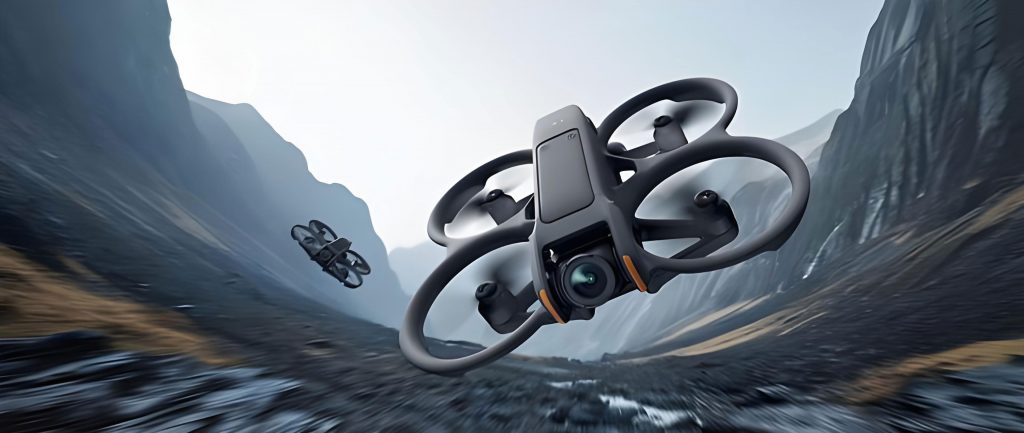
The vulnerability of armored vehicles to FPV drone attacks stems from several factors. First, the small size and agile flight capabilities of FPV drones make them difficult to detect with conventional sensors. They can operate at low altitudes, exploiting terrain and structures for cover, and reach speeds up to 130 km/h within a 5-10 km range. This limits the visibility of armored vehicle crews and onboard detection systems, reducing early warning times. Second, FPV drones can be deployed rapidly from multiple directions and altitudes, often in swarms, overwhelming defensive systems and making it challenging for armored vehicles to evade attacks. Third, the top-mounted equipment of armored vehicles, such as observation devices and communication antennas, is highly susceptible to “top-attack” maneuvers by FPV drones, which can disable critical functions through precise strikes. Fourth, traditional weapon systems on armored vehicles are designed for larger aerial or ground threats, lacking effective means to intercept low-altitude, slow-moving FPV drones. The first person view operation allows for real-time control and navigation, enabling these drones to fly close to armored surfaces and avoid counterfire. The proliferation of China FPV drones in conflicts underscores the urgency of developing robust countermeasures.
To quantify the detection challenges, consider the probability of detecting an FPV drone using radar or electro-optical sensors. The detection probability \( P_d \) can be modeled as a function of range and drone characteristics. For instance, using a radar equation approximation: $$ P_d = 1 – e^{-\frac{RCS \cdot G_t G_r \lambda^2}{(4\pi)^3 R^4 k T_s B F L}} $$ where \( RCS \) is the radar cross-section of the FPV drone (typically small, around 0.01 m² for a first person view drone), \( G_t \) and \( G_r \) are the transmit and receive gains, \( \lambda \) is the wavelength, \( R \) is the range, \( k \) is Boltzmann’s constant, \( T_s \) is the system noise temperature, \( B \) is the bandwidth, \( F \) is the noise figure, and \( L \) represents losses. This formula highlights the difficulty in detecting small FPV drones at longer ranges due to their low RCS.
| Vulnerability Aspect | Description | Impact on Armored Vehicles |
|---|---|---|
| Detection Challenges | Small size, low altitude, high speed, and terrain masking reduce early warning. | Limited reaction time; increased risk of surprise attacks. |
| Attack Evasion Difficulty | Multi-directional, swarm attacks from FPV drones overwhelm defenses. | High probability of successful strikes; system saturation. |
| Top Equipment Susceptibility | First person view allows precise top-attacks on exposed components. | Loss of critical functions (e.g., targeting, communications). |
| Limited Countermeasures | Traditional weapons ineffective against low-altitude, agile FPV drones. | Reduced defensive capability; reliance on external systems. |
Individual armored vehicles can adopt several countermeasures to enhance their defense against FPV drones. Hardware enhancements include adding grid armor or reactive armor to the vehicle’s top and sides to disrupt drone attacks. For example, cage armor can detonate FPV drones or their payloads before they reach the main hull, reducing the impact of shaped charges. However, this must be balanced with operational requirements, such as hatch accessibility and weapon functionality. Optimizing external mounts involves integrating auxiliary devices internally to minimize exposed surfaces and adding weapon hardpoints for small missiles or automatic grenade launchers. The German “Puma” infantry fighting vehicle, for instance, employs a 5.56mm coaxial machine gun with a high rate of fire to engage low-flying FPV drones. Improving warning capabilities entails deploying advanced sensors, such as small phased-array radars optimized for low-altitude, slow-moving targets, electro-optical systems including thermal imagers and visible-light cameras for 24/7 monitoring, and acoustic sensors that detect drone sounds for close-range alerts. The E-MBT, a European main battle tank, uses the Pilar-V acoustic sensor for passive detection. Enhancing strike power involves installing active protection systems (APS) that detect and intercept incoming threats. Systems like Israel’s “Trophy” or Russia’s “Arena” can be adapted for FPV drones, though their small size and erratic flight paths require adjustments. China’s GL-6 APS uses radar and electro-optical tracking to destroy incoming munitions at a safe distance.
The effectiveness of these individual measures can be analyzed using cost-benefit models. For instance, the survival probability \( S \) of an armored vehicle with added protection can be expressed as: $$ S = 1 – \prod_{i=1}^{n} (1 – P_{d,i} \cdot P_{k,i}) $$ where \( P_{d,i} \) is the probability of detecting the i-th FPV drone threat, and \( P_{k,i} \) is the probability of killing it with countermeasures. This equation underscores the need for layered defense, as multiple FPV drones in a swarm can overwhelm single-point protections.
| Countermeasure Type | Examples | Advantages | Limitations |
|---|---|---|---|
| Hardware Protection | Grid armor, reactive armor | Simple implementation; reduces damage from direct hits. | Adds weight; may impede mobility and access. |
| External Mount Optimization | Internalized sensors, added weapon points | Enhances survivability and firepower versatility. | Requires redesign; potential for increased complexity. |
| Warning Systems | Radar, electro-optical, acoustic sensors | Early detection; all-weather capability. | High cost; maintenance intensive; false alarms possible. |
| Strike Enhancements | Active protection systems (APS) | High interception probability; adaptable to various threats. | Expensive; may not scale for mass deployment. |
While individual measures provide some protection, a system-of-systems approach is more effective for countering FPV drones. This involves establishing a multi-dimensional electronic surveillance network, a layered firepower air defense system, and an electromagnetic denial framework. The electronic surveillance network employs multi-band radio spectrum monitoring to identify FPV drone signals in common frequencies like 2.4 GHz and 5.8 GHz, combined with radar, electro-optical, and acoustic systems for comprehensive detection. High-altitude assets such as satellites, reconnaissance aircraft, and drones provide wide-area reconnaissance, while real-time intelligence sharing through data links (e.g., Link 16) enables coordinated alerts among armored units. For example, French V8BCI infantry fighting vehicles use advanced electro-optical systems for long-range threat identification. The layered firepower air defense integrates long-range missile systems for intercepting drone swarms at a distance, medium to short-range missiles and anti-aircraft guns for mid-range defense, and terminal systems like laser weapons or man-portable air-defense systems for close-in engagements. Tactical coordination with infantry and friendly drone units enhances this defense; infantry can use portable weapons to engage low-flying FPV drones, while friendly drones patrol and counter hostile ones. The electromagnetic denial system uses jamming to disrupt FPV drone communications and navigation. Communication jamming emits signals in the same frequency bands as the drone’s control and video links, causing loss of control or forced landing. Navigation jamming targets GPS signals to disorient the drone, and deception jamming sends false commands to misdirect it. Systems like Russia’s “Krasukha” exemplify this approach, providing broad-spectrum interference to protect armored formations.
The jamming effectiveness can be modeled using signal-to-interference ratio (SIR) calculations. For a given FPV drone communication link, the SIR at the receiver is: $$ SIR = \frac{P_t G_t G_r \lambda^2}{(4\pi R)^2 L} \cdot \frac{1}{J} $$ where \( P_t \) is the transmit power of the drone, \( G_t \) and \( G_r \) are gains, \( \lambda \) is wavelength, \( R \) is range, \( L \) is loss, and \( J \) is the jamming power. If SIR falls below a threshold, the link fails, disrupting the first person view control. This principle is critical in countering China FPV drones, which often rely on stable communication for precision attacks.
| System Component | Key Elements | Role in FPV Drone Defense | Integration Benefits |
|---|---|---|---|
| Electronic Surveillance | Spectrum monitoring, radar, electro-optical, acoustic sensors, data links | Early detection and tracking of FPV drones; real-time intelligence sharing. | Comprehensive situational awareness; reduced surprise attacks. |
| Layered Air Defense | Long-range missiles, medium-range systems, terminal defenses, infantry support | Multi-echelon interception of FPV drones from far to close ranges. | Increased kill probability; resilience to swarms. |
| Electromagnetic Denial | Communication jamming, GPS jamming, deception techniques | Disruption of control and navigation for FPV drones; forced neutralization. | Non-kinetic option; scalable for area denial. |
In practice, the integration of these systems can be optimized using network-centric warfare models. The overall defense effectiveness \( E \) against an FPV drone threat can be represented as: $$ E = \alpha \cdot E_{detect} + \beta \cdot E_{intercept} + \gamma \cdot E_{jam} $$ where \( E_{detect} \), \( E_{intercept} \), and \( E_{jam} \) are the effectiveness scores for detection, interception, and jamming subsystems, respectively, and \( \alpha \), \( \beta \), \( \gamma \) are weighting factors based on threat priority. This formula emphasizes that a balanced approach, combining early warning, mid-course interception, and terminal jamming, is essential for countering the agile nature of FPV drones. The first person view capability of these drones allows operators to make real-time adjustments, so disrupting their command links through jamming is often more efficient than kinetic interception. Moreover, the proliferation of China FPV drones in global conflicts highlights the need for cost-effective solutions, as individual armor upgrades may be insufficient against massed attacks.
Furthermore, the operational deployment of these countermeasures must consider environmental factors. For instance, in urban terrain, the detection range for FPV drones may be reduced due to obstructions, requiring denser sensor networks. The probability of successful jamming \( P_j \) in such scenarios can be estimated as: $$ P_j = \frac{1}{1 + e^{-k \cdot (J/S – \theta)}} $$ where \( J/S \) is the jamming-to-signal ratio, \( k \) is a constant related to drone resilience, and \( \theta \) is a threshold value. This logistic function shows that as jamming power increases relative to the drone’s signal, the likelihood of successful disruption rises, making it a viable tactic against first person view drones attempting to navigate complex environments.
In conclusion, defending armored vehicles against FPV drones requires a multifaceted strategy that blends individual vehicle enhancements with system-wide cooperation. The first person view technology embodied in FPV drones, including advanced China FPV models, presents a dynamic threat that cannot be countered by isolated measures alone. Instead, a coordinated framework involving electronic surveillance, layered firepower, and electromagnetic denial offers a robust solution. By leveraging formulas for detection and jamming, and implementing tables to compare options, military planners can optimize resources and improve survivability. Ultimately, the goal is to achieve a synergistic defense where point protections (single vehicles), linear coordination (tactical units), and area networks (system integration) work in concert to neutralize the FPV drone menace, ensuring armored forces remain effective in modern battlespaces.