
As a practitioner in the field of aerial cinematography, I have witnessed the rapid evolution of first person view (FPV) drone technology and its integration into various media productions. In China, the adoption of FPV drones has grown significantly, offering unique perspectives that traditional methods cannot achieve. This article delves into my experiences with China FPV applications, exploring the scenarios where FPV drone footage excels, its inherent advantages and disadvantages, and key considerations for safe and effective use. Throughout, I will emphasize the transformative impact of first person view cinematography, supported by analytical frameworks including tables and mathematical models to quantify its effects.
FPV drone cinematography involves piloting a small, agile drone equipped with a camera, providing a real-time video feed to the operator through goggles or a screen, simulating a first person view flight experience. This technique has gained traction in China FPV communities due to its ability to capture dynamic, high-speed sequences that immerse viewers in the action. For instance, in cinematic productions, FPV drones have been used to film everything from urban landscapes to extreme sports, leveraging their maneuverability to create shots that feel like visual surfing—a term that aptly describes the exhilarating, wave-like motion through space. The core of this approach lies in the drone’s design: typically, a lightweight frame with powerful motors, capable of reaching speeds exceeding 200 km/h, and a camera system that can include action cams or specialized cinema rigs. The mathematical representation of motion in FPV shots often involves velocity and acceleration vectors; for example, the instantaneous speed \( v \) of an FPV drone can be modeled as \( v = \frac{ds}{dt} \), where \( s \) is the displacement and \( t \) is time, highlighting the rapid changes that define first person view footage.
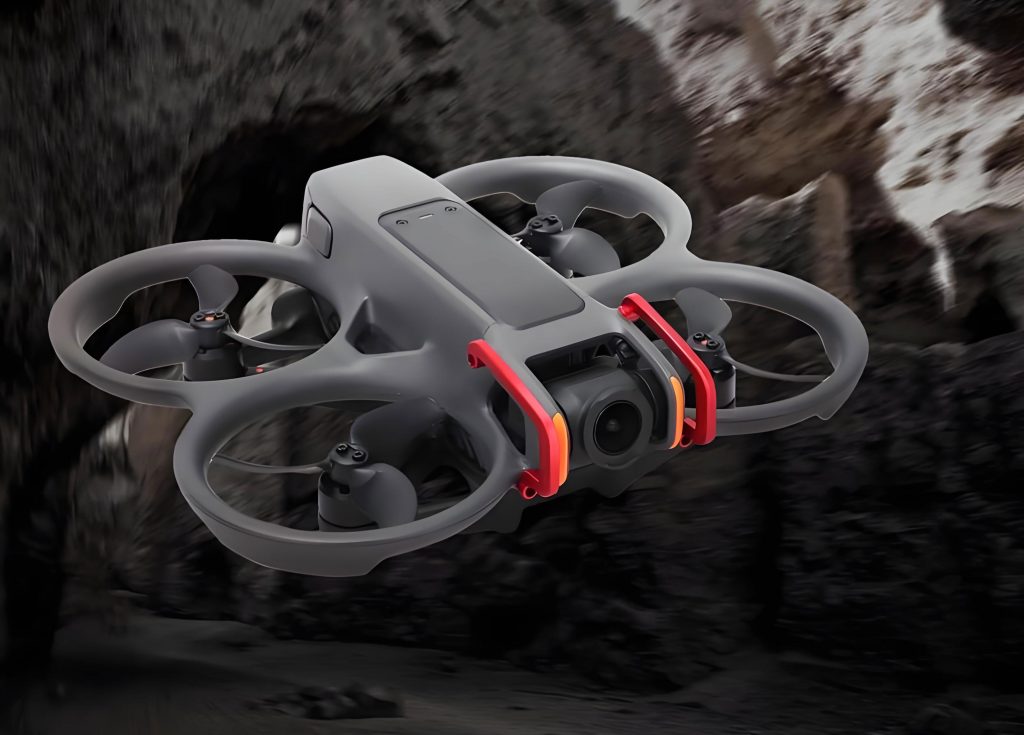
In my work, I have identified several key application scenarios where FPV drone cinematography shines, particularly in China FPV projects. These scenarios leverage the drone’s speed and agility to produce compelling visual narratives. Below is a table summarizing the primary applications, along with the typical camera movements and associated challenges. This table is based on my observations and data from multiple productions, illustrating how first person view technology adapts to different environments.
| Scenario | Description | Typical Camera Movements | Key Challenges |
|---|---|---|---|
| High-Speed Chases (e.g., car races) | FPV drones track fast-moving subjects, maintaining close proximity for immersive shots. | Tracking, diving, and rapid turns | Maintaining focus and avoiding collisions at high velocities |
| Indoor Spaces (e.g., theaters, museums) | Slow, precise maneuvers through confined areas, often in a single continuous take. | Orbiting, weaving, and passing through narrow openings | Limited space requiring exact control and lighting consistency |
| Amusement Parks and Outdoor Attractions | Combining high-speed action with scenic views, such as following roller coasters. | Swirling, ascending, and descending arcs | Coordinating with moving rides and managing public safety |
| Skyscrapers and Tall Structures | Emphasizing verticality with dramatic drops and climbs, known as “jump” shots. | Plummeting, spiraling, and inverted flights | High risk of accidents and regulatory compliance |
| Sports and Performances (e.g., gymnastics, dance) | Capturing fluid motions with close-up, dynamic angles that enhance the artistry. | Sweeping, circling, and synchronized moves with performers | Timing the drone’s path to match human movements |
The advantages of using an FPV drone in these scenarios are profound, primarily stemming from its unparalleled mobility and the immersive quality of first person view footage. In China FPV productions, I have observed that the speed and agility allow for shots that compress time and space, delivering a high-impact visual experience. For example, the kinetic energy \( KE \) of an FPV drone in motion can be expressed as \( KE = \frac{1}{2}mv^2 \), where \( m \) is the mass and \( v \) is the velocity; this relates to the intense energy conveyed in scenes where the drone accelerates rapidly, such as in chase sequences. Additionally, the information density in FPV shots is remarkably high—viewers are bombarded with rapidly changing visual data, which can be quantified using an information theory approach. If we consider the frame rate \( f \) and the spatial resolution \( R \), the total information per second \( I \) can be approximated as \( I = f \times R \times \log_2(L) \), where \( L \) is the number of luminance levels, highlighting how FPV drone footage maximizes data transfer to create excitement.
However, these advantages come with significant drawbacks that must be carefully managed. One major issue is the lack of stability in FPV drone footage, which can lead to motion blur and loss of detail. The motion blur \( B \) can be modeled as \( B = \frac{v \cdot t_e}{d} \), where \( v \) is the relative velocity, \( t_e \) is the exposure time, and \( d \) is the distance to the subject. In practice, this means that high-speed FPV shots often sacrifice clarity for dynamism, making them unsuitable for scenes requiring fine detail. Moreover, the first person view perspective can induce dizziness in viewers due to its unbalanced visual flow, which I have encountered in live broadcasts where rapid maneuvers caused discomfort. The table below contrasts the key advantages and disadvantages of FPV drone cinematography, drawing from my experiences in China FPV projects and broader industry insights.
| Aspect | Advantages | Disadvantages |
|---|---|---|
| Visual Impact | High-speed sequences create intense immersion and excitement; first person view offers unique angles. | Can cause viewer dizziness; excessive visual information may overwhelm. |
| Flexibility | Maneuverable in tight spaces; capable of complex shots like continuous takes. | Difficult to achieve stable hover; limited in low-light conditions due to small sensors. |
| Efficiency | Rapid coverage of large areas; reduces need for multiple camera setups. | Short battery life (3-5 minutes per flight); requires frequent interruptions. |
| Safety and Regulation | Allows for remote operation in hazardous environments. | High risk of crashes (“flyaways”); strict regulations in urban areas. |
| Narrative Suitability | Ideal for action-packed, joyful, or energetic scenes. | Unsuitable for solemn or detailed-focused contexts; may appear contrived in news. |
From a technical standpoint, the performance of an FPV drone can be analyzed using control theory. For instance, the drone’s response to pilot inputs can be modeled with a transfer function, such as \( G(s) = \frac{\theta(s)}{U(s)} \), where \( \theta \) represents the attitude angle and \( U \) is the control input. This highlights the precision required in operating an FPV drone, especially in scenarios like indoor navigation where minor errors can lead to collisions. In China FPV applications, I have often used simulations to pre-visualize flights, employing equations of motion like \( \ddot{x} = \frac{F}{m} – k\dot{x} \), where \( F \) is the thrust force, \( m \) is mass, and \( k \) is a drag coefficient, to optimize flight paths and minimize risks.
Safety is paramount in FPV drone operations, as the high-speed, close-proximity flights inherent to first person view cinematography pose significant hazards. In my projects, I always prioritize risk assessment, which includes calculating the probability of failure \( P_f \) based on factors like component reliability and environmental conditions. For example, if a motor has a failure rate \( \lambda \), the probability of at least one failure in a flight of duration \( T \) can be estimated as \( P_f = 1 – e^{-\lambda T} \). This mathematical approach helps in deciding when to use backup systems or avoid certain maneuvers. Additionally, regulatory compliance in China FPV activities involves adhering to no-fly zones and obtaining necessary permits, which I manage through pre-flight checklists and insurance coverage. The dynamic nature of FPV drones means that even with advanced gear, unexpected issues can arise; thus, I recommend collaborative efforts with professional pilots and continuous training to mitigate accidents.
Another critical consideration is the environmental impact on FPV drone performance. Light conditions play a crucial role, as the small sensors in typical FPV cameras struggle in low-light scenarios. The signal-to-noise ratio \( SNR \) can be expressed as \( SNR = \frac{S}{\sqrt{N}} \), where \( S \) is the signal strength and \( N \) is the noise, indicating how poor lighting degrades image quality. In China FPV shoots, I often schedule sessions during golden hour to maximize natural light, or use post-processing techniques to enhance footage. Furthermore, the choice of lens and settings affects the outcome; for wide-angle shots common in FPV drone work, the distortion can be modeled with a radial distortion coefficient \( k \), where the corrected coordinate \( r_c = r(1 + kr^2) \), with \( r \) being the radial distance from the image center. This technical detail underscores the need for careful planning to achieve the desired visual effect without compromising safety or narrative integrity.
In conclusion, FPV drone cinematography, particularly in the context of China FPV developments, offers a powerful tool for creating immersive and dynamic visual stories. The first person view perspective enables filmmakers to explore spaces in innovative ways, from high-speed chases to serene indoor sequences. However, the technology demands a balanced approach, weighing its advantages against limitations like stability issues and safety concerns. Through mathematical modeling and practical experience, I have learned that successful FPV drone integration requires meticulous planning, adherence to regulations, and a deep understanding of both the equipment and the storytelling goals. As the industry evolves, I believe that FPV drones will continue to push the boundaries of cinematography, provided we embrace their potential while respecting their constraints. The future of first person view filmmaking lies in harnessing this excitement responsibly, ensuring that every flight contributes to a compelling narrative without compromising on quality or safety.