
As a media team deeply involved in visual journalism, we have witnessed a transformative shift in how stories are told through emerging technologies. Our exploration into first person view (FPV) drone systems, particularly in the context of China FPV applications, has opened new frontiers in immersive reporting. This article delves into our experiences with FPV drone technology, highlighting its impact on visual narratives, and examines the balance between technological innovation and content integrity. Through detailed analyses, including tables and mathematical models, we aim to shed light on the capabilities and challenges of FPV drones in modern media.
The adoption of FPV drone technology in our projects, such as a recent series of short videos, has allowed us to push the boundaries of visual storytelling. Unlike traditional drones, FPV drones offer a first person view perspective that immerses viewers in high-speed, dynamic environments. This China FPV initiative represents a significant leap in visual communication, enabling us to capture scenes with unprecedented agility and intensity. For instance, the speed of an FPV drone can be modeled using the equation for velocity: $$ v = \frac{\Delta d}{\Delta t} $$ where \( v \) is the velocity in km/h, \( \Delta d \) is the distance covered, and \( \Delta t \) is the time interval. In practice, FPV drones can achieve speeds ranging from 120 to 260 km/h, making them ideal for capturing rapid movements and complex trajectories that traditional drones cannot match.
To better understand the technical aspects, we have compiled a comparison between traditional drones and FPV drones, focusing on key parameters that influence visual output. This table summarizes the differences:
| Feature | Traditional Drone | FPV Drone |
|---|---|---|
| Control Mechanism | Autonomous with sensors | Manual with first person view |
| Maximum Speed (km/h) | 50-80 | 120-260 |
| Battery Life (minutes) | 20-30 | 3-5 |
| Stability | High due to gimbals | Low, reliant on pilot skill |
| Visual Freedom | Limited to standard shots | High, with rolls and flips |
This table illustrates why FPV drones, despite their shorter battery life, provide a superior tool for creative visual expression. The first person view aspect allows pilots to navigate through tight spaces and execute maneuvers that enhance the sense of presence. In our work, we utilized multiple FPV drone models, each tailored to specific environments. For example, larger 5-inch drones were employed for outdoor landscapes, while smaller 1.6-inch units handled indoor settings. This flexibility is crucial for projects requiring diverse perspectives, and it underscores the importance of China FPV advancements in expanding visual capabilities.
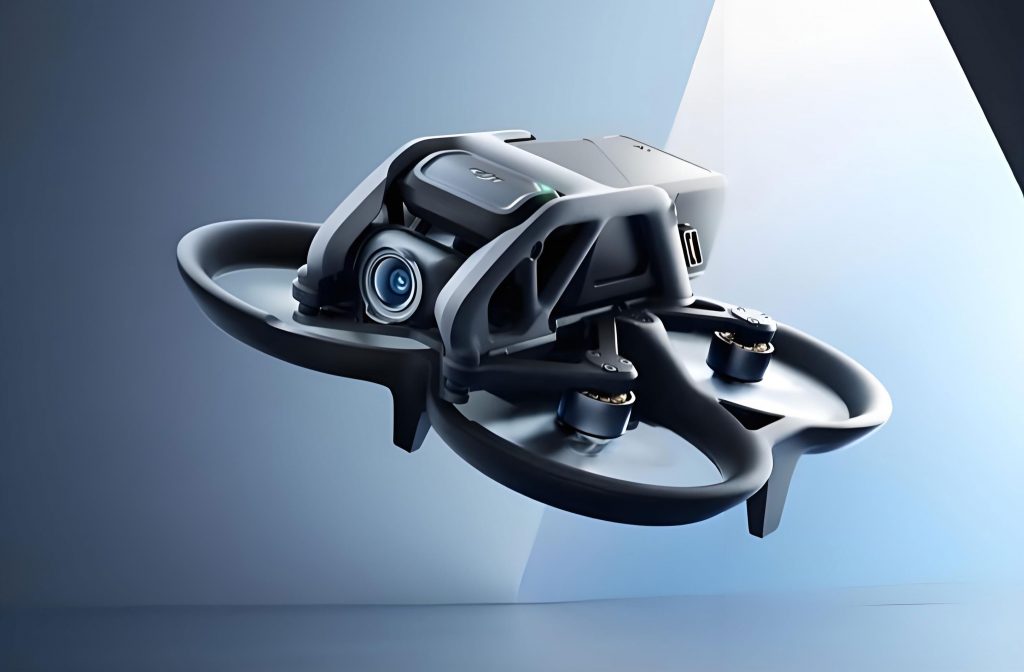
In one of our major projects, we leveraged FPV drone technology to create a series that traversed historical and modern landscapes, emphasizing the first person view to foster a connection with audiences. The concept of “visual freedom” became central to our approach, as FPV drones enabled continuous, unbroken shots that traditional methods could not achieve. We often describe the visual impact using a formula for immersive intensity: $$ I = k \cdot s \cdot \theta $$ where \( I \) represents the immersive intensity, \( k \) is a constant based on content relevance, \( s \) is the speed of the FPV drone, and \( \theta \) is the angular variation in movement. This equation helps quantify how first person view dynamics contribute to viewer engagement, with higher values indicating greater visual appeal.
Another critical aspect of our FPV drone applications is the ability to navigate complex spatial and temporal narratives. By integrating the first person view into storytelling, we could guide audiences through historical sites and natural wonders in a seamless flow. For instance, in a segment focused on coastal areas, the FPV drone flew from cliffs over beaches into museum interiors, creating a cohesive visual journey. This approach not only highlights the technical prowess of China FPV systems but also addresses the growing visual欲望 of modern viewers, who seek more engaging and interactive content. To manage this, we developed shooting plans that accounted for battery constraints, often requiring multiple takes to perfect each scene. The following table outlines the typical workflow for an FPV drone shoot:
| Stage | Activity | Duration (minutes) |
|---|---|---|
| Pre-production | Route planning and risk assessment | 60-120 |
| Production | FPV drone flight with first person view | 3-5 per battery |
| Post-production | Editing for seamless transitions | 30-60 per minute of footage |
This structured approach ensures that we maximize the limited operational time of FPV drones while delivering high-quality visuals. The first person view element is particularly demanding, as it requires pilots to maintain control in real-time, often in unpredictable environments. In our experience, the learning curve for FPV drone operation is steep, but the rewards in terms of visual storytelling are immense. We have found that audiences respond positively to the raw, unfiltered perspectives offered by first person view technology, which contrasts with the polished but often sterile outputs of traditional drones.
However, the integration of FPV drone technology is not without challenges. The emphasis on first person view can sometimes overshadow narrative depth, leading to a focus on spectacle over substance. In our projects, we strive to balance innovation with content integrity, ensuring that the visual elements serve the story rather than dominate it. For example, we use mathematical models to evaluate the visual-to-content ratio: $$ R_{vc} = \frac{V_i}{C_d} $$ where \( R_{vc} \) is the ratio, \( V_i \) is the visual intensity derived from FPV drone footage, and \( C_d \) is the content depth measured by historical or educational value. A balanced ratio, typically around 1, indicates that the first person view enhancements complement rather than overwhelm the narrative.
Moreover, the rise of China FPV initiatives has spurred discussions on the ethical implications of immersive media. As we push the boundaries of visual欲望 with FPV drones, we must consider how these technologies affect audience perception and critical thinking. In our work, we adhere to principles that prioritize accurate representation, even when using dramatic first person view shots. This commitment to “visual能力” – the ability to convey truth through imagery – is essential in maintaining trust and relevance in journalism.
Looking ahead, the evolution of FPV drone technology promises even greater possibilities for visual storytelling. Advances in battery life, stabilization, and AI-assisted navigation could further enhance the first person view experience, allowing for longer and more complex sequences. As part of the China FPV community, we are excited to contribute to this progress, experimenting with new formats and applications. For instance, we are exploring the use of FPV drones in virtual reality (VR) environments, where the first person view can create fully immersive narratives. The potential synergy between FPV drones and other technologies can be expressed through a synergy equation: $$ S = \alpha \cdot FPV + \beta \cdot VR $$ where \( S \) is the synergy score, and \( \alpha \) and \( \beta \) are weighting factors based on project goals.
In conclusion, our journey with FPV drone technology has been a profound exploration of visual boundaries. The first person view capabilities of FPV drones have enabled us to create engaging, dynamic content that resonates with diverse audiences, particularly in the context of China FPV developments. By leveraging tables and formulas to analyze and plan our projects, we have achieved a balance between innovation and authenticity. As media continues to evolve, the lessons from our FPV drone experiences will guide future endeavors, ensuring that visual storytelling remains both captivating and meaningful. We believe that the fusion of technology and narrative, embodied in the first person view, will define the next era of visual communication.