
In the ongoing Russia-Ukraine conflict, first person view (FPV) drones have emerged as a pivotal element, reshaping modern battlefield dynamics. As an observer of military technology, I have analyzed how these China FPV-inspired systems, derived from commercial designs, have evolved into dedicated attack platforms. This article explores the classification, performance characteristics, operational use, and defensive measures associated with FPV attack drones, drawing from recent developments in the conflict. I will systematically examine their roles, supported by tables and mathematical models to summarize key insights. The term “FPV drone” refers to these first person view-enabled systems, which offer real-time immersive control, while “China FPV” highlights the influence of cost-effective manufacturing trends. Throughout, I emphasize how first person view technology enhances precision and adaptability in combat.
The proliferation of FPV drones in this conflict underscores a shift toward asymmetric warfare, where low-cost, high-agility platforms challenge traditional defense systems. I begin by categorizing FPV attack drones based on their targets and detonation mechanisms, then delve into their performance metrics, such as mobility and cost-efficiency. Operational aspects, including command structures and tactical deployments, are detailed to illustrate their实战 impact. Furthermore, I assess defensive strategies, such as electronic countermeasures and physical modifications, that have been developed to mitigate FPV drone threats. By integrating formulas and tables, I aim to provide a comprehensive analysis that highlights the transformative role of FPV drones, particularly those influenced by China FPV innovations, in contemporary military engagements.
Categorization of FPV Attack Drones
FPV attack drones can be classified according to their intended targets and detonation types, which influence their design and deployment. Based on attack targets, I have identified three primary categories, as summarized in Table 1. This classification helps in understanding how first person view control enables tailored missions, with China FPV models often serving as bases for customization.
| Target Type | Description | Example Applications |
|---|---|---|
| Fixed Targets | Structures with stationary positions, such as buildings or bridges, where FPV drones utilize first person view for precise strikes. | Destroying fortified positions; China FPV variants excel in urban environments due to their agility. |
| Moving Targets | Dynamic objects like vehicles or personnel, requiring high maneuverability enabled by FPV drone real-time control. | Intercepting supply convoys; first person view allows operators to track and engage swiftly. |
| Concealed Targets | Hidden facilities, such as underground bunkers, demanding advanced FPV drone sensors and operator skill. | Neutralizing camouflaged assets; China FPV models often integrate enhanced optics for such roles. |
In terms of detonation mechanisms, FPV attack drones are divided into three types, which I describe below. These mechanisms leverage the first person view interface for timely activation, with many China FPV designs incorporating modular warheads.
- Contact Detonation: The drone carries warheads like shaped charges that explode upon impact. This is common in FPV drone attacks on armored vehicles, where the kinetic energy is maximized. The force can be modeled as: $$ F = k \cdot m \cdot v^2 $$ where \( F \) is the impact force, \( m \) is the mass, \( v \) is the velocity, and \( k \) is a constant based on warhead design.
- Remote Detonation: Operated via first person view controls, allowing the operator to trigger explosion at optimal moments. This enhances precision in FPV drone operations, particularly against elusive targets.
- Timed Detonation: Incorporates timers for delayed explosions, useful for time-sensitive targets. China FPV drones often feature programmable modules for this purpose.
Performance Characteristics of FPV Drones
The performance of FPV attack drones is defined by several key attributes that make them formidable in combat. I have analyzed these characteristics, emphasizing how first person view technology and China FPV innovations contribute to their effectiveness. Table 2 provides a comparative overview, while mathematical formulations quantify their capabilities.
| Characteristic | Description | Quantitative Measure |
|---|---|---|
| Mobility | High agility from first person view control, enabling rapid directional changes and evasion. | Maximum speed: up to 100 km/h; acceleration modeled as \( a = \frac{F_{\text{thrust}} – F_{\text{drag}}}{m} \), where \( F_{\text{thrust}} \) is motor force and \( F_{\text{drag}} \) is air resistance. |
| Precision | Enhanced accuracy through real-time first person view feedback and human-in-the-loop targeting. | Targeting error: < 1 meter; formula: \( \epsilon = \frac{d}{v \cdot t} \), where \( \epsilon \) is error, \( d \) is distance, \( v \) is velocity, and \( t \) is reaction time. |
| Flexibility | Adaptable to various missions due to modular FPV drone designs, often seen in China FPV models. | Payload capacity: 1-2 kg; mission switch time: under 5 minutes. |
| Economic Efficiency | Low cost compared to traditional systems, with China FPV drones costing $400-$500 per unit. | Cost-benefit ratio: \( \text{CBR} = \frac{\text{Effectiveness}}{\text{Cost}} \); for FPV drones, CBR is high due to minimal expense. |
| Susceptibility to Interference | Vulnerable to jamming, as many FPV drones use open commercial frequencies. | Interference range: up to 2 km; probability of disruption: \( P = 1 – e^{-\lambda d} \), where \( \lambda \) is jamming intensity and \( d \) is distance. |
| Short Range | Limited operational distance due to battery constraints, typical of first person view systems. | Maximum range: 10-15 km; endurance: \( E = \frac{C \cdot V}{P} \), where \( C \) is battery capacity, \( V \) is voltage, and \( P \) is power consumption. |
Mobility is a standout feature, driven by the first person view interface that allows operators to perform complex maneuvers. For instance, the maximum velocity \( v_{\text{max}} \) of an FPV drone can be expressed as: $$ v_{\text{max}} = \sqrt{\frac{2 \cdot T}{\rho \cdot A \cdot C_d}} $$ where \( T \) is thrust, \( \rho \) is air density, \( A \) is frontal area, and \( C_d \) is drag coefficient. This equation highlights how China FPV designs optimize these parameters for better performance.
Economic efficiency is another critical aspect. The low cost of FPV drones, often attributed to China FPV supply chains, allows for mass deployment. The total cost \( C_{\text{total}} \) for a squadron can be modeled as: $$ C_{\text{total}} = n \cdot (C_{\text{drone}} + C_{\text{munition}}) $$ where \( n \) is the number of units, \( C_{\text{drone}} \) is approximately $450 for a China FPV model, and \( C_{\text{munition}} \) is the warhead cost. This contrasts sharply with advanced systems like the Switchblade, which costs around $6,000, demonstrating the high cost-benefit ratio of FPV drones.
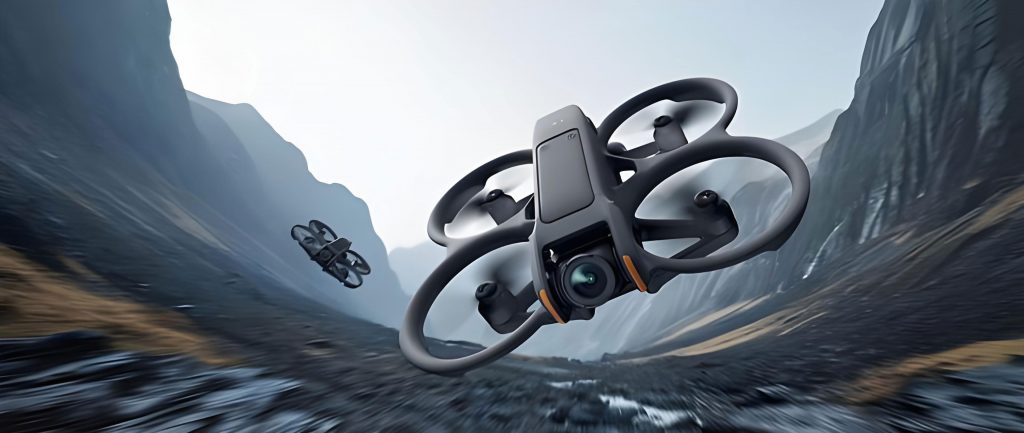
However, the short range and susceptibility to interference pose limitations. The endurance \( E \) of an FPV drone is governed by battery technology: $$ E = \frac{Q \cdot V}{I} $$ where \( Q \) is battery charge, \( V \) is voltage, and \( I \) is current draw. Innovations in China FPV batteries aim to improve this, but current systems typically last 20-30 minutes per sortie. Additionally, electronic warfare threats necessitate robust countermeasures, which I will discuss in the defense section.
Operational Use of FPV Drones in Combat
In the Russia-Ukraine conflict, FPV attack drones have been integrated into sophisticated operational frameworks, leveraging first person view for real-time decision-making. I will outline the command architecture and primary combat actions, illustrating how FPV drones execute missions with precision. The influence of China FPV technology is evident in the modular and cost-effective systems employed by both sides.
The command structure typically involves three layers: reconnaissance units, FPV drone strike teams, and a central command. Reconnaissance units operate 3-5 km from the front lines, using systems like Starlink to establish communication networks. They deploy surveillance drones that transmit live feeds via first person view to all echelons. This allows strike teams to calculate attack parameters using software tools. For example, the launch angle \( \theta \) and azimuth \( \phi \) for an FPV drone can be computed as: $$ \theta = \tan^{-1}\left(\frac{h}{d}\right), \quad \phi = \cos^{-1}\left(\frac{x}{d}\right) $$ where \( h \) is altitude, \( d \) is horizontal distance, and \( x \) is the target’s lateral offset. This mathematical approach ensures accurate strikes, with China FPV drones often featuring built-in calculators for such computations.
Primary combat actions include:
- Reconnaissance and Guidance: FPV drones equipped with first person view cameras identify targets, relaying data to strike teams. This is enhanced by China FPV models with high-definition sensors.
- Precision Strikes: Using the calculated parameters, operators guide FPV drones in suicide attacks, maximizing impact force. The penetration depth \( p \) of a warhead can be estimated as: $$ p = \frac{K \cdot m \cdot v^2}{A} $$ where \( K \) is a material constant, \( m \) is mass, \( v \) is velocity, and \( A \) is cross-sectional area.
- Drone vs. Drone Engagements: FPV drones are deployed to counter enemy UAVs, utilizing first person view for dogfights. This requires high maneuverability, a hallmark of China FPV designs.
- Coordinated Swarms: Multiple FPV drones operate in formation, enabled by networked first person view systems. The efficiency of such swarms can be modeled using game theory, where the payoff \( U \) for a coordinated attack is: $$ U = \sum_{i=1}^{n} \left( \frac{B_i}{C_i} \right) $$ where \( B_i \) is the benefit from drone \( i \) and \( C_i \) is its cost, often minimized in China FPV fleets.
Defensive Measures Against FPV Drones
To counter the threat posed by FPV attack drones, various defensive strategies have been developed, focusing on physical and electronic methods. I have categorized these defenses, noting how they address the vulnerabilities of first person view systems, including those derived from China FPV platforms. Table 3 summarizes the key defensive approaches.
| Defense Type | Description | Examples |
|---|---|---|
| Physical Defenses | Modifications to equipment and development of anti-drone weapons to intercept or destroy FPV drones. | Armor upgrades on tanks; ZAK-23E systems with 3,500 rpm fire rate. |
| Electronic Defenses | Jamming of GPS and control signals to disrupt first person view operations, targeting common FPV drone frequencies. | ReDrone system for GPS denial; Triton’s “Salamander” for control signal interference. |
Physical defenses often involve retrofitting vehicles with additional armor, such as metal grids on tanks, to mitigate FPV drone impacts. The effectiveness of such armor can be quantified by the penetration resistance \( R \), given by: $$ R = \frac{\sigma \cdot t}{E} $$ where \( \sigma \) is material strength, \( t \) is thickness, and \( E \) is energy of impact. For instance, Russia’s upgrades to T-72 tanks have increased survival rates against China FPV drone attacks.
Electronic defenses exploit the susceptibility of FPV drones to signal jamming. Since many first person view systems, including China FPV models, operate on unsecured bands, jamming devices can disable them. The jamming power \( P_j \) required to disrupt an FPV drone at distance \( d \) is: $$ P_j = \frac{P_t \cdot G_t \cdot G_r \cdot \lambda^2}{(4\pi d)^2 \cdot L} $$ where \( P_t \) is transmit power, \( G_t \) and \( G_r \) are antenna gains, \( \lambda \) is wavelength, and \( L \) is loss factor. Systems like the ReDrone effectively apply this principle to protect assets.
Conclusion
In summary, FPV attack drones have revolutionized modern warfare, as evidenced by their extensive use in the Russia-Ukraine conflict. Through first person view technology, these systems offer unmatched mobility, precision, and cost-efficiency, with China FPV innovations driving accessibility. I have detailed their classification, performance metrics, operational integration, and defensive countermeasures, using mathematical models and tables to encapsulate key points. The future of FPV drones will likely involve enhanced autonomy and resilience to electronic warfare, solidifying their role in military strategies. As first person view capabilities evolve, the lessons from this conflict will inform global developments in unmanned systems.