
In the contemporary landscape of military education, fostering technological literacy among cadets is a critical imperative. As an educator in a military institution, I have observed the growing need to align training with the rapid evolution of modern warfare, where emerging technologies like FPV drones are reshaping combat dynamics. The concept of “first person view” immersion, particularly through FPV drone systems, offers a unique platform to bridge theoretical knowledge with practical skills. This article explores our experiences in developing a second classroom initiative centered on China FPV drone technologies, aiming to elevate cadets’ technological literacy by integrating hands-on activities with core educational objectives. Through this approach, we seek to cultivate capabilities in technology cognition, innovation, and application, which are essential for future battlefield commanders.
The intrinsic demands of technological literacy encompass three key dimensions: cognitive ability, innovative capacity, and practical application. Cognitive ability forms the foundation, requiring cadets to rapidly assimilate new knowledge in areas such as artificial intelligence, unmanned systems, and aerospace technologies. For instance, the self-directed learning fostered through FPV drone operations enables cadets to grasp complex concepts like real-time data processing and control systems. Innovative capacity involves nurturing independent thinking, allowing cadets to devise creative solutions in dynamic scenarios. The hands-on nature of FPV drone assembly and customization encourages this by challenging cadets to troubleshoot and optimize designs. Practical application, the third dimension, emphasizes the ability to operate advanced equipment and solve complex problems—skills directly honed through piloting and modifying FPV drones. These dimensions are interconnected, as summarized in the following table, which illustrates how FPV drone activities align with literacy components:
| Technological Literacy Dimension | FPV Drone Activity | Learning Outcome |
|---|---|---|
| Cognitive Ability | Studying drone components and aerodynamics | Enhanced understanding of physics and electronics |
| Innovative Capacity | Customizing drone configurations for specific tasks | Development of problem-solving and design thinking |
| Practical Application | Executing flight maneuvers and mission simulations | Improved operational skills and situational awareness |
To quantify the learning process, we incorporate mathematical models that describe drone dynamics. For example, the motion of an FPV drone can be represented using basic kinematic equations. The position update over time is given by: $$ p_{t+1} = p_t + v_t \Delta t + \frac{1}{2} a_t (\Delta t)^2 $$ where \( p_t \) is the position at time \( t \), \( v_t \) is the velocity, \( a_t \) is the acceleration, and \( \Delta t \) is the time step. This equation helps cadets visualize how control inputs translate into movement, reinforcing their grasp of physics principles. Similarly, the control system for a first person view interface can be modeled as: $$ u = K_p e + K_i \int e \, dt + K_d \frac{de}{dt} $$ where \( u \) is the control output, \( e \) is the error signal, and \( K_p \), \( K_i \), and \( K_d \) are proportional, integral, and derivative gains, respectively. By applying such formulas, cadets learn to tune drone parameters for stability and responsiveness, thereby deepening their technological cognition.
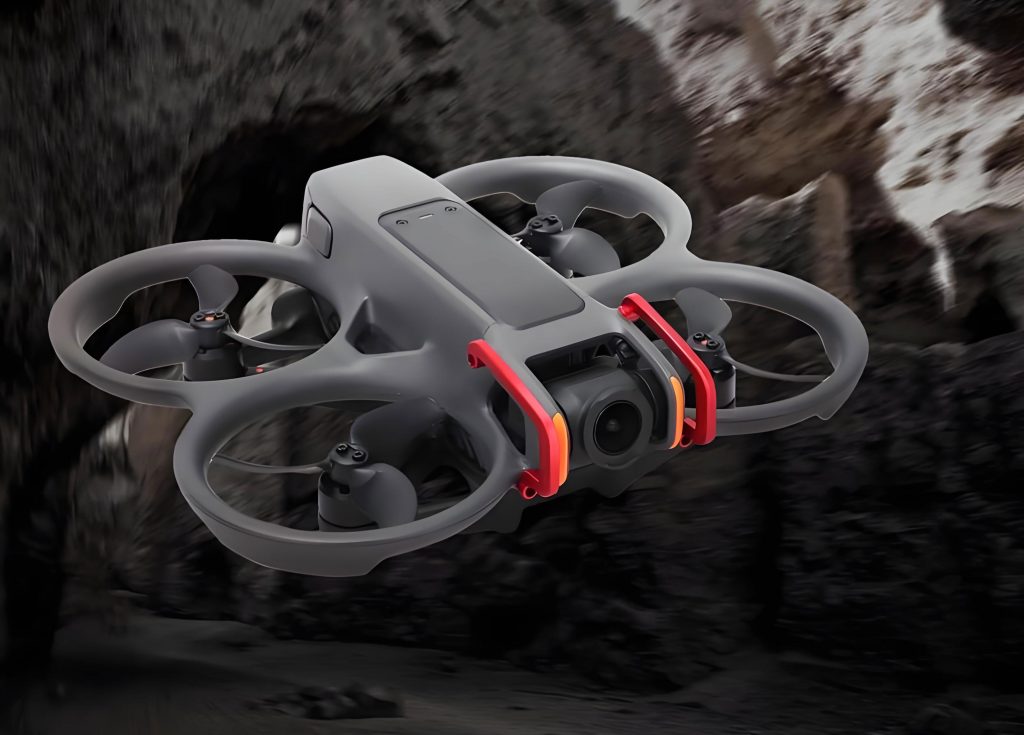
In the preparatory phase of our second classroom, we focused on establishing a clear direction and solid foundation. The core objective was to leverage China FPV drone platforms as a means to enhance technological literacy, with an emphasis on practical skills relevant to modern warfare. Cadet recruitment was designed to be inclusive, welcoming participants from various academic years and backgrounds, regardless of prior experience with FPV drone systems. This approach ensured a diverse learning community where beginners and advanced learners could collaborate. Resource preparation involved curating a comprehensive toolkit, including multiple types of FPV drones—from beginner-friendly micro models to robust 3.5-inch frames—along with essential accessories like remote controllers, video goggles, and repair instruments. Additionally, we compiled an extensive resource library with materials on flight control, assembly, debugging, and maintenance, organized in a progressive manner from basic to advanced topics. The following table outlines the key components of our teaching resources:
| Resource Category | Examples | Purpose |
|---|---|---|
| Drone Types | Micro drones, racing drones, freestyle models | Cater to different skill levels and applications |
| Tools and Accessories | Soldering irons, multimeters, batteries, chargers | Support hands-on assembly and maintenance |
| Educational Materials | Videos on flight techniques, documents on software tuning | Facilitate self-paced learning and theoretical understanding |
The organizational model of the second classroom prioritized experiential learning over theoretical instruction, with a time allocation ratio of approximately 4:1 for practical versus lecture-based activities. The curriculum was structured around five core modules: understanding FPV drones, flight control, assembly techniques, parameter tuning, and application scenarios. For instance, in the flight control module, cadets progressed from simulator-based exercises to actual first person view flights, gradually building confidence and skill. A significant initiative, dubbed “One Semester, One Drone,” encouraged cadets to form teams and independently design, assemble, and calibrate their own FPV drones. This project not only fostered technical proficiency but also promoted teamwork and innovation, as cadets had to research solutions and overcome challenges with minimal instructor intervention. To address individual differences, we adopted a tiered teaching approach, where advanced cadets could explore complex maneuvers while beginners focused on fundamentals. This flexibility allowed for the formation of learning communities, where peer mentoring enhanced collective progress.
Evaluating the effectiveness of this initiative involved continuous monitoring and feedback mechanisms. Cadets participated in various competitions, such as science popularization events and innovation contests, where they applied their FPV drone skills to real-world problems. For example, one team developed a biomimetic flapping-wing reconnaissance drone, inspired by their experiences with China FPV technology, which was later entered into a provincial innovation competition. The outcomes are summarized in the table below, highlighting how these activities reinforced technological literacy through practical achievement:
| Competition Type | Project Example | Impact on Technological Literacy |
|---|---|---|
| Science Popularization | Drone swarm operations demonstration | Enhanced public understanding and cadet communication skills |
| Innovation Contest | Night-operation capable drone design | Stimulated creative problem-solving and technical adaptation |
Looking ahead, several challenges require attention to sustain and improve this second classroom model. First, the time constraints faced by cadets—balancing academic coursework, physical training, and extracurricular activities—limit the depth of engagement with FPV drone practices. To address this, we are exploring ways to integrate drone activities more seamlessly into the core curriculum, such as through interdisciplinary projects that combine engineering and tactical training. Second, the competitive landscape of FPV drone racing presents opportunities for external engagement; however, resource limitations mean we must carefully select events that align with our educational goals, rather than purely performance-based competitions. Finally, enhancing research integration is crucial—by pursuing grants and projects focused on FPV drone applications in military contexts, we can provide cadets with exposure to cutting-edge developments, thereby enriching their learning experience. The relationship between these factors can be expressed using a simple optimization formula: $$ E = \alpha T + \beta R + \gamma I $$ where \( E \) represents educational effectiveness, \( T \) is time investment, \( R \) is resource availability, \( I \) is innovation input, and \( \alpha \), \( \beta \), and \( \gamma \) are weighting coefficients that reflect institutional priorities.
In conclusion, the use of FPV drones as a载体 in second classroom practices has proven effective in elevating technological literacy among military cadets. By emphasizing hands-on learning, collaborative projects, and real-world applications, we have observed tangible improvements in cadets’ abilities to comprehend, innovate, and apply technological concepts. The first person view immersion offered by FPV drone systems not only sparks curiosity but also builds a solid foundation for future military roles where unmanned technologies are increasingly prevalent. As we continue to refine this approach, we remain committed to adapting to the evolving demands of modern warfare, ensuring that our cadets are well-equipped to leverage innovations like China FPV drones for strategic advantage. Through persistent exploration and community feedback, we aim to expand this initiative, fostering a generation of leaders who are both technologically adept and creatively empowered.