
In this article, I explore the integration scenarios of sports, culture, and tourism from the perspective of the low altitude economy, a rapidly emerging sector that leverages airspace below 1,000 meters, extending up to 3,000 meters in some cases, for civil aviation activities. The low altitude economy is a scenario-driven economic form that relies on specific applications to generate demand and foster industrial development. As a researcher, I aim to analyze how the low altitude economy can transform traditional sports, culture, and tourism integration by creating new three-dimensional spaces, enhancing consumer experiences, and driving economic growth. Through methods such as literature review, field investigations, and logical analysis, I have identified key characteristics, practical models, challenges, and pathways for building these integrated scenarios. This exploration is crucial for understanding how the low altitude economy can serve as a catalyst for innovation in the sports, culture, and tourism sectors, ultimately contributing to the development of new productive forces and vibrant consumer markets.
The concept of the low altitude economy revolves around the utilization of low-altitude airspace for various activities, including transportation, recreation, and production, which collectively form a comprehensive economic ecosystem. In the context of sports, culture, and tourism integration, the low altitude economy introduces a vertical dimension that enables the creation of immersive, multi-sensory experiences. For instance, activities like aerial sightseeing, paragliding, and drone racing combine physical exertion, cultural appreciation, and leisure travel, resulting in unique scenarios that attract diverse consumer groups. The low altitude economy not only provides the technological and infrastructural backbone for these scenarios but also stimulates demand by offering novel ways to engage with sports, heritage, and natural landscapes. As I delve into this topic, I will discuss the intrinsic features of these integrated scenarios, the models for their construction, the obstacles they face, and the strategies to overcome them, all while emphasizing the transformative role of the low altitude economy in reshaping urban and rural spaces.
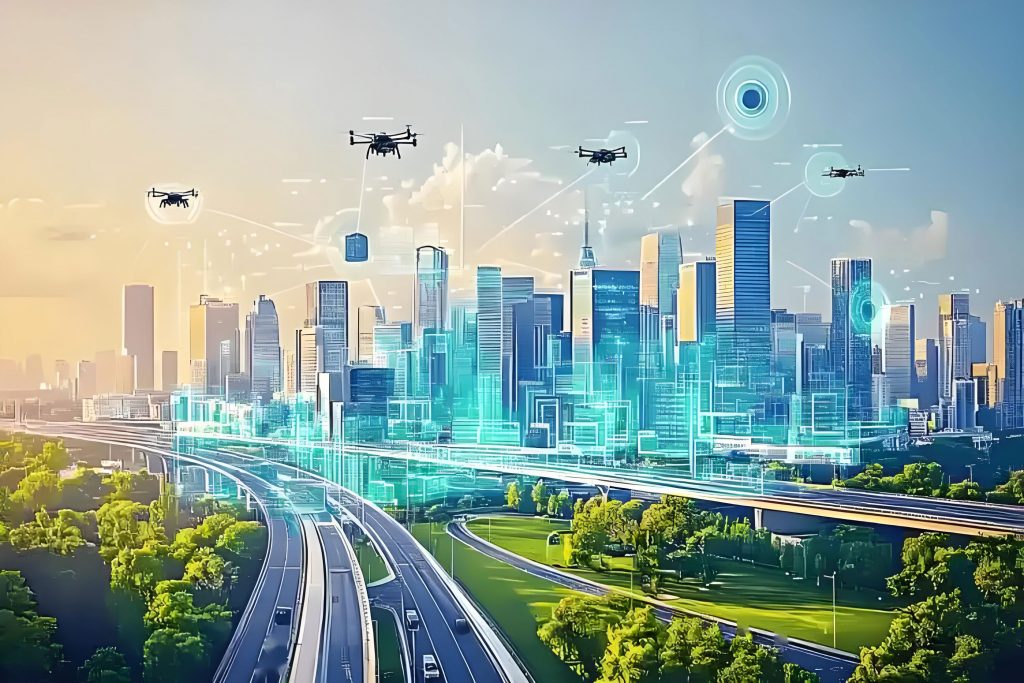
The integration of sports, culture, and tourism under the low altitude economy paradigm exhibits five distinct characteristics: spatial superposition, facility integration, demand dominance, activity fusion, and cultural transmission. Spatial superposition refers to the layering of aerial and ground spaces, creating multi-dimensional environments where activities like low-altitude flights and ground-based events coexist. This characteristic is fundamental to the low altitude economy, as it maximizes the use of vertical airspace while integrating terrestrial resources. Facility integration involves the combination of advanced infrastructures, such as electric vertical take-off and landing (eVTOL) stations, parachute towers, and aviation museums, which serve as comfort objects that enhance user satisfaction. These facilities are often equipped with smart technologies, reflecting the innovative nature of the low altitude economy. Demand dominance highlights the consumer-centric approach, where personalized and adventurous experiences, such as skydiving or aerial photography, cater to high-end and niche markets. Activity fusion emphasizes the seamless blending of sports, cultural events, and tourism offerings, leading to composite products like aviation sports festivals or heritage tours with low-altitude elements. Lastly, cultural transmission ensures that these scenarios convey values like health, adventure, and local identity, fostering a sense of community and cultural pride through the low altitude economy.
| Characteristic | Description | Role in Low-Altitude Economy |
|---|---|---|
| Spatial Superposition | Integration of aerial and ground spaces for multi-level activities. | Enables efficient use of vertical airspace, expanding operational scope. |
| Facility Integration | Combination of advanced infrastructures like eVTOL hubs and aviation camps. | Provides technological comfort objects that drive innovation and user engagement. |
| Demand Dominance | Consumer-driven experiences focusing on personalization and adventure. | Stimulates market demand through unique, high-value offerings. |
| Activity Fusion | Blending of sports, culture, and tourism into cohesive events. | Enhances experiential value and promotes cross-sector collaboration. |
| Cultural Transmission | Dissemination of values like health and local heritage through scenarios. | Builds cultural identity and supports sustainable development. |
To quantify the impact of these characteristics, I propose a simple model for assessing the value of integration scenarios in the low altitude economy. Let $$ V $$ represent the overall value of a scenario, which can be expressed as: $$ V = \alpha S + \beta C + \gamma T + \delta L $$ where $$ S $$ denotes sports elements, $$ C $$ cultural components, $$ T $$ tourism factors, and $$ L $$ the low-altitude economy contributions. The coefficients $$ \alpha, \beta, \gamma, \delta $$ are weights that reflect the relative importance of each element, typically derived from market research or empirical data. For example, in a scenario dominated by adventure sports, $$ \alpha $$ might be higher, whereas in culture-rich areas, $$ \beta $$ could prevail. This formula underscores how the low altitude economy amplifies the value by introducing the $$ L $$ term, which encompasses technological innovations and aerial resources. Furthermore, the fusion of activities can be modeled using an interaction term: $$ V_{\text{fusion}} = \epsilon (S \cdot C \cdot T) \cdot L $$ where $$ \epsilon $$ is a fusion coefficient that captures the synergistic effects. Such models help in prioritizing investments in the low altitude economy for maximum returns.
In practice, the construction of integration scenarios under the low altitude economy follows three primary models: cross-penetration, interactive extension, and platform aggregation. The cross-penetration model involves the deep embedding of sports, culture, and tourism elements, resulting in new hybrid formats. For instance, low-altitude flights over cultural sites combine aerial sports with heritage appreciation, creating a novel product that leverages the low altitude economy for enhanced experiences. This model relies on functional mixing and symbolic渗透, where traditional symbols are modernized through aerial activities. The interactive extension model focuses on extending and reorganizing industry chains, where the low altitude economy acts as a nexus linking upstream and downstream segments. An example is the development of aviation towns that integrate flight training, cultural exhibitions, and tourism services, forming a comprehensive ecosystem. The platform aggregation model utilizes hubs like general aviation airports to aggregate multiple stakeholders and resources, fostering a collaborative environment. In this model, spatial platforms, data platforms, and organizational platforms work in tandem to support the low altitude economy. For instance, digital twin systems for airspace management enable real-time monitoring and scheduling, essential for safe and efficient operations.
| Model Type | Core Mechanism | Example Applications | Low-Altitude Economy Role |
|---|---|---|---|
| Cross-Penetration | Deep integration of elements to create hybrid formats. | Heliculture tours combining aerial sports and cultural festivals. | Provides aerial载体 for innovation and symbol transformation. |
| Interactive Extension | Extension and reorganization of industry chains. | Aviation towns with training, events, and tourism services. | Serves as a central node for value chain integration. |
| Platform Aggregation | Aggregation of stakeholders through multi-platform systems. | General aviation hubs with digital management and collaborative networks. | Facilitates scalable and efficient ecosystem development. |
The effectiveness of these models can be evaluated using a performance metric for the low altitude economy. Let $$ P $$ represent the performance score, calculated as: $$ P = \sum_{i=1}^{n} w_i M_i $$ where $$ M_i $$ are indicators such as consumer engagement, economic output, or cultural impact, and $$ w_i $$ are their respective weights. For the low altitude economy, key indicators might include airspace utilization rates, number of low-altitude flights, or revenue from integrated activities. Additionally, the synergy between models can be expressed as: $$ P_{\text{synergy}} = \eta \cdot (CP \cdot IE \cdot PA) $$ where $$ CP $$, $$ IE $$, and $$ PA $$ are scores for cross-penetration, interactive extension, and platform aggregation, respectively, and $$ \eta $$ is a synergy factor. This approach highlights how combining models under the low altitude economy can lead to multiplicative benefits, driving overall scenario success.
Despite the potential, the construction of integration scenarios in the low altitude economy faces several real-world阻滞. First, market demand traction is insufficient, with limited consumer participation due to high costs and safety concerns. For example, the price of a 20-minute powered paragliding experience can exceed $200, deterring mass adoption. Moreover, trust issues arise from inadequate insurance markets and occasional accidents, hindering the growth of the low altitude economy. Second, scene supply推动力 is weak, characterized by structural imbalances and a lack of market-oriented entities. Many offerings are homogenous, focusing on basic aerial sightseeing rather than diversified experiences like sports training or cultural immersion. This is exacerbated by insufficient involvement of private enterprises, as government-led initiatives dominate the low altitude economy, and policies often exclude consumer-oriented projects from subsidies. Third, new要素支撑 is lacking, particularly in ground infrastructure, digital airspace systems, and talent. The number of general aviation airports is low compared to countries like the U.S., and digital platforms for airspace management are in their infancy. Additionally, a shortage of skilled professionals, such as certified pilots or cross-disciplinary managers, hampers innovation in the low altitude economy. Fourth, collaborative mechanisms are limited, with difficulties in cross-departmental and cross-regional coordination. For instance, airspace approvals involve multiple authorities, leading to delays, and urban areas often restrict low-altitude activities, constraining scenario scalability.
| Challenge Category | Specific Issues | Impact on Low-Altitude Economy |
|---|---|---|
| Market Demand Traction | High costs, safety concerns, limited consumer awareness. | Reduces participation and slows down market expansion. |
| Scene Supply推动力 | Homogeneous offerings, lack of private sector involvement. | Leads to inefficiencies and inhibits innovation. |
| New要素支撑 | Inadequate infrastructure, digital systems, and talent. | Undermines operational efficiency and long-term growth. |
| Collaborative Mechanisms | Cross-departmental and cross-regional coordination problems. | Hinders integrated development and scalability. |
To address these challenges, I propose a set of推进路径 centered on the low altitude economy. First, demand引领 involves cultivating consumer groups through affordable experiences and trust-building measures. For example, offering low-cost introductory flights or developing specialized insurance products can broaden participation in the low altitude economy. Additionally, creating immersive educational programs and high-profile events, such as international drone races, can foster a cultural shift towards aerial activities. Second, supply创新 focuses on activating market dynamics by encouraging content innovation and diverse市场主体. This includes developing composite projects that blend sports, culture, and tourism, and supporting small and medium enterprises to explore niche markets within the low altitude economy. Financial incentives, like subsidies for consumer-oriented scenarios, can stimulate private investment. Third,要素支撑 aims to strengthen the foundation by improving ground infrastructure, building intelligent airspace platforms, and cultivating talent. Initiatives could include standardizing take-off and landing points, deploying digital twin systems for real-time airspace management, and establishing cross-disciplinary training programs in collaboration with educational institutions. These efforts are vital for sustaining the low altitude economy. Fourth,协同治理 involves完善保障机制 through跨部门联动 and跨区域协作. Reforming airspace management to allow flexible urban corridors and establishing regional coordination bodies can enhance efficiency. For instance, creating “white list” time slots for low-altitude activities in cities or developing cross-border tourism routes can unlock new opportunities for the low altitude economy.
| Pathway | Key Actions | Expected Outcomes for Low-Altitude Economy |
|---|---|---|
| Demand引领 | Offer affordable experiences, build trust, promote education and events. | Expands consumer base and enhances cultural acceptance. |
| Supply创新 | Innovate content, support SMEs, provide financial incentives. | Diversifies offerings and boosts market vitality. |
| 要素支撑 | Upgrade infrastructure, develop digital platforms, train talent. | Improves operational efficiency and fosters innovation. |
| 协同治理 | Reform airspace management, enhance cross-regional cooperation. | Facilitates scalable and integrated development. |
The implementation of these pathways can be optimized using a strategic framework for the low altitude economy. Let $$ E $$ represent the overall effectiveness, which can be modeled as: $$ E = \theta_D D + \theta_S S + \theta_F F + \theta_G G $$ where $$ D $$, $$ S $$, $$ F $$, and $$ G $$ are scores for demand, supply,要素, and governance dimensions, respectively, and $$ \theta $$ coefficients indicate their relative importance. For the low altitude economy, $$ \theta_F $$ might be high due to the critical role of infrastructure and talent. Furthermore, the interaction between pathways can be captured by: $$ E_{\text{interaction}} = \lambda (D \cdot S \cdot F \cdot G) $$ where $$ \lambda $$ is an interaction parameter. This model emphasizes that holistic approaches yield the best results for the low altitude economy. Additionally, monitoring key performance indicators (KPIs) such as growth in low-altitude flight hours or consumer satisfaction scores can guide adjustments in real-time.
In conclusion, the low altitude economy serves as a powerful enabler for integrating sports, culture, and tourism, creating dynamic scenarios that cater to evolving consumer preferences. By leveraging vertical airspace and advanced technologies, the low altitude economy transforms traditional flat landscapes into multi-dimensional experiences, driving economic growth and cultural enrichment. However, realizing this potential requires addressing challenges in demand, supply,要素, and governance through coordinated efforts. As I reflect on this analysis, it is clear that the low altitude economy is not just an industrial sector but a transformative force that can redefine how we experience and value our surroundings. Moving forward, continued innovation and collaboration will be essential to harness the full benefits of the low altitude economy, ensuring that these integrated scenarios become sustainable pillars of future development.