
In the context of the rapidly expanding low altitude economy, characterized by exponential growth in sectors like unmanned aerial vehicle (UAV) logistics and urban air mobility, the structural mismatch between industry demands and talent supply has become a critical bottleneck. As a researcher deeply involved in this field, I have observed that the low altitude economy is not only reshaping transportation and logistics but also necessitating a fundamental transformation in how we educate and train professionals. The core challenge lies in the disjunction between educational outputs and real-world industry needs, leading to significant gaps in skilled labor, such as the shortage of nearly 900,000 UAV maintenance technicians and 410,000 general aviation operation managers. This paper, drawing from extensive analysis and practical case studies, proposes a comprehensive framework for building an integrated education system that synergizes industry and education, with a focus on the low altitude economy. Through the development of stratified educational pathways, innovative training models, and multi-dimensional collaboration mechanisms, we aim to address the structural supply-demand contradictions and foster a sustainable ecosystem for talent development. The integration of digital technologies, standardized frameworks, and policy incentives is crucial to enhancing the adaptability and responsiveness of education to the dynamic demands of the low altitude economy, ultimately contributing to the trillion-dollar market potential projected for this sector.
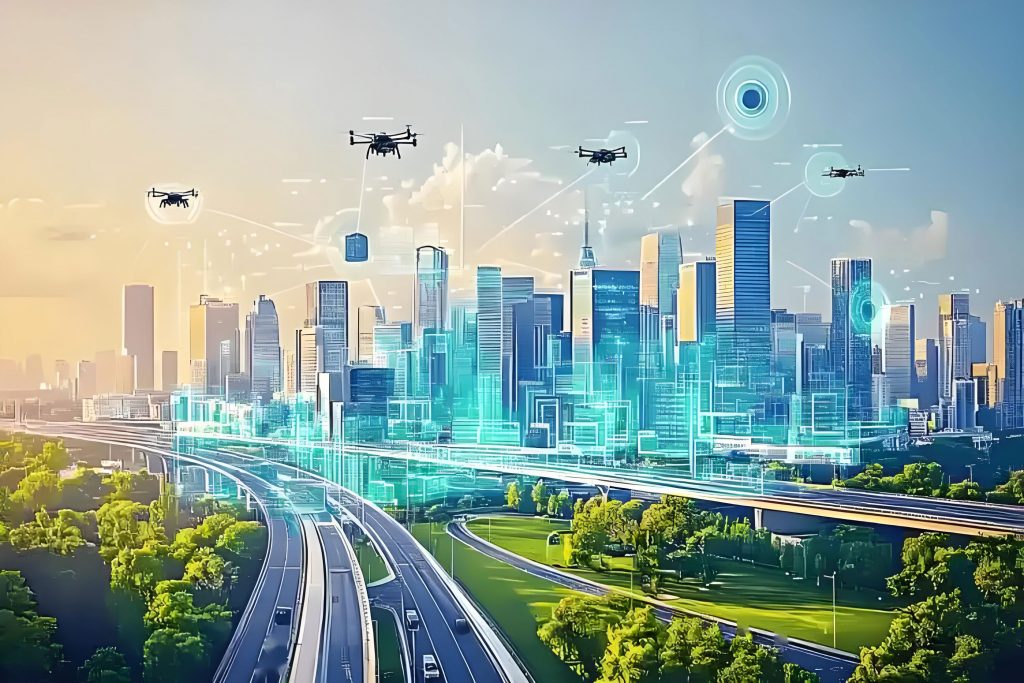
The low altitude economy has emerged as a pivotal driver of economic growth, with core industries surpassing 820 billion yuan and contributing over 60% to emerging fields like UAV logistics. However, the accelerated pace of technological innovation, such as the compression of UAV technology development cycles to just nine months, has exacerbated the misalignment between educational curricula and industry practices. This misalignment results in heterogenous effects, including outdated teaching content, extended on-the-job training periods costing billions annually, and fragmented continuing education systems that leave half of the workforce vulnerable to technological obsolescence every 18 months. To mitigate these issues, we have developed a tri-chain synergy model—integrating the education chain, industry chain, and talent chain—based on innovation ecosystem theory. This model facilitates a hierarchical talent cultivation system and standardized对接 mechanisms, evolving from a triple helix to a four-dimensional collaborative approach. Empirical evidence from实践 cases, such as the Qingdao Blue Valley General Aviation Industrial Park and the Guangdong-Hong Kong-Macao UAV Industrial Belt, demonstrates the efficacy of this framework in enhancing equipment utilization rates and reducing talent cultivation costs. In this paper, I will elaborate on the construction pathways for a stratified educational ecosystem, innovative practices in industry-education integration, and the协同 mechanisms that underpin the sustainable development of the low altitude economy.
The stratified educational ecosystem for the low altitude economy is designed to address the diverse skill requirements across different levels of expertise, from technical operators to research innovators. We propose a gradient division of labor between vocational education and higher education, encompassing secondary vocational, higher vocational, undergraduate, and postgraduate levels. This structure ensures a seamless flow of talent, with vocational institutions focusing on skill-based training and universities driving technological breakthroughs. For instance, secondary vocational education adopts a blended paradigm inspired by the German dual system and Japanese craftsmanship, emphasizing certification rates and reducing adaptation periods. Higher vocational education centers on system maintenance capabilities, utilizing high-quality training centers and实战 projects to cultivate professionals in aviation repair and control systems. Undergraduate education targets the resolution of technical bottlenecks through applied research, while postgraduate education pioneers advancements in cutting-edge areas, such as electric vertical take-off and landing (eVTOL) technologies. This hierarchical approach not only covers the entire innovation chain but also enhances the overall resilience of the talent supply for the low altitude economy.
To quantify the effectiveness of this stratified system, we can model the talent supply-demand matching degree using a simple formula that incorporates the alignment between educational outputs and industry needs. Let \( S \) represent the talent supply, \( D \) the industry demand, and \( M \) the matching degree. The improvement in matching degree can be expressed as:
$$ M = \frac{S \cap D}{D} \times 100\% $$
In our observations, the implementation of this stratified system has increased \( M \) from 81% to 92%, indicating a significant enhancement in the relevance of education to the low altitude economy. Additionally, the reduction in the adaptation period for graduates can be represented as a function of the training efficiency \( \eta \), where \( \eta \) is influenced by the integration of practical training and industry exposure. For example, the adaptation period \( T_a \) decreases as \( \eta \) increases:
$$ T_a = \frac{T_0}{\eta} $$
Here, \( T_0 \) is the baseline adaptation period, and \( \eta > 1 \) denotes improvements in training methods. In cases from vocational institutions, \( T_a \) has been reduced to just seven days, compared to the previous 3–6 months, underscoring the efficiency gains from this ecosystem.
The重构 of educational carriers is another critical aspect of adapting to the low altitude economy. Traditional institutions are being transformed into dynamic hubs that combine training, assessment, and certification. For example, the intelligent upgrade of aviation research bases, such as the one in Zhangye, Gansu, has enabled the creation of closed-loop systems that use smart sensors to collect real-time flight data. This data-driven approach allows for personalized training algorithms, increasing training capacity by over 300 participants per session and boosting pilot license pass rates to 89%. Similarly, industrial parks like the Qingdao Blue Valley General Aviation Industrial Park have adopted a “teaching + R&D + industry” layout, leveraging digital twin technology to monitor precision instruments and foster a virtuous cycle where education feeds back into industrial innovation. The integration of digital technologies, such as virtual training environments, has reached a penetration rate of 39%, while the response speed to industry needs has accelerated to 72 hours, and innovation density has surged to 23 patents per square kilometer. These advancements highlight the potential of redefined educational carriers to support the low altitude economy.
In the realm of lifelong education, the rapid iteration of technologies and regulations in the low altitude economy necessitates continuous learning mechanisms. We have observed that UAV technologies transition from lab to market in as little as nine months, while aviation regulations undergo quarterly updates with up to 17 amendments. To address this, we advocate for the extension of社会化 education systems, such as massive open online courses (MOOCs) on low-altitude safety regulations, which use virtual simulations to create immersive learning environments. These platforms, like the national low-altitude intelligence governance system (LIGS), integrate data from thousands of aviation research institutions, forming a closed feedback loop of “learning, practicing, assessing, and refining.” For instance, the use of augmented reality (AR) in maintenance training allows technicians to overlay instructional videos onto physical components, improving experience transfer efficiency by sixfold. Moreover, the establishment of credit bank systems enables professionals to convert practical experience, such as 200 hours of flight tasks, into continuing education credits, thereby enhancing the adaptability of the workforce. The coverage rate of continuing education has risen from a baseline of 45% to over 70% in pilot regions, reducing the risk of skill obsolescence in the low altitude economy.
The innovation in industry-education integration training models is pivotal for bridging the gap between theoretical knowledge and practical application. We have explored various approaches, such as the deep co-construction of school-enterprise collaborative platforms, which facilitate the flow of resources across material, capability, and data dimensions. A notable example is the “front-school, back-factory” 2.0 model, where enterprises like SF Express integrate real work orders into teaching projects, enabling students to maintain UAVs directly linked to logistics networks. This model has boosted the annual utilization rate of training equipment to over 2,000 hours, quadrupling the output efficiency of traditional training workshops. The collaborative platform can be represented schematically as follows, illustrating the key components and their interactions:
| Component | Function | Impact |
|---|---|---|
| Production-Oriented Training | Converts real work orders into teaching projects | Increases equipment utilization and student engagement |
| Equipment Sharing Pool | Centralizes access to advanced tools | Reduces costs and enhances resource efficiency |
| Modular Courses | Adapts content to industry trends | Shortens skill-updating cycles |
| XR Training Systems | Provides immersive virtual environments | Improves learning retention and practical skills |
| Blockchain Certification | Secures skill credentials | Facilitates cross-institutional recognition |
The economic benefits of this model can be quantified using a cost-efficiency formula. Let \( C_t \) represent the total talent cultivation cost, \( U_e \) the equipment utilization rate, and \( \Delta C \) the cost reduction. The relationship can be expressed as:
$$ \Delta C = C_0 \times \left(1 – \frac{U_e}{U_0}\right) $$
where \( C_0 \) and \( U_0 \) are the initial cost and utilization rate, respectively. In实践, this approach has reduced unit talent cultivation costs by 34% and increased equipment utilization from 52% to 88%, demonstrating its viability for the low altitude economy.
Another innovative practice is the competency-oriented curriculum重构, which aligns educational content with the evolving demands of the low altitude economy. Based on extensive surveys of hundreds of enterprises, we have developed a four-dimensional competency matrix covering professional knowledge, practical skills, innovation capabilities, and career development. For instance, foundational courses like aerodynamics are enhanced with AR tools, allowing students to visualize complex components and improving knowledge retention rates to 78%, a 2.3-fold increase over traditional methods. Core competency courses incorporate real-world challenges, such as high-altitude delivery and signal loss scenarios, reducing graduates’ response time to anomalies by 32%. Innovation courses, developed in collaboration with companies like EHang, use digital twin systems to simulate hundreds of fault scenarios, accelerating experience accumulation. The competency matrix ensures that education remains responsive to the low altitude economy, with curriculum update cycles compressed to just four months.
To illustrate the competency framework, we can summarize the key dimensions and their indicators in a table:
| Dimension | Description | Example Indicators |
|---|---|---|
| Professional Knowledge | Theoretical understanding of low-altitude systems | Mastery of aerodynamics, regulations |
| Practical Skills | Hands-on operation and problem-solving | UAV maintenance, flight control |
| Innovation Capabilities | Ability to develop new technologies | Patent filings, R&D contributions |
| Career Development | Compliance and lifelong learning | Certification rates, adaptation to new regulations |
The diversification of training models further enriches the talent cultivation landscape for the low altitude economy. Approaches like the “dual-system and triple-fixation” model involve enterprises prepaying tuition fees and co-designing curricula, leading to higher certification pass rates and direct industry engagement. Similarly, flexible academic systems, such as the “1+1+1” model, combine classroom learning with rotational internships, enhancing practical exposure and reducing skill gaps. The integration of certificate systems, supported by credit bank mechanisms, allows for the recognition of diverse learning outcomes, fostering跨界 talent. For example, individuals obtaining multiple certifications, such as low-altitude logistics planner credentials, demonstrate improved performance in energy-saving tests, with能耗 reductions of up to 17%. These models have been instrumental in increasing the proportion of graduates who become technical骨干 to 23% within three years, compared to 8% in traditional systems.
The协同 mechanisms among the industry chain, education chain, and talent chain are essential for sustaining the integrated ecosystem of the low altitude economy. We propose a standardized对接 framework that encompasses teaching, training, certification, and evaluation. For instance, the collaboration between educational institutions and industry associations has led to the development of competency standards that are regularly updated to reflect technological advancements. The resource integration path leverages digital platforms, such as blockchain-based talent ecosystems, to match岗位 demands with skill supplies in real-time, reducing response times for small and medium-sized enterprises. Policy保障 systems, including tax incentives and land support, create an enabling environment for industry-education collaboration. In pilot regions like Zhejiang Province, these policies have increased校企 cooperation projects by 65%, expanded training spaces by 300%, and boosted skill certification participation by 68%.
The policy incentives can be modeled using a three-dimensional framework targeting enterprises, institutions, and individuals. Let \( I_e \), \( I_i \), and \( I_p \) represent the incentives for each group, respectively. The overall policy impact \( P \) can be expressed as a weighted sum:
$$ P = \alpha I_e + \beta I_i + \gamma I_p $$
where \( \alpha \), \( \beta \), and \( \gamma \) are weighting factors based on regional priorities. In实践, this approach has led to measurable improvements in collaboration metrics, such as a 28% reduction in enterprise R&D costs and a 60% increase in student participation in real production activities.
In terms of research outcomes, our findings indicate that the stratified education system has significantly improved talent supply-demand matching, while the “front-school, back-factory” model has driven down costs and enhanced resource utilization. The standardization mechanisms have accelerated curriculum updates, addressing the core issue of educational lag in the low altitude economy. Based on these results, we recommend institutional innovations, such as establishing national industry-education integration pilot zones with dedicated funding, and the development of comprehensive standard systems to guide future efforts. The integration of new infrastructure, like aviation flight camps configured at a density of one Class A camp per 5,000 square kilometers, will further support the scalability of these initiatives.
In conclusion, the low altitude economy represents a transformative force that demands a holistic and adaptive education system. By building stratified pathways, fostering innovative training models, and strengthening collaborative mechanisms, we can overcome the structural imbalances in talent supply and demand. The integration of digital tools, standardized frameworks, and supportive policies has already demonstrated tangible benefits, from cost reductions to improved efficiency. As the low altitude economy continues to evolve, sustained efforts in industry-education integration will be crucial for nurturing a skilled workforce capable of driving innovation and securing long-term growth. This ecosystem not only addresses immediate talent shortages but also lays the foundation for the sustainable development of the low altitude economy, ensuring that education remains a catalyst for economic and technological advancement.