
As I explore the evolving landscape of modern economies, the concept of the low altitude economy emerges as a transformative force driven by new quality productive forces. This innovative domain involves utilizing low-altitude airspace, typically below 1000 meters but extendable up to 3000 meters, for various commercial activities, including transportation, logistics, and public services. The low altitude economy represents a synergy of advanced technologies, optimized resource allocation, and industrial upgrades, fostering a new economic model with immense potential. In this analysis, I delve into the intricacies of the low altitude economy, its development status, challenges, and future pathways, while integrating insights into ESG-based performance evaluation for logistics enterprises. The low altitude economy not only enhances regional growth and urban development but also introduces novel approaches to social governance and cross-sector integration.
The essence of the low altitude economy lies in the transformation of low-altitude resources into actionable scenarios that drive economic value. It encompasses a broad spectrum of elements, including infrastructure, manufacturing, operational services, and support systems. To illustrate the core components, I present a table summarizing the key characteristics of the low altitude economy:
| Component | Description | Impact |
|---|---|---|
| Low-Altitude Infrastructure | Physical foundations such as vertiports and navigation systems | Enables safe and efficient operations in low-altitude airspace |
| Aircraft Manufacturing | Production of UAVs and eVTOLs | Drives technological innovation and industrial growth |
| Operational Services | Applications in logistics, surveillance, and passenger transport | Converts technology into tangible economic activities |
| Flight Support Systems | Safety measures, traffic management, and maintenance | Ensures sustainability and risk mitigation |
In mathematical terms, the growth of the low altitude economy can be modeled using a production function that incorporates factors like technological innovation and capital investment. For instance, the output $Y$ of the low altitude economy can be expressed as: $$ Y = A \cdot K^\alpha \cdot L^\beta \cdot T^\gamma $$ where $A$ represents total factor productivity, $K$ is capital input, $L$ denotes labor, $T$ symbolizes technology level, and $\alpha$, $\beta$, $\gamma$ are elasticity coefficients. This equation highlights how advancements in the low altitude economy contribute to overall economic efficiency.
The development of the low altitude economy has accelerated globally, with significant progress in research, innovation, and application. Research institutions dedicated to the low altitude economy focus on interdisciplinary studies, policy analysis, and technological breakthroughs, such as vertical take-off and landing (VTOL) systems and electric unmanned aerial vehicles (UAVs). These efforts facilitate the transition from theoretical concepts to practical implementations, expanding the low altitude economy into sectors like urban air mobility (UAM) and diversified drone applications. For example, flying taxis, often eVTOL-based, offer eco-friendly and efficient urban transport solutions, while UAVs revolutionize agriculture, logistics, and environmental monitoring. The low altitude economy thus acts as a catalyst for regional innovation and global collaboration.
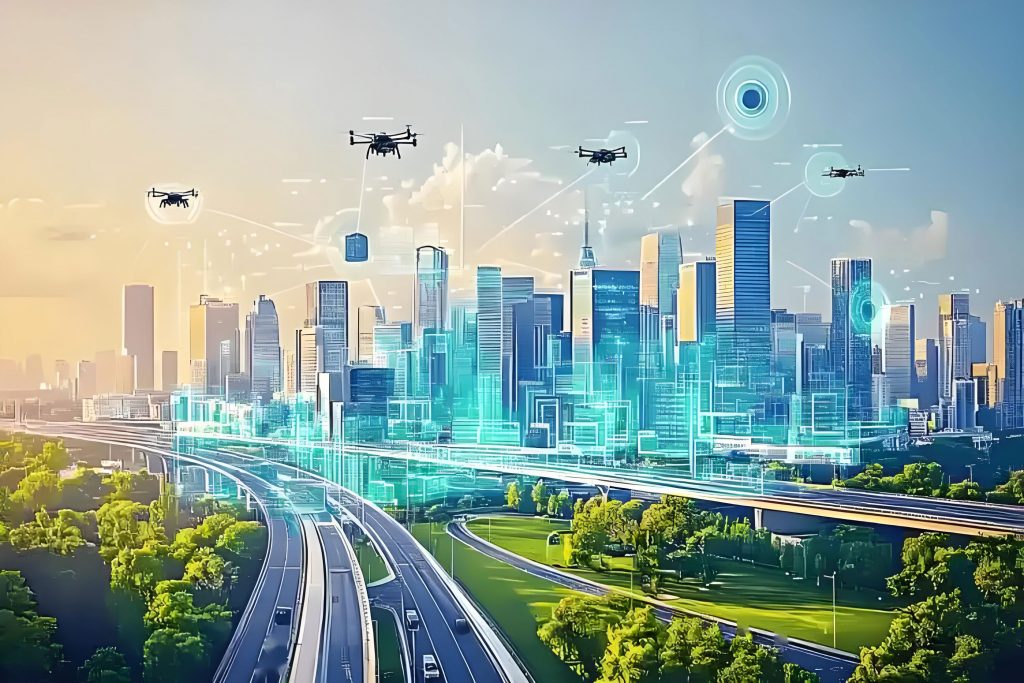
Despite its promise, the low altitude economy faces several challenges that hinder its full realization. Technologically, issues like limited battery life, precision in autonomous systems, and interoperability standards require urgent attention. Regulatory frameworks are often underdeveloped, necessitating updated policies to address safety, privacy, and data security. Infrastructure gaps, such as the lack of vertiports and air traffic management systems, demand substantial investment. Additionally, public acceptance is crucial, as concerns over noise, privacy, and safety can impede adoption. To quantify these challenges, I propose a risk assessment formula: $$ R = \sum_{i=1}^n (P_i \cdot C_i) $$ where $R$ is the total risk, $P_i$ is the probability of challenge $i$, and $C_i$ is its impact. This emphasizes the need for holistic strategies in advancing the low altitude economy.
Looking ahead, the future of the low altitude economy depends on robust policy support, industrial clustering, and technological leadership. Governments must enact comprehensive strategies, including fiscal incentives and legal standards, to foster a conducive environment. Encouraging industry alliances and specialized zones can enhance innovation and competitiveness. Moreover, integrating new quality productive forces—such as digitalization and AI—will deepen the penetration and fusion of the low altitude economy across sectors. For instance, in logistics, the low altitude economy enables drone-based delivery systems that reduce costs and improve efficiency, aligning with ESG principles. The synergy between the low altitude economy and sustainability is pivotal for long-term growth.
Transitioning to ESG-based performance evaluation, I recognize its growing importance in the logistics sector, particularly under carbon neutrality goals. ESG—encompassing environmental, social, and governance criteria—provides a framework for assessing non-financial performance, which is essential for sustainable development. In logistics, ESG evaluation helps companies align with environmental regulations, enhance social responsibility, and improve governance structures. The low altitude economy intersects with ESG through applications like electric UAVs, which reduce emissions and support green logistics. A well-designed ESG system can drive the low altitude economy toward greater sustainability and resilience.
The significance of ESG in logistics cannot be overstated. It promotes sustainable practices by incentivizing energy-efficient technologies and resource optimization. For example, companies adopting the low altitude economy for drone logistics can lower their carbon footprint, directly impacting environmental scores. ESG also boosts brand reputation and stakeholder trust, as consumers increasingly favor ethically responsible firms. Furthermore, it aids in resource allocation by identifying risks and opportunities, ensuring long-term stability. To illustrate, I present a table of key ESG indicators relevant to logistics enterprises involved in the low altitude economy:
| ESG Dimension | Indicator | Application in Low Altitude Economy |
|---|---|---|
| Environmental (E) | Carbon emissions reduction | Use of electric UAVs for delivery |
| Social (S) | Community engagement and safety | Public education on low-altitude operations |
| Governance (G) | Transparency in reporting | Disclosure of low-altitude incident data |
Mathematically, an ESG performance score for a logistics firm can be computed as: $$ ESG_{\text{score}} = w_E \cdot E + w_S \cdot S + w_G \cdot G $$ where $E$, $S$, and $G$ are normalized scores for each dimension, and $w_E$, $w_S$, $w_G$ are weights reflecting their importance. This formula helps quantify the integration of the low altitude economy into sustainable logistics practices.
However, constructing an effective ESG指标体系 poses difficulties. Inconsistent disclosure frameworks lead to qualitative rather than quantitative data, reducing comparability. For instance, many firms in the low altitude economy may report positive outcomes while omitting negatives. Additionally, aligning ESG with financial performance is challenging due to the conflict between short-term profits and long-term sustainability goals. The lack of standardized quantitative methods further complicates evaluation, as subjective judgments can skew results. To address this, I recommend developing unified metrics, such as emission ratios or safety indices, that bridge the low altitude economy and ESG criteria. Collaborative efforts among stakeholders are essential to overcome these barriers.
In conclusion, the low altitude economy represents a dynamic frontier in modern economics, driven by innovation and new quality productive forces. Its development, though fraught with challenges, offers vast opportunities for growth and sustainability. By leveraging policy support, technological advances, and ESG integration, the low altitude economy can evolve into a cornerstone of future industries. Similarly, ESG-based evaluations will empower logistics firms to navigate the complexities of the low altitude economy while fostering environmental and social responsibility. As I reflect on these interconnections, it is clear that the low altitude economy will continue to shape economic landscapes, demanding adaptive strategies and collaborative action for a prosperous future.