
In recent years, the rapid advancement of drone technology has enabled the widespread deployment of Unmanned Aerial Vehicle (UAV) swarms in complex scenarios such as search and rescue, military operations, and logistics. However, as the scale of UAV swarms and mission complexity increase, designing efficient task allocation algorithms becomes a critical challenge. This paper addresses the issues of allocation inefficiency and conflicts arising from cross-queue influences in temporal task allocation for UAV clusters. We propose a novel Temporal Coupling Analysis-based Task Allocation (TCATA) method, which leverages distributed computation and conflict resolution to optimize global task performance under temporal constraints. Our approach focuses on the interdependencies between sequential tasks, such as those in search-and-rescue missions, where rescue tasks must follow the completion of associated search tasks. By analyzing the temporal coupling effects, we design a performance function that directly optimizes the objective and ensures validity during allocation. The TCATA method involves three phases: local adjustment set construction, communication and consensus, and global adjustment set decision-making via maximum weighted clique solving. Simulations demonstrate that TCATA outperforms existing distributed genetic algorithms, CBBA-TCC, and CNP in terms of solution quality and computational efficiency, particularly for large-scale problems with hundreds of UAVs and tasks. This work highlights the potential of drone technology in enhancing swarm intelligence and operational effectiveness.
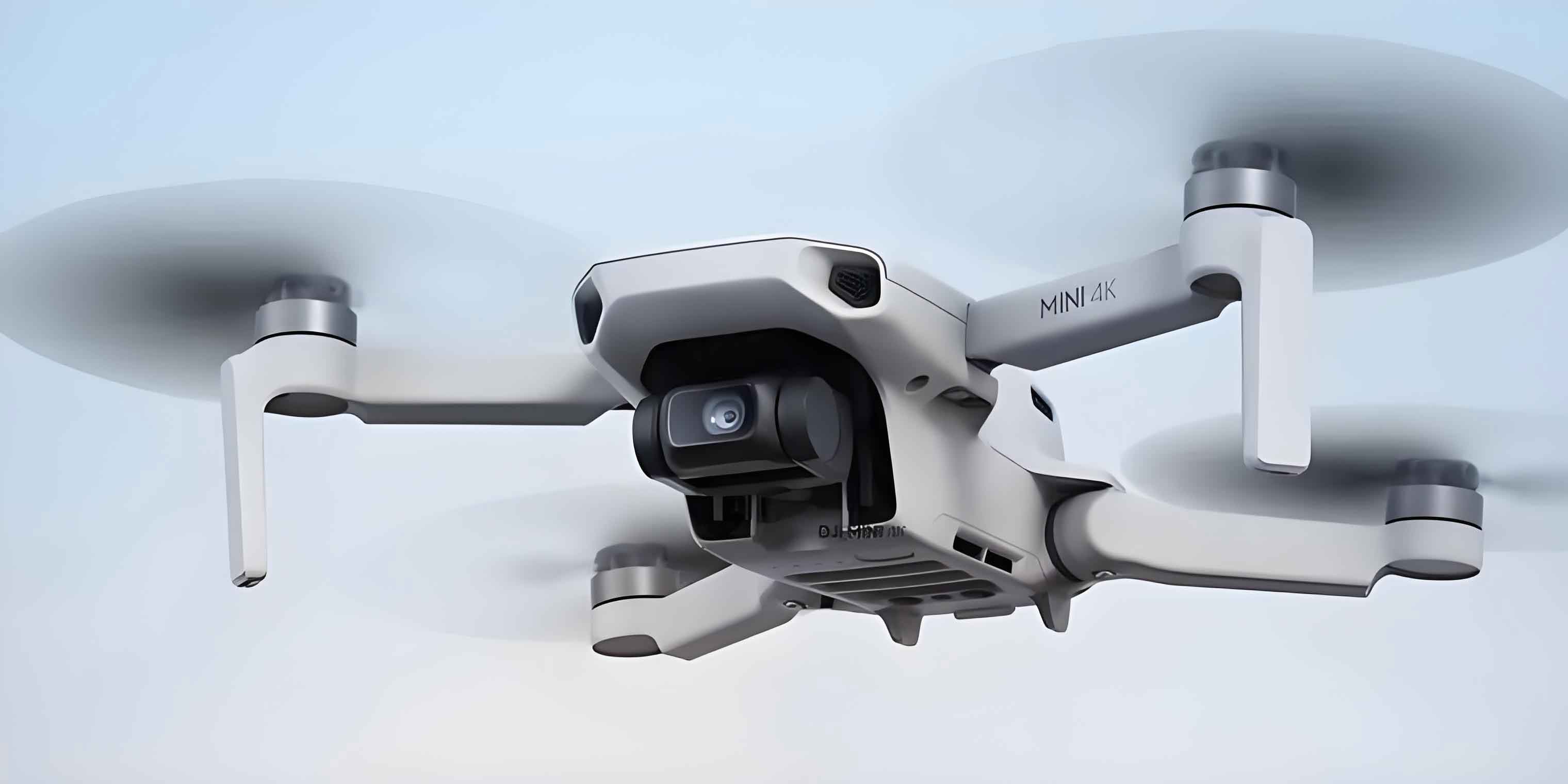
The proliferation of Unmanned Aerial Vehicle systems has revolutionized various fields, but managing large-scale UAV swarms remains a daunting task due to the inherent complexities in task allocation. Temporal constraints, where subsequent tasks depend on the completion of predecessors, introduce cross-queue influences that can lead to performance failures and conflicts in distributed allocation mechanisms. Traditional methods often struggle with these issues, resulting in suboptimal solutions and high computational overhead. In this paper, we delve into the intricacies of temporal coupling in drone technology and present a comprehensive solution that integrates analytical modeling with efficient algorithms. Our contributions include a quantitative description of temporal coupling effects, a distributed task allocation framework, and a graph-based decision strategy that minimizes communication burden and enhances convergence. Through extensive simulations, we validate the efficacy of TCATA in real-world scenarios, underscoring its superiority in handling大规模时序任务分配问题 for Unmanned Aerial Vehicle swarms.
To formalize the problem, consider a UAV swarm consisting of $n$ heterogeneous drones, denoted as $\mathcal{U} = \{u_1, u_2, \dots, u_n\}$, and a set of $m$ tasks associated with survivors, represented as $\mathcal{T} = \{t_1, t_2, \dots, t_m\}$, where $m$ is even, and each survivor corresponds to one search task and one rescue task. Each UAV $u_i$ is characterized by a tuple: $u_i = (\text{UT}_i, \text{UV}_i, \text{UR}_i, \text{UA}_i, \text{UD}_i, \text{UH}_i, L_i)$, where $\text{UT}_i \in \{1, 2\}$ indicates the type (1 for search, 2 for rescue), $\text{UV}_i$ is the maximum cruise speed, $\text{UR}_i = (x_i, y_i)$ is the initial position, $\text{UA}_i$ is the task execution queue sorted by time, $\text{UD}_i$ is the list of task start times, $\text{UH}_i$ is the set of communicable UAVs, and $L_i$ is the task execution limit. Similarly, each task $t_j$ is defined by $t_j = (\text{TS}_j, \text{TT}_j, \text{TR}_j, \text{TD}_j, \text{TE}_j, \text{TU}_j, \tau_j)$, where $\text{TS}_j$ is the associated survivor, $\text{TT}_j \in \{1, 2\}$ is the task type, $\text{TR}_j = (x_j, y_j)$ is the task location, $\text{TD}_j$ is the execution duration, $\text{TE}_j$ is the start time, $\text{TU}_j$ is the executor, and $\tau_j$ is the earliest start time constraint. The objective is to minimize the sum of all task start times, expressed as:
$$ J = \min \sum_{i=1}^{n} \sum_{t_j \in \text{UA}_i} c_{i,j}(\text{UA}_i) $$
where $c_{i,j}(\text{UA}_i)$ represents the start time of task $t_j$ when executed by UAV $u_i$ according to queue $\text{UA}_i$, calculated as:
$$ TE_j = \max\left( \tau_j, TE_{j-1} + TD_{j-1} + \frac{\text{dist}(\text{TR}_{j-1}, \text{TR}_j)}{\text{UV}_i} \right) $$
Here, $\text{dist}(\cdot)$ computes the Euclidean distance, and $\tau_j$ is derived from the preceding task’s end time for rescue tasks. The constraints include temporal dependencies: for any rescue task $t_j$ with $\text{TT}_j = 2$, the start time must satisfy $TE_j \geq TE_{\text{pre}_j} + TD_{\text{pre}_j}$, where $\text{pre}_j$ is the preceding search task. Additionally, resource heterogeneity and task limits are enforced: $\text{UT}_i = \text{TT}_j$ for all assigned tasks, and $|\text{UA}_i| \leq L_i$.
The temporal coupling in drone technology introduces cross-queue influences, meaning that adjusting one task’s allocation can affect the performance of tasks in other UAVs’ queues. To address this, we analyze the impact on the performance function and its validity. In market-based mechanisms, the performance of a task adjustment is typically computed as the change in the local objective. However, under temporal constraints, this must account for global effects. For a UAV $u_i$ considering inserting task $t_j$ at position $l$ in its queue, the performance $w_{i,j}^l$ is defined as the reduction in the global objective:
$$ w_{i,j}^l = J(\mathcal{A}) – J(\mathcal{A}^*) $$
where $\mathcal{A}$ is the current global allocation, and $\mathcal{A}^*$ is the new allocation after adjustment. The affected task set $\text{IA}_{i,j}^l$ includes not only $u_i$’s queue but also queues of UAVs executing subsequent rescue tasks linked to search tasks in $u_i$’s queue after position $l$. This set is constructed using Algorithm 1, which ensures all influenced queues are considered. The performance validity is crucial; if multiple adjustments are computed based on the same allocation, executing one may invalidate others due to changed task times. Thus, we model conflicts between adjustments based on overlapping affected sets.
The TCATA method for Unmanned Aerial Vehicle swarms operates in three phases. In the local adjustment set construction phase, each UAV $u_i$ generates a set of candidate adjustments $\mathcal{P}_i$ by evaluating possible insertions of unassigned tasks or reassignments of assigned tasks into its queue. For each candidate task $t_j$ and insertion position $l$, $u_i$ computes the performance $w_{i,j}^l$ and the affected set $\text{IA}_{i,j}^l$. The top-$\alpha$ adjustments based on performance are selected, where $\alpha$ is a tunable parameter (e.g., $\alpha=2$). This phase leverages drone technology to distribute computation, reducing the problem size for subsequent steps.
In the communication and consensus phase, UAVs exchange their local adjustment sets to achieve a consistent global set $\mathcal{CP}$. Through $D$ rounds of communication (where $D$ is the network diameter), each UAV gathers all local sets, ensuring that every drone has the same $\mathcal{CP}$. To save bandwidth, only essential data—task ID, UAV IDs, insertion position, and performance—are transmitted; the full adjustment details are reconstructed locally using stored global allocation information. This phase highlights the robustness of distributed drone technology in maintaining consistency under communication delays.
The global adjustment set decision phase formulates the selection of non-conflicting adjustments as a maximum weighted clique (MWC) problem. We construct a graph $G = (V, E)$ where vertices represent adjustments in $\mathcal{CP}$, edges indicate no conflict (i.e., disjoint affected sets), and vertex weights are the performances. The MWC problem is solved using a greedy algorithm: iteratively select the vertex with the highest weight and remove non-adjacent vertices. This ensures that the chosen adjustments can be executed simultaneously without performance invalidation. The solution updates the global allocation, and the process repeats until convergence. This approach significantly reduces iteration counts and communication overhead compared to existing methods.
We validate TCATA through simulations in a search-and-rescue scenario with up to 200 tasks and 160 UAVs. The environment is an 18 km × 12 km area with randomly distributed survivors. UAV speeds are set to 60 m/s, search tasks take 60 s, and rescue tasks take 80 s. We compare TCATA with distributed genetic algorithms (GA), CBBA-TCC, and CNP in terms of solution quality (average task end time), computation time, and iteration counts. The results demonstrate that TCATA achieves superior performance, especially in large-scale settings. For instance, with 200 tasks, TCATA reduces the average end time by over 20% compared to GA and slightly outperforms CBBA-TCC and CNP, while cutting run time and iterations by more than 50%. The table below summarizes key metrics from our experiments.
| Algorithm | Average End Time (s) | Run Time (s) | Iterations |
|---|---|---|---|
| TCATA | 320.72 | 4.38 | 42.6 |
| CBBA-TCC | 323.96 | 21.84 | 107 |
| GA | 407.76 | 30.00 | 300 |
| CNP | 348.27 | 13.59 | 452 |
Further analysis shows that TCATA’s efficiency stems from its ability to decouple problem size from task count through local adjustment sets and graph-based decision-making. The parameter $\alpha$ balances computation and communication; for example, with $\alpha=2$, TCATA achieves low run time and fast convergence. The integration of temporal coupling analysis ensures that performance calculations remain valid during allocation, minimizing conflicts and enhancing solution quality. These advantages make TCATA highly suitable for real-world applications of drone technology in dynamic environments.
In conclusion, our TCATA method effectively addresses the challenges of temporal task allocation in Unmanned Aerial Vehicle swarms by incorporating temporal coupling analysis into a distributed framework. The key innovations include a performance function that accounts for cross-queue influences, a consensus mechanism for global adjustment sets, and an MWC-based decision strategy that enables conflict-free multi-task allocation per iteration. Simulations confirm that TCATA outperforms state-of-the-art algorithms in scalability and efficiency, paving the way for more intelligent and responsive drone technology. Future work will explore deeper coupling analysis using Markov models and graph neural networks for improved optimality in complex scenarios.
The evolution of drone technology continues to push the boundaries of autonomous systems, and our contribution underscores the importance of adaptive algorithms for Unmanned Aerial Vehicle swarms. By tackling temporal dependencies head-on, TCATA sets a new standard for distributed task allocation, ensuring that UAV clusters can operate seamlessly in mission-critical applications. As drone technology advances, methods like TCATA will be essential for harnessing the full potential of swarm intelligence in an increasingly automated world.