
In recent years, the rapid advancement of drone technology has revolutionized various fields, including surveillance, logistics, and environmental monitoring. Unmanned Aerial Vehicles (UAVs) rely heavily on autonomous navigation, where path planning is a critical component. Path planning for Unmanned Aerial Vehicles involves identifying an optimal route from a start point to an endpoint while adhering to constraints such as obstacle avoidance, energy consumption, and time efficiency. Traditional search algorithms often struggle with the complex search spaces and multiple limitations inherent in UAV path planning. Inspired by natural swarm behaviors, metaheuristic optimization algorithms have gained prominence due to their robust global search capabilities. Among these, the Hyperbolic Sine-Cosine Optimization Algorithm (SCHO) has shown promise, but it suffers from drawbacks like poor search accuracy, slow convergence, and a tendency to fall into local optima. To address these issues, this paper proposes an enhanced version called the Segment-guided Dynamic-partition Hyperbolic Sine-Cosine Optimizer (SDSCHO). This improved algorithm incorporates chaos mapping, nonlinear oscillation factors, segment guidance with reverse escape mechanisms, and dynamic boundary partitioning to enhance performance in UAV path collaborative planning. The effectiveness of SDSCHO is validated through benchmark function tests and practical UAV path planning scenarios in three-dimensional mountainous terrains with various threats.
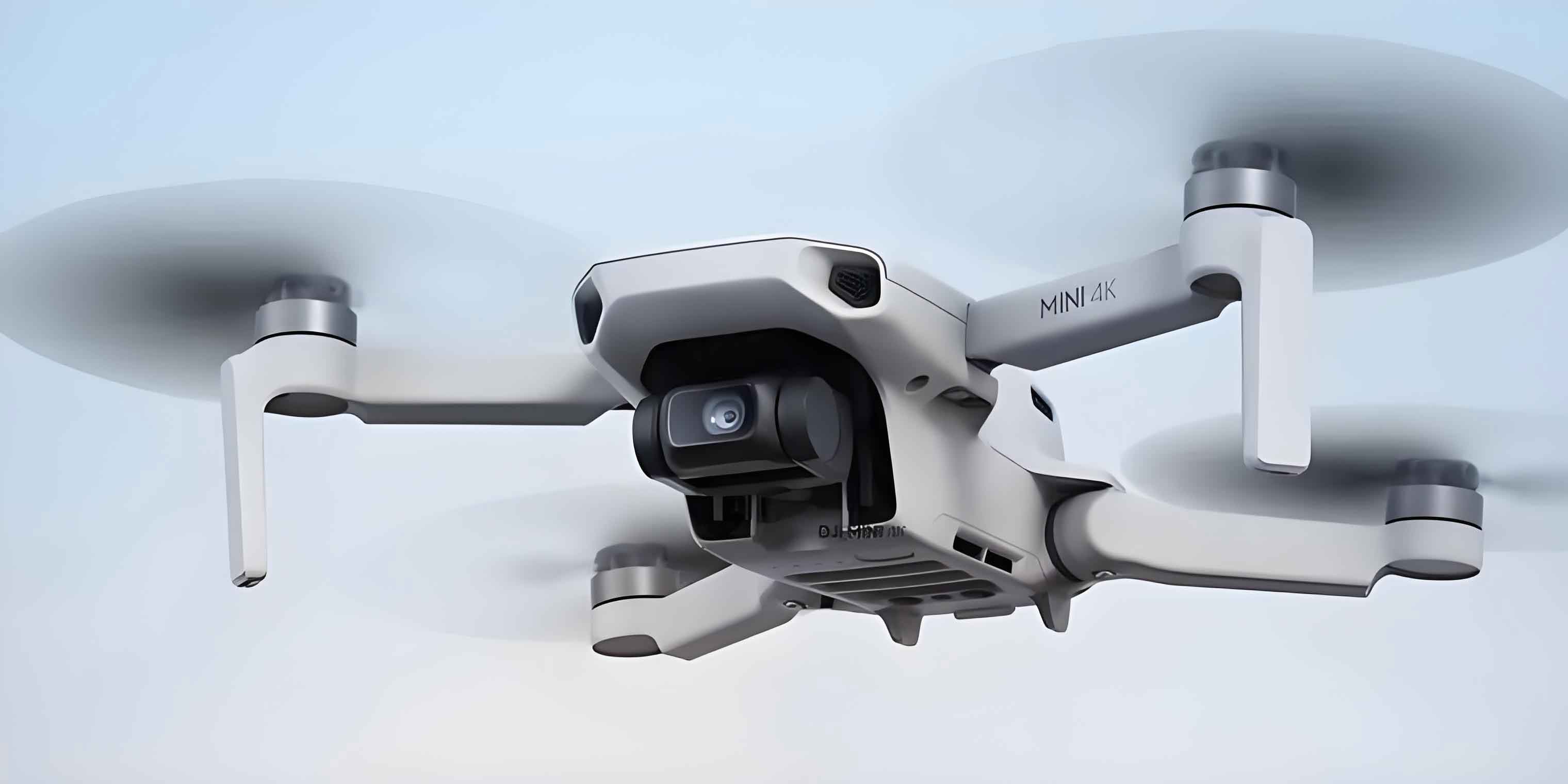
Path planning for Unmanned Aerial Vehicles is a multifaceted problem that requires modeling the environment, defining threats, and optimizing multiple cost factors. The three-dimensional geographic model for UAV flight includes terrain features, obstacle distributions, and no-fly zones. The terrain is represented using mathematical functions to simulate realistic environments, such as mountainous regions. For instance, the baseline terrain model can be defined as:
$$Z(x, y) = \sin(y + a) + b \sin(x) + c \cos(d \sqrt{x^2 + y^2}) + e \cos(y) + f \sin(g \sqrt{x^2 + y^2})$$
where $x$ and $y$ are coordinates on the horizontal plane, $Z$ is the elevation, and $a$, $b$, $c$, $d$, $e$, $f$, $g$ are constants controlling the terrain’s undulations. Additionally, natural mountain peaks are modeled using Gaussian functions:
$$Z(x, y) = \sum_{i=1}^{n} h_i \exp\left[-\left(\frac{x – x_i}{x_{si}}\right)^2 – \left(\frac{y – y_i}{y_{si}}\right)^2\right]$$
where $(x_i, y_i)$ is the center of peak $i$, $h_i$ is the height parameter, $x_{si}$ and $y_{si}$ control the slope decay, and $n$ is the number of peaks. Threats in the environment include ground radar and no-fly zones. Ground radar threats are modeled as hemispheres with a detection radius, while no-fly zones are represented as cylinders. The cost model for UAV path planning integrates multiple factors: path length, flight height, turning angle, and threat avoidance. The total cost function is formulated as:
$$f = w_1 J_{path} + w_2 J_{height} + w_3 J_{curve} + J_o + J_m$$
where $w_1$, $w_2$, $w_3$ are weights summing to 1, $J_{path}$ is the path length cost, $J_{height}$ is the height cost, $J_{curve}$ is the turning angle cost, $J_o$ is the threat cost, and $J_m$ is the multi-UAV collision avoidance cost. Specifically, the path length cost is computed as the sum of Euclidean distances between consecutive waypoints:
$$J_{path} = \sum_{i=1}^{N} L_{path,i}, \quad L_{path,i} = \sqrt{(x_{i+1} – x_i)^2 + (y_{i+1} – y_i)^2 + (z_{i+1} – z_i)^2}$$
The height cost ensures stable flight by minimizing deviations from the average height:
$$J_{height} = \frac{1}{N} \sum_{i=1}^{N} (z(i) – z_{avg})^2, \quad z_{avg} = \frac{1}{N} \sum_{i=1}^{N} z(i)$$
The turning angle cost penalizes sharp turns to maintain flight stability:
$$J_{curve} = \sum_{i=1}^{N} \begin{cases} \infty & \text{if } \theta_i < \theta_{max} \\ \cos \theta_i – \cos \theta_{max} & \text{otherwise} \end{cases}, \quad \cos \theta_i = \frac{\mathbf{a}_i \cdot \mathbf{a}_{i+1}}{|\mathbf{a}_i| |\mathbf{a}_{i+1}|}$$
Threat costs for radar and no-fly zones are defined to avoid prohibited areas:
$$J_o = \begin{cases} \infty & \text{if } L_i < R_i \text{ for radar} \\ \infty & \text{if } L_i < R_i \text{ and } z \in [0, H_i] \text{ for no-fly zones} \\ 0 & \text{otherwise} \end{cases}$$
where $L_i$ is the distance to the threat source. For multi-UAV scenarios, an additional cost $J_m$ is included to prevent collisions:
$$J_m = \begin{cases} \infty & \text{if } L_{x,t} > r \text{ or } L_{y,t} > r \text{ or } L_{z,t} > r \\ 0 & \text{otherwise} \end{cases}$$
where $L_{x,t}$, $L_{y,t}$, $L_{z,t}$ are distances between UAVs at time $t$, and $r$ is the UAV’s radius.
The standard Hyperbolic Sine-Cosine Optimization Algorithm (SCHO) is a metaheuristic that mimics the behavior of hyperbolic functions. It consists of exploration and exploitation phases, bounded search, and a switching mechanism. The transition between phases is controlled by a conversion factor $T$:
$$T = \text{floor}\left(\frac{T_{max}}{ct}\right)$$
where $ct = 3.6$ is a switch point coefficient. In the exploration phase, positions are updated based on the best solution and random weights:
$$X_{i,j}(t+1) = \begin{cases} X_{best,j} + r_1 \cdot W_1 \cdot X_{i,j}(t) & \text{if } r_2 > 0.5 \\ X_{best,j} – r_1 \cdot W_1 \cdot X_{i,j}(t) & \text{if } r_2 \leq 0.5 \end{cases}$$
where $r_1$, $r_2$ are random numbers in [0,1], and $W_1$ is a weight coefficient defined as:
$$W_1 = r_3 \cdot a_1 \cdot \cosh(r_4) + u \cdot r_4 – 1$$
with $a_1 = 3 \times (1.3 – m \times t / T_{max})$, $m=0.45$, $u=0.388$. In the second exploration stage, positions are updated as:
$$X_{i,j}(t+1) = \begin{cases} X_{i,j}(t) + W_2 \cdot |X_{best,j} – X_{i,j}(t)| \cdot \epsilon & \text{if } r_5 > 0.5 \\ X_{i,j}(t) – W_2 \cdot |X_{best,j} – X_{i,j}(t)| \cdot \epsilon & \text{if } r_5 \leq 0.5 \end{cases}$$
where $W_2 = r_6 \cdot a_2$, $a_2 = 2 \times (n – t / T_{max})$, $n=0.5$, $\epsilon=0.003$. The exploitation phase focuses on local search around the best solution:
$$X_{i,j}(t+1) = \begin{cases} X_{best,j} + r_7 \cdot W_3 \cdot X_{i,j}(t) & \text{if } r_8 > 0.5 \\ X_{best,j} – r_7 \cdot W_3 \cdot X_{i,j}(t) & \text{if } r_8 \leq 0.5 \end{cases}$$
with $W_3 = r_9 \cdot a_1 \cdot \cosh(r_{10}) + u \cdot r_{10}$. In the second exploitation stage, a deeper search is performed:
$$X_{i,j}(t+1) = X_{i,j}(t) + r_{11} \cdot W_2 \cdot |X_{best,j} – X_{i,j}(t)| \cdot \frac{\sinh(r_{12})}{\cosh(r_{12})}$$
Bounded search is used to explore potential spaces dynamically, with boundaries updated as:
$$ub_k = X_{best,j} + (1 – \frac{t}{T_{max}}) \cdot |X_{best,j} – X_{second,j}|$$
$$lb_k = X_{best,j} – (1 – \frac{t}{T_{max}}) \cdot |X_{best,j} – X_{second,j}|$$
A switching mechanism based on a function $A$ determines the phase:
$$A = \left(\frac{\cosh(\eta)}{\sinh(\eta)} – p \cdot q \cdot r_{13}\right), \quad \eta = \frac{t}{T_{max}}$$
where $p=10$, $q=9$. If $A>1$, exploration is performed; otherwise, exploitation occurs.
To enhance SCHO for UAV path planning, several improvements are introduced in SDSCHO. First, Circle chaos mapping is used for population initialization to improve diversity:
$$X_{i+1} = \text{mod}\left(X_i + 0.2 – \frac{0.5}{2\pi} \sin(2\pi X_i), 1\right)$$
This generates a more uniform distribution of initial solutions compared to random initialization. Second, a nonlinear oscillating conversion factor $T_s$ is proposed to balance exploration and exploitation:
$$T_s = T + c \cdot \sin(t) + a + b \cdot t$$
$$a = 1 + \frac{r_{14}}{2}, \quad c = 0.7 \cdot r_{14}, \quad b=1.5$$
where $r_{14}$ is a random number in [0,1]. This factor oscillates nonlinearly, allowing the algorithm to revisit exploration phases and escape local optima. Third, segment guidance with reverse escape optimization is implemented. For $t \leq T_s$, positions are updated using the current and best solutions:
$$X_{i,j}(t+1) = X_{i,j}(t) + F \cdot r_{15} \cdot X_{best,j}(t)$$
For $t > T_s$, the worst solution and opposite positions are used:
$$X_{i,j}(t+1) = X_{best,j}(t) + F \cdot r_{16} \cdot \left(\frac{ub – lb}{2} – X_{worst,j}(t)\right)$$
where $F = +1$ if $p \leq 0.5$, otherwise $F = -1$, and $p$ is a random number. Finally, dynamic boundary partitioning assists position updates. After each iteration, individuals are split into superior and inferior groups. For superior individuals, random opposition-based learning is applied:
$$X_{new}(t) = lb + (ub – r_{17}) \cdot X_i(t)$$
For inferior individuals, dynamic reinitialization within temporary boundaries is used:
$$X_{new}(t) = r_{18} \cdot (inub – inlb) + inlb$$
$$inub = \frac{ub}{2} – X_i(t), \quad inlb = \frac{lb}{2} – X_i(t)$$
where $r_{17}$, $r_{18}$ are random numbers. This strategy enhances diversity and avoids local stagnation.
The path planning process using SDSCHO involves setting parameters such as population size, iteration count, and problem dimensions. For a 3D environment with start and end points, waypoints are generated, and cubic B-spline curves smooth the path. The fitness is evaluated using the cost function $f$. The algorithm iteratively improves the path by updating positions based on SDSCHO mechanisms.
Experiments are conducted to validate SDSCHO’s performance. Benchmark functions from CEC2005 are used, including unimodal and multimodal types. The results are compared with SCHO, MSCHO, PSO, WOA, AOA, SAOA, and MAOA. Statistical measures like best, average, and worst costs, along with standard deviation, are recorded. For unimodal functions like Sphere and Schwefel, SDSCHO achieves faster convergence and higher accuracy. For multimodal functions like Generalized Schwefel, SDSCHO finds global optima where others fail. Convergence curves and box plots demonstrate SDSCHO’s superiority in stability and robustness. Ablation studies confirm the individual contributions of each improvement strategy.
| Function | Name | Dimension | Search Range | Optimum |
|---|---|---|---|---|
| F1 | Sphere | 30 | [-100,100] | 0 |
| F2 | Schwefel 1.2 | 30 | [-100,100] | 0 |
| F3 | Schwefel 2.21 | 30 | [-100,100] | 0 |
| F4 | Step | 30 | [-100,100] | 0 |
| F5 | Quartic | 30 | [-1.28,1.28] | 0 |
| F6 | Generalized Schwefel | 30 | [-500,500] | -12569.5 |
| F7 | Penalized 1 | 30 | [-50,50] | 0 |
| F8 | Shekel’s Foxholes | 2 | [-65.536,65.536] | 1 |
| F9 | Hartman | 6 | [0,1] | -3.322 |
| F10 | Shekel | 4 | [0,10] | -10.153 |
| Function | Metric | SDSCHO | SCHO | MSCHO | SAOA | MAOA | AOA | WOA | PSO |
|---|---|---|---|---|---|---|---|---|---|
| F1 | Best | 0.0 | 0.0 | 0.0 | 2.39e-297 | 4.34e-142 | 5.86e-23 | 3.23e-20 | 1056.32 |
| Average | 0.0 | 0.0 | 0.0 | 4.07e-261 | 1.30e-141 | 3.84e-21 | 2.07e-17 | 2445.94 | |
| Std | 0.0 | 0.0 | 0.0 | 2.90e-200 | 3.76e-285 | 2.50e-50 | 3.39e-34 | 328216.59 | |
| F6 | Best | -12569.50 | -6008.82 | -4593.70 | -1945.41 | -5003.10 | -4940.11 | -6744.43 | -3781.08 |
| Average | -12474.71 | -5084.20 | -4430.70 | -1528.84 | -4827.70 | -4560.79 | -6140.71 | -2922.87 | |
| Std | 16407.91 | 275749.73 | 1048944.87 | 134260.94 | 43604.38 | 1142607.57 | 222964.65 | 355660.57 | |
| F10 | Best | -10.1531 | -5.10500 | -5.05999 | -3.76889 | -10.1011 | -4.57576 | -0.89946 | -2.63041 |
| Average | -10.1531 | -3.45571 | -9.40230 | -3.61897 | -10.0113 | -2.24770 | -0.27894 | -1.70355 | |
| Std | 4.66e-11 | 1.27931 | 0.00509 | 0.905492 | 0.00018 | 1.05935 | 0.15743 | 2.46177 |
For UAV path planning, a 3D mountainous environment of 100km × 100km × 100km is simulated. The start point is (0,0,10) and the endpoint is (100,100,70). Threats include radar and no-fly zones with specified parameters. In single-path planning, SDSCHO achieves a lower cost and smoother path compared to SCHO and MSCHO. The convergence curves show rapid initial improvement and better final results. In multi-path collaborative planning for three UAVs, SDSCHO efficiently avoids obstacles and minimizes collision risks, outperforming other algorithms in average path cost. The integration of drone technology and advanced optimization ensures reliable Unmanned Aerial Vehicle operations in complex scenarios.
| Algorithm | Best Cost | Average Cost | Worst Cost | Variance |
|---|---|---|---|---|
| SDSCHO | 210.9 | 214.11 | 219.4 | 3.4799 |
| SCHO | 227.4 | 229.6 | 241.6 | 9.5533 |
| MSCHO | 226.1 | 229.11 | 238.6 | 6.7929 |
| Algorithm | Path 1 Cost | Path 2 Cost | Path 3 Cost | Average Cost |
|---|---|---|---|---|
| SDSCHO | 212.2 | 114.9 | 116.1 | 147.7 |
| SCHO | 213.4 | 137.2 | 133.8 | 161.5 |
| MSCHO | 226.2 | 136.6 | 117.7 | 160.1 |
| SAOA | 217.4 | 131.9 | 134.9 | 161.4 |
| MAOA | 222.5 | 127.2 | 146.1 | 165.2 |
| AOA | 234.9 | 144.7 | 125.0 | 168.2 |
| WOA | 213.7 | 137.5 | 137.9 | 163.0 |
| PSO | 217.2 | 145.5 | 139.5 | 167.4 |
In conclusion, the proposed SDSCHO algorithm significantly enhances the Hyperbolic Sine-Cosine Optimizer for UAV path collaborative planning. Through chaos mapping, nonlinear factors, segment guidance, and dynamic partitioning, it achieves higher accuracy, faster convergence, and better avoidance of local optima. Applications in single and multi-path scenarios demonstrate its practicality for Unmanned Aerial Vehicle operations. Future work will focus on dynamic threat environments and real-time path planning to further advance drone technology in实战 conditions.