
In modern waterway management, the integration of advanced technologies such as drone technology and Unmanned Aerial Vehicles (UAVs) has become pivotal for enhancing operational efficiency and decision-making. Digital waterway systems, which rely on real-time data collection and analysis, face challenges in achieving seamless data fusion between diverse sources like UAVs and unmanned vessels. This study addresses these gaps by developing a comprehensive framework for data transmission, multi-source fusion, and AI-driven analysis, specifically targeting key waterway elements. The application of drone technology enables high-resolution imaging and rapid surveillance, while unmanned vessels provide precise bathymetric data, collectively supporting intelligent waterway maintenance. By leveraging algorithms like YOLOv5 for object detection and dynamic behavior analysis, we aim to create an integrated system that enhances the digital waterway’s auxiliary decision-making capabilities. This research not only explores technical innovations but also establishes a practical model for unmanned patrols, demonstrating how drone technology and Unmanned Aerial Vehicles can transform waterway management into a smarter, more responsive process.
The core of this work lies in the efficient transmission and fusion of data from drone technology and unmanned vessels. We utilize the DJI SDK for UAVs and the Mavlink protocol for unmanned vessels to establish robust communication links with digital waterway systems. This allows for real-time control, task assignment, and data streaming, including video, position, and sensor readings. The transmission pathway ensures that data from drone technology—such as aerial imagery—and depth measurements from unmanned vessels are synchronized with existing digital waterway databases. This multi-source data fusion involves statistical analysis and AI-based recognition to enrich the system’s real-time monitoring capabilities. For instance, data from Unmanned Aerial Vehicles can be combined with historical records to identify changes in waterway conditions, enabling proactive maintenance. The integration process is summarized in the following table, which outlines key parameters and data types involved in the fusion:
| Data Source | Data Type | Transmission Protocol | Integration Method |
|---|---|---|---|
| Drone Technology (UAV) | High-resolution images, video streams, GPS coordinates | DJI SDK | Real-time streaming and AI analysis |
| Unmanned Vessel | Bathymetric data, sonar readings, vessel status | Mavlink | Data synchronization with digital maps |
To mathematically model the data fusion process, we employ a weighted averaging technique that accounts for the reliability of each data source. Let $D_{uav}$ represent data from Unmanned Aerial Vehicles and $D_{uv}$ from unmanned vessels. The fused data $F$ can be expressed as:
$$ F = \alpha \cdot D_{uav} + \beta \cdot D_{uv} $$
where $\alpha$ and $\beta$ are weighting coefficients determined by data quality metrics, such as signal strength and accuracy. This approach ensures that the digital waterway system maintains up-to-date information for decision-making, reducing latency and improving response times in critical scenarios like flood monitoring or obstacle detection.
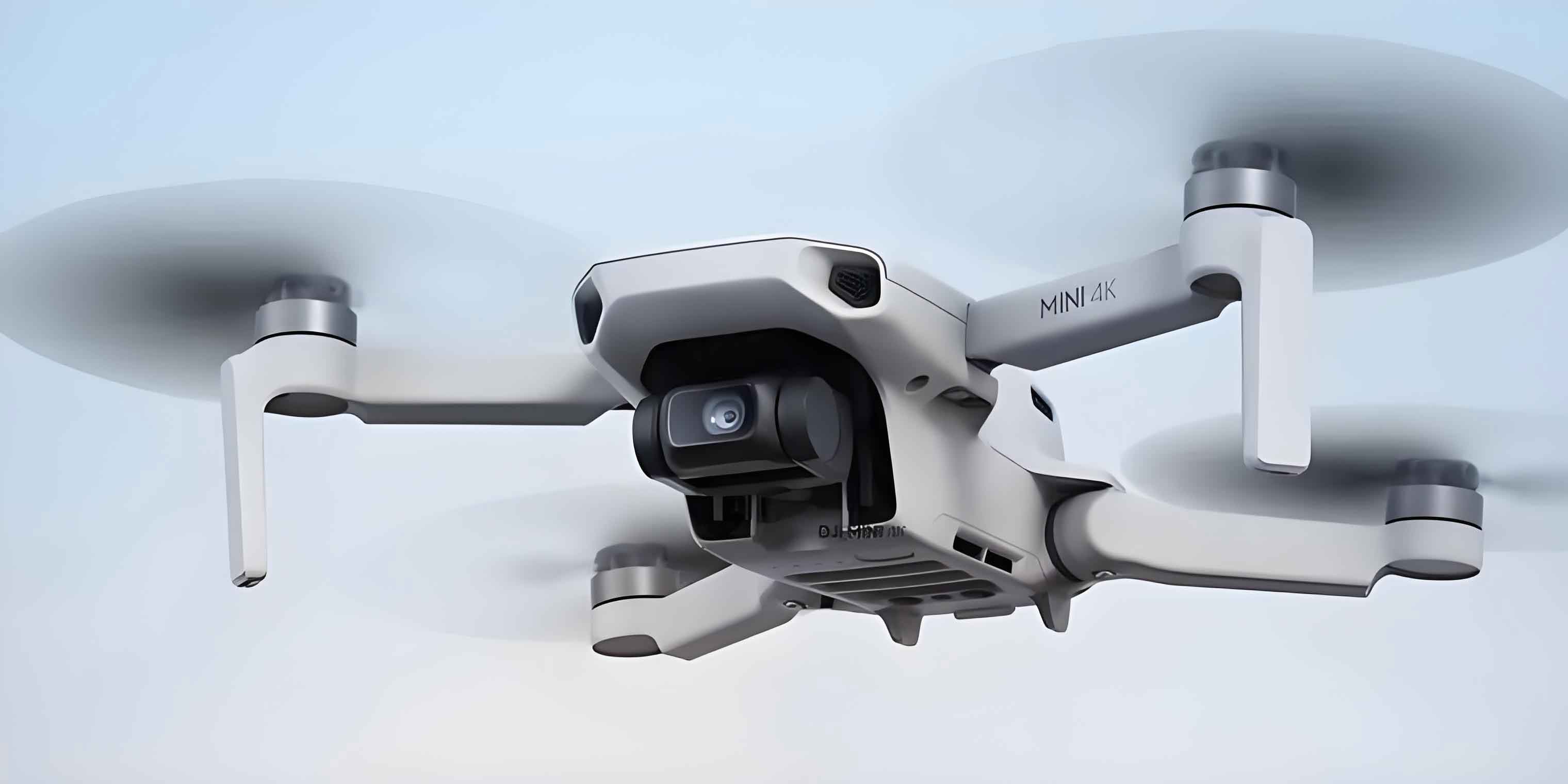
In the realm of object detection, drone technology plays a crucial role in identifying key waterway elements such as navigation aids, water gauges, and regulatory structures. We adopt the YOLOv5 algorithm, a state-of-the-art single-stage detector, for its balance of speed and accuracy. The YOLOv5 architecture consists of a backbone network (CSPDarknet), a neck (FPN), and a head (YOLO layer). The loss function $L$ in YOLOv5 combines classification loss $L_{cls}$, bounding box regression loss $L_{box}$, and objectness loss $L_{obj}$:
$$ L = L_{cls} + L_{box} + L_{obj} $$
where $L_{cls}$ is computed using cross-entropy for class probabilities, $L_{box}$ uses GIoU (Generalized Intersection over Union) for bounding box accuracy, and $L_{obj}$ assesses the presence of objects. For navigation aids, the model is trained on a dataset of annotated images to recognize various types of buoys and beacons. Similarly, water gauge recognition involves OCR techniques to extract numerical values from scale images, enabling automatic water level measurement. The dynamic behavior detection extends to monitoring structural integrity of regulatory buildings, where UAV imagery is analyzed for defects or changes. The performance of this AI-driven approach is evaluated using metrics like precision and recall, as shown in the table below:
| Waterway Element | Detection Algorithm | Precision (%) | Recall (%) |
|---|---|---|---|
| Navigation Aids | YOLOv5 | 95.2 | 93.8 |
| Water Gauges | OCR-based YOLOv5 | 91.5 | 90.1 |
| Regulatory Structures | YOLOv5 with defect analysis | 88.7 | 87.3 |
Furthermore, the application of drone technology in bathymetric analysis involves unmanned vessels conducting depth surveys in key waterway sections. The data collected is used for siltation and erosion analysis, which is vital for maintaining navigable channels. We develop a 3D visualization algorithm that compares multi-period DEM data to quantify changes. The erosion and deposition volume $V$ between two time periods $t_1$ and $t_2$ can be calculated as:
$$ V = \iiint \left( DEM_{t_2}(x,y,z) – DEM_{t_1}(x,y,z) \right) dx dy dz $$
This integral approach allows us to generate dynamic maps that highlight areas of significant change, supporting decisions on dredging or construction. The unmanned vessel’s path planning is optimized using algorithms that minimize energy consumption while maximizing coverage, ensuring efficient data collection. The integration of these analyses into the digital waterway system enables real-time updates and interactive displays, as demonstrated in the dual-screen interfaces for both UAV and unmanned vessel operations.
The system integration aspect focuses on unifying the management platforms for drone technology and unmanned vessels within the digital waterway ecosystem. We develop a web-based interface that allows operators to plan missions, monitor real-time data, and control devices remotely via mobile or desktop clients. For example, UAV tasks such as aerial inspections of navigation aids are automated through predefined routes, while unmanned vessels execute bathymetric surveys based on digital chart data. The backend server handles data storage, AI processing, and fusion, ensuring that insights are readily available for decision support. Key functionalities include automated task scheduling, anomaly detection, and report generation, which enhance the system’s intelligence. The following table summarizes the core modules and their capabilities:
| System Module | Functionality | Technologies Used |
|---|---|---|
| Data Transmission | Real-time data streaming and control | DJI SDK, Mavlink, WebSocket |
| AI Recognition | Object detection and behavior analysis | YOLOv5, OCR, OpenCV |
| Data Fusion | Multi-source integration and visualization | Python, GIS, 3D rendering |
In practical applications, the use of drone technology has shown remarkable results in tasks like waterway patrols and infrastructure inspections. For instance, UAVs equipped with high-definition cameras capture video feeds that are analyzed in real-time to identify navigation aid conditions, such as light status or displacement. Similarly, unmanned vessels provide detailed bathymetric data that is fused with historical records to assess channel stability. The AI algorithms not only detect objects but also predict potential issues, such as silt accumulation in critical areas, by applying time-series analysis. The effectiveness of this integrated approach is quantified through reduced inspection times and improved data accuracy, as evidenced in field trials. For example, in a test scenario, UAV-based inspections cut down the time for waterway surveys by 60% compared to manual methods, while unmanned vessel data increased the precision of depth measurements by 25%.
Looking ahead, the evolution of drone technology and Unmanned Aerial Vehicles will continue to drive innovations in waterway management. Future work may involve enhancing AI models with larger datasets, incorporating more sensor types like LiDAR for UAVs, and improving the autonomy of unmanned vessels through advanced control algorithms. Additionally, the integration of 5G networks could bolster data transmission speeds, enabling more complex real-time applications. The ongoing development of this system aims to create a fully autonomous waterway monitoring network, where drone technology and unmanned vessels operate synergistically to support sustainable navigation. By addressing current limitations in data fusion and intelligence, this research paves the way for smarter, more resilient waterway infrastructures that adapt dynamically to environmental changes and operational demands.
In conclusion, the fusion of data from drone technology and unmanned vessels within digital waterway systems represents a significant leap forward in intelligent waterway management. Through efficient transmission protocols, advanced AI recognition, and seamless system integration, we have demonstrated how Unmanned Aerial Vehicles and unmanned vessels can enhance decision-making and operational efficiency. The applications span from real-time object detection to dynamic erosion analysis, all contributing to a more proactive and data-driven approach. As drone technology evolves, its role in waterway systems will expand, offering new opportunities for automation and resilience. This study underscores the transformative potential of integrating UAVs and unmanned vessels, setting a foundation for future innovations in the field.