
In modern engineering fields, wireless sensor networks (WSNs) serve as the core of the Internet of Things (IoT), playing a crucial role in applications such as agriculture, marine monitoring, and healthcare. However, in remote environments like disaster rescue scenarios, the deployment and maintenance of sensor nodes are challenging due to complex terrains. To ensure long-term and efficient operation of sensors and wireless devices, enhancing the durability of WSNs is essential. Drone technology, particularly Unmanned Aerial Vehicle (UAV) systems, has emerged as a promising solution due to their high mobility and low cost. UAVs can act as aerial mobile chargers to replenish the energy of ground or aerial devices in WSNs, thereby improving network sustainability. Nonetheless, UAVs face limitations in onboard energy, and their energy consumption during hovering or flight directly impacts charging performance. Thus, rational deployment planning and resource allocation for UAVs are critical to maximizing charging efficiency.
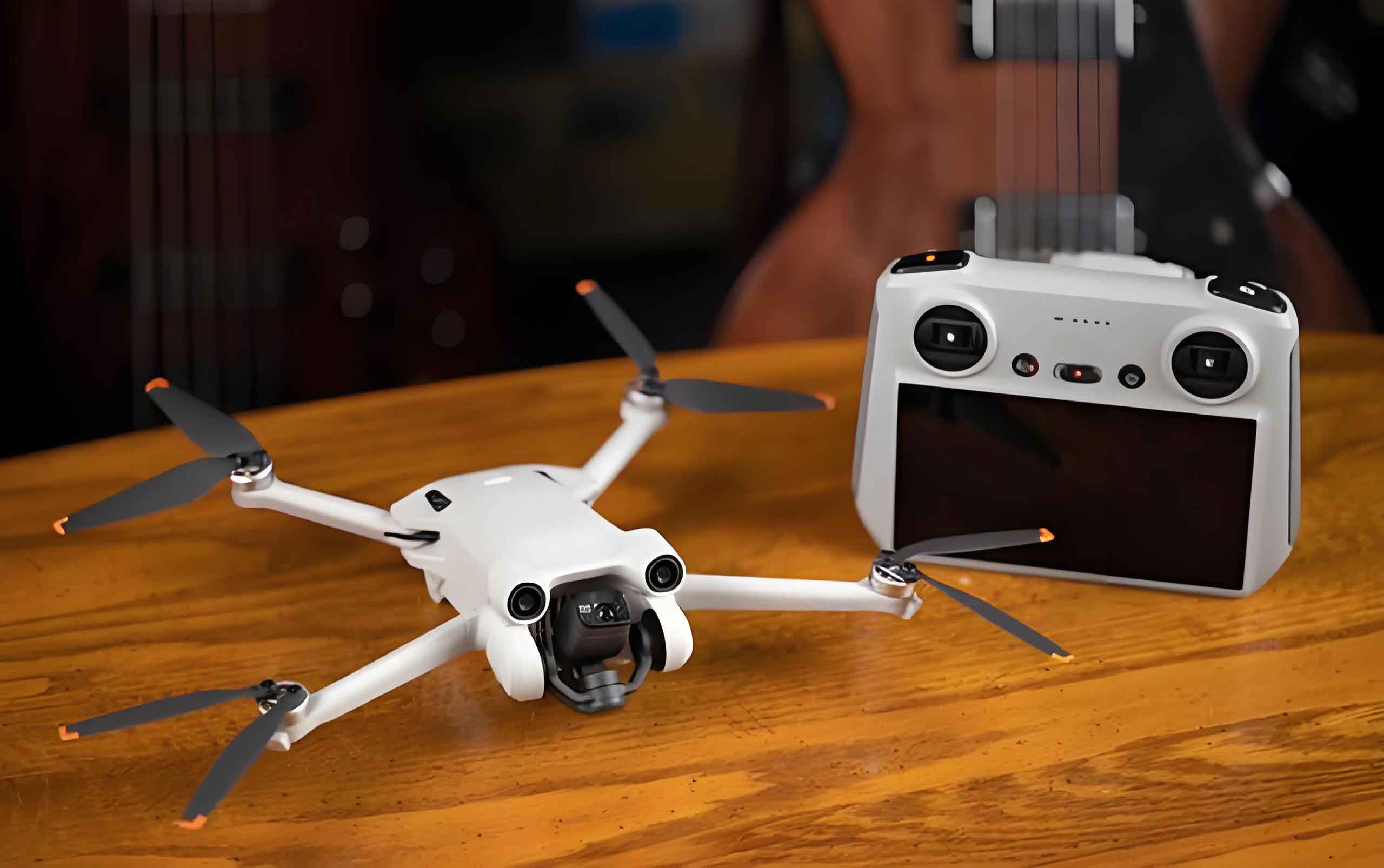
Existing research has explored various aspects of UAV-assisted WSNs, such as data collection and energy supplementation. For instance, some studies focus on optimizing the average age of information by adjusting UAV visitation sequences, while others employ reinforcement learning to enhance task execution efficiency. However, these approaches often overlook the dynamic hovering positions and limited onboard energy of UAVs in three-dimensional (3D) environments. Moreover, charging efficiency can be further improved by considering joint optimization of hovering locations and charging times. To address this, we construct a multi-objective optimization model that minimizes the total charging time while maximizing the energy replenished for network devices. The model accounts for UAV energy constraints and 3D network characteristics, making it a complex NP-hard problem.
The charging model for UAVs is based on wireless power transfer, where the received power at a sensor device depends on the distance from the UAV. We define the received power $\sigma_{ij}$ for the $i$-th device from the $j$-th hovering position as:
$$ \sigma_{ij} = \begin{cases}
\frac{\alpha}{(d_{ij} + \beta)^2} & \text{if } d_{ij} \leq d_{\text{max}} \\
0 & \text{otherwise}
\end{cases} $$
where $\alpha = \frac{\eta \lambda^2 G_s G_r \sigma_0}{16\pi^2 L_p}$, $\beta = \sqrt{\frac{\alpha}{\sigma_{\text{min}}}} – d_{\text{max}}$, $d_{ij}$ is the Euclidean distance, $d_{\text{max}}$ is the maximum effective charging distance, $\sigma_0$ is the UAV’s transmission power, and $\sigma_{\text{min}}$ is the minimum receivable power threshold. The total energy received by the $i$-th device, considering its energy capacity $\theta_c$, is:
$$ E(i) = \min \left\{ \theta_c, \sum_{j=1}^{m} \sigma_{ij} t_{H_j} \right\} $$
where $t_{H_j}$ is the hovering time at the $j$-th position. The UAV’s energy consumption includes mobility, hovering, and charging components. The mobility energy $C_{\text{mov}}$ is proportional to the total path length $\Re$, calculated as:
$$ \Re = \sum_{j=1}^{m} D_j^{us} + \| H_m – BS \|_2 $$
where $D_j^{us}$ is the distance between consecutive hovering points, and $BS$ is the base station. The total energy consumption $C_{\text{sum}}$ is:
$$ C_{\text{sum}} = C_{\text{mov}} + C_{\text{hov}} + C_{\text{char}} = \mu \Re + P_{\text{hov}} \sum_{j=1}^{m} t_{H_j} + \sigma_0 \sum_{j=1}^{m} t_{H_j} $$
with $\mu = P_{\text{mov}} / v$ being the mobility cost per unit length, $P_{\text{hov}}$ the hovering power, and $v$ the economic cruise speed. The UAV must satisfy the onboard energy constraint $C_{\text{sum}} \leq B$.
The multi-objective optimization model aims to minimize the total charging time $f_2$ and maximize the total charged energy $f_1$, formulated as:
$$ \min \, F = \{ -f_1, f_2 \} $$
where
$$ f_1 = \sum_{i=1}^{n} E(i), \quad f_2 = \sum_{j=1}^{m} t_{H_j} $$
subject to:
$$ \begin{aligned}
& X_{\min} \leq X_j \leq X_{\max} \\
& Y_{\min} \leq Y_j \leq Y_{\max} \\
& Z_{\min} \leq Z_j \leq Z_{\max} \\
& C_{\text{sum}} \leq B
\end{aligned} $$
This model involves discrete solution spaces for hovering positions and charging times, requiring global search techniques. We propose an Enhanced Multi-Objective Particle Swarm Optimization (EMOPSO) algorithm, incorporating chaos theory, Grey Wolf Optimization (GWO) update strategies, and Cauchy operator mutation to improve global search capability.
The EMOPSO algorithm initializes the population using ICMIC chaos mapping to ensure uniform distribution in the solution space. The position update combines PSO and GWO strategies with a 50% probability, and Cauchy mutation is applied to escape local optima. The algorithm steps are summarized in Table 1.
| Step | Description |
|---|---|
| 1 | Initialize parameters: population size $NN$, max iterations $IT$, fitness functions. |
| 2 | Generate initial population using ICMIC chaos mapping. |
| 3 | Evaluate fitness and determine personal best positions. |
| 4 | Identify Pareto non-dominated solutions, update adaptive grid and Archive. |
| 5 | For each iteration $t = 1$ to $IT$: |
| 6 | For each particle $i = 1$ to $NN$: |
| 7 | Select global best using grid mechanism. |
| 8 | Update velocity using PSO equation. |
| 9 | If rand > 0.5, update position via PSO; else, use GWO update. |
| 10 | Apply Cauchy mutation with 50% probability. |
| 11 | Update Archive with non-dominated solutions. |
| 12 | Return Archive as the solution set. |
For simulation, we consider a 3D WSN of size $100\text{m} \times 100\text{m} \times 100\text{m}$ with sensor counts of 50, 75, and 100. The UAV parameters are based on multi-rotor models, and key simulation parameters are listed in Table 2.
| Parameter | Value |
|---|---|
| Network Area | $100\text{m} \times 100\text{m} \times 100\text{m}$ |
| Number of Devices $n$ | 50, 75, 100 |
| Device Energy Capacity $\theta_c$ | 10 kJ |
| UAV Onboard Energy $B$ | 250 kJ |
| Max Charging Distance $d_{\text{max}}$ | 12 m |
| Transmission Power $\sigma_0$ | 200 J/s |
| Mobility Cost $\mu$ | 10 J/m |
| Hovering Power $P_{\text{hov}}$ | 20 J/s |
We compare EMOPSO with traditional MOPSO, NSGA-II, MOFPA, and MODA. The population size and maximum iterations are set to 30 and 200, respectively. Numerical results for different network sizes are shown in Table 3, demonstrating that EMOPSO achieves superior performance in both objectives.
| Device Count | Algorithm | Charged Energy $-f_1$ (J) | Charging Time $f_2$ (s) |
|---|---|---|---|
| 50 | MOPSO | -84401 | 1253.4 |
| NSGA-II | -42695 | 2636.9 | |
| MOFPA | -37746 | 2512.7 | |
| MODA | -79396 | 2061.5 | |
| EMOPSO | -111120 | 688.6 | |
| 75 | MOPSO | -99226 | 1419.1 |
| NSGA-II | -53185 | 2558.7 | |
| MOFPA | -29362 | 2545.2 | |
| MODA | -115940 | 1778.2 | |
| EMOPSO | -126400 | 1083.5 | |
| 100 | MOPSO | -102880 | 1990.5 |
| NSGA-II | -38697 | 2480.7 | |
| MOFPA | -9119 | 2705.3 | |
| MODA | -75117 | 1885.0 | |
| EMOPSO | -119660 | 1531.6 |
The Pareto front distributions for each scale show that EMOPSO solutions are closer to the true Pareto front, indicating better convergence and diversity. The UAV deployment positions obtained by EMOPSO are uniformly distributed across the network, reflecting effective exploration of the solution space. To evaluate stability, we run each algorithm 30 times independently. The results, including mean, standard deviation, maximum, and minimum values for both objectives, are summarized in Tables 4-6. EMOPSO consistently achieves lower mean values and standard deviations, confirming its robustness and stability.
| Objective | Algorithm | Mean | Std Dev | Max | Min |
|---|---|---|---|---|---|
| $-f_1$ | MOPSO | -84450 | 12310 | -69778 | -108397 |
| NSGA-II | -49243 | 12472 | -26500 | -77086 | |
| MOFPA | -18562 | 11510 | -1690 | -52248 | |
| MODA | -77730 | 11634 | -55010 | -98265 | |
| EMOPSO | -98699 | 9269 | -69778 | -115701 | |
| $f_2$ | MOPSO | 1629.7 | 270.9 | 2162.1 | 1094.6 |
| NSGA-II | 2190.8 | 159.4 | 2470.3 | 1906.9 | |
| MOFPA | 2452.8 | 160.6 | 2739.2 | 2193.5 | |
| MODA | 2072.4 | 164.2 | 2458.3 | 1822.1 | |
| EMOPSO | 1154.3 | 156.3 | 1477.0 | 823.6 |
| Objective | Algorithm | Mean | Std Dev | Max | Min |
|---|---|---|---|---|---|
| $-f_1$ | MOPSO | -76773 | 14816 | -46453 | -109959 |
| NSGA-II | -44233 | 12878 | -17694 | -66824 | |
| MOFPA | -21038 | 13026 | -2464 | -57876 | |
| MODA | -70527 | 13361 | -42993 | -97113 | |
| EMOPSO | -97515 | 12866 | -73734 | -124397 | |
| $f_2$ | MOPSO | 1599.6 | 234.3 | 2077.0 | 1198.0 |
| NSGA-II | 2059.9 | 249.3 | 2854.5 | 1707.7 | |
| MOFPA | 2399.7 | 232.7 | 2919.7 | 1927.2 | |
| MODA | 1986.5 | 230.2 | 2687.2 | 1546.5 | |
| EMOPSO | 1168.0 | 224.6 | 1573.5 | 832.2 |
| Objective | Algorithm | Mean | Std Dev | Max | Min |
|---|---|---|---|---|---|
| $-f_1$ | MOPSO | -74896 | 12000 | -49065 | -99326 |
| NSGA-II | -47491 | 11964 | -29158 | -72221 | |
| MOFPA | -21132 | 10320 | -4865 | -51409 | |
| MODA | -73091 | 13316 | -29158 | -95665 | |
| EMOPSO | -95459 | 10016 | -78965 | -117210 | |
| $f_2$ | MOPSO | 1597.7 | 266.8 | 2309.4 | 1080.4 |
| NSGA-II | 2213.0 | 205.5 | 2681.9 | 1896.3 | |
| MOFPA | 2382.0 | 255.7 | 2835.2 | 1550.8 | |
| MODA | 2023.1 | 268.7 | 2711.5 | 1530.2 | |
| EMOPSO | 1108.6 | 205.3 | 1567.7 | 842.5 |
In conclusion, our study addresses the multi-objective optimization of UAV charging efficiency in 3D WSNs under onboard energy constraints. The proposed EMOPSO algorithm, enhanced with chaos theory, GWO strategies, and Cauchy mutation, effectively balances exploration and exploitation in the solution space. Simulation results validate that EMOPSO outperforms existing algorithms in terms of solution quality and stability across various network scales. This advancement in drone technology and Unmanned Aerial Vehicle systems contributes to sustainable WSN operations in challenging environments. Future work may extend to dynamic environments and multiple UAV collaborations.