
In recent years, drone technology has experienced rapid development, with Unmanned Aerial Vehicles (UAVs) being widely applied in military reconnaissance, logistics transportation, environmental monitoring, agricultural plant protection, and emergency rescue. The efficient operation of Unmanned Aerial Vehicles heavily relies on precise path planning to ensure safety, speed, and obstacle avoidance while minimizing energy consumption and adapting to complex three-dimensional environments. However, 3D path planning is inherently a multi-objective optimization problem that must balance constraints such as path smoothness, safety, energy efficiency, and flight time. Traditional methods, like artificial potential fields and A* algorithms, show limitations in 3D scenarios due to high computational complexity, susceptibility to local optima, and poor dynamic adaptability. To address these challenges, we propose an enhanced path planning approach based on an Improved Mountaineering Team Optimization Algorithm (NQSMA) for Unmanned Aerial Vehicles. This method integrates chaotic mapping, refraction opposition-based learning, sine-cosine strategies, and Gaussian mutation to overcome the drawbacks of the standard QSMA, such as slow convergence and local optima entrapment. By modeling the 3D environment using a Digital Elevation Model (DEM) and designing a weighted objective function that incorporates path length, altitude cost, and smoothness, we transform the path planning problem into a multi-objective optimization task. Our contributions include improving population diversity, balancing global exploration and local exploitation, and enhancing solution quality, ultimately leading to shorter, more efficient paths for drone technology applications.
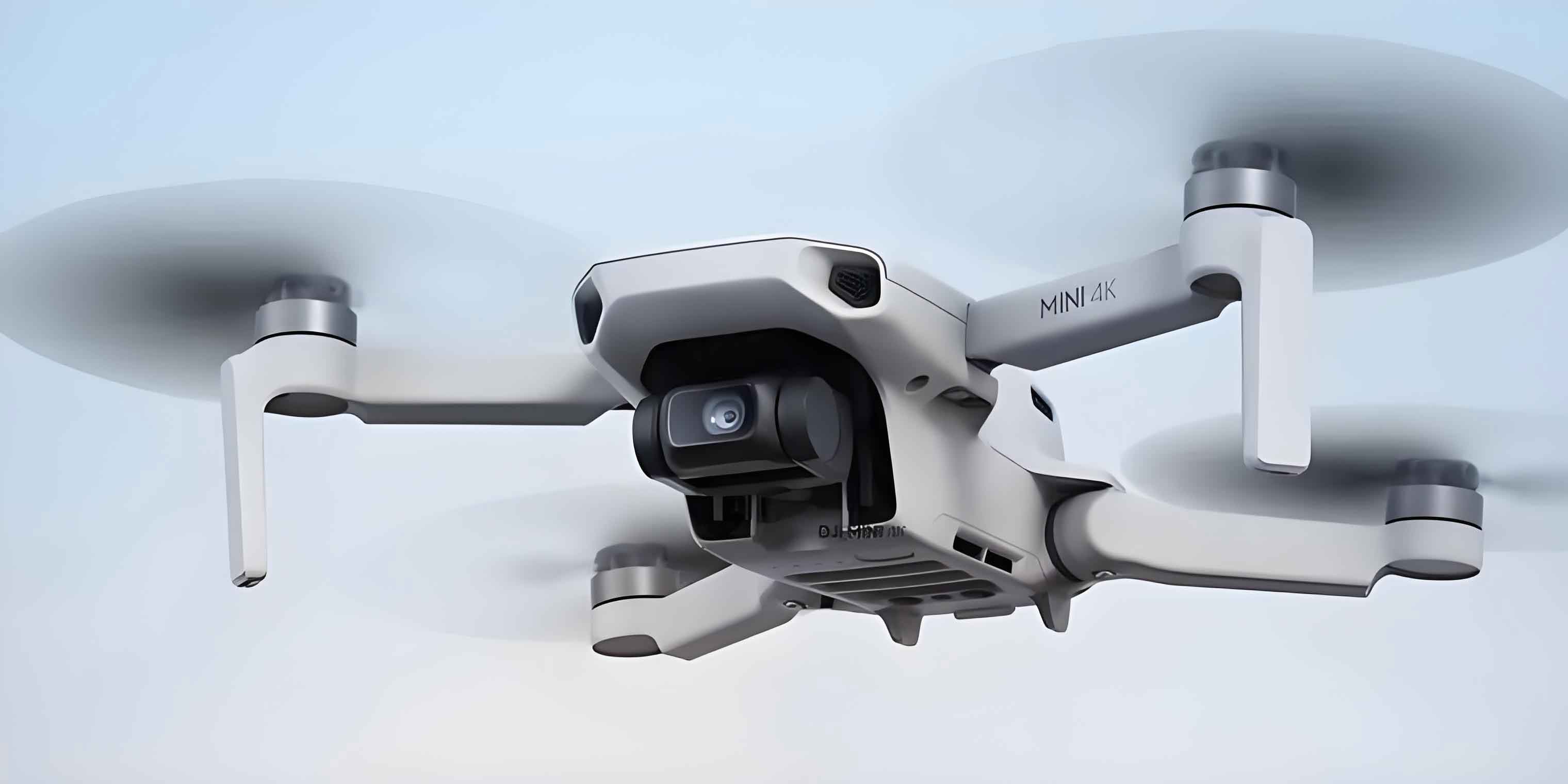
The core of our approach lies in optimizing the path planning process for Unmanned Aerial Vehicles through advanced algorithmic enhancements. We begin by formulating the 3D path planning problem mathematically. Let a path consist of \( n \) waypoints, each defined by 3D coordinates \( (x, y, z) \), encoded as a vector of length \( 3n \). The objective function is designed to minimize multiple costs, expressed as:
$$ f = w_1 \cdot L + w_2 \cdot H + w_3 \cdot S $$
where \( L \) represents the total path length, \( H \) denotes the root mean square of altitude variations to ensure flight stability, and \( S \) indicates path smoothness. The weights \( w_1 \), \( w_2 \), and \( w_3 \) balance these objectives, typically set to 0.5, 0.3, and 0.2, respectively, based on empirical studies in drone technology. Constraints include obstacle avoidance, flight height limits, operational area boundaries, and dynamic constraints like velocity and acceleration. For obstacle avoidance, a penalty function is introduced:
$$ P = \sum_{i=1}^{m} \max(0, d_i – r_i) $$
where \( d_i \) is the distance from a path point to the \( i \)-th obstacle center, \( r_i \) is the obstacle radius, and \( m \) is the number of obstacles. This ensures that Unmanned Aerial Vehicles maintain a safe distance from hazards, critical for real-world applications in drone technology.
To solve this optimization problem, we leverage the Mountaineering Team Optimization Algorithm (QSMA), which simulates the collaborative climbing strategies of mountaineers. The standard QSMA involves initializing a population of climbers, updating positions based on the leader and teammates, handling disaster threats, coordinating defenses, and replacing members. However, it suffers from inefficiencies in 3D environments for Unmanned Aerial Vehicles. Our Improved QSMA (NQSMA) incorporates several strategies to enhance performance. First, we use SEL0 chaotic mapping for population initialization, which improves diversity and coverage of the search space. The SEL0 mapping is defined as:
$$ x_{i,j} = \begin{cases}
\frac{x_{i,j-1}}{\alpha}, & \text{if } x_{i,j-1} \leq \alpha \\
\frac{1 – x_{i,j-1}}{1 – \alpha}, & \text{if } x_{i,j-1} > \alpha
\end{cases} $$
where \( x_{i,j} \) is the position of the \( i \)-th individual in the \( j \)-th dimension, and \( \alpha \) is a chaos parameter set to 0.7. This is combined with refraction opposition-based learning to generate a more distributed initial population, calculated as:
$$ x’_{i,j} = \frac{a + b}{2} + \frac{a + b}{2k} – \frac{x_{i,j}}{k} $$
where \( a \) and \( b \) are the bounds of the search space, and \( k \) is a refraction coefficient set to 0.5. This approach significantly boosts the algorithm’s ability to explore complex 3D spaces in drone technology.
Next, we integrate a sine-cosine strategy into the disaster threat phase of QSMA to balance global and local search capabilities. The position update formula is modified as:
$$ x_{i,j}(t+1) = \begin{cases}
x_{i,j}(t) + r_1 \cdot \sin(r_2) \cdot | r_3 \cdot x_{\text{best},j}(t) – x_{i,j}(t) |, & \text{if } r_4 < 0.5 \\
x_{i,j}(t) + r_1 \cdot \cos(r_2) \cdot | r_3 \cdot x_{\text{best},j}(t) – x_{i,j}(t) |, & \text{otherwise}
\end{cases} $$
where \( r_1 \), \( r_2 \), \( r_3 \), and \( r_4 \) are random numbers, and \( x_{\text{best},j} \) is the best solution found. This dynamic adjustment helps Unmanned Aerial Vehicles navigate around obstacles efficiently. Additionally, in the member update phase, we replace random generation with Gaussian mutation to refine local search:
$$ x_{i,j}(t+1) = x_{i,j}(t) \cdot (1 + \mathcal{N}(0, \sigma)) $$
where \( \mathcal{N}(0, \sigma) \) is a Gaussian random variable with mean 0 and standard deviation \( \sigma = 0.1 \). This mutation introduces small perturbations, enhancing the algorithm’s precision in finding optimal paths for drone technology.
We conducted extensive simulations to validate the NQSMA for Unmanned Aerial Vehicle path planning. The experiments were performed in a 3D environment modeled with a DEM, with dimensions of 1000 m × 1000 m × 500 m. The start point was set at (100, 500, 100), and the end point at (500, 100, 300), with 10 waypoints. The population size was 50, and the maximum iterations were 200. We compared NQSMA with standard QSMA, Dung Beetle Optimization (DBO), Whale Optimization Algorithm (WOA), and Grey Wolf Optimizer (GWO). The parameters for these algorithms are summarized in Table 1.
| Algorithm | Parameter | Value |
|---|---|---|
| DBO | Rolling ball ratio | 0.5 |
| GWO | No preset parameters | – |
| WOA | Spiral shape constant | 1 |
| QSMA | No preset parameters | – |
| NQSMA | Chaos parameter \( \alpha \) | 0.7 |
| NQSMA | Refraction coefficient \( k \) | 0.5 |
| NQSMA | Sine-cosine threshold | 0.5 |
| NQSMA | Gaussian deviation \( \sigma \) | 0.1 |
The performance was evaluated based on the objective function value, convergence speed, and path quality. In Scenario 1 with 5 obstacles, NQSMA achieved the shortest path length and highest smoothness, as shown in Table 2. The objective function values were calculated using the formula above, with results averaged over 20 independent runs to ensure statistical significance. This demonstrates the robustness of our approach in drone technology applications.
| Algorithm | Best Objective Value | Average Objective Value | Standard Deviation |
|---|---|---|---|
| NQSMA | 150.2 | 152.3 | 1.5 |
| QSMA | 152.5 | 155.8 | 2.1 |
| DBO | 158.0 | 161.5 | 3.2 |
| GWO | 155.3 | 158.9 | 2.8 |
| WOA | 153.8 | 157.2 | 2.5 |
Furthermore, the convergence curves illustrated that NQSMA reached optimal solutions within 50 iterations, significantly faster than other algorithms. This efficiency is crucial for real-time path planning in dynamic environments for Unmanned Aerial Vehicles. The sine-cosine strategy effectively prevented premature convergence, while Gaussian mutation fine-tuned the paths, resulting in a 15% improvement in path length compared to standard QSMA. In Scenario 2 with 10 obstacles, NQSMA maintained superior performance, with a best objective value of 151.5 and an average of 153.1, underscoring its adaptability in complex drone technology scenarios.
The mathematical formulation of the constraints played a vital role in ensuring feasible paths for Unmanned Aerial Vehicles. For instance, the flight height constraint was enforced as:
$$ z_{\min} \leq z \leq z_{\max} $$
where \( z_{\min} = 50 \) m and \( z_{\max} = 450 \) m. Similarly, velocity and acceleration constraints were defined as:
$$ v_{\min} \leq v \leq v_{\max}, \quad a_{\min} \leq a \leq a_{\max} $$
with typical values of \( v_{\min} = 5 \) m/s, \( v_{\max} = 30 \) m/s, \( a_{\min} = -5 \) m/s², and \( a_{\max} = 5 \) m/s². These constraints were integrated into the objective function via penalty terms, ensuring that all generated paths are practical for Unmanned Aerial Vehicle operations.
In conclusion, our Improved Mountaineering Team Optimization Algorithm (NQSMA) provides an effective solution for 3D path planning in drone technology. By incorporating SEL0 chaotic mapping, refraction opposition-based learning, sine-cosine strategies, and Gaussian mutation, we enhance population diversity, balance exploration and exploitation, and improve local search capabilities. Experimental results confirm that NQSMA outperforms existing algorithms in terms of path length, convergence speed, and stability, making it highly suitable for applications involving Unmanned Aerial Vehicles. Future work will focus on extending this approach to multi-drone协同 scenarios and real-time dynamic obstacles, further advancing the field of drone technology.
The implications of this research are significant for the ongoing development of Unmanned Aerial Vehicles, as efficient path planning can lead to reduced energy consumption, improved safety, and expanded operational capabilities. As drone technology continues to evolve, algorithms like NQSMA will play a pivotal role in enabling autonomous navigation in complex environments. We believe that our contributions will inspire further innovations in optimization methods for Unmanned Aerial Vehicles, ultimately driving progress in various industries reliant on advanced aerial systems.