
In modern drone technology, the management of flight data plays a pivotal role in enhancing safety, optimizing performance, and ensuring successful mission execution. As an integral part of Unmanned Aerial Vehicle operations, flight data encompasses a wide array of information, including real-time sensor readings, positional coordinates, and system status parameters. I have designed a robust flight data management system that addresses the challenges of collecting, storing, processing, and analyzing this data efficiently. This system leverages advanced technologies to handle the complexities inherent in drone operations, providing a foundation for intelligent decision-making and automation. The integration of drone technology into various sectors underscores the importance of reliable data management, as it enables stakeholders to derive actionable insights and improve operational outcomes. In this article, I delve into the architectural design, database structures, key algorithms, and practical applications of such a system, emphasizing the use of mathematical models and tabular summaries to illustrate core concepts. By exploring these aspects, I aim to contribute to the evolution of Unmanned Aerial Vehicle systems, fostering innovation in data-driven drone technology.
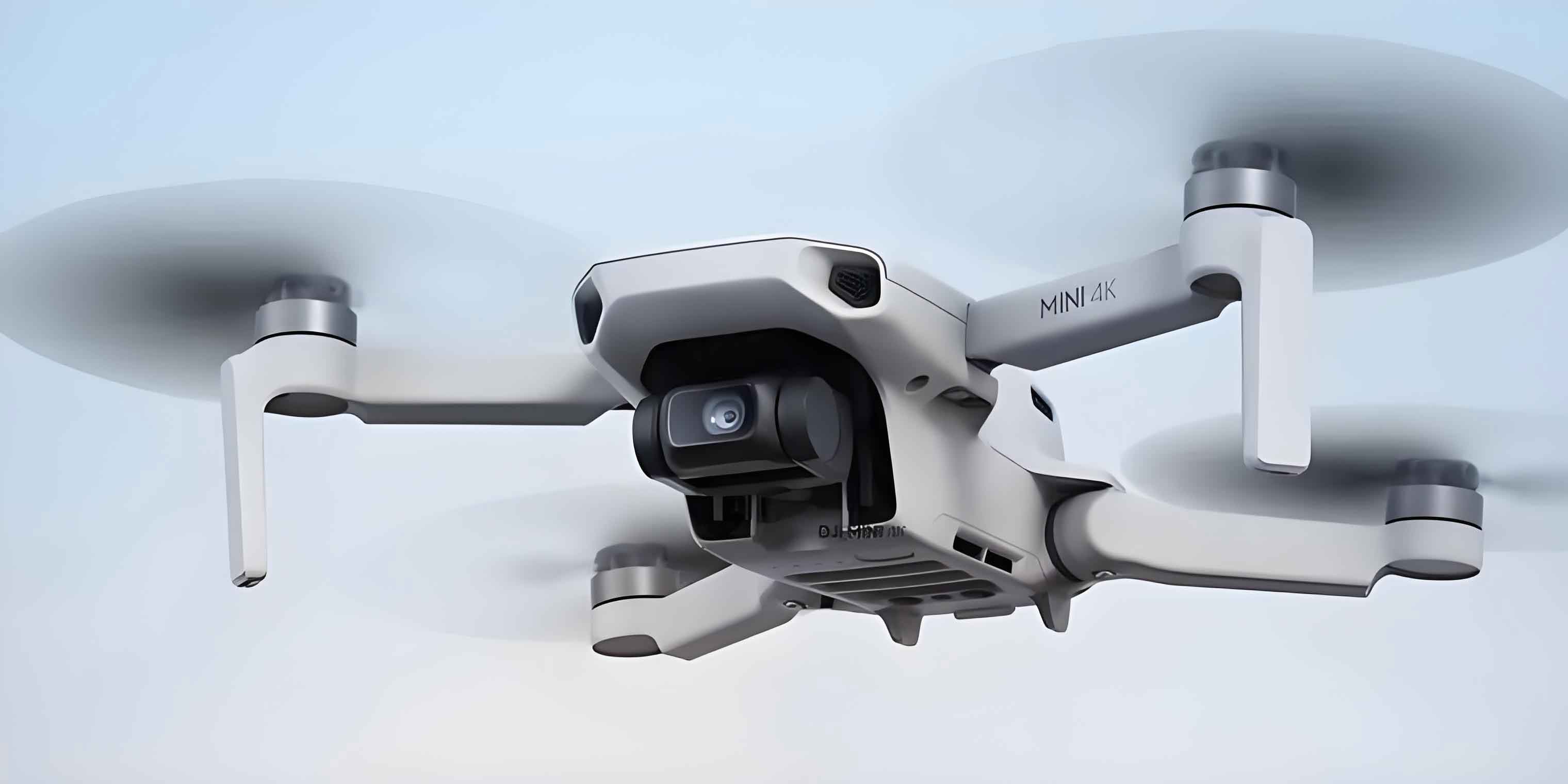
The architecture of a drone flight data management system is built upon a carefully selected stack of hardware and software components, ensuring scalability and reliability. In my approach, I prioritize modular design to facilitate seamless interaction between different parts of the system. This involves a detailed analysis of technical options, divided into hardware, software, and development tools. For hardware, I consider components such as flight controllers, motors, electronic speed controllers, and sensors like gyroscopes, accelerometers, and compasses. These elements form the backbone of data acquisition in Unmanned Aerial Vehicles, capturing essential flight parameters. The selection criteria balance performance, cost, and application-specific needs, as summarized in the table below. For instance, high-end sensors may be chosen for precision tasks, while cost-effective options suffice for routine monitoring. This hardware foundation is critical for generating accurate data streams that feed into the management system, enabling real-time analysis and historical tracking of drone performance.
| Component | Key Criteria | Examples |
|---|---|---|
| Flight Controller | Processing speed, stability | Pixhawk, DJI A3 |
| Sensors (e.g., Gyroscope) | Accuracy, noise reduction | MPU-6050, BMI160 |
| Motors and ESCs | Efficiency, torque | BLDC motors, SimonK ESCs |
| Battery | Capacity, discharge rate | LiPo, Li-ion batteries |
| Camera and Payloads | Resolution, weight | RGB cameras, multispectral sensors |
On the software side, I opt for operating systems like Linux or Windows, depending on the deployment environment, and database management systems such as MySQL or Oracle for structured data storage. The choice of development languages and frameworks, including Java, Python, JavaEE, Spring, and Django, is driven by factors like community support, integration capabilities, and performance in handling large datasets. For development tools, I utilize integrated development environments (IDEs) like Eclipse or Visual Studio, version control with Git, and project management tools such as Jira to streamline collaboration and maintain code quality. This software ecosystem supports the entire lifecycle of drone data management, from initial capture to final visualization. The modular division of the system into data acquisition, storage, processing, and display ensures that each component functions cohesively. For example, the data acquisition module interfaces directly with Unmanned Aerial Vehicle hardware, parsing and filtering raw data to ensure validity, while the storage module employs relational databases for persistent retention. This architectural design not only enhances system robustness but also aligns with the evolving demands of drone technology, enabling adaptive responses to new challenges in data handling.
In the module division, I define four core components that work in tandem to manage drone flight data. The data acquisition module serves as the entry point, responsible for collecting real-time data from Unmanned Aerial Vehicle hardware. It establishes communication protocols to retrieve state information, flight parameters, and sensor readings, then parses and filters this data to remove anomalies. Key functions include data caching for temporary storage and maintenance of data integrity during transmission. The data storage module focuses on persisting this information in databases, with features like indexing for fast querying, regular backups, and security measures to prevent unauthorized access. For instance, I implement role-based access control to safeguard sensitive drone data. The processing module handles data cleansing, integration, transformation, and mining, using algorithms to normalize datasets and extract patterns. Finally, the data display module presents processed information through interactive visualizations, such as charts and maps, allowing users to monitor drone operations and receive alerts for anomalies. This modular approach ensures that the system can scale with increasing data volumes, a common trend in advancing drone technology.
| Module | Primary Functions | Technologies Used |
|---|---|---|
| Data Acquisition | Hardware communication, data parsing, filtering, caching | Serial protocols, UDP/TCP |
| Data Storage | Data入库, querying, updating, backup, security | MySQL, PostgreSQL, indexing |
| Data Processing | Cleansing, integration, transformation, mining, analysis | Python pandas, Apache Spark |
| Data Display | Visualization, interaction, reporting, alerting | D3.js, Tableau, Grafana |
Database design is a cornerstone of effective flight data management for Unmanned Aerial Vehicles, as it dictates how information is organized, accessed, and secured. I propose a hybrid architecture that combines relational and NoSQL databases to accommodate both structured and semi-structured data. For example, MySQL is suitable for tabular data like flight parameters, while MongoDB handles unstructured sensor logs. This design supports high-concurrency读写 and scalability through techniques like data partitioning and sharding. In a cluster environment, I employ load balancing and replication to ensure high availability, with regular backup tests to mitigate data loss risks. The relationship model links entities such as drones, flight parameters, and sensor data through primary and foreign keys, maintaining referential integrity. A sample data table for flight parameters might include fields like timestamp, altitude, and velocity, with indexes to accelerate queries. This structured approach enables efficient data retrieval for analysis, which is vital for optimizing drone technology performance. Moreover, the database schema is designed to be extensible, allowing for future additions as drone applications evolve, such as integrating AI-driven analytics.
To illustrate the data modeling, consider the following relational schema for a drone flight data management system. The DroneTable contains details about each Unmanned Aerial Vehicle, such as unique ID, model, and registration date. The FlightParamTable stores flight-specific data, linked via drone ID, and includes attributes like latitude, longitude, and speed. The SensorDataTable captures readings from various sensors, also referenced by drone ID and timestamp. This model ensures that all data points are traceable to their source, facilitating comprehensive analysis. For large-scale deployments, I implement horizontal scaling by sharding data across multiple nodes based on criteria like geographic region or time periods. This not only improves query performance but also enhances fault tolerance. In terms of data consistency, I use ACID properties in relational databases for critical transactions, while eventual consistency suffices for less critical NoSQL data. The integration of these database strategies underpins the reliability of drone technology systems, enabling them to handle the vast amounts of data generated during flights.
| Table Name | Key Fields | Data Type | Relationships |
|---|---|---|---|
| DroneTable | DroneID (PK), Model, ManufactureDate | INT, VARCHAR, DATE | Links to FlightParamTable |
| FlightParamTable | FlightID (PK), DroneID (FK), Timestamp, Altitude, Velocity | INT, INT, DATETIME, FLOAT, FLOAT | Foreign key to DroneTable |
| SensorDataTable | SensorID (PK), DroneID (FK), Timestamp, GyroX, AccelY | INT, INT, DATETIME, FLOAT, FLOAT | Foreign key to DroneTable |
Key technologies and algorithms form the engine of the drone flight data management system, enabling efficient data handling and insightful visualizations. In data acquisition and transmission, I leverage sensor data fusion techniques to combine inputs from multiple sources, such as GPS, gyroscopes, and accelerometers. This reduces uncertainties and improves accuracy. A common fusion algorithm is the weighted average, represented by the formula: $$ \hat{x} = \frac{\sum_{i=1}^{n} w_i x_i}{\sum_{i=1}^{n} w_i} $$ where \( \hat{x} \) is the fused value, \( x_i \) are sensor readings, and \( w_i \) are weights based on sensor reliability. For wireless communication, I utilize 5G technology due to its low latency and high bandwidth, ideal for real-time data streams in drone technology. Data compression algorithms like H.265 minimize transmission overhead, while encryption methods such as AES ensure security. The mathematical representation of compression can be simplified as: $$ C(x) = \text{encode}(x) $$ where \( C(x) \) is the compressed data, and encode denotes the compression function. Real-time data stream processing with tools like Apache Kafka and Apache Flink allows for immediate analysis, enabling features like anomaly detection during flight.
Data visualization technologies transform raw data into interpretable formats, aiding users in monitoring Unmanned Aerial Vehicle operations. I employ interactive tools like D3.js and Tableau to create dynamic charts and dashboards that respond to user inputs. For multidimensional data, I use Cube.js to generate insights from various angles, such as time-series analysis of flight paths. Geographic Information Systems (GIS) integrate spatial data, displaying drone locations on maps for enhanced situational awareness. The formula for calculating distance between two points in GIS is: $$ d = \sqrt{(x_2 – x_1)^2 + (y_2 – y_1)^2} $$ where \( d \) is the distance, and \( (x_1, y_1) \), \( (x_2, y_2) \) are coordinates. Real-time visualization with Grafana or Kibana provides live updates on drone status, allowing for prompt interventions. These technologies not only improve user experience but also support data-driven decisions in drone technology applications, from environmental monitoring to emergency response.
| Tool | Primary Features | Use Cases in Drone Technology |
|---|---|---|
| D3.js | Customizable interactive charts | Flight trajectory plotting |
| Tableau | Drag-and-drop dashboard creation | Performance metric analysis |
| Grafana | Real-time monitoring and alerting | Live drone status updates |
| GIS Platforms | Spatial data mapping | Area coverage visualization |
The practical applications of drone flight data management span diverse sectors, demonstrating the versatility of Unmanned Aerial Vehicle technology. In natural disaster scenarios, drones equipped with sensors can rapidly assess damage and locate survivors, transmitting data to command centers for coordinated救援 efforts. For example, after an earthquake, flight data on structural integrity and victim locations can guide rescue teams, reducing response times. In environmental protection, drones monitor air quality, water sources, and wildlife populations, providing data that supports conservation policies. I have implemented systems where drone technology collects multispectral imagery to detect pollution levels, with data processed to generate compliance reports. The formula for calculating an environmental index from sensor data might be: $$ I = \sum_{j=1}^{m} \alpha_j s_j $$ where \( I \) is the index, \( s_j \) are sensor readings, and \( \alpha_j \) are weighting factors based on environmental impact. This approach enables proactive measures, such as identifying deforestation or illegal dumping.
In transportation, drone flight data management enhances traffic monitoring and accident response. Drones capture real-time footage of road conditions, vehicle densities, and incident sites, facilitating faster decision-making by authorities. For instance, data on traffic flow can be analyzed to optimize signal timings, reducing congestion. The integration of drone technology with existing infrastructure allows for comprehensive urban planning, as data on population movements and land use inform development projects. In each application, the management system ensures data accuracy and accessibility, underscoring the value of Unmanned Aerial Vehicles in modern society. As drone technology advances, these applications will expand, necessitating continuous improvements in data handling techniques.
In conclusion, the comprehensive management of drone flight data is essential for unlocking the full potential of Unmanned Aerial Vehicle systems. Through meticulous architectural design, robust database structures, and advanced algorithms, I have developed a framework that addresses the complexities of data collection, storage, processing, and visualization. The integration of mathematical models and tabular summaries highlights the systematic approach required for scalable solutions. As drone technology evolves, future research should focus on incorporating artificial intelligence and big data analytics to achieve higher levels of automation and intelligence. This will further enhance the safety, efficiency, and applicability of drones across various domains, solidifying their role in the technological landscape.