
In recent years, drone technology has advanced rapidly, offering significant advantages in terms of cost-effectiveness, flexibility, and safety for applications such as wildlife conservation and agricultural monitoring. However, Unmanned Aerial Vehicles (UAVs) often rely on Global Navigation Satellite Systems (GNSS), which are susceptible to obstacles and electromagnetic interference, leading to unreliable positioning in complex environments. To address this, visual localization methods have emerged as a robust alternative, leveraging image data for accurate positioning without GNSS dependency. This article presents a novel framework for Unmanned Aerial Vehicle localization using multi-source image feature learning, which overcomes the limitations of traditional approaches by integrating advanced neural networks and strategic enhancements. The proposed method focuses on extracting consistent features from drone and satellite images, improving matching efficiency, and ensuring real-time performance in diverse scenarios.
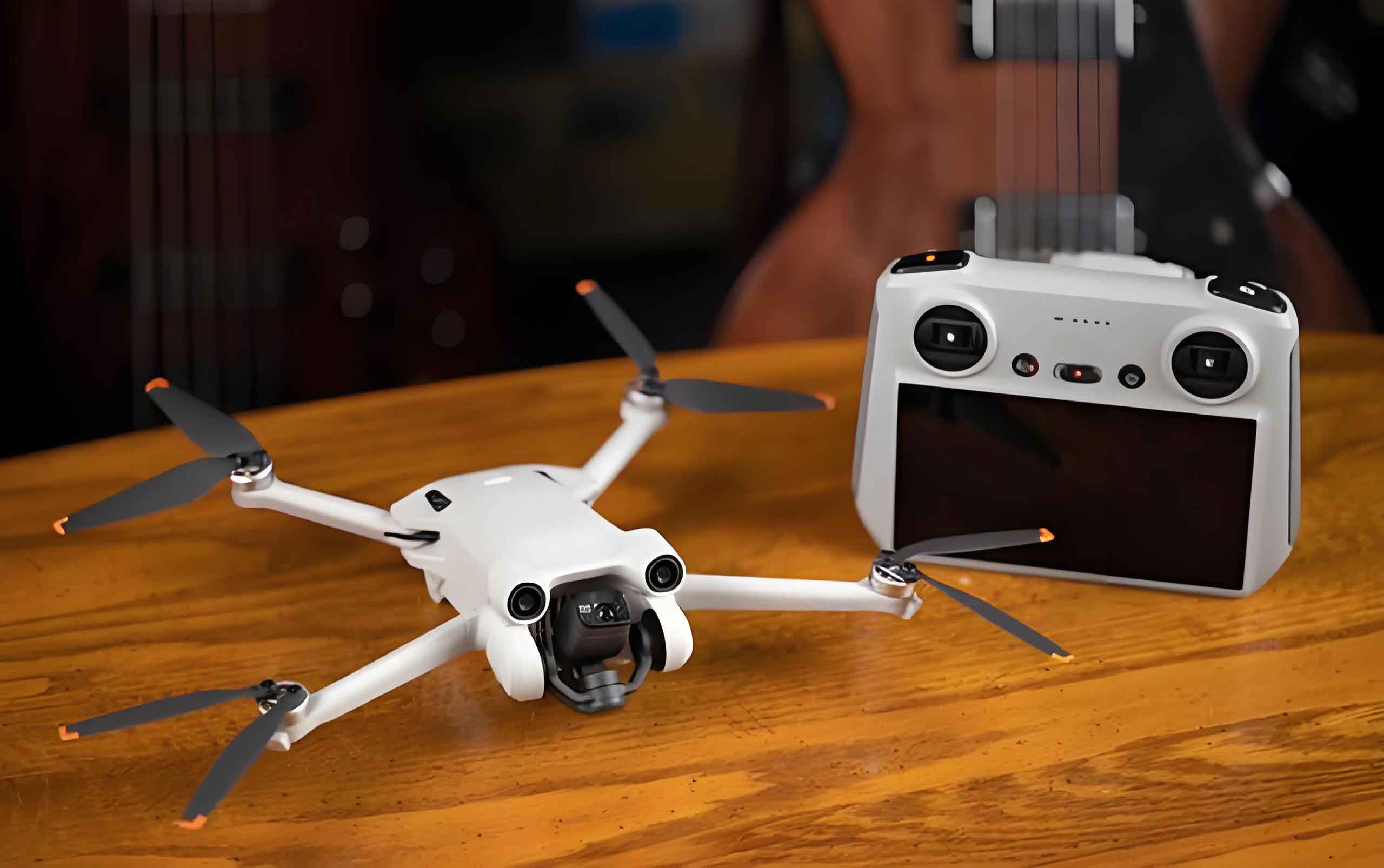
The core of our framework involves a lightweight Siamese neural network combined with a three-dimensional attention mechanism to handle the heterogeneity between UAV and satellite images. This is further enhanced by a cell division strategy that strengthens positional mapping and a confidence evaluation mechanism for reliable localization. Experiments on both simulated and real-world datasets demonstrate that our approach significantly improves accuracy and speed compared to existing methods. In this article, we delve into the technical details, provide empirical evidence, and discuss the implications for advancing drone technology in GNSS-denied environments. By leveraging multi-source image feature learning, we aim to push the boundaries of what Unmanned Aerial Vehicles can achieve in autonomous navigation and positioning.
Introduction to Unmanned Aerial Vehicle Localization Challenges
Unmanned Aerial Vehicles, commonly referred to as drones, have become indispensable in various fields due to their versatility and accessibility. However, one of the persistent challenges in drone technology is achieving reliable localization in environments where GNSS signals are weak or unavailable. Traditional visual localization methods can be categorized into map-free systems, map-based systems, and map-building systems. Among these, map-based visual localization, which matches drone images with pre-existing satellite images to obtain absolute positions, avoids the cumulative errors associated with map-free approaches. Nevertheless, this method faces significant hurdles due to the inherent differences in imaging conditions between UAV and satellite sources, such as variations in perspective, illumination, and seasonal changes.
To tackle these issues, we propose a framework that leverages deep learning for feature extraction, specifically designed to handle multi-source image discrepancies. Our contributions include: (1) a lightweight feature extraction network with a 3D attention mechanism for efficient and consistent feature learning; (2) a cell division strategy to enhance regional correspondence and reduce localization errors; and (3) a confidence-based evaluation mechanism that dynamically adjusts search areas for improved efficiency. This comprehensive approach not only addresses the limitations of current drone technology but also sets a new standard for Unmanned Aerial Vehicle operations in challenging environments. In the following sections, we detail the methodology, experimental setup, and results, highlighting how our framework advances the state-of-the-art in visual localization for UAVs.
Methodology: Multi-Source Image Feature Learning Framework
Our proposed framework for Unmanned Aerial Vehicle visual localization consists of two main components: multi-source image feature matching and position estimation. The feature matching module employs a Siamese neural network to extract shared feature descriptors from both drone and satellite images, enabling robust matching despite their heterogeneous nature. The position estimation module incorporates a confidence evaluation mechanism and dynamic search area prediction based on historical trajectory data. Below, we describe each component in detail, supported by mathematical formulations and algorithmic strategies.
Multi-Source Feature Extraction Network
The Siamese neural network serves as the backbone for feature extraction, designed to handle the stylistic and perspective differences between satellite and drone images. This lightweight network comprises several convolutional layers with increasing receptive fields to capture semantic information at various scales. The operation for each layer \( l \) can be expressed as:
$$ X_l = H_l(X_{l-1}) $$
where \( H_l(\cdot) \) represents the nonlinear convolution at layer \( l \), and \( X_l \) is the output feature map. To address variations caused by factors like weather and shadows, we integrate a 3D attention mechanism before each convolutional layer. This mechanism focuses on invariant key features by applying a sigmoid-based weighting to the input features:
$$ \bar{X}_l = \text{Sigmoid}\left(\frac{1}{E}\right) \odot X_l $$
Here, \( \bar{X}_l \) denotes the weighted features, \( E \) is the energy tensor of dimensions \( H \times W \times C \) (height, width, channels), and \( \odot \) represents element-wise multiplication. This attention module enhances the network’s ability to emphasize regions with complex terrain, generating more stable descriptors without adding significant computational overhead. The overall feature extraction process is thus defined as:
$$ X_l = H_l(\bar{X}_{l-1}) $$
For training, we use a batch sampling strategy with \( m \) image pairs per batch, processing the entire training set of \( M \) pairs. The output descriptors \( Y = \{y_1, y_2, \ldots, y_m\} \) are normalized to unit vectors, and the similarity between drone and satellite images is measured using the L2 distance. The distance matrix \( D \) for a batch is computed as:
$$ D = [d_{ij}]_{m \times m} = 2(1 – (Y^a)^T Y^b) $$
where \( Y^a \) and \( Y^b \) are the descriptors for satellite and drone images, respectively, and \( d_{ij} = \|y_i^a – y_j^b\|_2 \). The diagonal elements represent positive matches, while off-diagonal elements serve as negative samples, maximizing data utilization during training.
Cell Division Strategy for Feature Enhancement
While deep convolutional networks excel at extracting high-level semantic features, they often overlook low-level topological structures crucial for precise localization. To mitigate this, we implement a cell division strategy that partitions images into smaller cells, enhancing the robustness of feature matching. Specifically, both drone and satellite images are divided into \( k \) segments horizontally and vertically, resulting in \( N = k^2 \) cells. For \( k = 3 \), this yields 9 cells per image, denoted as \( I^\theta = \{i^\theta_1, i^\theta_2, \ldots, i^\theta_{k^2}\} \), where \( \theta \) indicates the image source (e.g., \( a \) for satellite, \( b \) for drone). Each cell is processed through the feature extraction network, producing sub-features \( y^\theta_u \) that are concatenated into a comprehensive descriptor set \( Y^\theta \).
This strategy not only preserves the feature extraction capabilities of convolutional networks but also strengthens positional correspondences by focusing on sub-regions. It reduces the impact of offset errors, especially in scenes with repetitive patterns or similar semantic content. The cell division approach ensures that the model captures both global and local features, leading to more accurate and reliable matching for Unmanned Aerial Vehicle localization.
Position Estimation with Confidence Evaluation
Efficient position estimation requires a balanced search range—too large an area leads to inefficiencies, while too small a range may exclude the correct location. We model the UAV’s flight path as a Markov process and use historical trajectory data to predict the next position. However, this relies on accurate historical data, so we first implement a confidence evaluation mechanism. The confidence score \( \text{cred} \) for a localization result is derived from the similarity distances between the drone image and \( n \) neighboring satellite images, sorted in ascending order (\( d_1 \) is the smallest distance, \( d_2 \) the next, etc.):
$$ \text{cred} = \frac{d_2 – d_1}{(d_n – d_1) / (n – 1)} $$
If \( \text{cred} \) exceeds a threshold \( \beta \), the result is deemed reliable. With \( n = 5 \), we maintain a list of confident historical positions \( P = \{p_1, p_2, \ldots, p_n\} \). Using these, we estimate the UAV’s velocity and direction under the assumption of short-term consistency. The velocity interval is estimated using a t-distribution:
$$ \left( \bar{v} – \frac{S^*}{\sqrt{n-1}} t_{\alpha/2}(n-2), \bar{v} + \frac{S^*}{\sqrt{n-1}} t_{\alpha/2}(n-2) \right) $$
where \( \bar{v} \) is the average velocity from \( n-1 \) samples, \( S^* \) is the corrected sample standard deviation, and \( t_{\alpha/2}(n-2) \) is the t-distribution critical value for confidence level \( 1-\alpha \). Multiplying the velocity interval endpoints by the time interval defines a rectangular search area for the next time step, enabling efficient and accurate visual localization for the Unmanned Aerial Vehicle.
Experimental Setup and Datasets
To validate our framework, we conducted experiments on both simulated and real-world datasets, focusing on various environmental conditions. The datasets were designed to test the robustness of our method in scenarios typical of drone technology applications, including urban areas, rural landscapes, and extreme weather conditions.
| Dataset Type | Description | Number of Image Pairs | Key Characteristics |
|---|---|---|---|
| Simulated Dataset (LA-10000) | Generated via Google Earth, covering urban scenes like streets and buildings. | 10,000 (90% train, 10% test) | Simulated drone imaging parameters; diverse urban environments. |
| Real-World Dataset (Xi’an-City) | Collected using DJI drones at altitudes of 120–200 m in varied settings. | Multiple scenes (e.g., suburbs, parks, farmland) | Includes extreme weather (rain, snow, darkness); low-texture and high-complexity scenes. |
The simulated dataset, LA-10000, was created using a flight simulator to adjust camera parameters, mimicking real UAV imaging characteristics. This allows for controlled testing of feature matching and localization accuracy. The real-world dataset, Xi’an-City, encompasses challenging conditions such as snow-covered landscapes, dark environments, and feature-sparse areas like farmland, providing a comprehensive testbed for evaluating the generalization ability of our framework in practical drone technology scenarios.
Results and Analysis
We compared our method against several state-of-the-art lightweight models, including MatchNet, L2-Net, SOSNet, SOLAR, and BJN, using matching accuracy as the primary metric. Accuracy is defined as the proportion of correctly matched image pairs in the Top-1 results. The following table summarizes the quantitative comparisons on both datasets, highlighting the superiority of our approach in handling multi-source image feature learning for Unmanned Aerial Vehicle localization.
| Method | Simulated Dataset | Real-World Dataset |
|---|---|---|
| MatchNet | 41.03 | 36.00 |
| L2-Net | 32.46 | 37.33 |
| SOSNet | 56.38 | 56.67 |
| SOLAR | 59.03 | 60.00 |
| BJN | 63.50 | 64.00 |
| Our Method | 64.79 | 65.33 |
Our method achieves the highest accuracy on both datasets, demonstrating its effectiveness in extracting consistent features from heterogeneous images. The integration of the 3D attention mechanism and cell division strategy contributes to this performance by focusing on invariant features and enhancing positional mapping. For instance, in the simulated dataset, our accuracy reaches 64.79%, outperforming BJN by 1.29%, while in the real-world dataset, we achieve 65.33%, a 1.33% improvement over BJN. These results underscore the robustness of our framework in diverse environments, a critical aspect for advancing drone technology.
To further evaluate the impact of the cell division strategy, we conducted ablation studies by comparing our full method with a version excluding this strategy. The results, shown in the table below, indicate significant improvements in matching accuracy when cell division is incorporated, particularly in the simulated dataset where accuracy increases from 64.79% to 75.82%. In the real-world dataset, accuracy rises from 65.33% to 68.00%, confirming that the strategy effectively addresses issues related to repetitive features and semantic similarities in multi-source images.
| Method Variant | Simulated Dataset | Real-World Dataset |
|---|---|---|
| Without Cell Division | 64.79 | 65.33 |
| With Cell Division | 75.82 | 68.00 |
In terms of position estimation, we tested our framework in three distinct scenarios: campus, urban, and rural environments. The table below compares the average localization error and processing speed (frames per second, fps) between global search and our position estimation module. Our method reduces errors substantially while maintaining real-time performance, which is essential for practical Unmanned Aerial Vehicle applications.
| Scenario | Global Search Average Error (m) | Global Search Speed (fps) | Position Estimation Average Error (m) | Position Estimation Speed (fps) |
|---|---|---|---|---|
| Campus | 185.0 | 0.03 | 5.4 | 10.0 |
| Urban | 125.2 | 0.05 | 7.5 | 8.7 |
| Rural | 236.8 | 0.02 | 14.3 | 7.1 |
In the campus scenario, the average error drops from 185.0 m to 5.4 m, and the speed increases from 0.03 fps to 10.0 fps, showcasing the efficiency of our confidence-based search area prediction. Similarly, in urban and rural settings, errors are reduced to 7.5 m and 14.3 m, respectively, with speeds improving to over 7 fps. These improvements highlight how our framework adapts to varying environmental complexities, ensuring reliable localization for Unmanned Aerial Vehicles even in feature-sparse or high-clutter areas.
Discussion and Implications for Drone Technology
The results demonstrate that our multi-source image feature learning framework effectively addresses the challenges of UAV visual localization in GNSS-denied environments. By leveraging a lightweight Siamese network with 3D attention, we achieve high matching accuracy while minimizing computational costs, making it suitable for real-time drone operations. The cell division strategy further enhances performance by reinforcing local feature correspondences, which is crucial in scenarios with repetitive patterns or minimal textures. Additionally, the confidence evaluation and dynamic search adjustment mechanisms ensure that the system remains efficient and accurate over time, reducing the risk of cumulative errors.
From a broader perspective, this work contributes to the advancement of drone technology by providing a reliable solution for autonomous navigation. The ability to operate in diverse conditions—such as urban canyons, rural farmland, and adverse weather—expands the potential applications of Unmanned Aerial Vehicles in fields like disaster response, precision agriculture, and infrastructure inspection. Future research could explore integrating additional sensor modalities, such as LiDAR or inertial measurement units, to further improve robustness. Moreover, extending the framework to handle multi-drone collaborative localization could unlock new possibilities for swarm-based operations.
Conclusion
In this article, we have presented a comprehensive framework for Unmanned Aerial Vehicle visual localization based on multi-source image feature learning. Our approach combines a lightweight Siamese neural network with a 3D attention mechanism, a cell division strategy for feature enhancement, and a confidence-driven position estimation module. Experimental results on simulated and real-world datasets confirm that our method outperforms existing techniques in terms of matching accuracy and real-time performance. By addressing the heterogeneity between drone and satellite images, our framework enables reliable localization in GNSS-denied environments, pushing the boundaries of what is possible with modern drone technology. As UAVs continue to evolve, such innovations will play a pivotal role in ensuring their autonomy and reliability across a wide range of applications.