
As a drone manufacturer, we recognize that aerodynamic shape is critical to the performance and safety of unmanned aerial vehicles (UAVs). Even minor deviations in the manufactured外形 can significantly impact lift, drag, and moment balance, potentially leading to reduced efficiency or flight instability. Traditional inspection methods, such as measuring key dimensions and installation angles, often fail to capture comprehensive geometric inaccuracies like airfoil distortions or surface deformities. This limitation underscores the need for an advanced evaluation approach that quantifies the aerodynamic effects of manufacturing deviations. In this study, we propose an integrated method combining digital photogrammetry and computational fluid dynamics (CFD) to assess these deviations systematically. By leveraging high-precision measurement techniques and validated CFD simulations, we aim to provide drone manufacturers with a robust framework for ensuring aerodynamic integrity throughout the production process.
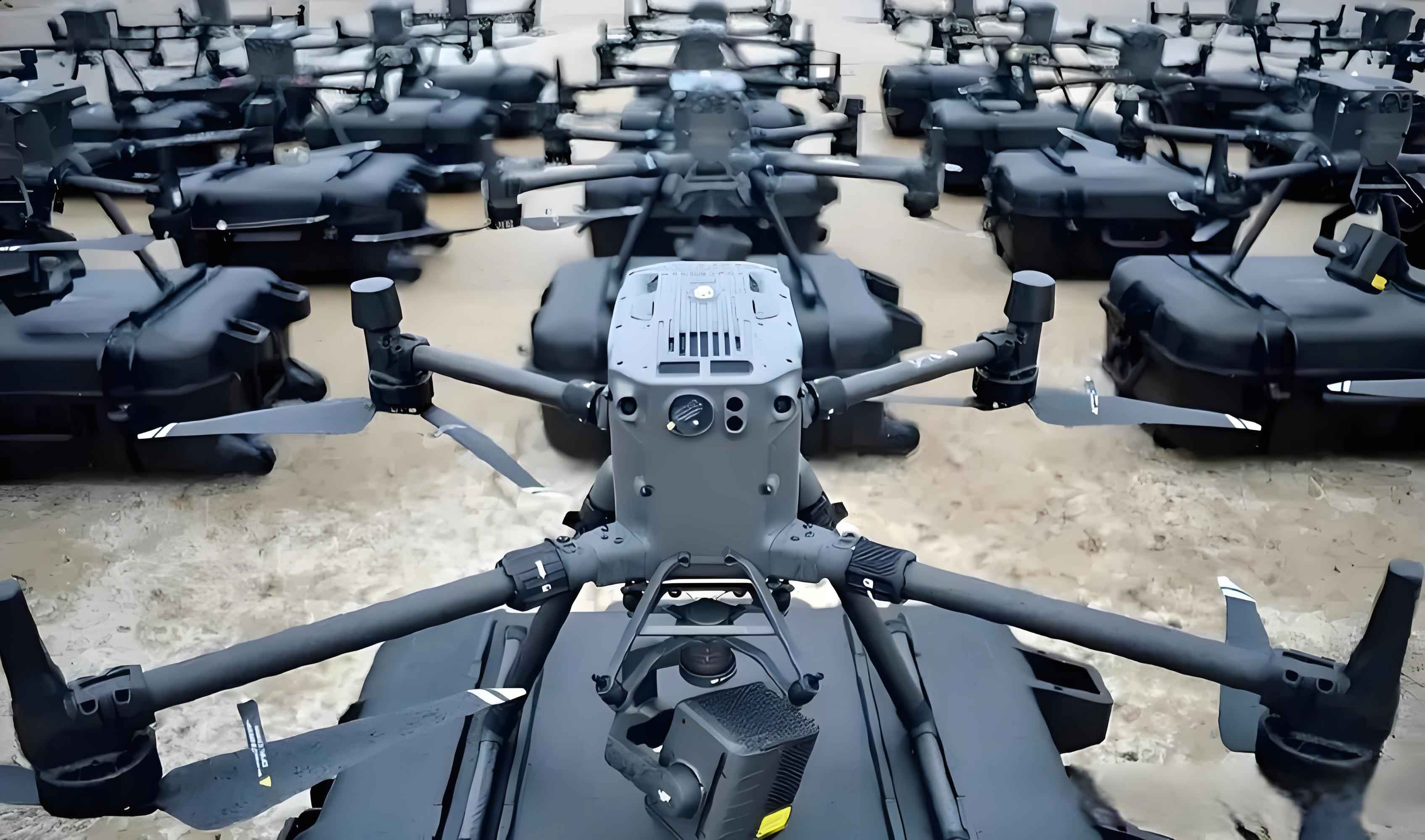
The evaluation process begins with the acquisition of point cloud data from the manufactured drone using a digital photogrammetric system. This system, with an accuracy of within 1 mm, captures detailed surface information of key aerodynamic components like wings, canards, and vertical tails. For instance, when assessing a typical drone model, we position it horizontally on a stable surface and employ multiple cameras to generate a dense point cloud. This data is then aligned with the theoretical CAD model by matching coordinate systems, using the nose as a reference point. The alignment process involves minimizing the root mean square error between corresponding points, expressed as:
$$ \text{RMS} = \sqrt{\frac{1}{n} \sum_{i=1}^{n} \left( \mathbf{p}_{\text{meas},i} – \mathbf{p}_{\text{theo},i} \right)^2 } $$
where \( \mathbf{p}_{\text{meas},i} \) and \( \mathbf{p}_{\text{theo},i} \) represent the measured and theoretical point coordinates, respectively, and \( n \) is the number of points. This allows us to statistically analyze geometric deviations, which are crucial for identifying areas where the drone manufacturer may need to adjust production tolerances. The distribution of these deviations is summarized in Table 1, highlighting the frequency of various error ranges across the drone’s surface.
Following data acquisition, we perform reverse modeling to reconstruct a three-dimensional representation of the manufactured shape. Using NURBS (Non-Uniform Rational B-Splines) surfaces, we generate a high-fidelity model that accurately reflects the as-built geometry. The NURBS representation for a surface is given by:
$$ S(u,v) = \frac{\sum_{i=0}^{n} \sum_{j=0}^{m} N_{i,p}(u) N_{j,q}(v) w_{i,j} \mathbf{P}_{i,j}}{\sum_{i=0}^{n} \sum_{j=0}^{m} N_{i,p}(u) N_{j,q}(v) w_{i,j}} $$
where \( \mathbf{P}_{i,j} \) are control points, \( w_{i,j} \) are weights, and \( N_{i,p}(u) \) and \( N_{j,q}(v) \) are B-spline basis functions of degrees \( p \) and \( q \), respectively. This逆向建模 step is essential for creating a digital twin that can be used in subsequent CFD analyses, enabling a drone manufacturer to visualize and quantify deviations before proceeding to aerodynamic testing.
For the CFD evaluation, we first validate our computational approach against wind tunnel data for the theoretical drone shape. We generate an O-H structured grid using ICEM software, with approximately 10 million cells to ensure resolution of boundary layers and flow features. The grid independence is confirmed by refining the mesh until changes in aerodynamic coefficients are negligible, typically below 1%. The governing equations are the compressible Navier-Stokes equations, discretized using the finite volume method:
$$ \frac{\partial}{\partial t} \int_{V} \mathbf{U} \, dV + \oint_{\partial V} \mathbf{F} \cdot \mathbf{n} \, dS = 0 $$
where \( \mathbf{U} \) is the vector of conservative variables, \( \mathbf{F} \) is the flux tensor, and \( V \) represents the control volume. We employ the Spalart-Allmaras turbulence model for its efficiency in attached and mildly separated flows, common in drone operations. The boundary conditions include a pressure-far-field for freestream conditions and no-slip, adiabatic walls for the drone surfaces. Computational settings are adjusted to match wind tunnel results, such as by tuning the turbulence model constants and discretization schemes. Once validated, the same CFD methodology is applied to the reverse-engineered model of the manufactured drone. This allows us to compute aerodynamic forces and moments, comparing them against the theoretical baseline to assess the impact of deviations.
The geometric deviation analysis reveals significant insights for a drone manufacturer. For example, in a case study, we observed that deviations were predominantly in the range of 2–5 mm, with maxima up to 25 mm in regions like the wing and canard surfaces. Cross-sectional comparisons at specific spanwise locations, such as z = 400 mm for the canard and z = 2400 mm for the wing, showed asymmetric distortions between left and right sides. This asymmetry is critical as it can induce unwanted rolling moments. The deviation statistics are quantified in Table 1, which categorizes the percentage of surface area affected by different error magnitudes. Such data helps a drone manufacturer identify patterns in production errors and implement corrective measures in the manufacturing process.
| Deviation Range (mm) | Percentage of Total Surface Area (%) | Common Locations |
|---|---|---|
| 0–2 | 30 | Fuselage, Tail Sections |
| 2–5 | 50 | Wing Roots, Canard Tips |
| 5–10 | 15 | Wing Surfaces, Leading Edges |
| 10–25 | 5 | Asymmetric Wing Regions |
CFD results for the manufactured drone indicate notable changes in aerodynamic characteristics compared to the theoretical design. The lift coefficient (\( C_L \)) shows a reduction of up to 12% at lower angles of attack, which can affect takeoff and climb performance. The lift-to-drag ratio (\( L/D \)) remains relatively stable in the 0°–4° angle of attack range but degrades at higher angles due to increased pressure drag from surface irregularities. The pitching moment coefficient (\( C_m \)) shifts upward, requiring a 1° adjustment in trim angle, which could necessitate larger elevator deflections during flight. Additionally, the asymmetric deviations produce a residual rolling moment coefficient (\( C_l \)), as summarized in Table 2. This roll imbalance means that a drone manufacturer must consider aileron pre-setting to maintain lateral stability, adding complexity to the control system.
| Aerodynamic Coefficient | Theoretical Value (at 4° AoA) | Manufactured Value (at 4° AoA) | Percentage Change (%) |
|---|---|---|---|
| Lift Coefficient (\( C_L \)) | 0.45 | 0.40 | -11.1 |
| Drag Coefficient (\( C_D \)) | 0.035 | 0.038 | +8.6 |
| Pitching Moment Coefficient (\( C_m \)) | -0.02 | -0.015 | +25.0 |
| Rolling Moment Coefficient (\( C_l \)) | 0.00 | 0.005 | N/A |
The implications of these aerodynamic deviations extend beyond immediate performance metrics. For a drone manufacturer, the reduction in lift and increase in drag can lead to longer takeoff distances, higher energy consumption, and shortened flight endurance. We can estimate these effects using basic aerodynamic relations. For instance, the takeoff distance \( s_{\text{TO}} \) is proportional to the square of the stall velocity \( V_s \) and inversely related to the acceleration, as given by:
$$ s_{\text{TO}} \propto \frac{V_s^2}{a} $$
where \( V_s = \sqrt{\frac{2W}{\rho S C_{L,\text{max}}}} \), with \( W \) as weight, \( \rho \) air density, \( S \) wing area, and \( C_{L,\text{max}} \) the maximum lift coefficient. A decrease in \( C_{L,\text{max}} \) due to manufacturing deviations increases \( V_s \), thereby extending \( s_{\text{TO}} \). Similarly, the range \( R \) for a battery-powered drone can be approximated using the Breguet range equation:
$$ R = \frac{\eta}{g} \frac{C_L}{C_D} \ln \left( \frac{W_{\text{initial}}}{W_{\text{final}}} \right) $$
where \( \eta \) is propulsion efficiency, \( g \) is gravity, and \( W_{\text{initial}} \) and \( W_{\text{final}} \) are initial and final weights. A lower \( L/D \) ratio directly reduces \( R \), impacting mission capability. These calculations emphasize the importance of tight tolerances in drone manufacturing to achieve design specifications.
In discussion, we highlight that the integrated digital photogrammetry and CFD approach offers a scalable solution for quality control. By quantifying deviations and their aerodynamic consequences, a drone manufacturer can implement targeted improvements in tooling, material selection, and assembly processes. For example, the asymmetric rolling moment identified in our study could be mitigated by adjusting mold designs or incorporating real-time feedback during wing attachment. Moreover, this method supports iterative design optimization, where CFD simulations on as-built models inform future iterations, reducing development cycles and costs. The ability to predict performance impacts early in production is invaluable for maintaining competitiveness in the rapidly evolving drone industry.
In conclusion, our assessment method provides a comprehensive framework for evaluating aerodynamic deviations in drone manufacturing. Through precise measurement, reverse engineering, and validated CFD analysis, we enable drone manufacturers to quantify and address production inaccuracies proactively. The results demonstrate that even small geometric errors can lead to significant aerodynamic changes, necessitating careful monitoring and correction. By adopting this approach, a drone manufacturer can enhance product reliability, ensure compliance with performance standards, and reduce the risk of flight failures. Future work could explore machine learning techniques to automate deviation analysis and predict aerodynamic outcomes, further streamlining the manufacturing workflow for drones.