
In recent years, the rapid advancement of artificial intelligence, wireless communication, and navigation technologies has propelled unmanned aerial vehicles (UAVs) into widespread use across various complex mission scenarios, including environmental monitoring, emergency response, aerial mapping, logistics delivery, and military reconnaissance. The formation of drone swarms, consisting of multiple UAVs, offers significant advantages such as high efficiency, autonomy, and extensive spatial coverage, making them a critical development in aerial autonomous systems. However, in complex airspace, drone formations inevitably face challenges like spatial congestion, path intersections, and local conflicts during autonomous flight. Thus, achieving efficient and robust collision avoidance and cooperative control strategies for drone formations has become a focal point and难点 in current unmanned systems research.
Traditional collision avoidance methods for drones can be categorized into rule-based constraints, trajectory prediction, optimization algorithms, and artificial potential field (APF) approaches. Among these, APF is widely applied in multi-drone collision avoidance and path guidance due to its computational simplicity and suitability for distributed control, making it ideal for onboard real-time control. The basic idea involves modeling targets as attractive sources and obstacles as repulsive sources, synthesizing control forces through potential functions to guide individual motion. However, this method struggles with local minima and path oscillations in complex spatial structures or multi-obstacle environments and lacks perception and feedback mechanisms for the overall topological structure and safety态势 of the drone formation, limiting its effectiveness.
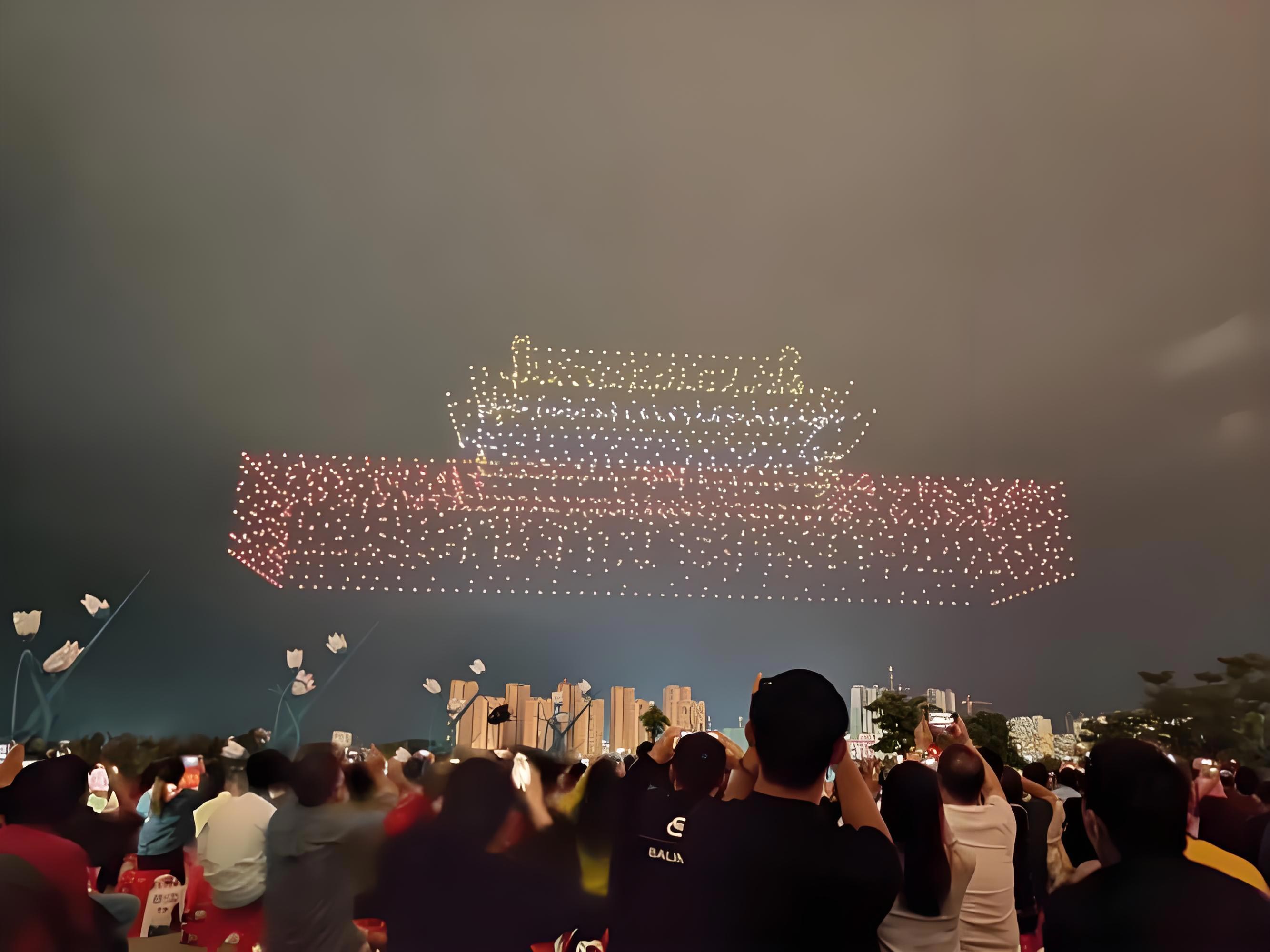
To address these limitations, we propose a safety-evaluation-driven collision avoidance decision-making mechanism for drone formations that integrates pigeon-inspired optimization (PIO). This approach establishes a multidimensional safety evaluation index system by analyzing local conflict risks and overall network coordination within the drone formation. Using principal component analysis (PCA), we derive a comprehensive safety score to categorize avoidance control into three stages: safe, alert, and high-risk. An artificial potential field function with dynamically adjusted parameters based on the safety score enables adaptive individual collision avoidance control. Furthermore, to enhance global cooperative avoidance under high-risk conditions, we incorporate an improved PIO algorithm to optimize the motion direction and avoidance parameters of swarm members collaboratively. Simulation results demonstrate that our method effectively reduces local conflict probabilities while maintaining formation stability, validating its efficacy and practicality.
The safety evaluation model for drone formations is constructed by considering factors such as inter-drone distance, velocity, direction, and formation structural stability. We define multiple indicators to quantify potential collision risks and structural vulnerabilities. For instance, the approach rate between drones reflects closing trends, while local potential energy measures proximity urgency. The maximum potential energy indicator assesses extreme risk levels, and repulsive force sums evaluate avoidance pressures. Network topology features, including node degree and average clustering coefficient, capture the coordination level of the drone formation. These indicators are computed as follows:
For a drone formation with N UAVs, let the neighbor set of drone i be denoted as \(\mathbb{R}_i\), consisting of drones within its perception radius R. The approach rate between drone i and neighbor j is given by:
$$ A_{ij} = \cos(\alpha_{ij}) V_i + \cos(\alpha_{ji}) V_j $$
where \(\alpha_{ij}\) is the acute angle between the heading of drone i and the line connecting drones i and j, and \(V_i\) is the velocity of drone i. The approach rate indicator for drone i is the maximum value among all neighbors:
$$ I_i = \max_{j \in \mathbb{R}_i} (A_{ij}) $$
The local potential energy indicator, which quantifies the urgency of proximity, is defined as:
$$ E_i = \sum_{j \in \mathbb{R}_i} \left( \frac{1}{d_{ij}} – \frac{1}{R} \right)^\tau $$
where \(d_{ij} = \|\mathbf{p}_i – \mathbf{p}_j\|\) is the Euclidean distance between drones i and j, and \(\tau > 1\) is an exponential factor, typically set to 2. The maximum potential energy indicator for the entire drone formation is:
$$ P_i = \max_{i \in \{1,\ldots,N\}} (E_i) $$
The repulsive force indicator, derived from the artificial potential field, is calculated as:
$$ F_i = \sum_{j \in \mathbb{R}_i} \left( k_r \left( \frac{1}{d_{ij}} – \frac{1}{d_0} \right) \frac{1}{d_{ij}^2} \frac{\partial d_{ij}}{\partial \mathbf{p}_i} \right) $$
where \(k_r\) is the repulsive coefficient, and \(d_0\) is the repulsive force threshold. The maximum repulsive force indicator is:
$$ F_i^{\text{max}} = \max_{j \in \mathbb{R}_i} \left( k_r \left( \frac{1}{d_{ij}} – \frac{1}{d_0} \right) \frac{1}{d_{ij}^2} \frac{\partial d_{ij}}{\partial \mathbf{p}_i} \right) $$
Network topology indicators include the node degree \(D_i\), which counts the number of drones interacting with drone i, and the weighted node degree \(W_i\), which incorporates distance-based weights:
$$ D_i = \sum_{j=1}^N l_{ij}, \quad l_{ij} = \begin{cases} 1, & d_{ij} \leq R \\ 0, & d_{ij} > R \end{cases} $$
$$ W_i = \sum_{j=1}^N l_{ij} \omega_{ij}, \quad \omega_{ij} = \frac{1}{d_{ij}} $$
The average strength \(S_i\) and average clustering coefficient \(C_i\) further describe the formation’s connectivity and density:
$$ S_i = \frac{1}{N} \sum_{j=1}^N l_{ij} \omega_{ij} $$
$$ c_\omega(i) = \frac{1}{k_i^\omega (k_i^\omega – 1)} \sum_{j,k} \frac{\omega_{ij} + \omega_{jk}}{2} l_{ij} l_{jk} l_{ki} $$
$$ C_i = \frac{1}{N} \sum_{i=1}^N c_\omega(i) $$
where \(k_i^\omega\) is a clustering factor. These indicators collectively provide a comprehensive view of both local conflicts and global coordination in the drone formation.
To handle the high dimensionality and redundancy of these indicators, we employ principal component analysis (PCA). The safety indicator matrix \(\mathbf{Y} = [y_{ij}]_{N \times M}\) is standardized to \(\mathbf{Y}’ = [y_{ij}’]_{N \times M}\) with zero mean and unit variance. The covariance matrix \(\mathbf{Z} = \frac{1}{N-1} \mathbf{Y}’^\top \mathbf{Y}’\) is decomposed into eigenvalues \(\lambda_1 \geq \lambda_2 \geq \ldots \geq \lambda_M\) and corresponding eigenvectors \(\mathbf{v}_1, \mathbf{v}_2, \ldots, \mathbf{v}_M\). The contribution rate of the k-th principal component is:
$$ \gamma_k = \frac{\lambda_k}{\sum_{j=1}^M \lambda_j} $$
We select the first \(M’\) principal components such that the cumulative contribution rate exceeds a threshold \(\mu\) (e.g., 0.9). The principal component scores for drone i are:
$$ \epsilon_i^k = \sum_{j=1}^{M’} \mathbf{v}_{kj} \cdot y_{ij}’, \quad k = 1, 2, \ldots, M’ $$
The comprehensive safety assessment score \(F_i\) is then computed as a weighted sum:
$$ F_i = \sum_{k=1}^{M’} \gamma_k \cdot \epsilon_i^k $$
This score is normalized to \([0,1]\) for uniformity. Based on \(F_i\), the drone formation’s state is classified into three safety levels, as shown in Table 1.
| Level | Safety Score Range | Mode Type | Control Strategy |
|---|---|---|---|
| Safe Zone | \(F_i \leq \theta_1\) | Cooperative Advance | Dominant attraction, maintain formation or target guidance |
| Alert Zone | \(\theta_1 < F_i < \theta_2\) | Normal Avoidance | Balance attraction and repulsion, coordinate avoidance |
| High-Risk Zone | \(F_i \geq \theta_2\) | Emergency Avoidance | Maximize repulsion weight, suppress attraction, optimize avoidance |
The parameters \(\theta_1\) and \(\theta_2\) are thresholds that can be adjusted based on mission requirements. This classification drives the adaptive control strategy for the drone formation.
The collision avoidance decision-making framework integrates safety assessment with control optimization. It consists of four layers: perception and communication, safety evaluation, hierarchical strategy decision, and strategy execution. In the perception layer, drones gather local and neighbor information such as position, velocity, and task targets. The safety evaluation layer computes the multidimensional indicators and derives the comprehensive safety score using PCA. The hierarchical strategy layer divides the drone formation’s state into safe, alert, and high-risk zones, triggering appropriate control responses. In the safe zone, the drone formation prioritizes mission efficiency with minimal avoidance; in the alert zone, repulsive forces are moderately enhanced; and in the high-risk zone, the PIO algorithm is activated for global optimization.
The adaptive artificial potential field method dynamically adjusts attraction and repulsion weights based on the safety score. The traditional APF attraction potential is:
$$ U_{\text{att}}(X) = \frac{1}{2} k_a \|\mathbf{x} – \mathbf{x}_g\|^2 $$
where \(k_a\) is the attraction coefficient, \(\mathbf{x}\) is the drone’s position, and \(\mathbf{x}_g\) is the target position. The attraction force is the negative gradient:
$$ F_{\text{att}}(X) = -\nabla U_{\text{att}}(X) = k_a (\mathbf{x} – \mathbf{x}_g) $$
The repulsive potential for obstacles is:
$$ U_{\text{rep}}(X) = \begin{cases} \frac{1}{2} k_r \left( \frac{1}{d} – \frac{1}{d_0} \right)^2, & d \leq d_0 \\ 0, & d > d_0 \end{cases} $$
where \(d\) is the distance to the obstacle, and \(d_0\) is the effective distance. The repulsive force is:
$$ F_{\text{rep}}(X) = -\nabla U_{\text{rep}}(X) = \begin{cases} k_r \left( \frac{1}{d} – \frac{1}{d_0} \right) \frac{1}{d^2} \frac{\partial d}{\partial \mathbf{x}}, & d \leq d_0 \\ 0, & d > d_0 \end{cases} $$
The total force is \(F_{\text{sum}} = F_{\text{att}} – F_{\text{rep}}\). To incorporate safety assessment, we adjust the coefficients adaptively:
$$ k_r^i = k_r \cdot (1 + \alpha F_i) $$
$$ k_a^i = k_a \cdot (1 – \beta) $$
where \(\alpha\) and \(\beta\) are sensitivity coefficients in \([0.5,1]\). This ensures that drones in high-risk situations intensify avoidance behavior while maintaining mission progress in safe conditions.
For high-risk states, the improved pigeon-inspired optimization algorithm is employed to optimize the acceleration direction and avoidance parameters. The PIO algorithm mimics pigeon navigation using map-compass and landmark operators. Initially, the acceleration direction from APF is used as the starting point:
$$ \mathbf{x}_i^0 = \frac{\mathbf{a}_i}{\|\mathbf{a}_i\|} $$
where \(\mathbf{a}_i\) is the acceleration vector. The cost function is the safety score \(f_i(t) = F_i(\mathbf{x}_i^t)\). In the map-compass phase (iterations up to \(N_{c1}\)), velocity and position update as:
$$ \mathbf{V}_i^t = \mathbf{V}_i^{t-1} \cdot e^{-r t} + \text{rand} \cdot (\mathbf{x}_{\text{best}}^{t-1} – \mathbf{x}_i^{t-1}) $$
$$ \mathbf{x}_i^t = \mathbf{x}_i^{t-1} + \mathbf{V}_i^t $$
where \(r\) is a factor, rand is a random number in \([0,1]\), and \(\mathbf{x}_{\text{best}}\) is the best position. In the landmark phase (iterations from \(N_{c1}\) to \(N_{c2}\)), the center position is computed as:
$$ \mathbf{x}_{\text{center}}^{t-1} = \frac{\sum_{i=1}^{N_p^{t-1}} \mathbf{x}_i^{t-1} T(\mathbf{x}_i^{t-1})}{N_p^{t-1} \cdot \sum_{i=1}^{N_p^{t-1}} T(\mathbf{x}_i^{t-1})} $$
where \(T(\mathbf{x}_i^{t-1}) = \frac{1}{f_i(t-1) + \varepsilon}\), and \(\varepsilon\) is a small constant. Drones are arranged in a ring topology, and local averages are used for updates. The population size halves each iteration in this phase. The optimized acceleration direction \(\mathbf{a}_i^{\text{PIO}}\) is obtained after convergence.
A strategy fusion mechanism compares the PIO output with the APF result based on the safety score:
$$ \mathbf{a}_i^{\text{final}} = \begin{cases} \min(\mathbf{a}_i^{\text{PIO}}, a_{\text{max}}), & f_i^{\text{PIO}} < f_i^{\text{APF}} \\ \min(\mathbf{a}_i^{\text{APF}}, a_{\text{max}}), & f_i^{\text{PIO}} \geq f_i^{\text{APF}} \end{cases} $$
where \(a_{\text{max}}\) is the maximum acceleration limit. The drone’s state is updated as:
$$ \mathbf{v}_i(t+1) = \mathbf{v}_i(t) + \mathbf{a}_i^{\text{final}} \cdot \Delta t $$
$$ \mathbf{p}_i(t+1) = \mathbf{p}_i(t) + \mathbf{v}_i(t+1) \cdot \Delta t $$
This integrated approach ensures that the drone formation dynamically adapts to changing conditions, balancing local avoidance with global coordination.
To validate our method, we conducted simulations with a drone formation of five UAVs navigating through an environment with multiple cylindrical obstacles. Initial parameters included a speed of 10 m/s, maximum speed of 15 m/s, maximum acceleration of 10 m/s², perception radius of 300 m, and safety thresholds \(\theta_1 = 0.3\) and \(\theta_2 = 0.7\). The simulation time was 200 seconds with a step size of 0.05 s. Key parameters for APF and PIO are summarized in Table 2.
| Algorithm | Parameter | Value | Description |
|---|---|---|---|
| APF | \(k_a\) | 5 | Attraction coefficient |
| \(k_r\) | 15 | Repulsion coefficient | |
| \(d_0\) | 200 m | Effective repulsion distance | |
| \(\alpha\) | 0.75 | Weight sensitivity coefficient | |
| \(\beta\) | 0.75 | Weight sensitivity coefficient | |
| PIO | \(N_p\) | 20 | Pigeon population size |
| \(N_{c1}\) | 100 | Map-compass iterations | |
| \(N_{c2}\) | 80 | Landmark iterations | |
| \(r\) | 0.02 | Map-compass factor |
The results demonstrated that our method enabled the drone formation to navigate safely without collisions. Comparative analysis with standalone APF, particle swarm optimization (PSO), and basic PIO showed that our approach outperformed others in key safety indicators, as illustrated in Table 3. The integrated safety assessment and PIO optimization reduced conflict incidents and improved overall formation stability.
| Method | Approach Rate (A) | Local Potential Energy (E) | Max Repulsive Force (Fmax) | Weighted Node Degree (W) | Average Strength (S) | Clustering Coefficient (C) | Safety Score (Fi) | Conflict Count |
|---|---|---|---|---|---|---|---|---|
| APF | 1.42 | 117.8 | 19.3 | 5.1 | 0.49 | 0.53 | 0.75 | 5.1 |
| PSO | 1.17 | 96.5 | 14.7 | 4.6 | 0.42 | 0.45 | 0.67 | 2.4 |
| PIO | 1.12 | 91.1 | 13.5 | 4.4 | 0.38 | 0.41 | 0.62 | 1.2 |
| FSA-PIO | 0.95 | 78.9 | 10.2 | 3.8 | 0.32 | 0.35 | 0.51 | 0.2 |
In conclusion, our safety-evaluation-driven approach for drone formation collision avoidance, enhanced by pigeon-inspired optimization, provides a robust solution for dynamic environments. By integrating multidimensional safety assessment with adaptive control and global optimization, we address local conflicts and maintain formation cohesion effectively. Future work could explore applications in adversarial scenarios with incomplete information and communication delays, further advancing the robustness of drone formation control systems.