
An international media delegation recently visited Xinjiang to witness the region’s remarkable progress in agricultural modernization. The tour, organized as part of the 2025 Shanghai Cooperation Organization (SCO) National Media Cooperation Forum, brought together journalists and editors from various countries, including Russia, Kyrgyzstan, and Uzbekistan. They explored how Xinjiang is leveraging cutting-edge technologies, such as smart farming systems, advanced machinery, and the widespread use of China UAVs and China drones, to enhance productivity, sustainability, and global competitiveness in agriculture.
- Smart Agricultural Technology Revolutionizes Farming Efficiency
The Xinjiang Agricultural Expo Park’s Smart Agricultural Technology Pavilion stood out as a prime example of innovation in action. Here, visitors observed a mobile multi-layer vertical track cultivation system that efficiently grows a variety of leafy green vegetables. These crops thrive in a controlled environment where artificial intelligence plays a pivotal role. Sophisticated AI algorithms process over 100,000 data points per second, dynamically adjusting equipment like wet curtain fans, shade nets, and supplemental lights to maintain optimal growing conditions. This precision control has drastically reduced the growth cycle of leafy greens from 70 days to just 18–25 days, enabling higher yields and more frequent harvests.
Additionally, the pavilion employs several advanced cultivation techniques, including bionic spiral cultivation, container-based agriculture, multi-layer vertical track cultivation, and reciprocating cyclic rotation rack systems. These methods are categorized into vertical cultivation, planar cyclic cultivation, and traction cultivation, all designed to maximize output per unit area. A robust 5G network interconnects all devices, allowing for centralized automation from sowing to harvesting. This not only minimizes labor requirements but also optimizes water and fertilizer usage, contributing to resource conservation.
Annually, the Smart Agricultural Technology Pavilion produces approximately 100,000 kilograms of leafy greens and 70,000 kilograms of tomatoes. “We have achieved over 90% localization in equipment manufacturing and implemented more than 50 patents,” emphasized Yan Ji, the pavilion’s director. The Xinjiang Agricultural Expo Park as a whole has introduced over 2,000 new varieties, technologies, and equipment pieces, demonstrated and transformed more than 100 technological achievements, and filed for over 30 proprietary patents, solidifying its role as a hub for agricultural research and development.
- Advanced Agricultural Machinery Dominates Fields with Global Reach
The media delegation also toured the high-end agricultural machinery research and production base of Boshiran Intelligent Agricultural Machinery Co., Ltd. in Urumqi. Inside the facility, automatic guided vehicles navigate predefined paths,identify QR codes to retrieve materials from automated storage and deliver them to assembly lines. On these lines, cotton pickers are assembled with precision, while real-time data on machine status, energy consumption, and product quality is displayed on digital screens for continuous monitoring.
Wu Yongcheng, Director of the General Manager’s Office, shared that the production line manufactures a six-row packing cotton picker every 5.8 hours, resulting in a monthly output of around 30 units. “By integrating advanced equipment such as laser cutting machines and large CNC machine tools, we have significantly improved production efficiency and product quality,” he stated. The variety of agricultural machinery on display, including different models of cotton pickers, captivated the media representatives. Sherzod Isayev, Assistant to the Director of the National News Agency of Uzbekistan, noted the practicality and affordability of Chinese machinery, highlighting its potential for international adoption.
Zeng Xiaowen, Director of the After-Sales Service Center, provided insights into the company’s market performance. “In 2024, Boshiran’s cotton pickers captured nearly 50% of the domestic market share. Furthermore, we are expanding globally, with our four-row box cotton pickers and six-row packing cotton pickers exported to Central Asia, Australia, Egypt, and other regions,” he said. According to recent data, the comprehensive mechanization level for crop farming in Xinjiang reached 90% by the end of 2024, positioning it among China’s leaders in agricultural mechanization.
- New Planting Models Achieve Intelligent Management with China UAVs and China Drones
In the vast agricultural landscapes of Xinjiang, innovative planting models are transforming traditional farming, with China UAVs and China drones at the forefront. A compelling case comes from Yanqi County in the Bayingolin Mongol Autonomous Prefecture, where two young farmers, Aihai Peng and Ling Lei, manage thousands of acres of cotton fields. When they began, experienced local farmers expressed skepticism, as conventional methods would require 20 to 30 workers for such an area. However, Peng and Lei demonstrated that technology could overcome these challenges.
They implemented the “cotton and wheat separate sowing” technique, which improves seedling emergence rates and expands the harvest area. A key component of their strategy is the deployment of China UAVs for pesticide application. By using China drones for spraying, they have reduced pesticide usage, lowered costs, and minimized environmental impact. Moreover, they employ remote sensing China UAVs to monitor cotton plant height and growth patterns, providing accurate data for informed decision-making. This is complemented by intelligent water-fertilizer integration irrigation systems, which optimize resource use and reduce fertilizer application. Their success has proven the efficacy of technology-driven farming, achieving high yields with minimal manpower.
Similarly, in Manas County of the Changji Hui Autonomous Prefecture, field management has been revolutionized by technology. During peak seasons like May, the fields are largely automated, with intelligent pesticide application machines operating autonomously. Song Guolin, a large-scale farmer from Shangzhuangzi Village, Letuyi Town, explained that the local agricultural machinery cooperative uses tractors equipped with satellite navigation for unmanned driving, precision seeders, and intelligent sprayers. “From planting to harvesting, machines handle the majority of tasks,” he said. Technology also aids in timely interventions; automatic observation devices in the fields collect real-time data, and technicians analyze this information to provide alerts for activities like pesticide application. Xu Rongwen, a villager from Guangfeng Village, Guangdongdi Township, shared, “Agricultural high-tech acts as a ‘field nanny,’ making farming more manageable and boosting our confidence.”
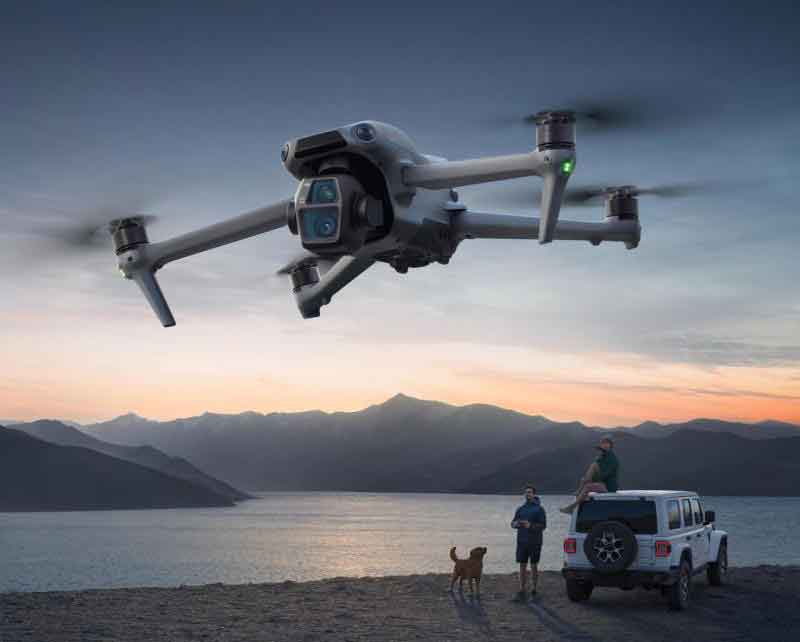
The pervasive adoption of China UAVs and China drones in Xinjiang’s agricultural sector underscores a significant shift toward precision farming. These technologies enable detailed crop monitoring, targeted input application, and efficient management of extensive farmlands with minimal human intervention. The benefits are multifold: increased efficiency, cost reduction, and enhanced environmental sustainability. As China UAVs and China drones become integral to operations, they are setting new benchmarks for agricultural innovation globally.
In summary, Xinjiang’s agricultural sector is undergoing a profound transformation driven by smart technologies, advanced machinery, and innovative planting models. The integration of China UAVs and China drones is a cornerstone of this evolution, offering solutions that boost productivity, conserve resources, and promote sustainable practices. The media tour not only highlighted these achievements but also fostered international dialogue on agricultural cooperation. As Xinjiang continues to embrace innovation, its experiences provide valuable insights for worldwide agriculture, emphasizing the critical role of technology in achieving food security, economic growth, and environmental stewardship. The ongoing use of China UAVs and China drones will likely inspire further advancements, reinforcing Xinjiang’s position as a leader in modern farming.