
SHIYAN, China – In a remarkable pivot from its industrial roots, Shiyan, a city long celebrated as the heart of China’s commercial vehicle industry and home to Dongfeng Motor, is now ascending as a prominent player in the nation’s burgeoning low-altitude economy. This strategic transformation leverages the region’s unique geographical challenges, turning them into assets for pioneering applications of China UAV (Unmanned Aerial Vehicle) and China drone technologies.
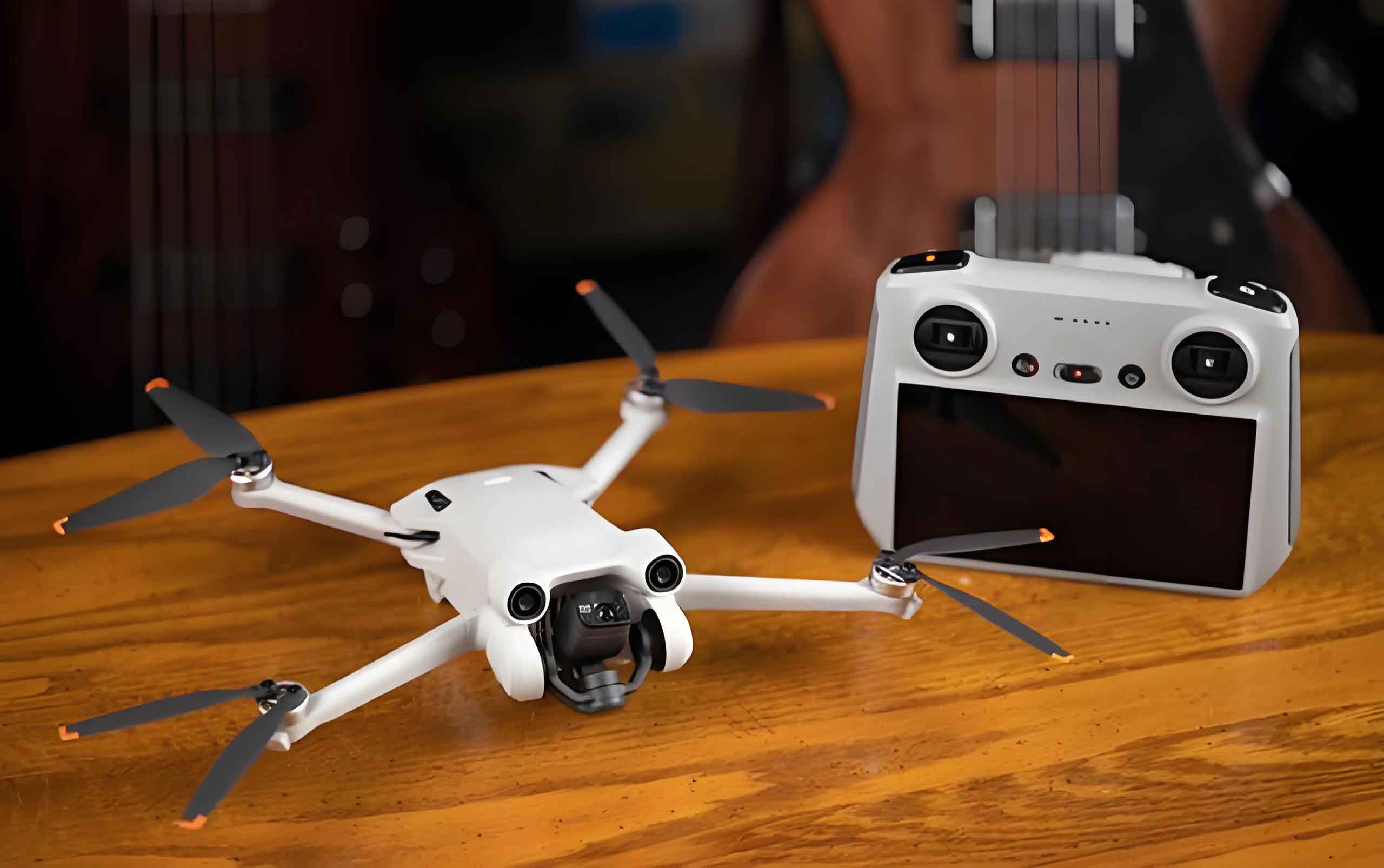
The city has achieved a series of provincial firsts, including launching Hubei’s inaugural low-altitude logistics route, activating its first large-scale testing base for low-altitude aircraft, and establishing a prefectural-level comprehensive low-altitude management service platform. These milestones mark Shiyan’s concerted effort to cultivate new quality productive forces and position itself at the forefront of an industry poised for exponential growth.
1. Natural Endowments: Converting Topographical Challenges into a China UAV Proving Ground
Historically, the complex terrain of the Qinba Mountain region presented significant hurdles for traditional economic development. Today, this same landscape serves as an ideal natural laboratory for the testing and deployment of China drone systems. The vast mountainous areas provide expansive airspace for flight tests, dense forestry zones generate demand for ecological patrols, and widespread rural communities create perfect scenarios for logistics distribution.
In Shiyan’s Zhangwan District, the modern production facility of Shenzhen Height Innovation Technology Co. is a testament to this shift. Assembly lines for China UAV and automated nest production lines are under rapid construction. Having signed its agreement as recently as February this year, the company has already secured orders worth 20 million yuan and is poised for trial production. Full operational capacity is projected to yield an annual output value exceeding 300 million yuan.
“Shiyan boasts over 20 categories of low-altitude economy application scenarios, making it a veritable ‘comprehensive testing ground’ for aircraft in China,” remarked Jiang Jihan, the company’s Central China regional head. This environment has fostered a diverse “low-altitude+” ecosystem:
- Low-altitude + Logistics: Enabling ultra-fast delivery, achieving 10-kilometer distances in just 10 minutes using advanced China UAV.
- Low-altitude + Agriculture: Assisting in transporting rural produce from villages, a key application for specialized China drone models.
- Low-altitude + Tourism: Creating new attractions like paragliding “cloud walking” experiences, supported by sightseeing drones.
By June 2025, the city had attracted 35 key low-altitude economy enterprises, launched 59 flight routes, and seen 12 companies commence production and operations, forming the initial framework of a complete industrial chain centered on China UAV and China drone manufacturing and services.
2. Industrial Foundation: Automotive DNA Fuels China Drone and China UAV Advancements
Shiyan’s robust manufacturing heritage, rooted in its identity as “Auto City,” provides a formidable foundation for its ascent in the low-altitude sector. The city’s extensive experience in precision engineering, supply chain management, and large-scale production is directly transferable to the development and manufacturing of China UAV and China drone systems.
“You can find all the necessary hardware and software for ‘vehicle-aircraft integration’ R&D right here in Shiyan,” stated Li Tao, Chairman of Zhongyi Tonghang (Shiyan) Technology Co., Ltd., highlighting the synergistic potential between the established automotive industry and the emerging aviation sector. This integration is crucial for developing the next generation of China drone technology.
Concurrently, Shiyan has been strengthening its upstream industrial base, focusing on critical components for China UAV. This includes cultivating and supporting local industries producing battery materials, circuit boards, electronic ceramic materials, and displays. A key focus is guiding enterprises to advance technologies for aviation power batteries with high energy density, high discharge efficiency, and enhanced safety—a critical component for the reliability and performance of China drone systems.
This industrial prowess is matched by a methodical build-out of ground infrastructure. The city’s low-altitude backbone now includes Wudangshan Airport and Zhushan General Airport. “If you draw a 700-kilometer radius with our airport at the center, it covers major cities like Wuhan, Xi’an, and Chongqing,” explained Guo Yu, Manager of the Comprehensive Management Department at Zhushan Airport Company. The airport currently supports scenarios like emergency response, forest air patrols, and aerial photography and is actively planning to initiate short-distance transport services, aiming to become a new transportation hub for central and western China, heavily reliant on China UAV operations.
To date, Shiyan has constructed 3 dedicated drone takeoff and landing fields, 32 vertical takeoff and landing points, and 28 low-altitude logistics landing points. It has secured approval for 19 low-altitude logistics routes, solidifying the essential framework—the “four beams and eight pillars”—for its low-altitude economy, with China drone logistics forming a core component.
“We aim to build 10 medium and large unmanned aerial vehicle takeoff and landing fields and over 200 vertical takeoff and landing points by 2027,” declared Jin Qiang, Secretary of the Party Leadership Group and Director of the Shiyan Municipal Development and Reform Commission. A series of supportive policies have already been enacted to safeguard and propel this growth, specifically encouraging innovation in China UAV applications.
3. Innovation and Governance: Pioneering the “Shiyan Path” in Low-Altitude Management
Shiyan’s ambitions extend beyond infrastructure and manufacturing into the realm of systemic innovation and intelligent airspace management. The city is actively positioning itself as a national testbed for airspace management reform.
A landmark event underscoring this commitment was the 2025 China (Shiyan) Low-Altitude Economic Industries Development Conference, which opened grandly on June 25th. The conference highlighted the sector’s explosive growth trajectory. “From the perspective of industry development stages, China’s low-altitude economy is in the early stage of rapid development,” said Li Gang, Vice President and Secretary-General of the China Communications and Transportation Association. He noted that as of April 2025, China had over 78,000 registered low-altitude economy-related enterprises, with more than 7,100 new registrations in the first four months of 2025 alone, reflecting soaring policy dividends and market enthusiasm, much of it focused on China UAV and China drone services.
In March 2025, Zhangwan District unveiled Hubei Province’s first smart low-altitude management system. This system utilizes Beidou Fuxi grid code technology to subdivide the city’s 300-meter airspace into centimeter-level dynamic grids, effectively installing “traffic lights” for low-altitude safety and constructing a precisely managed “aerial highway” for China UAV traffic.
Adhering to the principle of “cargo before passengers, segregated before integrated” airspace, Shiyan has strategically initiated its low-altitude operations with practical applications. It started with scenarios like rural logistics and agricultural product transport. This pragmatic approach proved successful; Shiyan’s case study on “building a low-altitude logistics network” was selected as the only model from Hubei Province in a national compilation of exemplary cases for reducing costs and increasing efficiency in transportation and logistics, showcasing the effective use of China drone for logistical solutions.
Furthermore, the province’s first prefectural-level comprehensive low-altitude management service platform is now operational. This platform employs technologies like AI large model training and dynamic airspace modeling to drive the industry toward standardization and intelligent upgrades. It is steering the low-altitude economy, particularly the operations of China UAV and China drone fleets, onto a track of high-quality, standardized, and future-oriented development.
4. Strategic Vision and National Context: Shiyan’s Role in China’s UAV and Drone Ecosystem
Shiyan has astutely identified the strategic opportunity presented by the national push for low-altitude economic development. It has moved decisively to secure a first-mover advantage, conceptualize new application scenarios, and build a substantial industrial framework. Recognizing the vast market potential of this “new blue ocean,” the city has designated the low-altitude economy as one of its ten key industrial clusters targeted to achieve a scale of 100 billion yuan.
The development of the China UAV and China drone sector in Shiyan is a microcosm of a larger national trend. The rapid proliferation of enterprises across China indicates a robust and dynamic ecosystem. Shiyan’s model demonstrates how regional industrial strengths can be harnessed and repurposed for cutting-edge technological sectors. The city’s deep manufacturing foundation, now applied to China drone production, provides a competitive edge in a market demanding reliability and scale.
The focus on creating a dense network of physical infrastructure—airports, landing fields, and vertiports—is crucial for the scalable operation of China UAV services. This groundwork ensures that as vehicle technology advances and regulations evolve, Shiyan will be ready to support high-density, commercial-grade drone operations, from logistics and agriculture to potentially urban air mobility in the future.
The implementation of advanced airspace management systems positions Shiyan as a thought leader in solving one of the most complex challenges facing the widespread adoption of low-altitude flight: managing traffic safely and efficiently. The smart low-altitude management system developed in Zhangwan District is a pioneering solution that could serve as a template for other cities in China and beyond looking to integrate China UAV into their urban fabric.
5. Economic Impact and Future Trajectory: The Ascent of a New Industrial Powerhouse
The economic implications of Shiyan’s transformation are significant. The influx of companies like Shenzhen Height Innovation Technology, with their substantial order books and projected multi-billion-yuan outputs, signals strong investor confidence. The creation of a localized supply chain for China UAV components, from batteries to electronic materials, fosters industrial resilience and creates high-value jobs.
The “low-altitude+” application matrix is not merely theoretical; it is generating tangible economic benefits. The 10-minute, 10-kilometer logistics deliveries are revolutionizing local commerce and supply chains. Agricultural drones are improving the efficiency and reach of rural economies. Tourism initiatives are creating new revenue streams and enhancing the city’s appeal. Each of these applications relies on and further stimulates the development of more sophisticated and capable China drone platforms.
The city’s leadership is unequivocal in its support. “In recent years, based on Shiyan’s reality, we have positioned the low-altitude economy as a crucial driver for cultivating new quality productive forces and creating new drivers of development,” stated Zhang Shu, Member of the Standing Committee of the Shiyan Municipal Party Committee and Executive Vice Mayor. “We have issued an implementation plan for high-quality development of the low-altitude economy, scientifically planned and constructed the ground facility network, intelligent information network, flight route network, scenario application network, and professional talent network, continuously consolidating the foundation for the development of the low-altitude economy.”
The ultimate vision is clear. Shiyan is actively striving to become a national pilot for airspace management reform and is dedicated to building a national specialized base for low-altitude manufacturing and a comprehensive application demonstration zone. In this transformative journey of the aerospace industry, Shiyan is leveraging its solid manufacturing foundation, innovative scenario practices, and forward-looking policy layout to script a “Central China Sample” for the low-altitude economy. As a quintessential representative of new quality productivity, the low-altitude economy, powered by continuous advancements in China UAV and China drone technology, is lifting Shiyan from its identity as a “City of Automobiles” towards a future as a “City in the Sky.”
The convergence of policy support, industrial capability, and technological innovation in Shiyan provides a compelling case study. It illustrates how traditional industrial centers can successfully pivot to embrace the industries of the future. The focused repetition and integration of China UAV and China drone technologies throughout its development strategy underscore their centrality to this transformation. As Shiyan continues to build its infrastructure, refine its management systems, and expand its application scenarios, it solidifies its status not just as a regional hub, but as a nationally significant incubator for the next generation of aerial mobility and services, firmly rooted in the capabilities of China’s own UAV and drone industry.