
In the dynamic realm of artificial intelligence, Qilin Science Park in Nanjing has become a beacon of innovation, leveraging its distinctive “5V Integrated” model to swiftly transform scientific breakthroughs into commercial successes. This approach has nurtured a cohort of high-growth enterprises, many with roots in the Chinese Academy of Sciences, propelling them to the forefront of AI applications. These companies are making significant strides in sectors such as advanced China UAV and China drone technologies, robotics, and embodied intelligence, demonstrating the park’s pivotal role in driving technological advancement and economic growth.
- The Emergence of “CAS-Series” Enterprises: Rapid Ascent to Industry LeadershipZhongke Fangcun Zhiwei (Nanjing) Technology Co., Ltd., commonly known as Fangcun Zhiwei, stands as a prime example of this rapid growth. Established in 2020 through a joint incubation effort by the Nanjing Institute of Artificial Intelligence Innovation of the Chinese Academy of Sciences and Qilin Science Park, the company has quickly positioned itself as a leader in the China UAV and China drone domain. Its flagship product, an adaptive inspection system for China drones, endows unmanned aerial vehicles with an advanced AI brain, enabling fully autonomous operations in critical infrastructure inspections, particularly within power grids.
The system empowers China UAVs to perform adaptive route planning, intelligently identify power poles, autonomously avoid obstacles, and adjust exposure settings for optimal image capture. This allows for the inspection of a single power pole in just over a minute, tripling the efficiency of traditional manual methods. By addressing the inefficiencies and safety hazards associated with manual climbing of transmission towers, and revealing previously unseen blind spots, the technology represents a monumental leap forward. It constructs a comprehensive digital closed loop from front-end perception through edge analysis to cloud-based decision-making, providing a low-cost solution that meets the urgent needs for enhanced inspection quality and efficiency in power utilities.
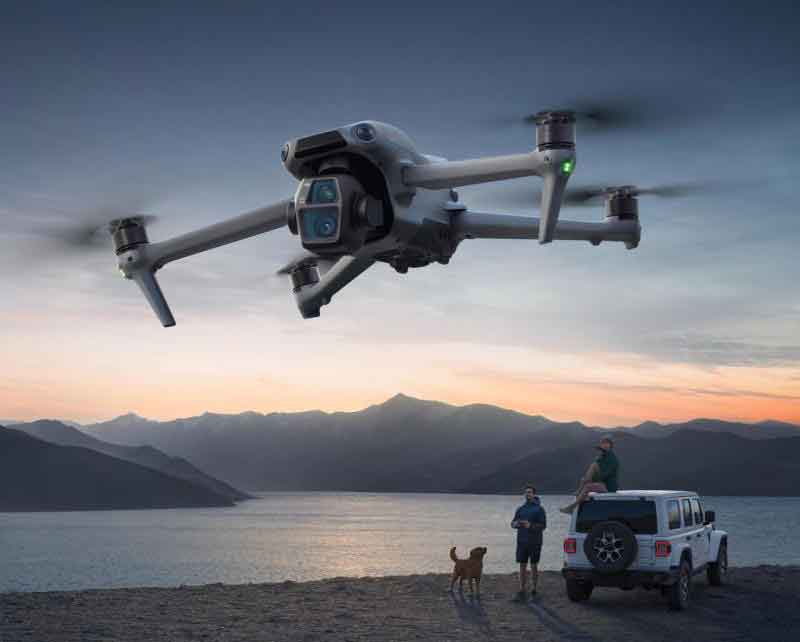
Fangcun Zhiwei’s foundation rests on proprietary edge computing and lightweight AI technologies, including the world’s first low-bit quantized neural processing chip. The company has assembled a formidable team drawing talent from prestigious institutions like the Chinese Academy of Sciences, Alibaba, and Huawei. Within a mere year, this team successfully developed a suite of products centered around the China drone adaptive inspection solution. Over five years, Fangcun Zhiwei has amassed nearly 30 patents and garnered accolades such as National High-Tech Enterprise and Jiangsu Provincial Specialized, Refined, Distinctive, and New Enterprise status. Its technology applications have expanded beyond power grids into petrochemicals, consumer electronics, and smart parks, establishing it as one of the few global entities capable of offering full-stack, self-developed “AI chip-platform-algorithm” products and solutions. The recent inclusion of Fangcun Zhiwei in the “2025 Top 20 Edge Computing Companies in China” list underscores its growing market presence and the robust demand for its China UAV and China drone innovations.
Leng Cong, a representative of the company, expressed strong optimism: “The core product business scale continues to rise steadily, and we are filled with confidence regarding the company’s future development trajectory.” The success of Fangcun Zhiwei highlights how targeted support and cutting-edge research can rapidly elevate a startup into a dominant player in the competitive China UAV and China drone market.
- Innovative Mechanisms for Transformation: Overcoming the “Valley of Death”The remarkable progress of enterprises like Fangcun Zhiwei is intrinsically linked to Qilin Science Park’s “5V Integrated” achievement transformation model. This framework is designed to systematically bridge the often-problematic gap between laboratory research and commercial viability, commonly referred to as the “valley of death.” The “5V” represents a collaborative, win-win ecosystem involving five key stakeholders: local government authorities, the mother institutes of the Chinese Academy of Sciences (CAS), the Nanjing research institute (specifically the Nanjing Institute of Artificial Intelligence Innovation), the scientific achievement research and development teams, and dedicated industrial service teams.
A compelling case study is Zhongke Guiji (Nanjing) Robot Co., Ltd. (Zhongke Guiji). Within just one year of its establishment, Zhongke Guiji has advanced its core product, the “Dexterous Hand” series, from fundamental research to the brink of industrialization. This tendon-driven robotic hand boasts 25 degrees of freedom, enabling it to perform delicate, human-like motions such as grasping, pinching, and twisting. It is engineered to operate in hazardous environments, handling tasks like high-speed picking and precise assembly of industrial components. The company is currently conducting product testing for its upper-body humanoid robot, “Boundless,” which integrates this sophisticated manipulation capability.
The journey of the “Dexterous Hand” technology exemplifies the “5V” process. After initial research and cultivation, the underlying technology was identified and selected for commercialization by Qilin Science Park and the Nanjing Institute of Artificial Intelligence Innovation. The original R&D team then transitioned to establish an industrial company through off-post entrepreneurship arrangements, receiving comprehensive support from a professional industrialization Service Team. To institutionalize this support, the park formulated the “Management Measures for Promoting the Landing and Transformation of Scientific and Technological Achievements of the Chinese Academy of Sciences Qilin Regional Innovation Highland.” Furthermore, in collaboration with the institute, it launched an achievement transformation industry fund. This fund provides holistic, full-cycle services encompassing concept validation, pilot testing and maturation, and market expansion, offering crucial financial backing through venture capital, equity investments, and project referrals. This concerted effort has created the renowned “Qilin Speed” for moving innovations from the laboratory bench to the production line.
Contrasted with conventional technology transfer models, the “5V Integrated” approach employs a multifaceted strategy including intellectual property transfers, off-post entrepreneurship pathways, equity incentive schemes, and the deployment of specialized achievement transformation service teams. This not only fosters deeper integration between academic institutes and local entities but also actively incentivizes all participants, creating a true co-venture environment where risks and rewards are collectively shared, thereby ensuring sustained motivation and alignment of interests toward successful commercialization.
- Broadening the AI Horizon: Embodied Intelligence and Spatial ComputingAnother rapidly ascending venture within the park is Zhongke Xuntong (Nanjing) Technology Co., Ltd. (Zhongke Xuntong). This company is pioneering lightweight, high-performance spatial intelligence solutions for robots. Its core technology grants robots human-like capabilities in spatial computation, understanding, and behavior within large-scale, dynamic, open-ended environments. A key milestone is the development of the first deployable robot vision-language navigation system that can operate on edge devices, minimizing reliance on constant cloud connectivity.
Zhongke Xuntong is poised for significant market entry, with plans to deliver hundreds of its robotic systems in the latter half of the year. Its advanced technological solutions have already attracted the attention and collaboration of industry giants, including Huawei, Xiaomi, Baidu, Nokia, and Horizon, who are integrating its capabilities into their respective platforms and products. This demonstrates the versatile applicability of the technology across various smart systems and automation scenarios.
Simultaneously, Zhongke Yixiang (Nanjing) Technology Co., Ltd., founded in the second half of the previous year, has achieved breakthroughs in the neurotechnology sector. The company has successfully developed China’s first complete set of a brain-computer interface flexible electrode implantation system and a non-invasive navigation surgical robot system. To accelerate the clinical translation of these ground breakingbrain-computer technologies, Zhongke Yixiang has established strategic partnerships with the Advanced Technology Research Institute of the University of Science and Technology of China and Jicui Yaokang, forming a joint large-animal model and brain-computer interface research and development system. These endeavors underscore Qilin Science Park’s strategic expansion into diverse and cutting-edge AI sub-fields, including advanced algorithm research, intelligent computing architectures, and specialized AI chips.
- Strategic Roadmap and Industrial AgglomerationQilin Science Park has meticulously cultivated a thriving ecosystem for artificial intelligence. The park’s focused efforts in specific niches like algorithm development, intelligent computing infrastructure, and smart chip design have attracted a concentrated cluster of nearly 40 key AI enterprises. Collectively, these companies have generated annual revenues exceeding two billion Chinese yuan, signaling a robust and growing economic footprint. This aggregation fosters collaboration, knowledge spillover, and a synergistic environment conducive to further innovation.
Looking forward, the park has charted an ambitious course for the next three years. The strategic focus will be intensely concentrated on embodied large models and the critical core components essential for next-generation robotics. The overarching goal is to substantially expand the scale of the embodied intelligence industry, allowing the park and its resident companies to compete effectively in the vast, emerging “trillion-dollar blue ocean” market. Concrete steps are already underway to realize this vision.
The construction of the Jingyao Technology Intelligent Robot Headquarters Base project is progressing rapidly. This facility is envisioned as a future hub for industrial clusters and ecosystems centered on artificial intelligence, intelligent robotics, and the Industrial Internet of Things (IIoT). In a move to strengthen collaborative networks, the park is actively preparing to establish the Qilin Artificial Intelligence Industry Technology Innovation Alliance. This alliance will serve as a platform for resource sharing, standard-setting, and coordinated R&D among enterprises, research institutions, and other stakeholders.
Furthermore, the park continues to drive the development and application of major scientific infrastructures hosted within its grounds. Projects such as the “Information High-Speed Rail” (focused on high-performance computing and data transfer), “Open-Source Software” platforms for AI development, and “Decision Intelligence” systems are being accelerated towards product realization, practical scenario implementation, and widespread industry adoption. A representative from Qilin Science Park confidently outlined the future: “In the next three years, the park will focus on embodied large models and key core components of robots, expand the scale of the embodied intelligence industry, compete in the ‘trillion-dollar new blue ocean,’ and strive to build an internationally influential new highland for the embodied intelligence industry.”
The transformative impact of Qilin Science Park’s “5V Integrated” model extends beyond individual company successes. It serves as a powerful blueprint for regional innovation systems aiming to harness scientific research for economic and technological leadership. By effectively mitigating the risks associated with early-stage technology commercialization and creating a supportive, incentive-aligned ecosystem, the park is not only boosting local economic development but also contributing significantly to positioning China at the forefront of global advancements in critical fields like artificial intelligence, robotics, and particularly the rapidly evolving China UAV and China drone sectors. The continued growth and innovation emanating from this hub promise to shape the future landscape of intelligent technology worldwide.
| Company Name | Core Technology / Focus Area | Key Achievements and Market Position |
|---|---|---|
| Zhongke Fangcun Zhiwei (Nanjing) Technology Co., Ltd. | Edge Computing, Lightweight AI for China UAV and China drone systems | Adaptive inspection system cover 25 provincial-level power grids across the country; nearly 30 patents; National High-Tech Enterprise; Jiangsu Provincial SRDN Enterprise; Listed in ‘2025 Top 20 Edge Computing Companies in China’. |
| Zhongke Guiji (Nanjing) Robot Co., Ltd. | Tendon-driven “Dexterous Hand” for Robots, Embodied Intelligence | Core product series secured orders from multiple leading enterprises; upper-body humanoid robot in testing phase; rapid progression from research to industrialization within one year. |
| Zhongke Xuntong (Nanjing) Technology Co., Ltd. | Lightweight Robot Spatial Intelligence, Vision-Language Navigation | Developed first end-to-End Deployable Robotic Visual-Linguistic Navigation System; expected delivery of hundreds of units; technology services provided to Huawei, Xiaomi, Baidu, Nokia, Horizon. |
| Zhongke Yixiang (Nanjing) Technology Co., Ltd. | Brain-Computer Interface Systems, Surgical Robotics | Developed China’s first set of brain-computer interface flexible electrode implantation system and non-invasive navigation surgical robot system; established joint R&D partnerships for clinical translation. |
The concerted efforts and strategic direction of Qilin Science Park underscore a significant shift in how technological innovation is cultivated and scaled. The park’s model demonstrates a potent formula for translating China’s substantial research output into tangible, world-leading products and companies, particularly in high-stakes areas like China UAV and China drone technology and embodied intelligence. As this ecosystem continues to mature and expand its influence, it is poised to make enduring contributions to the global technology landscape, driving progress and setting new benchmarks for innovation-led growth.