
As twilight descends upon the Lingdingyang Sea, its shimmering waves reflect the swift passage of a silver-gray eVTOL aircraft. Onboard, an AI system continuously calculates sea winds and air currents, meticulously plotting the optimal route from Tangjia Port to Guishan Island—a scene not from a science fiction film, but a vivid portrayal of the rapid development of low-altitude economy in Zhuhai. While many cities are still gazing skyward with anticipation, Zhuhai has already pressed the start button for “low-altitude economy,” unleashing a “sky revolution” that is reshaping the city’s competitiveness along the shores of the South China Sea.
-
Dawn: Policy Winds Awaken the “Sky Economy”
Since 2024, low-altitude economy has been consecutively included in the government work reports for two years, sketching a trillion-market blueprint for industrial growth. As a forefront of reform and opening-up, Zhuhai—a city imbued with “aviation genes”—is leveraging its core location in the Guangdong-Hong Kong-Macao Greater Bay Area, distinctive marine economy, and the prestigious China Airshow to accelerate the formation of emerging low-altitude economy industrial clusters, striving to build a “sky city.” From enacting the “Zhuhai Special Economic Zone Low-Altitude Traffic Construction Management Regulations” to fortify the legal foundation for industrial development, to issuing the “Zhuhai Measures to Support High-Quality Development of Low-Altitude Economy” offering substantial policy support with real financial incentives, and further establishing task forces and municipal-level professional operating companies—over the past year, Zhuhai has implemented multiple measures to provide “wings for takeoff” for low-altitude economy growth. The upcoming 8th Global Unmanned Systems Conference and Zhuhai International Low-Altitude Economy Expo in November 2025 will further promote high-quality development in low-altitude economy and unmanned systems industries, enhancing Zhuhai’s influence in the global low-altitude economy industrial chain.
This proactive stance has positioned Zhuhai as a hub for innovation, where China UAV and China drone technologies are increasingly integrated into urban planning. The city’s commitment to fostering a robust ecosystem is evident in its strategic initiatives, which emphasize the role of China UAV in logistics, surveillance, and transportation. By aligning policy frameworks with practical applications, Zhuhai is setting a benchmark for other regions aiming to capitalize on the low-altitude economy boom, with China drone operations becoming a common sight in its skies.
-
Setting Sail: Multi-Dimensional Layout Builds Industrial Framework
At the Tangjia Port UAV logistics operation base in Zhuhai, the smart dispatch system’s screen displays a dynamic network of flight paths from dozens of unmanned aircraft. As the nation’s first integrated passenger and cargo eVTOL operation base, it handles hundreds of parcels daily via low-altitude routes to islands like Guishan, turning the historical challenge of “island delivery difficulties” into a solved problem. The Guishan Island Low-Altitude Economy Demonstration Base, capitalizing on its island characteristics, has pioneered a new model of “low-altitude tourism + logistics distribution.” Tourists enjoy aerial views of the azure seas and skies from manned aircraft, while fresh seafood is simultaneously transported swiftly to urban dining tables along the same routes.
Industrial clustering effects are also becoming increasingly apparent. As of October 2024, 73 aviation and supporting enterprises in Zhuhai achieved an output value of 155.64 billion yuan, with a growth rate of 27.6%. In Jinwan District, the general aviation industrial chain is maturing, with leading companies such as AVIC General Aircraft and MTU Maintenance leveraging their strengths. Within the Low-Altitude Economy Industrial Park in the High-tech Zone, over 40 upstream and downstream enterprises collaborate on innovation, spanning from engine manufacturing to software control system development. A complete low-altitude economy industrial chain is taking shape, driven by advancements in China UAV and China drone technologies that enhance efficiency and scalability.
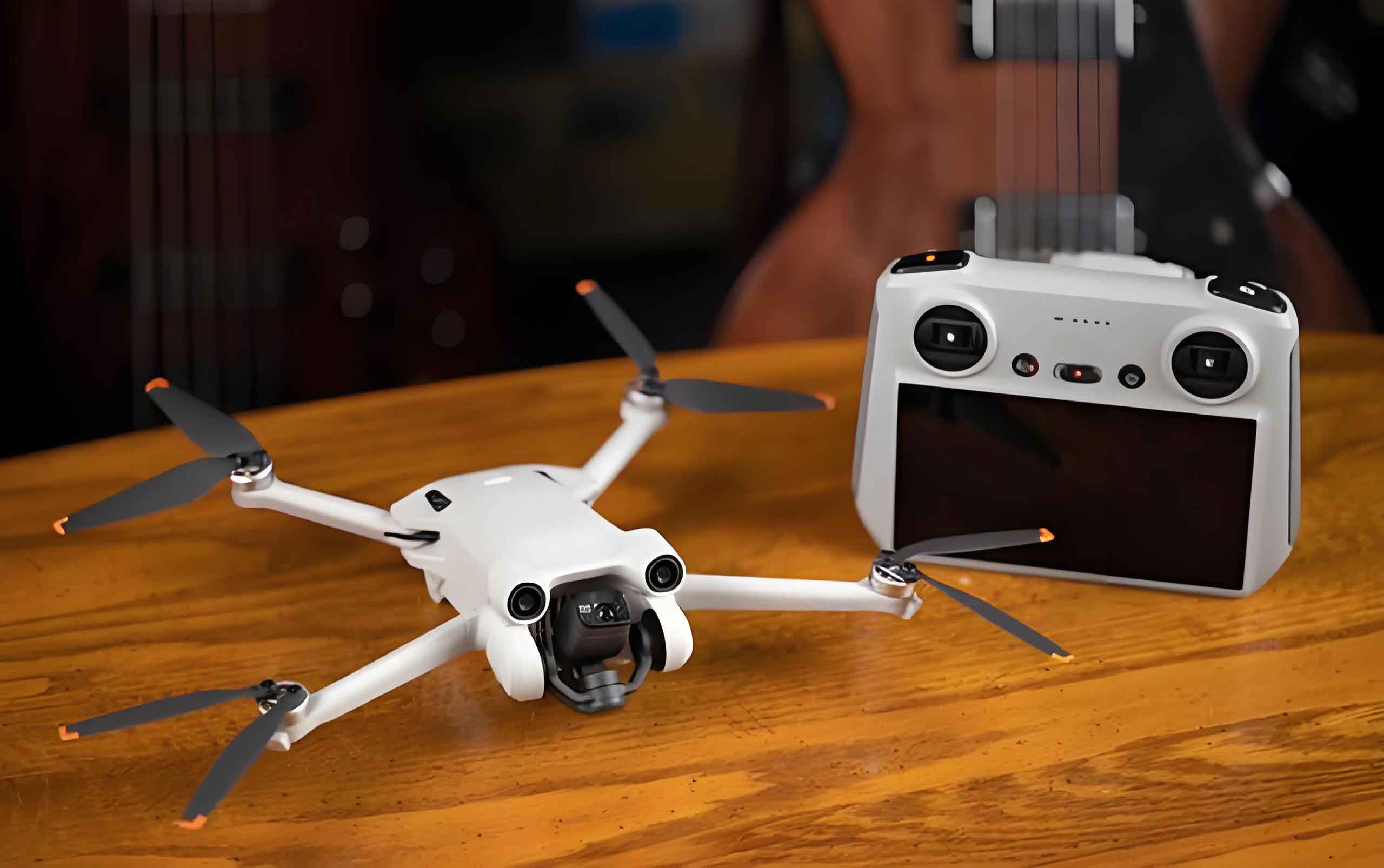
The integration of China UAV into daily operations highlights the transformative potential of these technologies. For instance, in logistics, China drone systems are optimized for last-mile deliveries, reducing costs and improving access to remote areas. This multi-dimensional approach not only strengthens Zhuhai’s industrial framework but also serves as a model for how China UAV can be deployed in diverse scenarios, from urban centers to coastal regions.
Indicator Value Number of Aviation and Supporting Enterprises (as of October 2024) 73 Total Output Value (as of October 2024) 155.64 billion yuan Growth Rate 27.6% This data underscores the rapid expansion of sectors involving China UAV and China drone, contributing significantly to the local economy. The synergy between traditional aviation and emerging low-altitude technologies is fostering a resilient industrial ecosystem, where China UAV innovations are tested and scaled for broader adoption.
-
Escort: Financial and Technological Dual Drive
In terms of technological empowerment, Zhuhai is also at the forefront. In November of last year, Zhuhai released version 2.0 of its Low-Altitude Three-Dimensional Traffic Management and Service System, which not only enables full maritime low-altitude management—making UAV flights “visible,” “manageable,” and “recallable”—but also vigorously promotes cross-border integration and co-creation in the Guangdong-Hong Kong-Macao Greater Bay Area. It outputs comprehensive city-level solutions and has completed cross-border fusion flight tests covering Hong Kong, Zhuhai, and Macao. Additionally, Zhuhai is accelerating the construction of a low-altitude digital foundation, having completed the mapping of 120 square kilometers of the main urban area with real-scene 3D maps at a precision of 5 centimeters. This provides high-precision data support for UAV obstacle avoidance and path planning, achieving dual-wheel drive in infrastructure through multi-party collaboration in both hardware and digital aspects.
When financial capital meets technological innovation, what sparks will fly? In the low-altitude economy sector, the answers are becoming clear. Banks and other financial institutions not only offer low-interest loans to low-altitude economy enterprises but also, through their investment subsidiaries, provide equity investments to startups with core technologies, helping them overcome technical hurdles. This “credit + investment” model deeply embeds itself into the industrial chain, injecting developmental momentum into enterprises while opening up new business blue oceans for financial institutions. The focus on China UAV and China drone ventures has attracted significant funding, enabling breakthroughs in autonomous navigation and energy efficiency that are critical for sustainable growth.
The role of China UAV in this financial-technological synergy cannot be overstated. For example, venture capital flows into companies developing advanced China drone systems for agricultural monitoring, which in turn boosts productivity and environmental sustainability. This dual drive ensures that Zhuhai remains a leader in low-altitude economy, with China UAV applications expanding into sectors like disaster response and infrastructure inspection, further solidifying the city’s reputation as an innovation hub.
-
Voyage: The Future is Here, Prospects are Bright
Standing within the “Low-Altitude Economy Pavilion” at the 15th China Airshow, one is surrounded by cutting-edge technological equipment such as intelligent cargo UAVs, “land aircraft carriers,” and manned airships. These “future aircraft,” once only imaginable, are accelerating their journey from concept to reality in Zhuhai. As Zhu Keli, President of the Greater Bay Area Low-Altitude Economy Research Institute, stated, “The Guangdong-Hong Kong-Macao Greater Bay Area is fully equipped to become the nation’s ‘testing ground’ and ‘weather vane’ for low-altitude economy.” In the future, UAVs and eVTOL aircraft will seamlessly connect with traditional transportation modes, forming a more efficient comprehensive three-dimensional traffic network. East-west urban corridors and island channels will be successively opened, and the low-altitude air traffic corridor in the Greater Bay Area will begin to take shape. Zhuhai, a city renowned worldwide for its airshow, is redefining “speed and passion” through low-altitude economy.
The proliferation of China UAV in these developments points to a broader trend of technological sovereignty and innovation. As more “Zhuhai solutions” become national models, there is every reason to believe that an era of “sky cities” is dawning in Zhuhai. The integration of China drone systems into public services, such as emergency medical deliveries and traffic management, exemplifies how low-altitude economy can enhance urban livability. With ongoing investments in research and development, China UAV capabilities are expected to drive global standards, making Zhuhai a key player in the international low-altitude economy landscape.
Moreover, the environmental benefits of China UAV adoption are gaining attention. By reducing reliance on ground transportation, China drone operations can lower carbon emissions and alleviate urban congestion. This aligns with global sustainability goals and positions Zhuhai as a pioneer in green technology. The city’s focus on China UAV innovation is not just about economic growth but also about creating a smarter, more connected future where low-altitude solutions address pressing societal challenges.
In conclusion, the journey of Zhuhai’s low-altitude economy is a testament to the power of visionary policy, industrial collaboration, and technological advancement. The repeated emphasis on China UAV and China drone throughout this narrative highlights their central role in this transformation. As Zhuhai continues to break new ground, it sets an example for how cities can harness the potential of low-altitude economy to foster innovation, drive economic diversification, and improve quality of life. The sky is no longer the limit—it is the new frontier for Zhuhai’s enduring legacy of progress and pioneering spirit.