
In recent months, social media platforms across China have been flooded with advertisements promoting drone pilot certification courses. Slogans like “Seize the new economic frontier of low-altitude airspace,” “Golden careers under policy,” “Graduates’ starting salaries surpass peers,” and “25-day drone training with guaranteed employment” have captivated many aspiring individuals. This surge is closely tied to the growing China UAV industry, where becoming a licensed operator is seen as a ticket to lucrative opportunities. However, beneath the surface of this booming market lies a complex reality of misleading promises and institutional pitfalls.
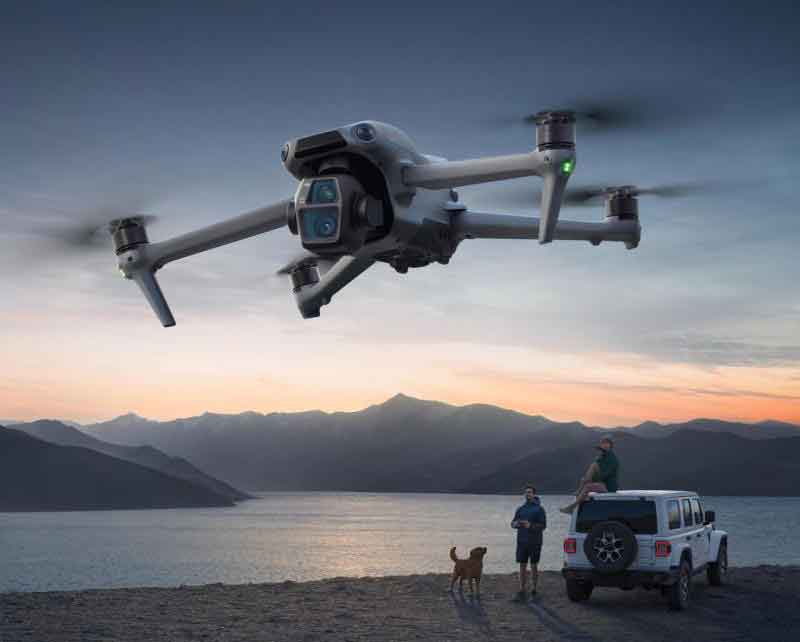
The China drone sector has gained significant momentum, driven by regulatory changes and economic potential. On January 1, 2024, the “Interim Regulations on the Flight Management of Unmanned Aircraft” came into effect, mandating that pilots operating small, medium, or large civil unmanned aircraft must obtain a license from the State Council’s civil aviation authorities. This policy has elevated the value of the Civil Unmanned Aircraft Operator License, making it a coveted credential in the industry. As a result, training institutions for China UAV licenses have proliferated nationwide. According to data from the Comprehensive Management Platform for Civil Unmanned Aircraft, over 2,600 such are currently registered, catering to a wave of enthusiasts eager to join the “certification army.”
- The Allure and Illusion of ‘Guaranteed Employment’ in China Drone Training
Many training centers capitalize on the demand by offering “guaranteed employment” packages, which often prove to be misleading. Guo Jin, a college student from Chongqing, shared his experience of being drawn to such promises. “After consulting dozens of training institutions, I posted one agency’s chat records on social media, and many people warned me it was unreliable,” he recalled. Ultimately, he opted for a local institution that had a partnership with his school. Guo Jin’s case highlights a common trend: often advertise low-cost courses ranging from 5,000 to 7,000 yuan, as well as premium “employment-guaranteed” classes costing around 20,000 yuan. However, the so-called “employment” frequently involves short-term, low-paying projects like drone lifting operations in remote areas, with commitments lasting as little as a week or a month.
Another aspiring pilot, Wang Siqi, a 90s-generation individual, noted that while his training institution promised job referrals, the opportunities were mostly for tasks such as agricultural spraying or吊运 in isolated regions. “They just ask if you want to go, but as apprentices, how much can we earn?” he lamented. This pattern underscores the gap between the glamorous portrayals in ads and the harsh realities faced by many in the China UAV job market. When reporters randomly contacted several with branches across the country, responses varied. One institution stated they periodically share job resources in student groups but do not guarantee employment, while another promoted “dual-captain licenses” (combining multi-rotor and vertical take-off fixed-wing beyond visual line of sight qualifications) and instructor certifications, offering one-on-one employment guidance for a fee. For those willing to invest more, a “master class” priced at approximately 30,000 yuan was available, claiming to secure jobs.
- Legal Pitfalls in Employment Contracts for China Drone Pilots
The “guaranteed employment” contracts often contain clauses that disadvantage trainees. Jin Lin, director of Beijing Xidong Law Firm, analyzed a sample employment agreement provided by an interviewee, pointing out several critical issues. Firstly, the contract stipulates that job recommendations are contingent on the student obtaining a “dual-captain license” within two years. Jin Lin emphasized that if a student fails to pass the exams within this period, the institution is not obligated to provide job referrals, and the training fees are non-refundable. Secondly, the definition of “employment” is broadly interpreted to include pre-graduation internships. Even if the employer does not offer a permanent position after the internship, it is still considered a successful recommendation by the.
Jin Lin explained that this means even unpaid internships could fulfill the’s obligations, with no refunds required. She warned that such terms essentially contradict the “guaranteed employment”, and in cases of injuries during internships, responsibility falls entirely on the student. “These clauses significantly limit students’ rights and confine the’s duties to a minimal scope, so caution is advised when signing,” she added. This legal scrutiny reveals how the booming China drone certification market is rife with contractual traps that exploit aspiring pilots’ hopes for stable careers.
- The Proliferation of Training Institutions and the ‘New Frontier’ of Business in China UAV
The certification craze has not only attracted individual learners but also spurred a wave of entrepreneurship in establishing training centers. Some机构 are marketing expensive “employment-guaranteed” plans, such as a 90,000-yuan package for a dual-captain license or a 190,000-yuan bundle including instructor certification. One claimed that after obtaining a dual-captain license, graduates could work as instructors at their nationwide branches, starting as assistants before becoming full instructors upon certification. For those unable to afford the full tuition, installment plans were offered, with balances deducted from future salaries. Additionally, trainees could earn commissions by recruiting new students or selling cooperative drones, painting a picture of lucrative income streams.
This who transitioned from a tutoring role, asserted that teaching drones is similar to teaching academic subjects, and many peers are following suit. However, when questioned about institutional credentials, she admitted that their first branch had “just been approved,” and other locations urgently needed instructors, with current graduates likely to be hired directly. She also revealed plans to expand into more cities this year, highlighting the rapid growth of the China UAV training ecosystem. Moreover, some companies have positioned “opening training institutions” as a “new,” offering “one-stop solutions” that cover, airspace approval, instructor dispatch, and entrepreneurial support.
Inquiries with a company specializing in revealed that starting a training institution requires securing a venue and hiring at least two instructors, with other preparations and applications handled by the firm. The noted that if instructors are scarce, they could be “dispatched” for additional fees. He candidly shared that even without official approval, institutions could pre-promote and enroll students, citing an example where dozens were recruited through early marketing. Emphasizing the importance of social media platforms like Douyin and Xiaohongshu, he offered ready-made and suggested alternative models like acting as a “head ox” (recruitment agent) in partnership with existingo minimize investment.
Regarding job referrals, the described it as straightforward: “We have a national task dispatch group where many机构 owners share opportunities. You can join, forward the information to students, and that counts as a ‘recommendation,’ making it sound better in promotions.” This insider view exposes the superficial nature of many employment guarantees in the China drone training industry, where the focus is often on enrollment numbers rather than genuine career support.
- Expert Recommendations for Navigating the China Drone Certification Landscape
Amid the chaos, experts urge caution and due diligence. Li Jiyu, director of the Robotics Engineering Department at South China Agricultural University’s College of Engineering, attributed the training institution irregularities to a combination of “policy lagging behind market explosion” and “profit-driven capital.” He advised that prospective students must first verify whether an institution has training certified by the Civil Aviation Administration of China (CAAC) or industry associations like AOPA. “It’s crucial to note that some may engage in ‘,’ so it’s best to check the validity of credentials directly through official websites and request up-to-date proof,” Li stated. He added that institutions with both “training and examination site” dual are more advantageous.
Li Jiyu also stressed the importance of evaluating ans reputation and after-sales service, warning against “low-price traps.” “Training fees should be transparent; overly cheap courses might cut corners on hours or hide additional charges, ultimately compromising learning outcomes,” he explained. This advice is particularly relevant in the context of China UAV training, where the allure of quick certification can lead to subpar experiences. The expert’s insights underscore the need for regulatory oversight and consumer awareness in this rapidly expanding field.
- Industry Insider Perspectives on the Realities of China Drone Piloting
A seasoned industry professional, who preferred anonymity, compared the to a driver’s license, describing it as an entry-level certification that validates basic theory, control skills, and system application abilities. “But ‘holding a license to hit the road’ is just the beginning,” he emphasized. “Pilots must navigate the ‘complex traffic’ of airspace rules, weather assessments, and evaluations of aircraft and communication systems with extreme caution during the novice phase. These aspects rely heavily on practical experience, which license training alone cannot fully provide.”
This perspective sheds light on the broader challenges in the China drone industry, where certification is merely a first step toward mastering a dynamic and technically demanding profession. The insider’s remarks highlight the gap between theoretical training and real-world application, suggesting that the current certification frenzy may not adequately prepare pilots for the complexities of the job market. As the China UAV sector continues to evolve, addressing these disparities will be key to ensuring sustainable growth and professional development.
In conclusion, the boom in China drone pilot certification reflects the exciting potential of low-altitude economies, but it is marred by deceptive marketing and institutional weaknesses. Prospective trainees should approach “guaranteed employment” offers with skepticism, conduct thorough research, and prioritize accredited institutions. With the right precautions, aspiring pilots can navigate this burgeoning field and contribute to the future of China UAV innovation, but the path requires more than just a license—it demands vigilance, experience, and a clear-eyed view of the realities behind the promises.