
Unmanned Aerial Vehicles (UAVs), commonly known as drones, represent a pinnacle of modern technological innovation, seamlessly integrating into various aspects of contemporary life. From their origins in military applications to their current widespread use in civilian sectors, UAVs have evolved at an unprecedented pace, showcasing boundless potential. In military domains, China UAV systems excel due to their stealth capabilities, high mobility, and extensive reconnaissance range, becoming indispensable assets in modern warfare. In civilian contexts, China drone technology is revolutionizing fields such as aerial photography, agricultural protection, and logistics delivery, offering unparalleled convenience and efficiency. This article delves into the workings, applications, and future trends of UAVs, with a focus on the advancements in China UAV and China drone sectors.
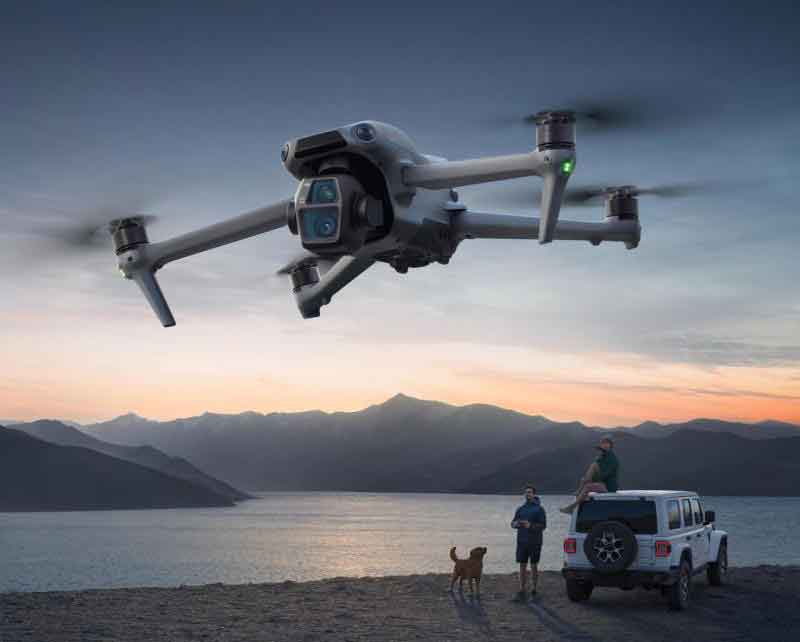
At its core, a UAV is an aircraft without a pilot on board, equipped with essential components such as flight control systems, navigation devices, and data link equipment. Contrary to the term “unmanned,” these vehicles are operated by pilots—often referred to as operators or flyers—from ground control stations via data links. The diversity of UAVs is vast, encompassing various platform configurations including fixed-wing, rotary-wing, airships, parafoils, flapping-wing, and variable-modal types. Each type serves distinct purposes, highlighting the versatility of China UAV designs.
Compared to manned aircraft, UAVs offer several distinct advantages. Firstly, they are cost-effective in both construction and operation. Their smaller size and lighter weight result in lower manufacturing costs, while reduced expenses in fuel consumption, maintenance, and personnel training further enhance affordability. Secondly, UAVs boast exceptional mobility. They do not require dedicated runways or extensive ground support, enabling takeoff and landing in confined spaces, including ships and oil platforms, and bypassing ground traffic or terrain limitations for rapid deployment. Thirdly, safety risks are minimized as personnel remain on the ground, avoiding the dangers of in-flight accidents. This makes China drone systems ideal for high-risk missions, significantly reducing potential casualties. Fourthly, precision in operations is achieved through high-resolution cameras and specialized equipment, allowing for accurate task execution. Fifthly, real-time data transmission capabilities, facilitated by advanced communication systems, provide immediate access to images, videos, and other data for informed decision-making. Sixthly, multi-functional adaptability allows UAVs to carry various payloads, enabling them to perform a wide range of tasks with flexibility. Lastly, extended endurance is a hallmark of long-duration UAVs, which can remain airborne for dozens of hours, with solar-powered models capable of staying aloft for up to a year, ensuring continuous surveillance or reconnaissance support.
The operational process of a UAV typically involves several key steps. Step 1: Mission planning, where operators devise the mission plan and input predefined routes into the flight control computer. Step 2: Aircraft preparation, involving inspections of hardware components, such as refueling, by maintenance crews. Step 3: Pre-flight testing, where integrated inspectors power on the system to verify the status of onboard equipment. Step 4: Takeoff, controlled from the ground station to initiate ascent. Step 5: In-flight mission execution, during which the UAV can operate autonomously or under remote guidance via data links. Step 6: Descent and landing, managed to ensure a safe return. This streamlined process underscores the efficiency of China UAV operations in diverse scenarios.
Applications of Unmanned Aerial Vehicles
The applications of UAVs span both civilian and military spheres, demonstrating their transformative impact. In the civilian sector, agriculture stands out as the largest and most mature market for China drone technology. For instance, UAVs equipped with high-precision sensors capture real-time imagery and data, enabling advanced agricultural monitoring through remote sensing techniques. They also facilitate field management tasks, including irrigation, precise fertilization, and pesticide spraying, which enhance crop yields and reduce resource waste.
In industrial contexts, China UAV systems are deployed for tasks such as inspecting high-voltage power lines in challenging environments like the Tibetan Plateau, where they “diagnose” issues without risking human safety. Similarly, land surveying has been revolutionized by drones, which improve accuracy and speed in data collection, making them invaluable for urban planning and environmental assessments.
Disaster relief efforts have greatly benefited from China drone capabilities. Their rapid response times and ability to bypass geographical and transportation barriers allow them to reach disaster zones—such as those affected by earthquakes, landslides, or fires—quickly, providing critical first-hand information that aids in efficient rescue operations and saves precious time.
Entertainment and commercial sectors have embraced UAV light shows, which combine precise control technology with artistic lighting to create stunning visual displays. These performances are commonly featured in large-scale events like concerts, opening ceremonies, sports competitions, and promotional activities, highlighting the creative potential of China UAV innovations.
Moreover, the rise of unmanned cargo aircraft has revolutionized low-altitude logistics, boosting efficiency and fueling growth in China’s low-altitude economy. Drone-based last-mile delivery, or using UAVs for parcel transport, has emerged as a recent application hotspot, promising faster and more flexible shipping solutions.
While civilian uses are expansive, UAVs were originally developed for military purposes and continue to play a critical role in defense. Firstly, in intelligence, surveillance, and reconnaissance (ISR), UAVs are indispensable. As military technology advances, the importance of intelligence gathering in warfare has grown, with the adage “know thy enemy” underscoring its value. The China UAV ecosystem ranges from micro-drones to strategic-level systems, all capable of ISR tasks, though their capabilities vary significantly. By the mid-1990s, militaries began leveraging UAVs not just for reconnaissance but also for target indication, directly enhancing combat effectiveness by providing real-time data to weapon platforms.
Secondly, UAVs excel in engaging time-sensitive targets. In battlefield scenarios, mobile assets like tanks and troops often relocate before manned aircraft can respond. To address this delay, armed UAVs were developed, integrating reconnaissance and strike capabilities. These China drone systems, equipped with missiles and advanced tracking technology, can perform tasks such as air interdiction, close air support, and search-and-rescue operations, ensuring timely target neutralization.
Thirdly, loitering munitions, also known as “suicide drones” or “roaming ammunition,” represent a growing military application. These UAVs can hover in a target area for up to six hours, autonomously or manually searching for objectives before initiating attacks. Recent conflicts have seen widespread use of such China UAV systems, demonstrating their effectiveness in asymmetric warfare.
Lastly, electronic warfare (EW) is another key domain for UAVs. China drone technology is employed in EW through electronic jamming, electronic decoys, and anti-radiation operations. Electronic jamming involves equipping UAVs with radar countermeasures to disrupt enemy radar networks, communication countermeasures to break enemy links, and electro-optical countermeasures to interfere with adversarial侦察 systems. UAVs can also deploy passive jamming materials, such as chaff, into specified airspace or drop active jammers into target zones. As decoys, UAVs mimic the radar cross-section or electromagnetic signatures of manned aircraft, deceiving enemy air defenses and depleting their ammunition. Furthermore, anti-radiation attack UAVs act as “pathfinders” for combat aircraft, carrying receivers, homing devices, and warheads to suppress enemy air defenses. Once airborne, these China UAV systems identify and engage radiation sources like radars or jammers, autonomously guiding themselves to targets based on signal data.
Future Trends in Unmanned Aerial Vehicle Development
As technological innovation continues to accelerate, UAV systems are poised for breakthroughs in flight control, artificial intelligence (AI), and big data analytics. These advancements will endow China UAV platforms with greater autonomy, more precise navigation, and enhanced data processing capabilities. The push toward智能化 will enable drones to better adapt to complex environments, autonomously executing tasks such as reconnaissance, identification, and engagement with minimal human intervention, thereby boosting efficiency and combat readiness.
UAV swarm technology is set for rapid development. In civilian applications like disaster response, agricultural management, and environmental protection, drone swarms can expand operational coverage and dramatically increase productivity. In military contexts, swarm operations and control are manifested in two primary modes: “swarm attacks” and “loyal wingmen.” Swarm modes allow UAVs to undertake complex missions and achieve overwhelming advantages on the battlefield. The “loyal wingman” concept involves UAVs that operate in formation with traditional manned aircraft, leveraging AI to follow pre-set programs and integrate into the data link systems of lead planes. Pilots can issue commands, with the AI deciding how to execute them, making these China drone systems highly autonomous and earning them the moniker “aerial guardians.”
High-altitude long-endurance (HALE) UAVs represent another critical direction, combining high operational altitudes, extended flight times, strong mobility, and autonomy. These attributes make them well-suited for the informational and autonomous characteristics of future warfare, where they will play vital roles in space operations and information countermeasures. The evolution of China UAV technology in this area underscores its strategic importance.
With the proliferation of UAVs in military arenas, counter-UAV technologies are gaining prominence. Nations are actively developing effective defense systems, including AI-based detection and tracking, as well as laser or electromagnetic pulse-based neutralization methods. These efforts aim to mitigate threats posed by adversarial drones, ensuring security in an increasingly UAV-centric landscape.
In summary, UAVs have transitioned from their military origins to become integral components of civilian life, with continuous innovation unlocking new possibilities. The future will see China UAV and China drone technologies further permeate diverse fields, showcasing their unique value and appeal. By understanding and embracing these advancements, individuals can contribute to this dynamic sector, potentially becoming the next generation of drone designers and innovators.