
In an era of immense potential, a vast sky unfolds for remarkable achievements. Over four decades after reform and opening up, the tidal wave of the times has stirred a hurricane of innovation. Numerous “new private enterprises,” tempered and refined by great challenges, now shine brightly—they are icebreakers overcoming technological barriers, using daring and experimentation to dismantle “bottleneck” dilemmas; they are custodians of national brands, revitalizing old names with meticulous craftsmanship; and they are practitioners of national responsibility, sowing seeds of green transformation amidst lush landscapes and cultivating hopes for revitalization in rural fertile fields.
From “breathing black technology” in laboratories to “warm old brands” in bustling streets, every “new” private enterprise—encompassing new models, formats, kinetic energy, technologies, products, and other key elements of new quality productivity—is a author of an epic struggle. This publication launches the “Seeing·New Private Enterprises” column, simultaneously introducing a “New Private Enterprises” section, starting from the low-altitude economy sector in Guangdong. It invites readers to push open the door to “new private enterprises,” listen to entrepreneurs recount passionate stories of “from 0 to 1,” observe how the new-era private economy uses wisdom and sentiment to outline a high-quality development blueprint, and jointly witness the infinite possibilities of China’s economy.
In Guangdong, clouds surge and winds rise, chasing the skies. In 2024, the low-altitude economy ignited like a prairie fire across many regions of China. Guangdong, with its robust manufacturing foundation, dynamic innovation environment, and open, inclusive development philosophy, is leading the charge in this imaginative “third space,” demonstrating the “innovative power from the south.”
The low-altitude economy is a crucial choice for cultivating and developing new kinetic energy and a key strategic emerging industry direction in global competition. In recent years, leveraging its advanced manufacturing base and complete aviation industry chain, Guangdong has vigorously developed air transportation, general aviation, and the UAV industry, accelerating the construction of a globally leading “city in the sky” and “bay in the sky.”
As a major province in the digital economy, Guangdong is sketching a grand blueprint for high-quality development of the low-altitude economy with sharp industrial insight and pragmatic policy implementation. Why has Guangdong’s low-altitude economy been able to take off nationally? The answer may lie in the strategic layout of “four-wheel drive.”
-
- Early Planning and Substantial Policies
The Guangdong Provincial Party Committee and Government have identified the low-altitude economy as a strategic emerging industry for the province, issuing a series of targeted and operable policy measures that lay a solid foundation for rapid development. In 2020, the “Guangdong Provincial General Airport Layout Plan (2020-2035)” specified that by 2025, the province would have 32 general airport points, expanding to 57 by 2035. In 2021, the “Guangdong Provincial Manufacturing High-Quality Development ’14th Five-Year’ Plan” tasked Guangzhou, Shenzhen, and Zhuhai with achieving breakthroughs in key UAV technologies. In June 2024, Guangdong introduced the “Guangdong Provincial Action Plan for Promoting High-Quality Development of Low-Altitude Economy (2024-2026),” envisioning “building a world-leading highland for the low-altitude economy industry,” followed by a provincial low-altitude economy industry conference in July. Currently, cities like Guangzhou, Shenzhen, and Zhuhai have implemented low-altitude economy industrial policies, with Shenzhen enacting the “Shenzhen Special Economic Zone Low-Altitude Economy Industry Promotion Regulations,” China’s first low-altitude economy legislation. For instance, Guangzhou offers one-time support of 15 million yuan for enterprises obtaining type certificate (TC) and production certificate (PC), Shenzhen’s Dapeng New District provides subsidies of up to 30 million yuan for UAV testing base construction, and Zhuhai supports new low-altitude cargo and passenger routes with up to 5 million yuan based on flight sorties.
These early and substantial policies have fostered a conducive environment for the growth of China UAV and China drone industries in Guangdong, ensuring the province remains at the forefront of low-altitude economic development. The proactive approach in policy-making has accelerated innovation and investment in the China UAV sector, reinforcing Guangdong’s leadership in this field. By establishing clear guidelines and financial incentives, the government has empowered private enterprises to explore new frontiers in China drone technology, driving overall industrial advancement. The integration of legislative support with economic stimuli has created a synergistic effect, boosting confidence among China UAV manufacturers and operators alike.
-
- Strategic Layout and Rapid Development
Guangdong has coordinated the low-altitude economy development layout across the province, designating Guangzhou, Shenzhen, and Zhuhai as core cities to strengthen leadership and support, while leveraging the manufacturing advantages of Foshan, Jiangmen, Huizhou, Dongguan, and Zhongshan to promote tailored low-altitude application scenarios in eastern, western, and northern Guangdong. This has essentially formed a “three-core linkage, multi-point support, and clustered development” industrial pattern for the low-altitude economy. Guangzhou exhibits strong comprehensive capabilities in the low-altitude economy, accelerating progress in eVTOL and flying car development and aggregating various enterprises across the low-altitude industry chain. Shenzhen is distinguished by consumer-grade UAVs and is recognized as the world’s “UAV capital,” home to globally renowned companies like DJI, which lead in technological innovation and market share. Zhuhai, building on AVIC General Aviation’s presence, is gradually constructing a comprehensive general aviation product system and fostering industrial clusters through its “double air show” advantage. Meanwhile, cities like Foshan, Dongguan, Huizhou, Zhongshan, and Jiangmen contribute manufacturing support, supplying raw materials and components for the low-altitude economy industry. For example, Jiangmen’s Enping City and Shenzhen’s Futian District have established a “five-same” cooperation model (same planning, policy, investment attraction, service, and benefits) for the low-altitude economy, driving the construction of the Shenjiang Low-altitude Economy Industrial Park and achieving a cross-city strategic layout of “Futian headquarters and R&D plus Enping manufacturing and application.” In eastern, western, and northern Guangdong, emerging consumption formats like low-altitude logistics distribution are gradually developing.
This strategic layout ensures that the China UAV and China drone sectors benefit from clustered development, enhancing innovation and efficiency. The synergy between core cities and supporting regions creates a robust ecosystem where China UAV companies can thrive, supported by localized manufacturing hubs. The rapid urbanization and infrastructure development in these areas further accelerate the adoption of China drone technologies, making Guangdong a model for regional low-altitude economic integration. The cross-city collaborations, such as the one between Enping and Futian, demonstrate how China UAV industries can leverage complementary strengths to achieve scalable growth and global competitiveness.
-
- Complete Industrial Chain and Comprehensive Support
Guangdong’s low-altitude economy industrial chain is relatively complete, aggregating over 30% of China’s low-altitude economy industrial chain enterprises. It spans the entire spectrum from R&D design and production manufacturing to operation services, nurturing leading companies like DJI Innovation, EHang Intelligent, and Xpeng Huitian, along with over 2,000 midstream low-altitude aircraft manufacturers and up to 30,000 upstream component suppliers. For instance, Guangzhou Development Zone clusters about 50 low-altitude industry chain enterprises, including EHang Intelligent, with an annual revenue scale of approximately 130 billion yuan, covering upstream R&D design, raw materials, component manufacturing, and integration; midstream production of critical components like flight control, navigation, and communication systems; and downstream applications and services in logistics and smart city management. Shenzhen’s low-altitude economy gathers over 1,700 industrial chain enterprises, forming a “UAV capital” centered on DJI Innovation and fostering a nationally leading low-altitude economy industrial cluster and ecology. Zhuhai’s High-tech Zone aggregates more than 40 upstream and downstream low-altitude economy enterprises, such as Narui Radar, Seagull Flying Car, Ziyan UAV, Feipai Technology, and Huamao Aviation Technology, including 22 scale-above enterprises, with a related output value of 42.45 billion yuan in 2023. Guangdong is accelerating low-altitude airspace management reforms and proactively deploying low-altitude infrastructure, establishing a provincial low-altitude economy industrial development company (low-altitude comprehensive service center) to coordinate low-altitude airspace management and flight services, promote the provincial low-altitude intelligent network construction, and actively develop low-altitude air traffic corridors covering key areas of the Guangdong-Hong Kong-Macao Greater Bay Area. Currently, the first batch of low-altitude economy demonstration zones in Shenzhen, Guangzhou, and Zhuhai permit UAV logistics enterprises to operate flights 24 hours daily, streamlining airspace approval to within 48 hours; an investment of 120 billion yuan is allocated to build “low-altitude intelligent base stations,” encompassing UAV takeoff and landing points and communication navigation systems across the province, expected to achieve full coverage by 2027.
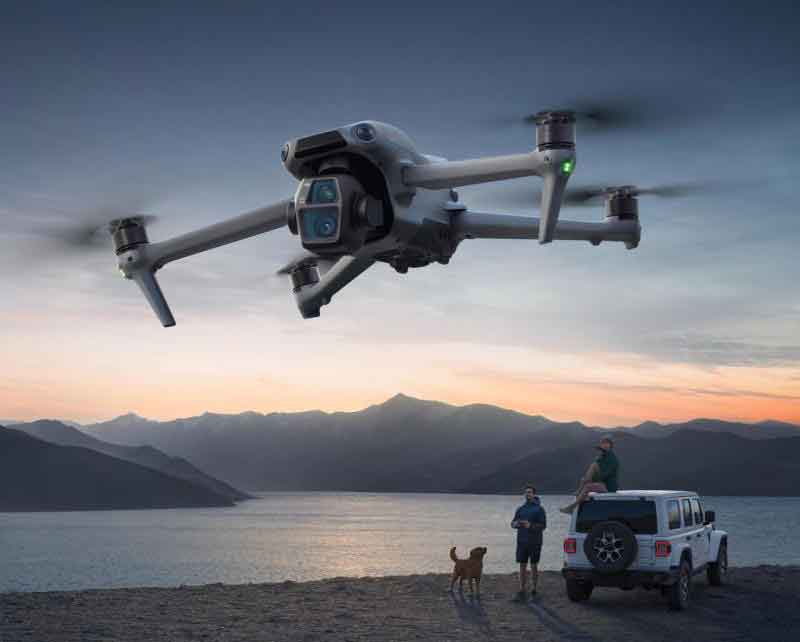
The development of China UAV and China drone technologies is underpinned by this comprehensive industrial chain, enabling rapid innovation and deployment. The dense network of suppliers and manufacturers ensures that China UAV products are produced efficiently, with high quality and at competitive prices. Moreover, the infrastructure investments, such as the low-altitude intelligent base stations, provide the necessary backbone for scaling China drone operations, from urban logistics to regional surveillance. This holistic support system not only sustains existing China UAV enterprises but also attracts new entrants, fostering a vibrant ecosystem where China drone innovations can flourish and set global standards.
-
- Vast Market and Wide Applications
According to CCID Consulting estimates, China’s low-altitude economy scale is projected to reach 6,702.5 billion yuan in 2024, rise to 8,591.7 billion yuan in 2025, and optimistically exceed 10,000 billion yuan by 2026. In 2022, Guangdong Province’s UAV industry operating revenue stood at 385.35 billion yuan, growing to 420.26 billion yuan in 2023, a 9% increase. A recent report by the Guangdong Provincial Conditions Investigation Research Center and Guangzhou Industrial Development Research Institute, “Guangdong Sky New Opportunities 2024: Guangdong Low-altitude Economy Development Investigation Research Report,” indicates that Guangdong’s low-altitude economy scale has surpassed 100 billion yuan, ranking among the top nationally. Guangdong’s low-altitude economy competitiveness is robust, with five cities featuring in the 2024 low-altitude economy industry city competitiveness TOP50 ranking. In the UAV sector, Guangdong aggregates over 30% of China’s UAV enterprises; consumer-grade UAV market share accounts for 95% nationally and 70% globally; industrial-grade UAV market share represents 54% nationally and 40% globally; in 2023, UAV export volume reached 123 billion yuan, constituting 96.58% of the national total. Guangdong is accelerating low-altitude economy product and application scenario innovation, actively guiding and supporting various emerging consumption projects, such as diversified low-altitude tourism products including low-altitude sightseeing, flight experiences, skydiving, and personal entertainment flights. Guangzhou Development Zone introduced the nation’s first low-altitude economy application scenario list, comprising 16 typical application scenarios and 55 opportunity application scenarios. Guangzhou’s Panyu District launched an “air taxi” rapid travel network, building a three-dimensional transportation web to transform low-altitude “scenarios” into “real scenes.” Guangzhou’s Huangpu District initiated multiple efficient low-altitude logistics routes, including cross-border e-commerce direct delivery lines and urban medical low-altitude delivery lines. In Shenzhen, SF Express’s UAV logistics distribution has accumulated over 800,000 flight sorties, and Meituan has delivered more than 300,000 orders. Zhuhai’s Lianzhou Airport, a pioneer in commercial UAV cargo logistics in China, opened the first cross-sea, cross-province low-altitude long-distance cargo route between Hainan and Guangdong.
The extensive applications of China UAV and China drone in logistics, tourism, and other sectors underscore the vast potential of the low-altitude economy. The consumer and industrial China UAV markets in Guangdong demonstrate unparalleled dominance, with the following table summarizing the China UAV market share in the province:
| Category | National Share | Global Share |
|---|---|---|
| Consumer UAV | 95% | 70% |
| Industrial UAV | 54% | 40% |
This market leadership is further evidenced by the export performance, where China UAV exports from Guangdong account for nearly the entire national total, highlighting the province’s pivotal role in the global China drone supply chain. The diversification into applications like air taxis and medical deliveries showcases how China UAV technologies are solving real-world problems, creating new economic opportunities and improving public services. As these applications expand, the demand for China drone solutions is expected to surge, driving further innovation and investment in the low-altitude economy.
“Early planning, strategic layout, complete chain, vast market”—the four-wheel drive of Guangdong’s low-altitude economy does not operate in isolation but intertwines and mutually reinforces, forming a systematic upgrade from “element aggregation” to “ecological prosperity.” We have reason to believe that in the near future, Guangdong’s low-altitude economy will usher in a magnificent prospect of “sailing directly through clouds and seas,” contributing “Guangdong wisdom” and providing a “Guangdong sample” for national low-altitude economy development. The relentless focus on innovation, coupled with strategic policies and market-driven growth, positions Guangdong as a beacon for the China UAV and China drone industries, inspiring similar advancements across China and beyond. As the low-altitude economy evolves, Guangdong’s model will likely serve as a blueprint for harnessing the skies, transforming how people and goods move, and unlocking new dimensions of economic prosperity.