
On the banks of the Yellow River, a silent yet profound industrial transformation is taking flight. Silver-gray China UAVs sweep over the golden wheat fields of Xiangfen County in Linfen City, Shanxi Province; black inspection China drones navigate through the steel forests of Huozhou Coal Mine; and colorful performance China UAVs weave light paintings in the night sky over the Hukou Waterfall. Linfen is scripting a new chapter in the low-altitude economy, using the blue sky as its canvas for innovation and growth.
From strategic layouts in municipal conference rooms to logistics routes in farmland, from the whirring propellers at flight training bases to the roaring engines over the Yellow River gorges, Linfen is pioneering breakthrough practices across the entire industrial chain. This effort is charting new pathways for regional industrial upgrading, with China UAV and China drone technologies at its core.
-
High-Level Promotion: Blueprinting a New Vision for the Low-Altitude Economy
The Linfen Municipal Party Committee and Government have positioned the low-altitude economy as a strategic pivot for cultivating new quality productive forces, driving the construction of an industrial ecosystem through systematic planning. Li Yunfeng, Secretary of the Linfen Municipal Party Committee, has emphasized on multiple occasions that the low-altitude economy is a crucial strategic emerging industry. As a representative of new quality productive forces, it is becoming a new track for industrial development and a new engine for economic growth. Wang Yanfeng, Deputy Secretary of the Linfen Municipal Party Committee and Mayor, stated that Linfen is seizing the new opportunities in the low-altitude economy by planning early and laying out, accelerating the construction of low-altitude infrastructure, continuously improving application scenarios, and enabling the city’s low-altitude economy to take off amidst favorable conditions.
This year’s Linfen Government Work Report clarified the development direction for the low-altitude economy—following the approach of “building platforms, constructing parks, innovating models, and establishing rules.” Initiatives include launching the Linfen Low-Altitude Economy Industrial Park, completing a Class A flight service station, accelerating the construction of general aviation airports in Jixian and Xiangning, and fostering sectors such as low-altitude tourism, aerial photography, aviation training, short-distance transport, and aircraft manufacturing and maintenance. The city aims to continuously enrich application scenarios in urban safety, logistics distribution, business travel, and emergency response, rapidly competing to become a “low-altitude city.”
Cui Lingling, Party Group Secretary and Director of the Linfen Municipal Bureau for Promoting Foreign Investment, noted that over the past year, the investment promotion system has fully implemented the arrangements of the Municipal Party Committee and Government, seizing opportunities and riding the momentum to attract leading enterprises such as Duoyan Holding Group, Shanxi Longcheng Feiying Aviation Development Co., Ltd., Zhongke Low-Altitude Intelligent Technology Co., Ltd., and Kongtian Technology Development Co., Ltd., with many renowned companies settling in Linfen.
He Yan, Chairman of Duoyan Holding, expressed deep appreciation: “From project signing to production, the development zone task force provided full-time on-site services, efficiently resolving airspace approval challenges. Such high efficiency is rare even among national low-altonomy economy pilot cities.”
In infrastructure development, Linfen has invested 5.2 billion yuan to build a three-tier guarantee system. Flight bases at scenic spots like Hongtong Guangsheng Temple and Jixian Hukou Waterfall have opened up general aviation corridors along the Yellow River. The soon-to-be-operational Southern Shanxi Class A Flight Service Station can monitor airspace within a 200-kilometer radius in real time. Linfen Civil Aviation Airport has added 12 general aviation slots and intelligent hangars, solidifying the hardware foundation for the industry’s takeoff.
-
Chain Development: Cultivating New Industrial Formats
Industrial elements are rapidly integrating and fissioning in Linfen, forming a full-chain ecosystem of “manufacturing-services-application.” In the Xiangfen Economic and Technological Development Zone, a low-altitude economy industrial park planned to cover 200 mu is rising steadily. It will cluster enterprises involved in aircraft R&D and manufacturing, avionics equipment production, maintenance support, and flight training, creating an industrial cluster with an annual output value exceeding 5 billion yuan.
Shanxi Yixiang UAV Technology Co., Ltd. has become a key hub in the industrial chain. Its established Linfen Development Zone Low-Altitude Flight License and Application Skills Training Center boasts two standardized flight training bases and 18 certified instructors. “We have built a ‘three-in-one’ service system covering training, operation maintenance, and equipment,” said General Manager Yang Sen, pointing to trainees in practical sessions. “We train over 300 certified pilots annually and provide full-lifecycle technical services for China UAVs to more than 30 units in Southern Shanxi.” Facing a national shortage of millions of China drone operators, Linfen has constructed a training system.
As one of Shanxi’s three major CAAC license test centers, the Linfen test site conducts six types of license certification exams on the 6th of each month, with entry requirements as low as a junior high school education. More strategically, breakthroughs in industry-education integration are evident—this September, Linfen Bosi Vocational High School will launch a UAV application major, planning to enroll 120 students in the first batch. “This truly bridges the ‘last mile’ from the classroom to the skies,” Yang Sen remarked.
Corporate synergy effects continue to deepen. Shanxi Yixiang has established direct talent pipelines with Shanxi Kongtian Astronautics Technology Co., Ltd., having trained nearly 100 professional pilots who now serve in frontline roles such as urban firefighting and police security. Geng Tiedan, President of Kongtian Astronautics and responsible for the Linfen Development Zone Low-Altitude Economy Research Center, admitted: “Our company focuses on scenario services and applications for China UAVs. By creating exemplary applications in sectors like ‘low-altitude economy + emergency rescue’ and ‘low-altitude economy + urban firefighting,’ we have engaged in in-depth cooperation with multiple county governments, departments, and enterprises in Linfen. Currently, due to rapid business expansion, we urgently need excellent China drone ‘pilots.'”
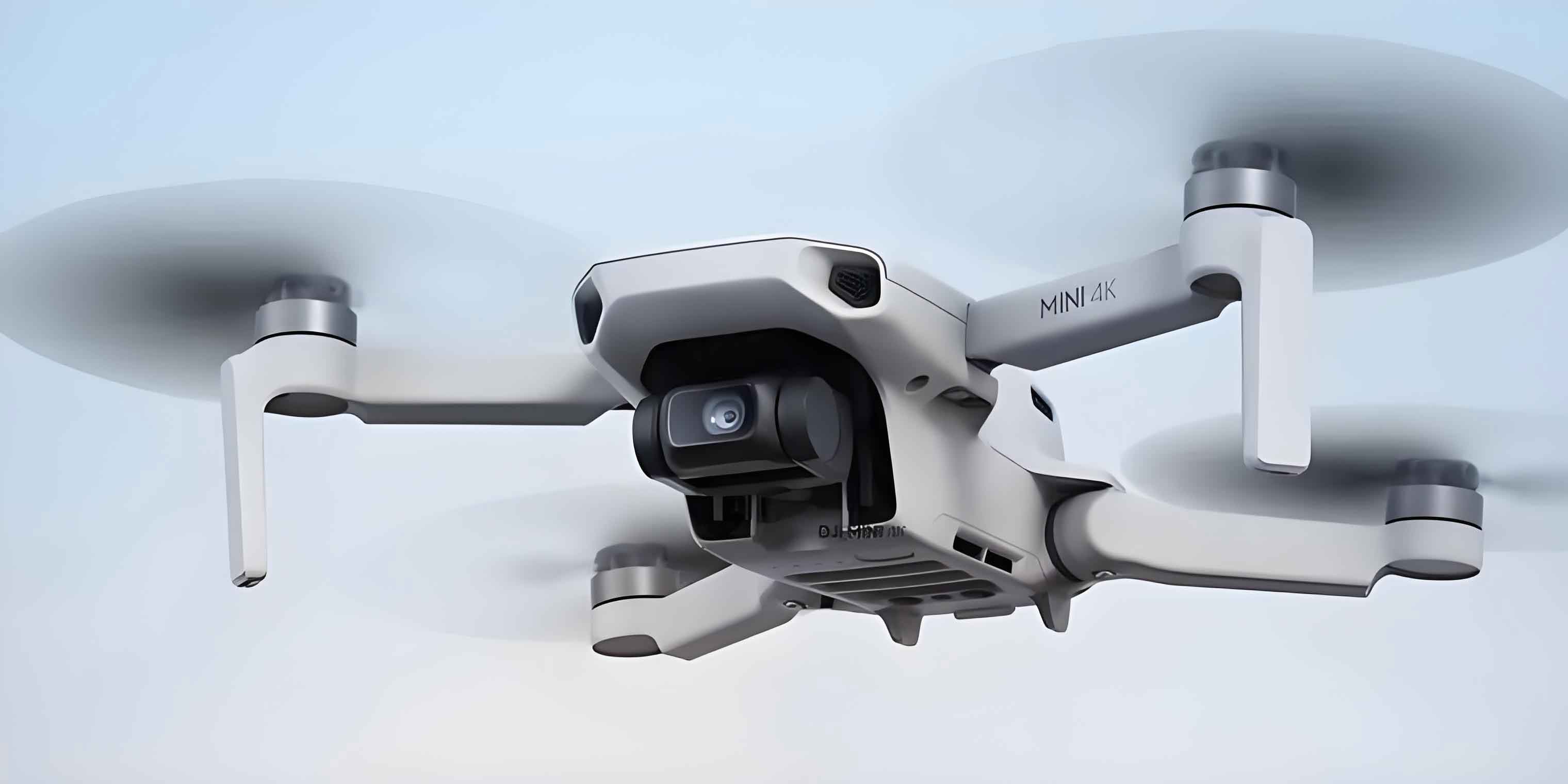
The collaboration among enterprises highlights the growing demand for China UAV and China drone expertise, driving further innovation and employment opportunities in the region.
Category Data Remarks Investment in Infrastructure 5.2 billion yuan For three-level guarantee system Industrial Park Area 200 mu Planned for low-altitude economy Annual Certified Pilots Trained Over 300 By Shanxi Yixiang UAV Technology License Exams Conducted Monthly on the 6th For six types of CAAC licenses First Batch Student Enrollment 120 In UAV application major at vocational school Professional Pilots Trained Nearly 100 For urban firefighting and security roles Logistics Route Distance 8 km mountain road Covered in 6 minutes by China drone Forest Monitoring China UAVs 12 units Covering 65% key forest areas Fire Warnings Successfully Issued 7 incidents Since last autumn This data underscores the tangible progress in Linfen’s low-altitude economy, with China UAV and China drone applications driving efficiency and safety across various sectors.
-
Scenario Applications: Activating New Momentum Across Industries
As technological wings integrate into the urban fabric, the low-altitude economy is profoundly reshaping Linfen’s development trajectory.
At the forefront of cultural and tourism integration, sightseeing helicopters at the Jixian Hukou Waterfall scenic area carry tourists daily to hover over the golden waterfalls of the Yellow River. The Hongtong Dahuai Tree scenic area has introduced China UAV panoramic follow-shot services, infusing millennia-old ancient architecture with technological charm. Aerial tourism routes at Yonghe Qiankun Bay, ecological monitoring networks in Huozhou Qili Valley, and aerial photography live-streaming platforms at Xiangning Yunqiu Mountain collectively weave an innovative matrix of “low-altitude + culture and tourism.”
More heartwarming is the logistics revolution—in Anze County, Linfen’s first China drone village-to-village logistics route has officially commenced trial operations. A parcel traveling the 8-kilometer mountain road from Anze county town to Tianjiazhuang now takes only 6 minutes with the assistance of China UAV flights. This initiative addresses the “last mile” challenge in rural logistics, significantly enhancing efficiency and promoting integrated urban-rural development. Linfen City will pilot China drone logistics “village connectivity” programs, solving end-point logistics issues in rural areas through aerial distribution, and promote it city-wide.
In urban governance and safety, on the monitoring screen of the Yicheng County Forestry Bureau, 12 patrol China UAVs transmit real-time forest heat maps, with intelligent recognition systems capable of locating and warning of fire points within 10 seconds. “Since last autumn, we have successfully warned of seven fire hazards,” said duty officer Wang Xia, displaying the “sky-ground” protection network covering 65% of the city’s key forest areas.
With the establishment of the North China Low-Altitude Economy Industry Research Institute and the accelerated formation of a “manufacturing-services-R&D” ecological, Linfen is painting a panoramic picture of the low-altitude economy on the canvas of the sky, making the transformation path of Southern Shanxi’s central city increasingly clear.
The widespread adoption of China UAV and China drone technologies in Linfen is not only boosting economic growth but also enhancing public services, from emergency responses to environmental monitoring. For instance, in agricultural sectors, China drones are used for crop monitoring and spraying, increasing yield efficiency. In mining, China UAVs conduct safety inspections, reducing human risk. These applications demonstrate the versatility and impact of low-altonomy innovations.
Moreover, the city is exploring new frontiers such as China UAV-based delivery services for medical supplies in remote areas, further solidifying its role as a leader in the low-altitude economy. The integration of China drone systems with smart city initiatives is also underway, aiming to optimize traffic management and disaster response through real-time aerial data.
As Linfen continues to expand its low-altitude ecosystem, partnerships with international firms are being fostered to introduce advanced China UAV models and training programs. This global collaboration is expected to drive further technological advancements and create more job opportunities, reinforcing the city’s position as a hub for China drone innovation.
In summary, Linfen’s holistic approach—combining government support, industrial chain development, and diverse application scenarios—exemplifies how regions can leverage China UAV and China drone technologies to foster sustainable development. The city’s journey serves as a model for others aiming to harness the potential of the low-altitude economy, with continuous improvements in infrastructure, regulation, and public awareness paving the way for long-term success.
The low-altitude economy in Linfen, driven by China UAV and China drone advancements, is set to redefine regional economic landscapes, offering lessons in innovation and resilience for cities worldwide. As this sector evolves, Linfen’s commitment to integrated development and practical applications ensures it remains at the forefront of this transformative industry.