
With the rapid expansion of low-altitude flight activities and the persistently high failure rates of Unmanned Aerial Vehicle (UAV) systems, ensuring high-reliability emergency landing capabilities has become a critical focus in drone technology. In complex urban airspace, multirotor drones face significant safety challenges during autonomous emergency landings under sudden failures. To address this, we propose a hierarchical trajectory optimization method for emergency decision-making within the ICAROUS framework, aiming to achieve efficient and safe autonomous landings. This approach integrates high-level path planning with low-level velocity profile optimization, enhancing both safety and energy efficiency for Unmanned Aerial Vehicle operations.
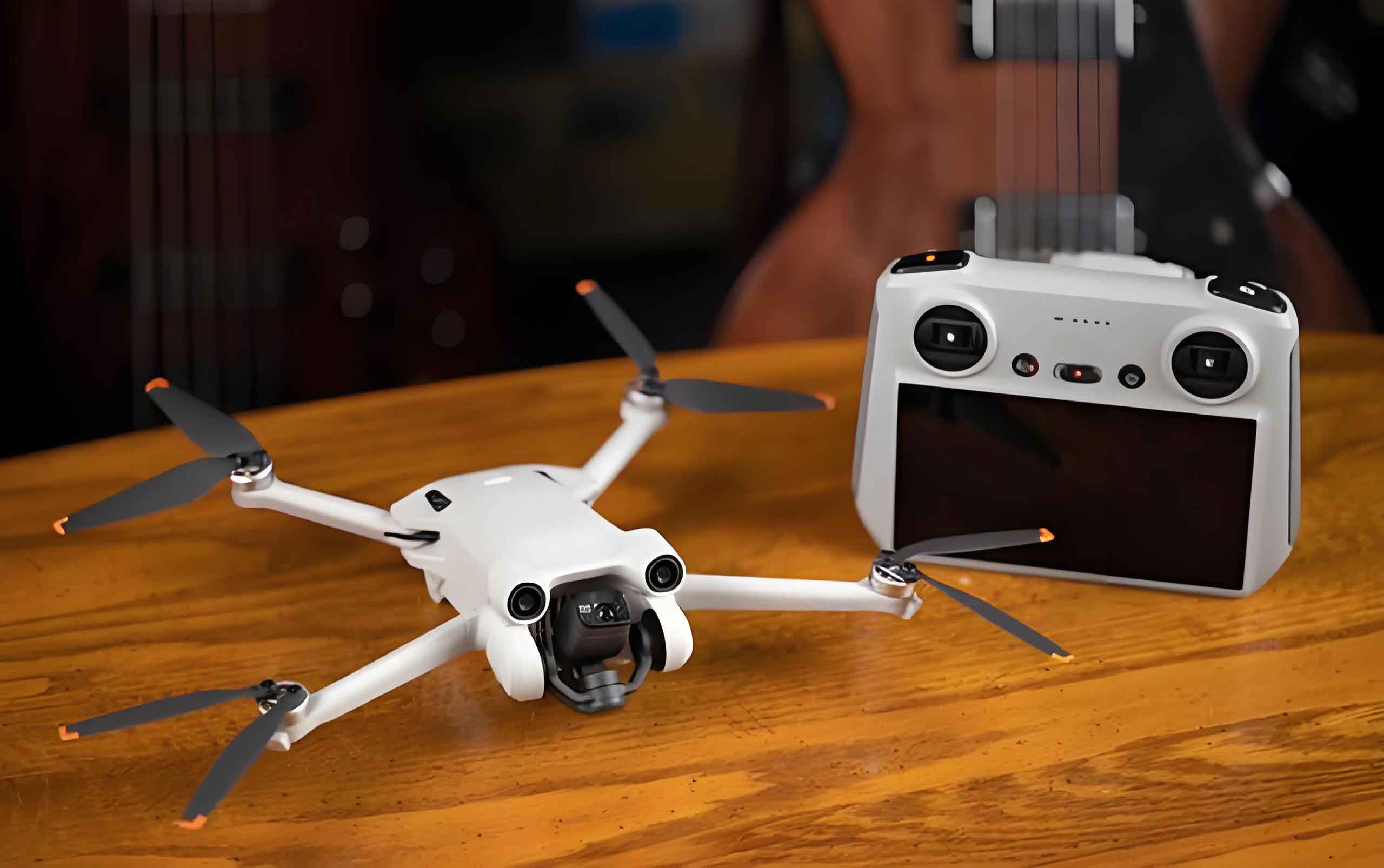
Our method begins with high-level path planning, where we employ the A* algorithm combined with climb cost and flight risk assessment to generate initial emergency paths. The risk assessment incorporates geofencing data to model hazardous areas, and the path cost function balances distance, risk, and climb penalties. For a path node sequence $X = \{n_1, n_2, \dots, n_N\}$, the transition cost between nodes $n$ and $n_0$ is defined as:
$$c(n, n_0) = \mu \cdot \text{dist}(n, n_0) + \phi \cdot \text{climb}(n, n_0) + \lambda \cdot \text{risk}(n)$$
where $\mu$ is the path cost weight, $\phi$ is the climb penalty factor, $\lambda$ is the risk weight, and $\text{risk}(n)$ is derived from a risk grid based on proximity to no-fly zones. The cumulative cost $g(n)$ and heuristic cost $h(n)$ are used in the A* algorithm to find the optimal path. The total path cost for a landing point $i$ is:
$$R_{p,i} = \sum_{j=1}^{k} \left[ \mu \cdot \text{dist}(n_{j-1}, n_j) + \phi \cdot \text{climb}(n_{j-1}, n_j) + \lambda \cdot \text{risk}(n_j) \right]$$
We then smooth the path using Bézier curves for a continuous trajectory. For adjacent path points $P_i$ and $P_{i+1}$, a cubic Bézier curve is constructed as:
$$\mathbf{B}(k) = (1-k)^3 \mathbf{P}_i + 3(1-k)^2 k \mathbf{C}_{i,i+1} + 3(1-k) k^2 \mathbf{C}_{i+1,i} + k^3 \mathbf{P}_{i+1}$$
where $k \in [0,1]$, and $\mathbf{C}$ are control points ensuring smoothness.
In the low-level optimization, we formulate the velocity profile design as a Markov Decision Process (MDP) to minimize energy consumption while adhering to dynamic constraints. The state space includes the path segment and velocity information:
$$\mathbf{S}_t = [i_t, v_t, v_{h,t}, v_{v,t}]^T$$
where $i_t$ is the current path segment, $v_t$ is the flight speed, $v_{h,t}$ is the horizontal speed, and $v_{v,t}$ is the vertical speed. The action space consists of acceleration values:
$$a_t \in \mathcal{A} = \{a_{\text{min}}, a_{\text{min}} + \Delta a, \dots, a_{\text{max}}\}$$
with $\Delta a = (a_{\text{max}} – a_{\text{min}}) / (N_a – 1)$ for $N_a$ discrete actions. The state transition is deterministic:
$$\mathbf{S}_{t+1} = [i_t + 1, v_t + a_t \cdot \Delta t, v_{h,t+1}, v_{v,t+1}]^T$$
The reward function penalizes energy consumption and constraint violations:
$$R(\mathbf{S}_t, a_t) = -\frac{P(v_t)}{v_t} \cdot \Delta s + K \cdot \mathbb{1}_{\text{violation}}$$
where $P(v_t)$ is the power consumption model for the Unmanned Aerial Vehicle, given by:
$$P(v) = P_m \left(1 + \frac{3v^2}{U_{\text{tip}}^2}\right) + P_n \left( \sqrt{1 + \frac{v^4}{4v_0^4}} – \frac{v^2}{2v_0^2} \right)^{1/2} + \frac{1}{2} d_0 \rho s A v^3$$
with $P_m = \frac{\delta}{8} \rho s A \Omega^3 R^3$ and $P_n = \frac{(1+k)W^{3/2}}{\sqrt{2 \rho A}}$. We use value iteration to solve the MDP for the optimal policy $\pi^*$ that minimizes the total cost.
For simulation, we set up a 1000 m × 1000 m × 200 m urban airspace with no-fly zones and multiple landing points. The parameters for the path planning and velocity optimization are summarized in the following tables.
| Parameter | Value |
|---|---|
| Maximum path length $d_{\text{max}}$ | 750 m |
| Risk threshold $d_{\text{hold}}$ | 50 m |
| Risk coefficient $\lambda$ | 2 |
| Maximum flight height $H_{\text{max}}$ | 120 m |
| Maximum turn angle $\alpha_{\text{max}}$ | $\pi/2$ rad |
| Maximum climb angle $\beta_{\text{max}}$ | $\pi/2$ rad |
| Path cost coefficient $\mu$ | 0.2 |
| Climb penalty coefficient $\phi$ | 0.5 |
| Parameter | Value |
|---|---|
| Maximum flight speed $v_{\text{max}}$ | 15 m/s |
| Maximum vertical speed $V_{v,\text{max}}$ | 5 m/s |
| Maximum acceleration $a_{\text{max}}$ | 3 m/s² |
| Minimum acceleration $a_{\text{min}}$ | -3 m/s² |
| Maximum flight time $T_{\text{max}}$ | 70 s |
| Number of discrete actions $N_a$ | 7 |
| Initial speed $v_0$ | 5 m/s |
| Initial time $t_0$ | 0 s |
In our simulations, the proposed method demonstrated superior performance in risk management and energy efficiency. Compared to the standard ICAROUS path planning, our approach reduced the cumulative risk by 28.8% by effectively balancing distance, risk, and climb costs across multiple landing points. For velocity optimization, the MDP-based method produced smoother profiles with a “rapid ascent-steady maintenance-smooth decay” pattern, outperforming Sequential Quadratic Programming (SQP) and Particle Swarm Optimization (PSO) in terms of flight time and energy consumption.
| Method | Total Energy (J) | Flight Time (s) | Average Speed Fluctuation (m/s) | Terminal Speed Error (m/s) |
|---|---|---|---|---|
| MDP | 7261.048 | 47.451 | 0.253 | 0.080 |
| SQP | 7609.813 | 53.161 | 0.719 | 0.133 |
| PSO | 8491.318 | 64.804 | 1.047 | 0.171 |
The MDP approach reduced flight time by 10.7% compared to SQP and 26.8% compared to PSO, while average speed fluctuations decreased by over 60%, enhancing flight safety and energy management. This underscores the value of our hierarchical optimization in advancing drone technology for urban air mobility.
Finally, we assign required time of arrival (RTA) to path points based on the optimized velocity profile. For a path segment $\Delta s_i = s_{i+1} – s_i$, the flight time is:
$$\Delta t_i = \int_{s_i}^{s_{i+1}} \frac{1}{v(s)} ds$$
and the RTA for each point is computed cumulatively from the start time $t_0$. This generates a four-dimensional trajectory with precise time allocations, enabling reliable autonomous landing for Unmanned Aerial Vehicles in emergency scenarios.
In conclusion, our hierarchical trajectory optimization method within the ICAROUS framework significantly improves the safety and efficiency of multirotor drone emergency landings. By integrating risk-aware path planning and MDP-based velocity optimization, we achieve a balanced approach that mitigates risks while conserving energy. Future work will explore adaptations to dynamic environments and adverse weather conditions, further advancing the capabilities of Unmanned Aerial Vehicle systems in complex urban settings.