
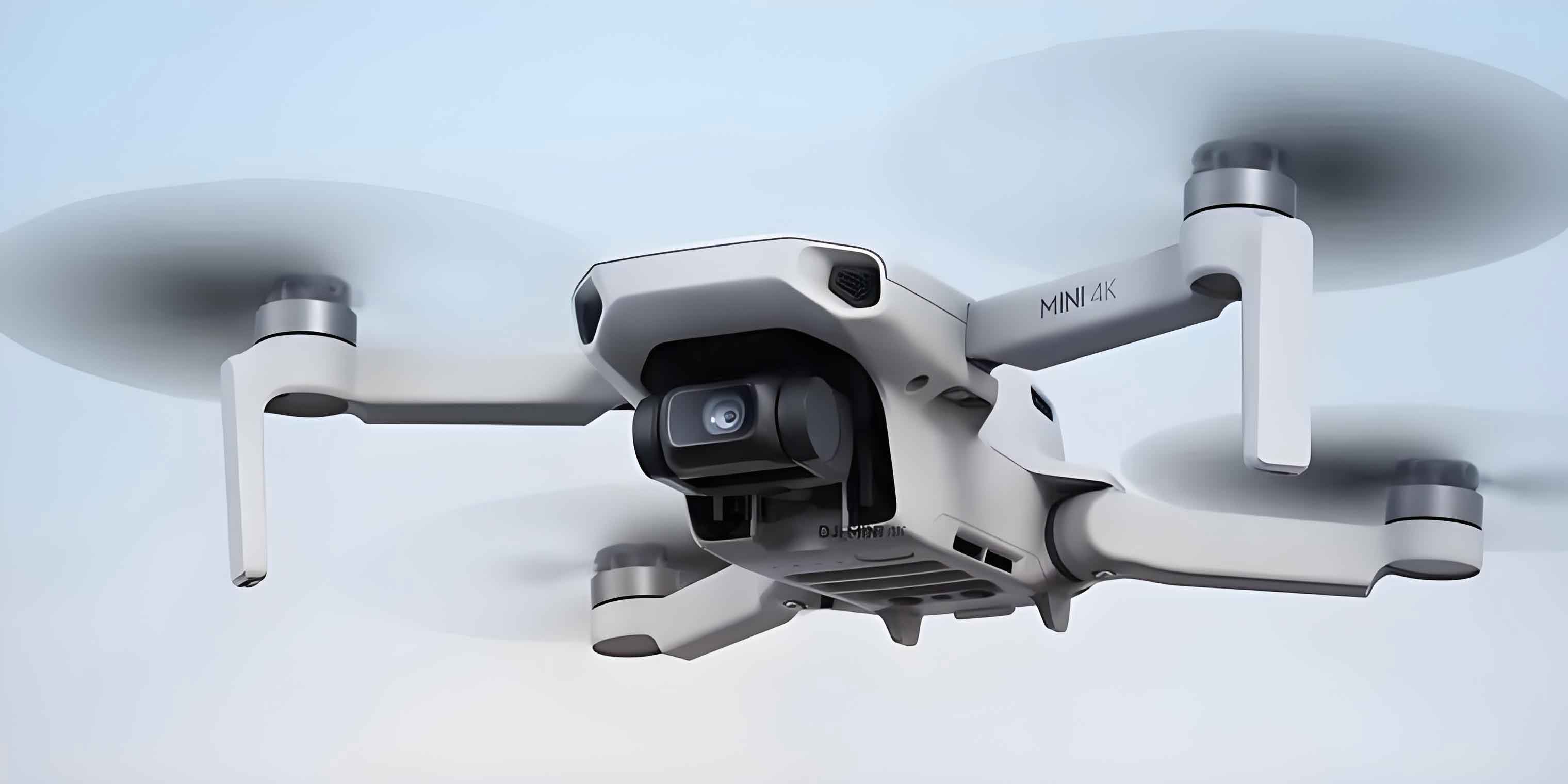
I study energy-efficient wireless computing for next-generation networks in which a UAV drone carries a mobile edge computing server and serves many ground devices. The exponential growth of Internet-of-Things terminals has made traditional terminals unable to support computation-intensive and delay-critical services. Mobile edge computing pushes computing capability to the network edge, and a UAV drone can further improve flexibility, line-of-sight connectivity, and deployment speed. I combine non-orthogonal multiple access with a UAV drone platform so that multiple devices can offload tasks in the same time-frequency resource. I then design two energy-oriented schemes: one that jointly considers delay constraints and successive interference cancellation order, and one that uses covert communication to protect offloading behavior against an eavesdropper. Across both schemes, I optimize device transmit power, UAV drone trajectory, computation resource allocation, artificial-noise power, and device grouping.
System Model and Notation
I consider a geographic area with K ground devices and one UAV drone equipped with a mobile edge computing server. The UAV drone flies at a fixed safe altitude H. Its initial position is Q0, and its final position is QF. The flight period is divided into N time slots. In the first scheme, I set M = K/N devices per slot. In the second scheme, I set N = K/2 so that two devices offload in each slot. The three-dimensional position of the UAV drone in slot n is
$$q[n] = \bigl(X[n], Y[n], H\bigr), \qquad n \in \{0,1,\dots,N\}.$$
The position of device k is \(w_k = (x_k,y_k,0)\), and the position of the eavesdropper is \(q_e = (x_e,y_e,0)\). I assume that the UAV drone knows the device locations and channel state information in advance. The air-to-ground channel is modeled as a line-of-sight free-space channel. The channel gain between device k and the UAV drone in slot n is
$$g_k[n] = \frac{\beta_0}{\|q[n]-w_k\|^2 + H^2},$$
where \(\beta_0\) is the reference channel power gain at a distance of one meter. For the eavesdropper links, I use
$$h_{k,e} = \frac{\beta_0}{\|q_k-q_e\|^2 + H^2}, \qquad h_{u,e}[n] = \frac{\beta_0}{\|q[n]-q_e\|^2 + H^2}.$$
I summarize the main symbols in Table 1.
| Symbol | Meaning |
|---|---|
| K | Number of ground devices |
| N | Number of time slots |
| M | Number of devices served per slot in the first scheme |
| \(q[n]\) | UAV drone position in slot n |
| \(w_k\) | Position of device k |
| \(H\) | UAV drone altitude |
| \(\beta_0\) | Reference channel gain |
| \(B\) | Total uplink bandwidth |
| \(p_k\) | Transmit power of device k |
| \(D_k\) | Task size of device k |
| \(T_k\) | Delay constraint of device k |
| \(f_U\) | Computation capability of the UAV drone server |
| \(\gamma_U\) | Effective capacitance coefficient of the UAV drone processor |
| \(W\) | Mass of the UAV drone |
| \(v\) | Average flight speed of the UAV drone |
Uplink NOMA and SIC Order Design
I group devices into N groups. In each slot, the UAV drone serves a group of M devices. Let the group in slot n be represented by an ordered vector \(r[n]\). This vector contains the original indices of the devices in the order in which the UAV drone decodes them. I use successive interference cancellation. When decoding device \(r_i[n]\), the UAV drone has already removed the signals of devices decoded before \(i\), and it treats the signals of devices decoded after \(i\) as interference. The achievable offloading rate is
$$R_{r_i(n)}[n] = B \log_2\!\left(1+\frac{p_{r_i(n)}g_{r_i(n)}[n]}{\sum_{j=i+1}^{M} p_{r_j(n)}g_{r_j(n)}[n]+B\sigma^2}\right).$$
The offloading time of device \(r_i[n]\) is
$$T_{r_i(n)}^{\mathrm{off}} = \frac{D}{R_{r_i(n)}[n]},$$
where I assume for the first scheme that each device has the same task size D. The total offloading energy in slot n is
$$E_n^{\mathrm{off}} = \sum_{i=1}^{M} p_{r_i(n)} T_{r_i(n)}^{\mathrm{off}}.$$
The total offloading energy over all slots is
$$E^{\mathrm{off}} = \sum_{n=1}^{N} \sum_{i=1}^{M} p_{r_i(n)} T_{r_i(n)}^{\mathrm{off}}.$$
Optimal SIC Order under Delay Constraints
Conventional uplink NOMA often uses a channel-gain-descending SIC order. However, I find that when devices have different delay constraints, the conventional order can increase energy. The reason is that power-domain NOMA imposes a transmit-power ordering for reliable SIC: an earlier-decoded device must have a transmit power no smaller than a later-decoded device. If a device with a tight delay constraint is decoded late, its transmit power must increase to satisfy the delay constraint. This increase propagates to all earlier-decoded devices because of the power ordering. Therefore, I propose the following theorem.
Theorem 1. In slot n, the optimal SIC order for the M devices is descending by
$$\frac{g_m[n]}{T_m}, \qquad m \in r[n].$$
Proof sketch. Consider two adjacent devices i and j in the SIC order. There are two possible decoding orders: decode i first or decode j first. Since computation energy and flight energy do not depend on SIC order, I only need to compare the sum of offloading energies. The delay constraint of each device is converted into a minimum signal-to-interference-plus-noise ratio requirement:
$$\eta_k = 2^{D/(B T_k^{\mathrm{off}})} – 1.$$
For the two devices, the interference from later-decoded devices is denoted by I. If i is decoded first, the feasible power region is
$$\frac{p_i g_i[n]}{p_j g_j[n]+I+B\sigma^2} \ge \eta_i, \qquad \frac{p_j g_j[n]}{I+B\sigma^2} \ge \eta_j,$$
$$0 \le p_i \le p_{\mathrm{th}}, \qquad 0 \le p_j \le p_{\mathrm{th}}, \qquad p_i \ge p_j.$$
If j is decoded first, the feasible power region is
$$\frac{p_j g_j[n]}{p_i g_i[n]+I+B\sigma^2} \ge \eta_j, \qquad \frac{p_i g_i[n]}{I+B\sigma^2} \ge \eta_i,$$
$$0 \le p_i \le p_{\mathrm{th}}, \qquad 0 \le p_j \le p_{\mathrm{th}}, \qquad p_j \ge p_i.$$
I compare the two cases. In the first case, when the later-decoded device j uses its minimum feasible power, the earlier-decoded device i also uses its minimum feasible power. In the second case, the roles are exchanged. Taking the difference of the two energy sums shows that the first case consumes no more energy than the second case if and only if
$$\frac{g_i[n]}{T_i} \ge \frac{g_j[n]}{T_j}.$$
Since this argument holds for every adjacent pair, the globally optimal order is descending by \(g_m[n]/T_m\). This proves the theorem. Table 2 shows the comparison for two devices.
| Scenario | First decoded device | Condition for lower energy |
|---|---|---|
| Scenario 1 | Device i | \(g_i[n]/T_i \ge g_j[n]/T_j\) |
| Scenario 2 | Device j | \(g_j[n]/T_j \ge g_i[n]/T_i\) |
This result is important for my UAV drone-assisted mobile edge computing system because it shows that SIC order is not merely a decoding detail. It directly affects transmit power, offloading time, and total energy.
Energy Consumption Model for the Delay-Aware Scheme
In the delay-aware scheme, the total energy consists of offloading energy, computation energy, and UAV drone flight energy:
$$E = E^{\mathrm{off}} + E^{\mathrm{comp}} + E^{\mathrm{fly}}.$$
The computation energy is modeled as
$$E^{\mathrm{comp}} = \sum_{n=1}^{N}\sum_{i=1}^{M} \gamma_U \left(\frac{f_U}{M}\right)^3 T_{r_i(n)}^{\mathrm{comp}},$$
where the computation time of each device is
$$T_{r_i(n)}^{\mathrm{comp}} = \frac{D C}{f_U/M}.$$
Here C is the number of CPU cycles required to process one bit. The UAV drone flight energy is
$$E^{\mathrm{fly}} = \sum_{n=1}^{N-1} \frac{W}{2} \|q[n+1]-q[n]\| v.$$
The slot duration must cover both offloading and computation:
$$T[n] = \max_{i \in r[n]} \left\{T_{r_i(n)}^{\mathrm{off}} + T_{r_i(n)}^{\mathrm{comp}}\right\}.$$
To satisfy quality of service, I require
$$T[n] \le T_{r_i(n)}, \qquad \forall i \in r[n], \ \forall n \in \mathcal{N}.$$
Problem Formulation for the Delay-Aware Scheme
Let \(\mathcal{A}=\{a_{kn}\}\) be the device grouping matrix, let \(\mathcal{Q}=\{q[n]\}\) be the UAV drone trajectory, and let \(\mathcal{P}=\{p_k\}\) be the device transmit powers. I formulate the energy minimization problem as
$$
\begin{aligned}
\mathrm{P0}: \quad & \min_{\mathcal{A},\mathcal{Q},\mathcal{P}} E \\
\text{s.t.} \quad
& a_{kn} \in \{0,1\}, \quad \forall k \in \mathcal{K}, \ \forall n \in \mathcal{N}, \\
& \sum_{n=1}^{N} a_{kn} = 1, \quad \forall k \in \mathcal{K}, \\
& \sum_{k=1}^{K} a_{kn} = M, \quad \forall n \in \mathcal{N}, \\
& q[0]=Q_0, \qquad q[N]=Q_F, \\
& \|q[n+1]-q[n]\| \le d, \quad n=1,\dots,N-1, \\
& T[n] \le T_{r_i(n)}, \quad \forall i \in r[n], \ \forall n \in \mathcal{N}, \\
& 0 \le p_k \le p_{\mathrm{th}}, \quad \forall k \in \mathcal{K}.
\end{aligned}
$$
This problem is a mixed-integer nonlinear program. The binary grouping variables, the coupling between power and trajectory in the offloading rate, and the non-convex delay constraints make the problem difficult to solve directly. I therefore decompose it into stages.
Alternating Optimization of Power and Trajectory
When the device grouping is fixed, I optimize the device transmit powers and the UAV drone trajectory. I alternate between two subproblems.
Power Allocation with Quadratic Transform
For a fixed UAV drone trajectory, the power allocation problem in slot n is independent across slots. I write it as
$$
\begin{aligned}
\mathrm{P2}: \quad & \min_{\mathbf{p}} \sum_{i=1}^{M} \frac{p_{r_i(n)} D}{R_{r_i(n)}[n]} \\
\text{s.t.} \quad
& T_{r_i(n)}^{\mathrm{off}} + T_{r_i(n)}^{\mathrm{comp}} \le T_{r_i(n)}, \\
& 0 \le p_{r_i(n)} \le p_{\mathrm{th}}.
\end{aligned}
$$
The objective is a sum of ratios. I apply a quadratic transform. The transformed objective is
$$f_q(\mathbf{p}) = \sum_{i=1}^{M} \left(2 y_i \sqrt{p_{r_i(n)} D} – y_i^2 R_{r_i(n)}[n]\right),$$
where the auxiliary variable is updated as
$$y_i = \frac{\sqrt{p_{r_i(n)} D}}{R_{r_i(n)}[n]}.$$
After a second quadratic transform for the denominator terms, the problem becomes convex and can be solved by standard convex tools. I summarize the iterative power allocation in Table 3.
| Step | Operation |
|---|---|
| 1 | Initialize transmit powers \(\mathbf{p}^{(0)}\) and set tolerance \(\epsilon\). |
| 2 | For each slot, update auxiliary variables \(y_i\) and \(z_i\). |
| 3 | Solve the convex transformed power problem. |
| 4 | Update powers and check convergence. |
Trajectory Optimization with Successive Convex Approximation
For fixed powers, I optimize the UAV drone trajectory. The offloading time still contains the UAV drone position through the channel gain. I rewrite the energy as
$$
\begin{aligned}
\mathrm{P4}: \quad & \min_{\mathcal{Q}} \sum_{n=1}^{N-1} \frac{W}{2}\|q[n+1]-q[n]\|v + \sum_{n=1}^{N}\sum_{i=1}^{M} p_{r_i(n)} T_{r_i(n)}^{\mathrm{off}} \\
\text{s.t.} \quad
& q[0]=Q_0, \qquad q[N]=Q_F, \\
& \|q[n+1]-q[n]\| \le d, \\
& T[n] \le T_{r_i(n)}.
\end{aligned}
$$
I apply a quadratic transform and a first-order Taylor expansion to the channel gain:
$$g_i[n] \approx \frac{\beta_0}{\|q^{(t)}[n]-w_i\|^2+H^2} – \frac{\beta_0 \left(\|q[n]-w_i\|^2 – \|q^{(t)}[n]-w_i\|^2\right)}{\left(\|q^{(t)}[n]-w_i\|^2+H^2\right)^2}.$$
This yields a convex subproblem for the UAV drone trajectory. I solve it iteratively until convergence.
Overall Alternating Algorithm
I combine the power and trajectory subproblems in an alternating loop. Table 4 gives the overall procedure.
| Step | Operation |
|---|---|
| 1 | Initialize UAV drone trajectory and device powers. |
| 2 | Solve the power allocation subproblem for the current trajectory. |
| 3 | Solve the trajectory subproblem for the current powers. |
| 4 | Compute total energy and check convergence. |
| 5 | Repeat until convergence or maximum iterations. |
Device Grouping with Matching Theory
Device grouping is combinatorial. Exhaustive search is prohibitively complex when K is large. I model grouping as a many-to-one matching problem between devices and time slots. Each device prefers the slot that yields lower system energy. Each slot prefers devices that reduce system energy. I define a swap operation between two devices in different slots. If the swap reduces total energy, I allow it. The process continues until no allowed swap exists. Table 5 shows the matching-based grouping algorithm.
| Phase | Action |
|---|---|
| Initialization | Randomly match devices to slots. |
| Swap matching | For any two devices in different slots, test whether swapping their slots reduces energy. |
| Update | If the swap is allowed, perform it and update the grouping. |
| Termination | Stop when no allowed swap exists in a full round. |
The worst-case complexity of my matching-based grouping is approximately \(O(C K^2)\), where C is the number of rounds. This is much lower than exhaustive search, whose complexity is on the order of \(O(K!/(M!)^N)\). I also note that when testing a swap, only the two affected slots need power and trajectory re-optimization, which further reduces computation.
Simulation Results for the Delay-Aware Scheme
I evaluated the delay-aware scheme with MATLAB. The main parameters are listed in Table 6.
| Parameter | Value |
|---|---|
| Area | 50 m × 50 m |
| Number of devices K | 50 |
| Number of slots N | 10 |
| Devices per slot M | 5 |
| UAV drone altitude H | 15 m |
| Flight speed v | 2 m/s |
| Bandwidth B | 1 MHz |
| Task size D | 100 Kbits |
| Delay constraint | Random in [5, 10] s |
| UAV drone computation fU | 2 GHz |
| Maximum device power pth | 10 W |
I compared five schemes: optimal SIC order, channel-gain-descending SIC order, delay-ascending SIC order, orthogonal multiple access, and a fixed-trajectory scheme. The optimal SIC order achieved the lowest energy among NOMA schemes. The orthogonal multiple access scheme consumed more energy because it requires more bandwidth or time per device. The fixed-trajectory scheme consumed more energy than the optimized-trajectory scheme, which confirms the value of UAV drone trajectory optimization. Table 7 summarizes the qualitative comparison.
| Scheme | Energy trend | Main observation |
|---|---|---|
| Optimal SIC order | Lowest | Jointly considers channel gain and delay constraint. |
| Channel-gain-descending | Higher | Ignores delay constraints. |
| Delay-ascending | Higher | Ignores channel quality. |
| OMA | Highest among non-covert | Lower spectral efficiency. |
| Fixed UAV drone trajectory | Higher | Trajectory optimization is important. |
I also observed that as the number of devices increases, the advantage of the optimal SIC order becomes more significant. When only one device is served per slot, all SIC orders are equivalent. When multiple devices share a slot, the order matters. The matching-based grouping algorithm consistently reduced energy compared with random grouping, dynamic grouping, and k-means grouping. Table 8 shows an example of grouping before and after optimization.
| Slot | Before grouping | After grouping |
|---|---|---|
| 1 | 3, 14, 31, 32, 41 | 15, 17, 23, 26, 43 |
| 2 | 6, 22, 42, 48, 50 | 9, 19, 28, 29, 33 |
| 3 | 5, 8, 21, 27, 42 | 4, 24, 36, 44, 49 |
| 4 | 16, 34, 36, 37, 43 | 1, 2, 5, 7, 37 |
| 5 | 17, 23, 26, 28, 49 | 16, 20, 30, 35, 38 |
| 6 | 9, 19, 23, 26, 28 | 13, 14, 25, 38, 47 |
| 7 | 4, 15, 38, 44, 47 | 10, 11, 18, 45, 46 |
| 8 | 1, 2, 7, 12, 39 | 8, 21, 27, 34, 42 |
| 9 | 13, 25, 35, 45, 46 | 6, 22, 44, 48, 50 |
| 10 | 10, 11, 18, 20, 30 | 3, 14, 31, 32, 41 |
Secure Covert NOMA UAV Drone MEC
In the second scheme, I address security. Wireless broadcast makes offloading vulnerable to eavesdropping. Encryption and physical-layer security protect content, but they do not hide the communication behavior. I therefore introduce covert communication. A UAV drone acts as both a mobile edge computing server and a jammer. It receives offloaded tasks from ground devices and transmits artificial noise to confuse an eavesdropper. The eavesdropper tries to detect whether a specific device, called Bob, is offloading. The UAV drone transmits artificial noise to keep the eavesdropper’s detection error probability above a required level.
Covert System Model
I consider K ground devices, one UAV drone, and one eavesdropper. The flight period has N = K/2 slots. In each slot, two devices offload using NOMA. The device with stronger channel gain to the UAV drone is Bob, and the device with weaker channel gain is Roy. Bob is the device whose activity must be hidden. The UAV drone transmits artificial noise with power \(P_u[n]\). The received signal at the UAV drone in slot n is
$$y_u[n] = p_r[n]h_{r,u}[n]s_r + p_b[n]h_{b,u}[n]s_b + \rho P_u[n]g_{u,u}[n]s_u + n_u,$$
where \(p_r[n]\) and \(p_b[n]\) are the transmit powers of Roy and Bob, \(h_{r,u}[n]\) and \(h_{b,u}[n]\) are the channel gains to the UAV drone, \(g_{u,u}[n]\) is the self-interference channel, \(\rho\) is the self-interference cancellation coefficient, and \(n_u\) is Gaussian noise with variance \(\sigma_u^2\). The artificial noise power is uniformly distributed in \([0,P_{u,\max}]\). The achievable rates are
$$R_b[n] = B \log_2\!\left(1+\frac{p_b[n]h_{b,u}[n]}{p_r[n]h_{r,u}[n]+\rho^2 P_u[n]g_{u,u}[n]+\sigma_u^2}\right),$$
$$R_r[n] = B \log_2\!\left(1+\frac{p_r[n]h_{r,u}[n]}{\rho^2 P_u[n]g_{u,u}[n]+\sigma_u^2}\right).$$
Covert Detection at the Eavesdropper
The eavesdropper faces a binary hypothesis test. Under \(H_0\), Bob is silent; under \(H_1\), Bob is offloading. The received signal at the eavesdropper is
$$
y_w[n] =
\begin{cases}
p_r[n]h_{r,e}[n]s_r + P_u[n]g_{u,e}[n]s_u + n_w, & H_0, \\
p_r[n]h_{r,e}[n]s_r + p_b[n]h_{b,e}[n]s_b + P_u[n]g_{u,e}[n]s_u + n_w, & H_1.
\end{cases}
$$
The eavesdropper compares the received power with a threshold \(\tau[n]\). The false-alarm probability and miss-detection probability are
$$\alpha[n] = \Pr\left\{T_w[n] \ge \tau[n] \mid H_0\right\},$$
$$\beta[n] = \Pr\left\{T_w[n] \le \tau[n] \mid H_1\right\}.$$
The detection error probability is
$$\xi[n] = \alpha[n] + \beta[n].$$
The minimum detection error probability occurs at the optimal threshold
$$\tau^*[n] = F_u[n] + \sigma_w^2,$$
where
$$F_u[n] = p_r[n]h_{r,e}[n] + P_{u,\max}g_{u,e}[n],$$
$$M_u[n] = p_r[n]h_{r,e}[n] + p_b[n]h_{b,e}[n] + P_{u,\max}g_{u,e}[n].$$
The minimum detection error probability is
$$\xi^*[n] = \frac{F_u[n]}{M_u[n]}.$$
To guarantee covertness, I impose
$$\xi^*[n] \ge 1-\epsilon,$$
where \(\epsilon\) is a small positive constant. This constraint ensures that the eavesdropper cannot reliably detect Bob’s offloading behavior.
Energy Model with Covert Communication
The total energy in the covert scheme includes offloading energy, artificial-noise energy, flight energy, and computation energy:
$$E = E^{\mathrm{off}} + E^{\mathrm{AN}} + E^{\mathrm{fly}} + E^{\mathrm{comp}}.$$
The offloading energy is
$$E^{\mathrm{off}} = \sum_{n=1}^{N} \left( p_r[n]\frac{D_r[n]}{R_r[n]} + p_b[n]\frac{D_b[n]}{R_b[n]} \right).$$
The artificial-noise energy is
$$E^{\mathrm{AN}} = \sum_{n=1}^{N} P_u[n]\frac{D_b[n]}{R_b[n]}.$$
The computation energy is
$$E^{\mathrm{comp}} = \sum_{n=1}^{N} \left( \gamma_U c_r^2[n]D_r[n]s_r + \gamma_U c_b^2[n]D_b[n]s_b \right),$$
where \(c_r[n]\) and \(c_b[n]\) are the computation resources allocated to Roy and Bob, and \(s_r\) and \(s_b\) are the CPU cycles per bit. The flight energy is
$$E^{\mathrm{fly}} = \sum_{n=1}^{N} \frac{W_u}{2} \frac{\|q[n+1]-q[n]\|^2}{t_n},$$
where \(W_u\) is the UAV drone mass and \(t_n\) is the flying time between adjacent slots.
Problem Formulation for the Covert Scheme
Let \(\mathcal{A}\), \(\mathcal{Q}\), \(\mathcal{P}\), \(\mathcal{P}_u\), and \(\mathcal{C}\) denote the grouping, trajectory, device powers, artificial-noise powers, and computation resource allocation. I formulate the energy minimization problem as
$$
\begin{aligned}
\mathrm{P1}: \quad & \min_{\mathcal{A},\mathcal{Q},\mathcal{P},\mathcal{P}_u,\mathcal{C}} E \\
\text{s.t.} \quad
& a_{kn}\in\{0,1\}, \quad \sum_{n=1}^{N}a_{kn}=1, \quad \sum_{k=1}^{K}a_{kn}=2, \\
& q[0]=Q_0, \qquad q[N]=Q_F, \\
& \|q[n+1]-q[n]\| \le d, \\
& 0 \le P_u[n] \le P_{u,\max}, \\
& 0 \le p_k \le P_{d,\max}, \\
& c_r[n]+c_b[n] \le c_{u,\max}, \\
& \xi^*[n] \ge 1-\epsilon, \quad \forall n.
\end{aligned}
$$
This problem is also non-convex and highly coupled. I solve it with a two-stage iterative method.
Stage One: Power and Artificial Noise Optimization
For a fixed trajectory and computation allocation, the power and artificial-noise subproblem is independent across slots. I apply a quadratic transform to the fractional objective. The transformed objective is
$$
\begin{aligned}
f(\mathbf{p}) ={} & D_r[n]\left(2x_i\sqrt{p_r[n]} – x_i^2 R_r[n]\right) \\
& + D_b[n]\left(2y_i\sqrt{p_b[n]} – y_i^2 R_b[n]\right) \\
& + D_b[n]\left(2z_i\sqrt{P_u[n]} – z_i^2 R_b[n]\right),
\end{aligned}
$$
where the auxiliary variables are updated as
$$x_i = \frac{\sqrt{p_r[n]}}{R_r[n]}, \qquad y_i = \frac{\sqrt{p_b[n]}}{R_b[n]}, \qquad z_i = \frac{\sqrt{P_u[n]}}{R_b[n]}.$$
I then approximate the square-root terms with first-order Taylor expansions and solve the resulting convex problem. Table 9 summarizes this subproblem.
| Step | Operation |
|---|---|
| 1 | Initialize \(p_r[n]\), \(p_b[n]\), and \(P_u[n]\). |
| 2 | Update auxiliary variables \(x_i\), \(y_i\), and \(z_i\). |
| 3 | Solve the transformed convex problem. |
| 4 | Check convergence and update variables. |
Stage Two: Trajectory and Computation Resource Optimization
For fixed powers, I optimize the UAV drone trajectory and computation resource allocation. The objective includes flight energy, computation energy, offloading energy, and artificial-noise energy. I apply a quadratic transform to the offloading and artificial-noise terms and a Taylor expansion to the channel gains. The resulting subproblem is convex. Table 10 gives the solution outline.
| Step | Operation |
|---|---|
| 1 | Initialize UAV drone trajectory and computation resources. |
| 2 | Update auxiliary variables for fractional terms. |
| 3 | Solve the convex trajectory and computation subproblem. |
| 4 | Check convergence and update variables. |
Dynamic Device Grouping for Covert Communication
For the covert scheme, I propose a low-complexity dynamic grouping algorithm. The sum offloading rate in slot n is approximately maximized when the two devices with the largest values of
$$G_k[n] = p_k[n]h_{k,u}^2[n]$$
are grouped together. I therefore sort the remaining devices by \(G_k[n]\) in descending order and group the two largest. This process repeats for each slot. Table 11 shows the grouping procedure.
| Step | Operation |
|---|---|
| 1 | Compute \(G_k[n]\) for all ungrouped devices. |
| 2 | Sort devices by \(G_k[n]\) in descending order. |
| 3 | Select the two largest devices as the group for slot n. |
| 4 | Remove them from the ungrouped set and proceed to the next slot. |
Overall Algorithm and Complexity
The overall algorithm iterates between the power/artificial-noise subproblem, the trajectory/computation subproblem, and the dynamic grouping. Table 12 summarizes the complexity.
| Component | Complexity |
|---|---|
| Alternating power and trajectory optimization | \(O(K_1(K+N)^3)\) |
| Dynamic grouping | \(O(K_1 N)\) |
| Overall | \(O(K_1(N+(K+N)^3))\) |
I use successive convex approximation inside each convex subproblem. The overall algorithm converges because each subproblem is solved optimally or sub-optimally with a non-increasing objective, and the objective is bounded below by zero.
Simulation Results for the Covert Scheme
I evaluated the covert scheme with K = 20 devices, N = 10 slots, and two devices per slot. The UAV drone flies at H = 15 m and v = 2 m/s. The eavesdropper is located at the center of the area. The main parameters are listed in Table 13.
| Parameter | Value |
|---|---|
| Number of devices | 20 |
| Number of slots | 10 |
| Devices per slot | 2 |
| UAV drone altitude | 15 m |
| Flight speed | 2 m/s |
| Eavesdropper position | (25, 25, 0) m |
| Task size | Random in [50, 150] Kbits |
| Noise power | -10 dBm |
| Maximum device power | 10 dB |
| Maximum artificial-noise power | 20 dB |
| Maximum UAV drone computation | 2 GHz |
I compared three covertness levels: \(\epsilon = 0.01\), \(\epsilon = 0.05\), and \(\epsilon = 0.1\). A smaller \(\epsilon\) means a stricter covertness requirement. The results show that energy increases as \(\epsilon\) decreases. This is because the UAV drone must transmit more artificial noise to raise the eavesdropper’s detection error probability. Table 14 summarizes the trade-off.
| Covertness parameter | Required detection error | Energy trend |
|---|---|---|
| \(\epsilon = 0.01\) | \(\xi^* \ge 0.99\) | Highest |
| \(\epsilon = 0.05\) | \(\xi^* \ge 0.95\) | Medium |
| \(\epsilon = 0.1\) | \(\xi^* \ge 0.90\) | Lowest |
I also compared the dynamic grouping algorithm with random grouping and two reference grouping rules. My dynamic grouping achieved lower energy because it selects the two devices with the largest \(p_k h_{k,u}^2\) values, which improves the sum offloading rate and reduces offloading time. Table 15 gives the qualitative comparison.
| Grouping scheme | Energy performance | Complexity |
|---|---|---|
| Dynamic \(p_k h_{k,u}^2\) grouping | Best | Low |
| Channel-gain-based grouping | Moderate | Low |
| Far-near grouping | Moderate | Low |
| Random grouping | Worst | Very low |
Comparison of the Two Energy Optimization Schemes
Both schemes optimize energy in a NOMA-based UAV drone mobile edge computing system, but they target different service requirements. Table 16 compares them.
| Dimension | Delay-aware scheme | Covert scheme |
|---|---|---|
| Primary concern | Task delay and SIC order | Communication behavior security |
| Devices per slot | M = K/N | 2 |
| Key innovation | Optimal SIC order \(g_m[n]/T_m\) | Artificial noise for covertness |
| Main optimization variables | Power, trajectory, grouping | Power, trajectory, AN power, computation, grouping |
| Security mechanism | None | Covert communication |
| Energy components | Offloading, computation, flight | Offloading, AN, computation, flight |
| Solution method | Alternating optimization and matching | Two-stage iterative and dynamic grouping |
Key Insights and Design Guidelines
From my analysis, I draw several design guidelines for NOMA-based UAV drone mobile edge computing.
First, SIC order should not be fixed by channel gain alone. When devices have heterogeneous delay constraints, the optimal order is determined by the ratio of channel gain to delay constraint. My theorem shows that sorting by \(g_m[n]/T_m\) minimizes offloading energy for adjacent devices and therefore for the entire group. This insight is especially important for UAV drone systems because the UAV drone can move to improve channel gains, but delay constraints remain fixed per task.
Second, trajectory optimization is consistently valuable. In both schemes, optimizing the UAV drone trajectory reduced total energy compared with a fixed straight-line trajectory. The UAV drone can fly closer to devices with high offloading demand or tighter delay constraints. This reduces offloading time and transmit power.
Third, device grouping matters. In the delay-aware scheme, matching theory provides a low-complexity way to approach the optimal grouping. In the covert scheme, sorting by \(p_k h_{k,u}^2\) provides a simple and effective dynamic grouping rule. Both grouping methods improve energy efficiency without exhaustive search.
Fourth, covertness has a clear energy cost. Requiring a higher detection error probability at the eavesdropper forces the UAV drone to transmit more artificial noise. This increases energy consumption. Therefore, system designers must balance security and energy. My two-stage iterative algorithm provides a practical way to achieve this balance.
Mathematical Summary of the Main Optimization Problems
For convenience, I summarize the two main optimization problems in a compact form. The delay-aware problem is
$$
\begin{aligned}
\min_{\mathcal{A},\mathcal{Q},\mathcal{P}} \quad & \sum_{n=1}^{N}\sum_{i=1}^{M} p_{r_i(n)} \frac{D}{R_{r_i(n)}[n]} \\
& + \sum_{n=1}^{N}\sum_{i=1}^{M} \gamma_U \left(\frac{f_U}{M}\right)^3 T_{r_i(n)}^{\mathrm{comp}} \\
& + \sum_{n=1}^{N-1} \frac{W}{2}\|q[n+1]-q[n]\|v \\
\text{s.t.} \quad & \text{grouping constraints, trajectory constraints,} \\
& \text{delay constraints, power constraints.}
\end{aligned}
$$
The covert problem is
$$
\begin{aligned}
\min_{\mathcal{A},\mathcal{Q},\mathcal{P},\mathcal{P}_u,\mathcal{C}} \quad & E^{\mathrm{off}} + E^{\mathrm{AN}} + E^{\mathrm{fly}} + E^{\mathrm{comp}} \\
\text{s.t.} \quad & \text{grouping constraints, trajectory constraints,} \\
& \text{power constraints, computation constraints,} \\
& \xi^*[n] \ge 1-\epsilon, \quad \forall n.
\end{aligned}
$$
Both problems are non-convex mixed-integer nonlinear programs. I solve them by decomposition, convex transformation, and low-complexity grouping.
Conclusion and Future Work
I have presented energy optimization schemes for NOMA-based UAV drone mobile edge computing. In the delay-aware scheme, I derive an optimal SIC order that jointly considers channel gain and delay constraints. I then optimize power, trajectory, and grouping with alternating optimization and matching theory. In the covert scheme, I introduce artificial noise from the UAV drone to protect offloading behavior. I formulate a two-stage iterative algorithm that jointly optimizes device power, UAV drone trajectory, artificial-noise power, computation resource allocation, and device grouping. The results show that the proposed schemes reduce energy while satisfying delay or covertness requirements.
For future work, I plan to extend the system to multiple UAV drones. Multiple UAV drones can cooperate to serve devices, balance computation load, and improve coverage. I also plan to consider partial offloading, where each device splits its task between local computation and edge computation. This can further reduce energy. Another direction is a three-tier architecture that includes a cloud server, a UAV drone edge server, and ground devices. Finally, I will incorporate coverage constraints and imperfect channel state information to make the design more practical.