
I investigate the problem of task-driven spectrum allocation and collaboration for UAV drone swarms in complex environments. With the rapid development of wireless communication networks, UAV drone technology has matured and is now widely used in military, civil, and emergency scenarios. A single UAV drone can perform simple missions, but a UAV drone swarm is required for complex tasks such as post-disaster reconnaissance, search and rescue, communication relaying, and coordinated surveillance. However, practical deployment faces severe challenges: limited spectrum resources, low spectrum utilization, heterogeneous transmission requirements, dynamic mission changes, and malicious interference. I focus on three representative scenarios: homogeneous multi-task execution, heterogeneous multi-task execution, and interference-impaired mission execution. My goal is to improve spectrum efficiency and collaborative execution capability of UAV drone swarms through task-driven allocation and collaboration methods.
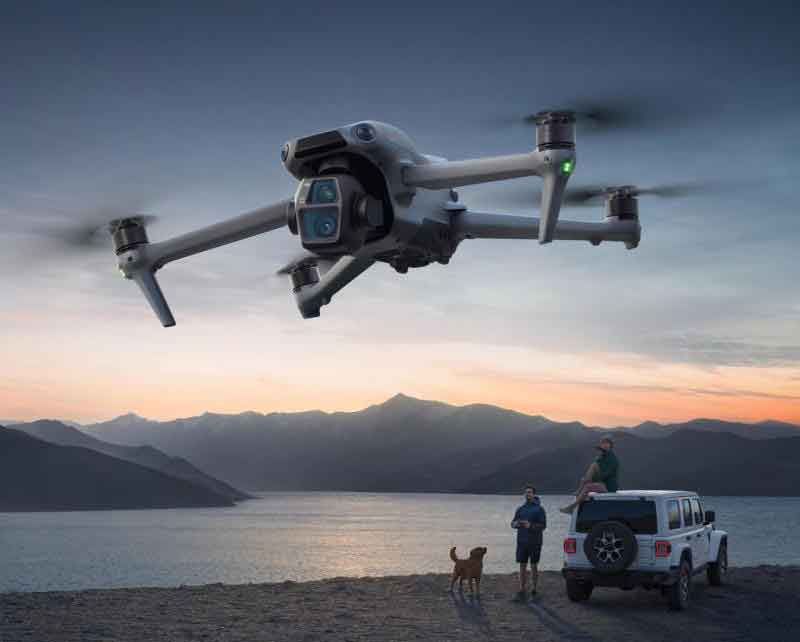
The core difficulty arises because a UAV drone swarm often operates in contested electromagnetic environments. Multiple UAV drones share spectrum with Wi-Fi, cellular, and other wireless devices. Spectrum is finite and non-renewable. As 5G and 6G evolve, the demand for spectrum grows dramatically. For a UAV drone swarm, the number of communication links is large: UAV drone-to-UAV drone links, UAV drone-to-ground station links, and control links. Different missions have different requirements in bandwidth, latency, and reliability. Fixed spectrum assignment causes severe interference and degrades mission execution. Therefore, dynamic and task-driven spectrum allocation is essential. Effective spectrum allocation reduces conflicts and enables collaboration among UAV drones. If spectrum is allocated improperly, communication between UAV drones is interfered, coordination fails, and the entire UAV drone swarm suffers.
Related Work and Research Gaps
Dynamic spectrum allocation has been studied extensively. Game-theoretic approaches model users as rational players. Potential games, non-cooperative games, and Stackelberg games have been used to reach Nash equilibrium or Stackelberg equilibrium. Heuristic algorithms such as genetic algorithms, whale optimization, and simulated annealing have been applied to spectrum assignment. Reinforcement learning, especially multi-agent reinforcement learning, has shown promise for dynamic spectrum access. However, most existing work does not jointly consider task diversity, channel switching cost, and weak information interaction under jamming. Task-driven UAV drone spectrum allocation has been studied using coalition formation games, mean field games, and matching theory. These works improve task efficiency but often ignore the heterogeneity of UAV drones and the interference inside a coalition. Collaborative spectrum resource management for UAV drone swarms has been explored using distributed games, federated learning, and blockchain. Nevertheless, when control links are interrupted by malicious jammers, centralized coordination becomes infeasible, and UAV drones must rely on local observations. This motivates my research on task-driven spectrum allocation and collaboration for UAV drone swarms.
System Models and Problem Formulation
I consider a UAV drone swarm divided into $G$ groups. Each group contains one cluster-head UAV drone and $N$ member UAV drones. The set of cluster-head UAV drones is $\mathcal{G}=\{1,2,\dots,G\}$, and the set of member UAV drones in each group is $\mathcal{N}=\{1,2,\dots,N\}$. There are $M$ available channels, each with bandwidth $B_0$. The channel set is $\mathcal{M}=\{1,2,\dots,M\}$. In heterogeneous and interference scenarios, I also consider $T$ time slots. The cluster-head UAV drone transmits data to the ground control station, while member UAV drones transmit data to their cluster-head UAV drone. Member UAV drones use underlay spectrum sharing to reuse channels occupied by other cluster-head UAV drones. This improves spectrum utilization but introduces co-channel interference.
For the homogeneous multi-task scenario, the signal-to-interference-plus-noise ratio (SINR) of cluster-head UAV drone $g$ on channel $m$ is
$$ \gamma_{g,m}^{G} = \frac{P_{g,m}^{G} d_{g,O}^{-\alpha}}{\delta_0 + \sum_{j\in\mathcal{G}, j\neq g}\sum_{n=1}^{N} P_{n,m}^{N,j} d_{n,O}^{-\alpha} \theta_{n,m}^{N,j}} $$
where $P_{g,m}^{G}$ is the transmit power of cluster-head UAV drone $g$ on channel $m$, $d_{g,O}$ is the distance from cluster-head UAV drone $g$ to the ground control station, $\alpha$ is the path loss exponent, $\delta_0$ is the noise power, $P_{n,m}^{N,j}$ is the transmit power of member UAV drone $n$ in group $j$ on channel $m$, and $\theta_{n,m}^{N,j}\in\{0,1\}$ indicates whether that member UAV drone occupies channel $m$. The throughput of cluster-head UAV drone $g$ on channel $m$ is
$$ R_{g,m}^{G} = B_0 \theta_{g,m}^{G} \log_2(1+\gamma_{g,m}^{G}) $$
where $\theta_{g,m}^{G}\in\{0,1\}$ indicates whether channel $m$ is used by cluster-head UAV drone $g$. The SINR of member UAV drone $n$ in group $g$ on channel $m$ is
$$ \gamma_{n,m}^{N,g} = \frac{P_{n,m}^{N,g} d_{n,g}^{-\alpha}}{\delta_0 + \sum_{j\in\mathcal{G}, j\neq g} P_{j,m}^{G} d_{j,g}^{-\alpha} \theta_{j,m}^{G} + \sum_{i\in\mathcal{N}, i\neq n} P_{i,m}^{N,g} d_{i,g}^{-\alpha} \theta_{i,m}^{N,g}} $$
where $d_{n,g}$ is the distance from member UAV drone $n$ to its cluster-head UAV drone $g$, $d_{j,g}$ is the distance from cluster-head UAV drone $j$ to cluster-head UAV drone $g$, and $d_{i,g}$ is the distance from member UAV drone $i$ to cluster-head UAV drone $g$. The throughput of member UAV drone $n$ in group $g$ on channel $m$ is
$$ R_{n,m}^{N,g} = B_0 \theta_{n,m}^{N,g} \log_2(1+\gamma_{n,m}^{N,g}) $$
The throughput of group $g$ is limited by the weaker of its two links:
$$ R_g = \min\left(\sum_{m=1}^{M} R_{g,m}^{G}, \sum_{n=1}^{N}\sum_{m=1}^{M} R_{n,m}^{N,g}\right) $$
To guarantee fairness among UAV drone groups, I maximize the minimum group throughput:
$$ \max_{\theta^{G}, P^{G}, \theta^{N}, P^{N}} \min_{g\in\mathcal{G}} R_g $$
subject to
$$ C1: \theta_{g,m}^{G}, \theta_{n,m}^{N,g} \in \{0,1\}, \quad \forall g,m,n $$
$$ C2: \theta_{g,m}^{G} + \theta_{n,m}^{N,g} \leq 1, \quad \forall g,m,n $$
$$ C3: \sum_{g=1}^{G} \theta_{g,m}^{G} \leq 1, \quad \forall m $$
$$ C4: \sum_{m=1}^{M} \theta_{g,m}^{G} = 1, \quad \forall g $$
$$ C5: \sum_{m=1}^{M} \theta_{n,m}^{N,g} = 1, \quad \forall g,n $$
$$ C6: 0 \leq P_{g,m}^{G} \leq P_{\max}^{G}, \quad \forall g,m $$
$$ C7: 0 \leq P_{n,m}^{N,g} \leq P_{\max}^{N}, \quad \forall g,n,m $$
$$ C8: R_g \geq \eta, \quad \forall g $$
For the heterogeneous multi-task scenario, missions change over time. I introduce channel switching cost. The actual throughput of group $g$ in time slot $t$ is
$$ R_g^{actual} = \min\{R_g^{actual,G}, R_g^{actual,N}\} $$
where
$$ R_g^{actual,G} = \sum_{m=1}^{M}\sum_{t=1}^{T} V_{g,m}^{G}(t) R_{g,m}^{G}(t) $$
$$ R_g^{actual,N} = \sum_{n=1}^{N}\sum_{m=1}^{M}\sum_{t=1}^{T} V_{n,m}^{N,g}(t) R_{n,m}^{N,g}(t) $$
The switching penalty factor is
$$ V_{g,m}^{G}(t) = \theta_{g,m}^{G}(t) – \frac{\mu}{2}\left(|\theta_{g,m}^{G}(t)-\theta_{g,m}^{G}(t-1)| + \theta_{g,m}^{G}(t) – \theta_{g,m}^{G}(t-1)\right) $$
$$ V_{n,m}^{N,g}(t) = \theta_{n,m}^{N,g}(t) – \frac{\mu}{2}\left(|\theta_{n,m}^{N,g}(t)-\theta_{n,m}^{N,g}(t-1)| + \theta_{n,m}^{N,g}(t) – \theta_{n,m}^{N,g}(t-1)\right) $$
where $\mu\in[0,1]$ is the channel switching cost. The task completion time for group $g$ on task $h$ is
$$ T_{g,h} = \frac{D_{g,h}}{R_g^{actual}} $$
where $D_{g,h}$ is the data volume required by task $h$. The objective is to minimize the maximum task completion time over all groups and tasks:
$$ \min_{\theta^{G}, P^{G}, \theta^{N}, P^{N}} \max_{g\in\mathcal{G}, h\in\mathcal{H}} T_{g,h} $$
subject to spectrum, power, and task constraints. This formulation captures the dynamic and heterogeneous nature of UAV drone missions.
For the interference-impaired scenario, a malicious jammer $J$ acts as the leader in a Stackelberg game, and cluster-head UAV drones act as followers. The jammer selects one channel per time slot to maximize interference. The SINR of cluster-head UAV drone $g$ on channel $m$ at time $t$ is
$$ \gamma_{g,m}(t) = \frac{P_G 10^{-h_g(t)/10}}{\sum_{i\in\mathcal{G}, i\neq g} P_G 10^{-h_i(t)/10} \theta_{i,m}(t) + P_J 10^{-h_J(t)/10} \theta_{J,m}(t) + \delta} $$
where $P_G$ is the cluster-head UAV drone transmit power, $P_J$ is the jammer power, $h_g(t)$ is the path loss from cluster-head UAV drone $g$ to the ground control station, $h_J(t)$ is the path loss from the jammer to the ground control station, and $\theta_{J,m}(t)\in\{0,1\}$ indicates whether the jammer interferes with channel $m$. The actual transmission rate considering switching cost is
$$ R_{g,m}^{actual}(t) = R_{g,m}(t) – R_{g,m}^{loss}(t) $$
where
$$ R_{g,m}^{loss}(t) = \frac{\mu}{2}\left(|\theta_{g,m}(t)-\theta_{g,m}(t-1)| + \theta_{g,m}(t) – \theta_{g,m}(t-1)\right) R_{g,m}(t) $$
The utility of the cluster-head UAV drone swarm is
$$ U_G = \sum_{g=1}^{G}\sum_{t=1}^{T}\sum_{m=1}^{M} R_{g,m}^{actual}(t) $$
The utility of the jammer is
$$ U_J = -\sum_{g=1}^{G}\sum_{t=1}^{T}\sum_{m=1}^{M} R_{g,m}(t) $$
The Stackelberg equilibrium is defined as
$$ U_J(\varepsilon_J^*, \omega^*) \geq U_J(\varepsilon_J, \omega^*) $$
$$ U_G(\varepsilon_J^*, \omega^*) \geq U_G(\varepsilon_J^*, \omega) $$
where $\varepsilon_J^*$ is the optimal jamming channel strategy and $\omega^*$ is the optimal channel selection strategy of the cluster-head UAV drones. The equilibrium exists and is unique because the game is a potential game.
Proposed Algorithms
I decompose the mixed-integer nonlinear programming problems into subproblems and solve them iteratively. For channel allocation, I propose an improved genetic algorithm. For power allocation, I use geometric programming and convex optimization. For the heterogeneous scenario, I apply block coordinate descent (BCD) to jointly optimize channel and power. For the interference scenario, I use Q-learning for the jammer and multi-agent proximal policy optimization (MAPPO) for the cluster-head UAV drones.
The improved genetic algorithm encodes the channel assignment matrices $\theta^{G}$ and $\theta^{N}$ as binary vectors. The fitness function is the objective value. I use roulette wheel selection, single-point crossover, mutation, and elite retention. Constraints are handled by gene correction and gene screening. The algorithm simultaneously optimizes cluster-head and member UAV drone channel assignments. The steps are summarized in the following table.
| Step | Operation | Description |
|---|---|---|
| 1 | Initialization | Generate initial population satisfying constraints. |
| 2 | Selection | Roulette wheel selection based on fitness. |
| 3 | Crossover | Single-point crossover on channel vectors. |
| 4 | Mutation | Flip bits with given probability. |
| 5 | Elite retention | Keep best individuals from parent generation. |
| 6 | Constraint handling | Repair infeasible individuals. |
For power optimization, I fix the channel assignments and optimize the transmit powers. The original non-convex problem is transformed into a convex problem using logarithmic transformation. For cluster-head UAV drone power, let $P_{g,m}^{G} = \log_2(P_{g,m}^{G})$ and approximate $\log_2(1+x) \approx \log_2(x)$ in the high-SINR regime. The constraints become affine or log-sum-exp forms. Then I use CVX to obtain the optimal power. For member UAV drone power, I apply the same transformation. I solve the two power subproblems separately and iterate between them.
For the heterogeneous scenario, I use block coordinate descent. The algorithm alternates between channel allocation, cluster-head power optimization, and member power optimization. The channel allocation subproblem is solved by the improved genetic algorithm. The power subproblems are solved by gradient projection method after convexification. The overall algorithm converges to a suboptimal solution. The steps are:
| Step | Optimization | Method |
|---|---|---|
| 1 | Channel allocation | Improved genetic algorithm |
| 2 | Cluster-head power | Geometric programming + gradient projection |
| 3 | Member power | Geometric programming + gradient projection |
| 4 | Alternate | Block coordinate descent until convergence |
For the interference scenario, the jammer uses Q-learning. The Q-value update is
$$ Q_J(\tau+1) = (1-\alpha_\tau)Q_J(\tau) + \alpha_\tau U_J(\tau) $$
where $\alpha_\tau$ is the learning rate. The channel selection probability is updated by
$$ p_{J,i}(\tau+1) = \frac{\exp(Q_{J,i}(\tau+1)/\Gamma)}{\sum_{j\in\mathcal{M}}\exp(Q_{J,j}(\tau+1)/\Gamma)} $$
where $\Gamma$ is the temperature coefficient. For the cluster-head UAV drones, I model the problem as a partially observable Markov game. Each cluster-head UAV drone observes the received signal strength indicator (RSSI) on each channel:
$$ I_{g,m}(t) = P_G \theta_{g,m}(t-1) h_g(t-1) + \sum_{j\neq g} P_G \theta_{j,m}(t-1) h_j(t-1) + P_J \theta_{J,m}(t-1) h_J(t-1) + \delta $$
The reward is the actual transmission rate:
$$ r_g^t = \sum_{m=1}^{M} R_{g,m}^{actual}(t) $$
MAPPO uses centralized training and decentralized execution. Each agent has an actor network $\pi_{\phi_g}$ and a critic network $V_{\theta_g}$. The actor loss is
$$ L^{actor}(\phi) = \frac{1}{DG}\sum_{i=1}^{D}\sum_{g=1}^{G} \left[ – \min\left( \psi_i^g A_i^g, \text{clip}(\psi_i^g, 1-\epsilon, 1+\epsilon) A_i^g \right) + \sigma S(\pi_{\phi_g}) \right] $$
where
$$ \psi_i^g = \frac{\pi_{\phi_g}(a_i^g|o_i^g)}{\pi_{\phi_g^{old}}(a_i^g|o_i^g)} $$
The critic loss is
$$ L^{critic}(\theta) = \frac{1}{DG}\sum_{i=1}^{D}\sum_{g=1}^{G} \max\left[ (V_{\theta_g}(s_i) – \hat{r}_i)^2, (V_{\theta_g^{old}}(s_i) + \text{clip}(V_{\theta_g}(s_i)-V_{\theta_g^{old}}(s_i), -\epsilon, \epsilon) – \hat{r}_i)^2 \right] $$
The advantage estimate is
$$ A_i^g = \sum_{l=0}^{\infty} (\gamma\lambda)^l \left[ r_{i+l}^g + \gamma V_{\theta_g}(s_{i+l+1}) – V_{\theta_g}(s_{i+l}) \right] $$
The overall hierarchical adversarial game algorithm alternates between jammer Q-learning and MAPPO for cluster-head UAV drones until the utilities stabilize.
Simulation Results and Analysis
I evaluate the proposed methods through simulations. The parameters are set as follows.
| Parameter | Homogeneous Scenario | Heterogeneous Scenario | Interference Scenario |
|---|---|---|---|
| Area | $2000\times2000$ m$^2$ | $2000\times2000$ m$^2$ | $10\times10$ km$^2$ |
| Number of groups $G$ | $\{4,5,6,7,8\}$ | $\{4,5,6,7,8\}$ | 5 |
| Member UAV drones $N$ | $\{2,3,4\}$ | $\{2,3,4\}$ | Multiple |
| Channels $M$ | $\{4,6,8,10\}$ | $[4,12]$ | $\{4,6,10\}$ |
| Channel bandwidth $B_0$ | 1 MHz | 1 MHz | 1 MHz |
| Altitude $H$ | 100 m | 100 m | 100 m |
| Noise power $\delta_0$ | -90 dBm | -90 dBm | -114 dBm |
| Path loss exponent $\alpha$ | 2 | 2 | – |
| Switching cost $\mu$ | – | 0.2 | 0.1 |
| Cluster-head max power | 4 W | 4 W | 23 dBm |
| Member max power | 2 W | 2 W | – |
| Jammer power | – | – | 60 dBm |
| Carrier frequency | – | – | 2 GHz |
| Discount factor $\gamma$ | – | – | 0.99 |
| Learning rate | – | – | $5\times10^{-4}$ |
For the homogeneous multi-task scenario, the proposed joint power and spectrum optimization algorithm converges faster than benchmark schemes. The minimum group throughput increases as the number of available channels increases. When the number of channels is 8 or more, increasing the number of member UAV drones improves group throughput because co-channel interference is mitigated. The proposed algorithm outperforms random allocation, channel-only optimization, and power-only optimization. The average improvement over benchmarks is at least 16%.
For the heterogeneous multi-task scenario, the BCD-based joint optimization method reduces the maximum task completion time. The proposed method converges in about 5 iterations, while power-only optimization requires about 16 iterations. The proposed method achieves 14% faster completion than power-only optimization and 16% faster than channel-only optimization. When the number of available channels is 12, the proposed method reduces task completion time by 16% to 40% compared with benchmarks. The channel switching cost is shown to reduce unnecessary channel switches and improve overall efficiency.
For the interference-impaired scenario, MAPPO enables cluster-head UAV drones to learn optimal channel selection strategies. As the number of available channels increases, the average reward increases and spectrum conflicts decrease. The proposed method significantly reduces the number of spectrum conflicts among cluster-head UAV drones. The channel switching cost factor reduces the frequency of channel switches, lowering collaboration overhead. The Stackelberg equilibrium is reached, and the jammer utility and UAV drone utility stabilize.
The following table summarizes the performance comparison of different methods.
| Scenario | Method | Optimization Goal | Key Technique | Performance Gain |
|---|---|---|---|---|
| Homogeneous multi-task | Joint power and spectrum | Maximize minimum group throughput | Improved GA + convex optimization | At least 16% over benchmarks |
| Heterogeneous multi-task | BCD-based joint optimization | Minimize maximum task completion time | Improved GA + geometric programming + gradient projection | 16%-40% reduction in completion time |
| Interference-impaired | Hierarchical adversarial game | Maximize UAV drone utility and minimize jammer utility | Stackelberg game + Q-learning + MAPPO | Reduced spectrum conflicts and improved throughput |
I further analyze the impact of the number of UAV drone groups. In the homogeneous scenario, as the number of groups increases, the minimum group throughput decreases because co-channel interference increases. In the heterogeneous scenario, the maximum task completion time increases with the number of groups. The proposed algorithm maintains fairness and efficiency. In the interference scenario, the proposed MAPPO-based method allows UAV drone swarms to adapt to jammer strategies without centralized control. The use of RSSI observations enables each cluster-head UAV drone to make local decisions, which is crucial when control links are interrupted.
The proposed methods have several advantages. First, they jointly optimize channel and power, which is more effective than optimizing either alone. Second, they consider task-driven requirements and channel switching costs, making them suitable for dynamic missions. Third, they use hierarchical game theory and multi-agent reinforcement learning to handle malicious interference and weak information exchange. The simulation results confirm that the proposed methods improve spectrum utilization, reduce interference, and enhance collaboration among UAV drones.
Conclusion and Future Directions
I have studied task-driven spectrum allocation and collaboration for UAV drone swarms. I formulated three scenarios: homogeneous multi-task, heterogeneous multi-task, and interference-impaired. For each scenario, I built mathematical models and proposed efficient algorithms. The homogeneous scenario uses joint power and spectrum optimization with improved genetic algorithm and convex optimization. The heterogeneous scenario uses block coordinate descent with channel switching cost. The interference scenario uses a Stackelberg game with Q-learning and MAPPO. Simulation results show that the proposed methods improve throughput, reduce task completion time, and mitigate spectrum conflicts. The keyword UAV drone appears throughout this work, emphasizing the central role of UAV drone swarms in future wireless networks.
In future work, I plan to extend this research in several directions. First, I will consider dynamic heterogeneous networks such as 5G/6G hybrid networking, where UAV drone swarms must adapt to real-time resource changes. I will incorporate more UAV drone characteristics such as altitude, speed, and mission urgency into grouping and allocation. Second, I will address task priority, random task arrival, and task completion. I will develop predictive models using spatiotemporal spectrum maps and online learning to enable proactive spectrum allocation. Third, I will enhance anti-jamming capabilities by integrating encryption and spread spectrum techniques. I will also extend the collaborative spectrum management to scenarios involving UAV drones, ground base stations, and other aerial devices. These future directions will further improve the robustness and adaptability of UAV drone swarm spectrum allocation and collaboration.