
1. Introduction and Research Motivation
As mobile wireless communication technologies continue to advance, a plethora of computationally intensive, latency-sensitive, and data-heavy applications have emerged in various emerging business domains. Applications such as the tactile Internet requiring millisecond-level responses, robotic control systems, smart grids, autonomous driving, and virtual/augmented reality present significant challenges for traditional cloud computing architectures. The physical distance between end devices and centralized cloud data centers, coupled with backhaul bandwidth limitations, makes it impossible to meet the stringent low-latency requirements of these modern applications. This fundamental limitation has driven the paradigm shift toward mobile edge computing (MEC).
MEC is a distributed computing architecture that pushes computation, storage, and network resources to the network edge, thereby bringing cloud computing capabilities closer to mobile users and terminal devices. By deploying edge servers at base stations or access points, MEC significantly reduces latency, improves bandwidth utilization, and enhances the overall user experience. However, static edge servers, typically co-located with ground base stations, face coverage limitations due to long-distance path loss and complex wireless propagation environments. In practical scenarios, deploying static edge servers extensively is not only economically prohibitive but also technically infeasible, particularly in remote or disaster-stricken areas where infrastructure is sparse or damaged.
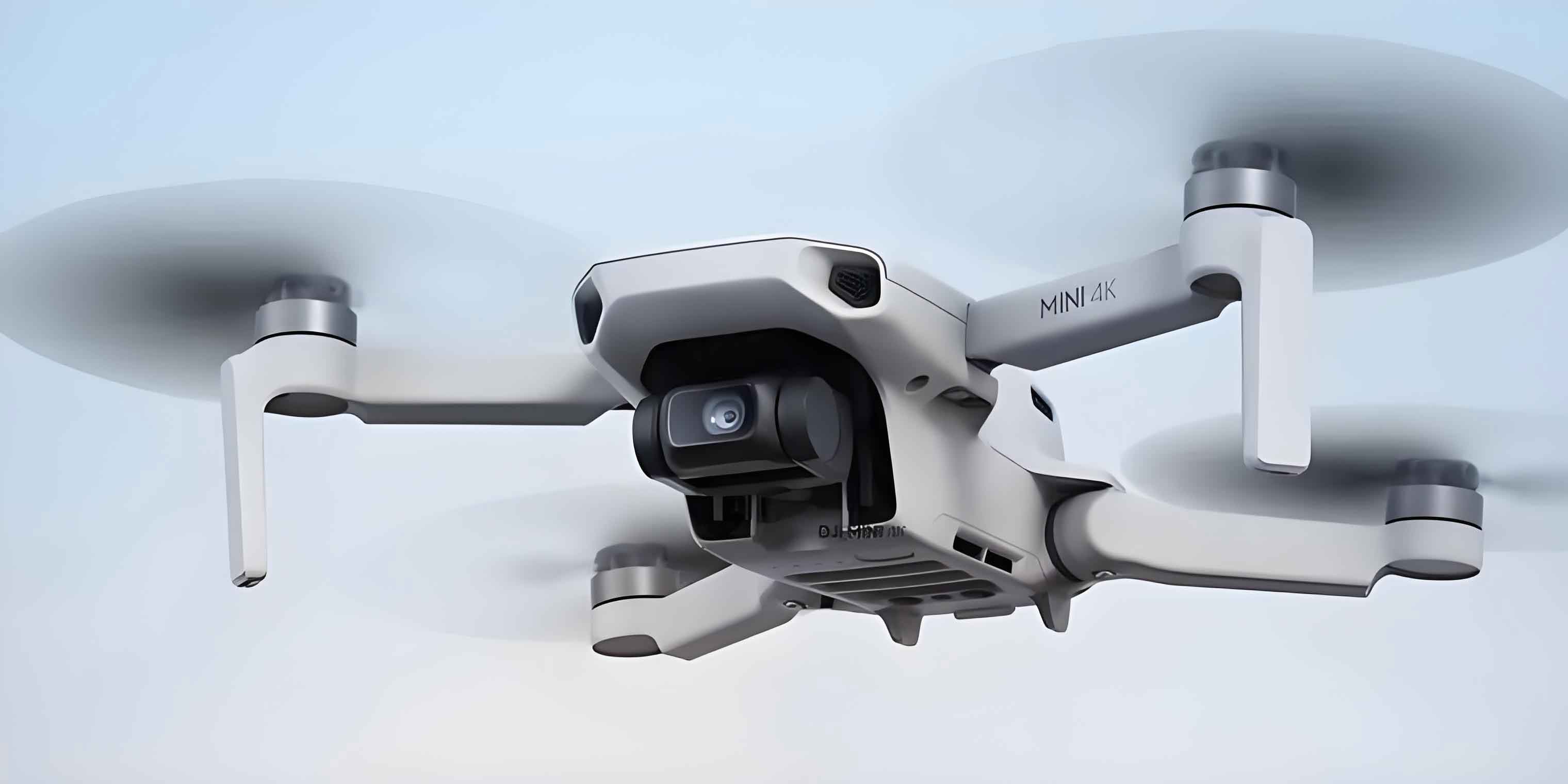
To overcome these limitations, unmanned aerial vehicles (UAVs) have emerged as a transformative solution for mobile edge computing. UAV-assisted MEC systems leverage the high mobility, low cost, and excellent line-of-sight (LoS) propagation characteristics of UAVs to bring computation resources directly to where they are needed. By flying in proximity to Internet of Things (IoT) devices, UAVs can establish reliable LoS links with ground terminals, significantly improving communication quality and enabling efficient task offloading. Nevertheless, UAV-assisted MEC systems introduce new challenges, particularly in terms of limited on-board energy, the coupling between trajectory design and task offloading, and the need for effective service caching strategies to reduce latency and energy consumption.
In this thesis, I investigate the joint optimization of service caching, computation offloading, resource allocation, and UAV trajectory design in multi-UAV-assisted MEC systems. The primary research contributions are encapsulated in three distinct optimization frameworks that address latency minimization, user energy consumption reduction, and system-level weighted energy consumption optimization under non-orthogonal multiple access (NOMA) transmission. I model these problems as mixed-integer nonlinear programs (MINLPs) and develop efficient iterative algorithms based on convex optimization techniques, including successive convex approximation (SCA), Lagrange duality, and matching theory. The key term unmanned aerial vehicles permeates every aspect of this work, from system modeling to algorithm design and performance evaluation.
2. System Model and Problem Formulation
I consider a multi-UAV-assisted MEC system operating within a square geographical area. The system comprises one base station (BS), K rotary-wing unmanned aerial vehicles (UAVs), and M ground user terminal devices. The sets of UAVs and user terminals are denoted by $\mathcal{K} = \{1, 2, \ldots, K\}$ and $\mathcal{M} = \{1, 2, \ldots, M\}$, respectively. Each UAV is equipped with a small-scale edge server that provides computation and caching services to ground terminals. Due to coverage limitations, ground users cannot communicate directly with the BS; instead, UAVs serve as aerial edge nodes that relay or directly process user tasks. The BS connects to the remote cloud via wired fiber links, while UAVs communicate with the BS through wireless backhaul links.
2.1 Communication Model
I employ a three-dimensional Cartesian coordinate system to describe the positions of UAVs and ground users. The horizontal position of UAV k is denoted as $\mathbf{Q}_k = (x_k, y_k)$ at a fixed altitude H, and the horizontal position of user m is given by $\mathbf{Q}_m = (x_m, y_m)$. For the front-haul link, users within each UAV’s coverage area access the network via orthogonal frequency-division multiple access (OFDMA), equally sharing the total bandwidth B. The bidirectional communication bandwidth between UAV k and its served user terminal is $B/M_k$, where $M_k$ represents the number of users served by UAV k. The distance between user m and UAV k is expressed as:
$$R_{k,m} = \sqrt{(x_k – x_m)^2 + (y_k – y_m)^2 + H^2}$$
For the air-to-ground channel, I adopt a probabilistic LoS/NLoS propagation model that accounts for the surrounding environment. The probability of establishing a LoS link between user m and UAV k at time slot n is given by:
$$P^{\text{LoS}}_{m,k}[n] = \frac{1}{1 + a \exp\left(-b \left(\theta_{m,k}[n] – a\right)\right)}$$
where $\theta_{m,k}[n] = (180/\pi) \arcsin(H/r_{m,k}[n])$ is the elevation angle, and a and b are environment-dependent parameters. The average path loss is then computed as:
$$L_{m,k}[n] = P^{\text{LoS}}_{m,k}[n] L^{\text{LoS}}_{m,k}[n] + P^{\text{NLoS}}_{m,k}[n] L^{\text{NLoS}}_{m,k}[n]$$
The channel gain $h_{m,k}[n]$ is the reciprocal of the average path loss. Assuming the downlink uses the same channel gain as the uplink, the achievable uplink rate between user m and UAV k is:
$$r^{\text{up}}_{m,k}[n] = \frac{B}{M_k} \log_2\left(1 + \frac{h_{m,k}[n] p_m[n]}{N_0 B/M_k}\right)$$
where $p_m[n]$ is the transmit power of user m and $N_0$ is the noise power spectral density. This communication model forms the basis for all subsequent task offloading and resource allocation decisions involving unmanned aerial vehicles.
2.2 Service Caching Model
Service caching is a critical enabler for reducing task execution latency in MEC systems. When a task is offloaded to a UAV’s edge server, the server must have the corresponding service program cached to execute the task immediately. If the service is not cached, the UAV must download it from the remote cloud via the backhaul link, incurring additional latency and communication overhead. In my model, each UAV caches service programs based on popularity, while user terminals adopt a random caching strategy due to their limited storage capacity.
If user m requests service s with probability $p_{m,s}$, the local popularity at UAV k is calculated as:
$$p_k^s = \sum_{m \in M_k} p_{m,s} / M_k$$
Since there is no coupling constraint between content deployments on different unmanned aerial vehicles, services with higher local popularity are preferentially cached in UAVs to maximize cache hit probability. A binary variable $a_{k,s}[n] \in \{0, 1\}$ indicates whether UAV k caches service s at time slot n. Similarly, $e_{m,s} \in \{0, 1\}$ indicates whether user terminal m caches service s locally. This service caching framework directly influences whether tasks are executed locally or offloaded, and consequently impacts both latency and energy consumption.
2.3 Computation and Energy Consumption Models
Each user m has a computation task with input data size $l_m$ bits and required CPU cycles $C_m$. I employ a partial offloading strategy, allowing each user to execute a portion of the task locally while offloading the remainder to the UAV’s MEC server. In time slot n, the user m executes $d^{\text{user}}_m[n]$ bits locally, determined by its CPU frequency:
$$d^{\text{user}}_m[n] = \frac{\tau f^{\text{user}}_m[n]}{C^{\text{user}}_m}$$
Similarly, the UAV k processes $d^{\text{uav}}_{m,k}[n]$ bits on behalf of user m:
$$d^{\text{uav}}_{m,k}[n] = \frac{\tau f^{\text{uav}}_{m,k}[n]}{C^{\text{uav}}_k}$$
The local computation energy consumption at user m is:
$$e^{\text{user}}_m[n] = \kappa^{\text{user}}_m \left(f^{\text{user}}_m[n]\right)^3 \tau$$
where $\kappa^{\text{user}}_m$ is the effective switched capacitance coefficient. The UAV’s computation energy for user m is similarly expressed. The task offloading energy depends on the transmit power and data rate, and the total energy consumption of the system comprises computation energy, transmission energy, and UAV flight propulsion energy. The flight energy of UAV k over a time horizon with velocity $v_k[n]$ is:
$$E^{\text{move}}_k = \sum_{n=1}^{N} \frac{W_k}{2} v_k^2[n] \tau$$
where $W_k$ is the mass of UAV k. These models are essential for formulating the optimization problems that balance latency, energy, and resource utilization among users and unmanned aerial vehicles.
3. Latency Minimization via Joint Offloading, Resource Allocation, and UAV Placement
3.1 Problem Formulation
In the first research contribution, I address the latency minimization problem in a multi-UAV-assisted MEC system with service caching. Under the constraints of task completion delay requirements for all devices, limited user energy, and limited UAV energy, I formulate the joint optimization of offloading decisions $\mathbf{C} = \{c_{m,k}\}$, computation resource allocation $\mathbf{F} = \{f_{k,m}\}$, and UAV positions $\mathbf{Q} = \{Q_k\}$ to minimize the total task completion delay. The optimization problem is stated as:
$$\mathcal{P}_1: \min_{\mathbf{C}, \mathbf{F}, \mathbf{Q}} \sum_{m=1}^{M} T_m$$
$$\text{s.t.} \quad C_1: T_m \leq D^{\max}_m, \quad \forall m \in \mathcal{M}$$
$$C_2: E_m \leq E^{\max}_m, \quad \forall m \in \mathcal{M}$$
$$C_3: E_k \leq E^{\max}_k, \quad \forall k \in \mathcal{K}$$
$$C_4: \sum_{m=1}^{M} f_{k,m} \leq F^{\max}_k, \quad \forall k \in \mathcal{K}$$
$$C_5: c_{m,k} \leq b_{m,k}, \quad \forall m \in \mathcal{M}, k \in \mathcal{K}$$
$$C_6: \sum_{k=1}^{K} c_{m,k} = 1, \quad \forall m \in \mathcal{M}$$
$$C_9: b_{m,k} R_{k,m} \leq R^{\max}_k, \quad \forall m \in \mathcal{M}, k \in \mathcal{K}$$
This problem is a mixed-integer nonlinear program (MINLP) due to the binary offloading variables and the non-convex nature of the objective function with respect to UAV positions. To make the problem tractable, I decompose it into three subproblems: offloading decision optimization, computation resource allocation, and UAV position optimization.
3.2 Offloading Decision Optimization
When the UAV positions and resource allocation are fixed, the offloading decision subproblem is obtained. I first relax the binary variables $c_{m,k}$ to continuous variables in [0, 1], transforming the problem into a linear programming problem. The relaxed problem $\mathcal{P}_3$ is convex and can be efficiently solved using standard convex optimization tools. After obtaining the optimal relaxed solution, I recover the binary offloading decisions by sorting the continuous values in descending order and sequentially setting them to 1 while ensuring all constraints are satisfied. The complete offloading decision procedure is summarized in Algorithm 1.
Algorithm 1: Offloading Decision Recovery
| Step | Operation |
|---|---|
| 1 | Sort the optimal continuous offloading variables $c^{*}_{m,k}$ in descending order |
| 2 | Initialize index $i = 1$ |
| 3 | Set $c_{(i)} = 1$ and all remaining variables to 0 |
| 4 | Increment $i$ and repeat until constraints are violated |
| 5 | Stop when the maximum number of offloading users is reached |
3.3 Computation Resource Allocation
With fixed offloading decisions and UAV positions, the resource allocation subproblem focuses on assigning each UAV’s computation capability to its served users. Using the Lagrange multiplier method and Karush-Kuhn-Tucker (KKT) conditions, I derive the optimal computation resource allocation. The Lagrangian function is constructed as:
$$\mathcal{L}(f_{k,m}, \lambda_m, \nu_k) = \sum_{m=1}^{M} T_m + \sum_{m=1}^{M} \lambda_m \left(C_m E^{\max}_m – E_m\right) + \sum_{k=1}^{K} \nu_k \left(\sum_{m=1}^{M} f_{k,m} – F^{\max}_k\right)$$
Applying the KKT conditions yields the closed-form optimal resource allocation for unmanned aerial vehicles:
$$f^{*}_{k,m} = \sqrt{\frac{E^{\max}_k C_m}{\kappa_m}}$$
This result demonstrates that the optimal CPU frequency allocated to each user is proportional to the square root of the user’s energy budget and inversely proportional to the computational complexity coefficient.
3.4 UAV Position Optimization
For the UAV placement subproblem, the objective function contains non-convex terms related to the transmission rate and energy consumption, which depend on the distance between users and unmanned aerial vehicles. I exploit the fact that $\|\mathbf{Q}_k – \mathbf{Q}_m\|^2$ is convex and apply the successive convex approximation (SCA) technique. Using the first-order Taylor expansion, the lower bound of the transmission rate can be expressed as:
$$r^{\text{up,lb}}_{m,k} = Z_{m,k}[i] – \frac{G_{m,k}}{H^2 + \|\mathbf{Q}_k[i] – \mathbf{Q}_m\|^2} \left(\|\mathbf{Q}_k\|^2 – \|\mathbf{Q}_k[i]\|^2\right)$$
where $Z_{m,k}[i]$ and $G_{m,k}$ are constants determined at the i-th iteration. Substituting this lower bound into the original problem converts the UAV position subproblem into a standard convex optimization problem solvable by CVX. The complete joint optimization algorithm iteratively updates the offloading decisions, resource allocation, and UAV positions until convergence.
4. User Energy Consumption Minimization with Partial Offloading
4.1 Problem Statement
In the second research contribution, I shift the focus from latency to user energy consumption. In the UAV-assisted MEC scenario, users often have limited battery capacity, making energy efficiency a paramount concern. I consider a time-slotted system over a horizon T divided into N equal slots, each of duration $\tau$. Under the constraints of task completion delay, UAV energy consumption, and limited computation resources on both UAVs and ground terminals, I formulate the following energy minimization problem:
$$\mathcal{P}_1: \min_{\mathbf{f}^{\text{user}}, \mathbf{f}^{\text{uav}}, \mathbf{Q}, \mathbf{C}} E^{\text{user}} = \sum_{m=1}^{M} \sum_{n=1}^{N} \left[\kappa^{\text{user}}_m \left(f^{\text{user}}_m[n]\right)^3 \tau + \sum_{k=1}^{K} c_{m,k}[n] p_{m,k}[n] \tau \right]$$
$$\text{s.t.} \quad C_1: 0 \leq f^{\text{user}}_m[n] \leq f^{\text{user,max}}_m, \quad \forall m \in \mathcal{M}, n \in \mathcal{N}$$
$$C_2: \sum_{m=1}^{M} f^{\text{uav}}_{m,k}[n] \leq f^{\text{uav,max}}_k, \quad \forall k \in \mathcal{K}, n \in \mathcal{N}$$
$$C_3: \sum_{t=1}^{n} c_{m,k}[t] R_{m,k}[t] \tau \geq \sum_{t=1}^{n} d^{\text{uav}}_{m,k}[t], \quad \forall m, k, n$$
$$C_4: \sum_{k=1}^{K} \sum_{n=1}^{N} \left(d^{\text{user}}_m[n] + c_{m,k}[n] d^{\text{uav}}_{m,k}[n]\right) \geq D_m, \quad \forall m$$
where $E^{\text{user}}$ represents the total energy consumption of all users, which includes local computation energy and task offloading transmission energy. This problem is non-convex due to the coupling between optimization variables. I decompose it into three subproblems: offloading strategy, resource allocation, and UAV trajectory optimization.
4.2 Offloading Strategy and Resource Allocation
Similar to the latency minimization problem in Chapter 3, the offloading decisions are handled by relaxing the binary variables to continuous ones, solving the resulting linear program, and then recovering the binary solution. The resource allocation subproblem, which involves both user CPU frequencies and UAV computation resource assignment, is a convex optimization problem since the objective function is a polynomial with positive coefficients, and all constraints are linear. This subproblem can be solved directly using CVX.
4.3 UAV Trajectory Design
The UAV trajectory subproblem aims to optimize the positions of unmanned aerial vehicles over time to minimize user transmission energy, which is a non-convex function of the UAV positions. I apply the SCA method to approximate the non-convex transmission rate function. The key bound is:
$$R^{\text{lb}}_{m,k}[n] \geq Z_{m,k}[n] – \frac{G_{m,k}}{H^2 + \|\mathbf{Q}_k[n] – \mathbf{Q}_m[n]\|^2} \left(\|\mathbf{Q}_k[n]\|^2 – \|\mathbf{Q}_k^{(i)}[n]\|^2\right)$$
This transformation converts the trajectory optimization into a convex problem that can be efficiently solved. The overall algorithm alternates among the three subproblems until the objective function converges, as outlined in Algorithm 2.
Algorithm 2: Joint Optimization for User Energy Minimization
| Step | Operation |
|---|---|
| 1 | Initialize offloading decisions $C^{(0)}$, resource allocation $F^{(0)}$, and UAV positions $Q^{(0)}$ |
| 2 | Repeat |
| 3 | Solve offloading subproblem with fixed $F$, $Q$ to obtain $C^{(i+1)}$ |
| 4 | Solve resource allocation subproblem with fixed $C$, $Q$ to obtain $F^{(i+1)}$ |
| 5 | Solve UAV trajectory subproblem with fixed $C$, $F$ to obtain $Q^{(i+1)}$ |
| 6 | Update iteration index $i = i + 1$ |
| 7 | Until the decrease of the objective function is less than a threshold $\varepsilon > 0$ |
5. NOMA-Based System Weighted Energy Consumption Optimization
5.1 NOMA-Enabled Communication
In the third research contribution, I incorporate non-orthogonal multiple access (NOMA) technology into the UAV-assisted MEC framework to improve spectral efficiency and support massive connectivity. NOMA allows multiple users to share the same frequency band simultaneously, with successive interference cancellation (SIC) employed at the receiver to separate superimposed signals. In this model, each UAV serves its associated users via NOMA, and the SIC decoding order follows the channel gain ranking: the user with the highest channel gain is decoded first. When the UAV’s server decodes the signal from user $m$, signals from users with indices less than m are treated as interference. The achievable data rate for user m in UAV k’s group in time slot n is:
$$R_{m,k}[n] = \frac{B}{M_k} \log_2\left(1 + \frac{p_{m,k}[n] h_{m,k}[n]}{\sum_{l=1}^{m-1} p_{l,k}[n] h_{l,k}[n] + N_0 B/M_k}\right)$$
The total system weighted energy consumption includes user computation energy, UAV computation energy, user transmission energy, and UAV flight energy. The optimization problem is formulated as minimizing this weighted sum under delay, power, and trajectory constraints.
5.2 User Grouping via Matching Theory
The user grouping problem is formulated as a bilateral many-to-one matching game between users and unmanned aerial vehicles. Each user and UAV has a preference list sorted by the utility function, which is defined based on the weighted energy consumption. The matching procedure starts with users sending access requests to the nearest UAV. If a UAV receives more requests than its capacity, it retains the most preferred users and rejects the others. The algorithm then iteratively improves the matching through swap operations until a stable matching is achieved. This matching game effectively assigns users to unmanned aerial vehicles in a manner that minimizes the overall energy consumption.
5.3 Power and Resource Allocation Convexification
A key challenge in the NOMA-based system is that the user transmission power is not directly expressed in a convex form. To address this, I transform the rate constraint and derive a recursi式 expression for the sum of transmission powers. By applying the following transformation:
$$p_{m,k}[n] = \frac{N_0 B/M_k}{h_{m,k}[n]} \left(e^{A_{m,k}[n] / G} – e^{A_{m-1,k}[n] / G}\right)$$
where $A_{m,k}[n] = \sum_{l=1}^{m} R_{l,k}[n]$ and $G = B / (M_k \ln 2)$, the power allocation problem can be converted into a convex form. The sum of transmission powers becomes:
$$\sum_{m=1}^{M} p_{m,k}[n] = \frac{N_0 B/M_k}{G} \left(\frac{e^{A_{M,k}[n] / G}}{h_{M,k}[n]} – \frac{1}{h_{1,k}[n]}\right)$$
This convexification enables the resource and power allocation subproblem to be solved optimally using convex optimization tools.
5.4 UAV Trajectory Optimization with Quadratic Approximation
For the trajectory optimization subproblem, the non-convexity arises from the path loss function in the transmission energy term. I employ a quadratic function to approximate the path loss:
$$L_{m,k}[n] \approx p_1 d^2_{m,k}[n] + p_2 d_{m,k}[n] + p_3$$
where $p_1$, $p_2$, and $p_3$ are fitting coefficients. This quadratic approximation preserves convexity, allowing the trajectory subproblem to be solved efficiently. The overall joint optimization algorithm for the NOMA-based system iterates among user grouping, power and resource allocation, and UAV trajectory optimization until convergence.
6. Simulation Results and Performance Analysis
6.1 Simulation Setup
I conducted extensive simulations to evaluate the proposed algorithms. The default simulation parameters are summarized in Table 1. In a 1 km × 1 km square area, user terminal devices are randomly distributed. Each user has a computation task request with parameters specified in the table. The channel model employs urban environment parameters achieved through s-curve fitting.
Table 1: Simulation Parameters for Chapter 3
| Parameter | Value | Parameter | Value |
|---|---|---|---|
| Channel gain $h_0$ | -50 dB | User input data size $l_m$ | [0.5, 1] Mbits |
| Bandwidth B | 20 MHz | User task CPU cycles $C_m$ | [0.2, 1] Gcycles |
| Noise power $N_0$ | -114 dBm | User max delay $D^{\max}_m$ | 1.2 s |
| User transmit power | 0.01 W | User max energy | 0.8 J |
| UAV task CPU cycles | 2 Mbits | UAV max energy | 40 J |
| UAV transmit power | 1 W | Backhaul link capacity | 5 Mbps |
| Chip coefficient $\kappa$ | $10^{-27}$ | Number of UAVs | 2 |
Table 2: Simulation Parameters for Chapters 4 and 5
| Parameter | Value | Parameter | Value |
|---|---|---|---|
| User max CPU frequency | 1 GHz | UAV max CPU frequency | 10 GHz |
| Bandwidth B | 4 MHz | UAV max speed | 15 m/s |
| Noise PSD | -114 dBm | Process density C | $10^3$ cycles/bit |
| Switch capacitance $\kappa$ | $10^{-28}$ | UAV weight W | 10 kg |
| Carrier frequency $f_c$ | 2 GHz | Environment parameters | a = 9.61, b = 0.15 |
6.2 Latency Performance
Figure 3.3 in the original thesis illustrates the relationship between task completion latency and the number of user terminals. I observe that the total latency increases with the number of terminals, as expected, since more terminals generate more computation tasks. However, my proposed algorithm achieves significantly lower latency compared to both the no-cache scheme and the benchmark algorithm in reference [32]. This improvement is attributed to two factors: first, the effective service caching strategy that reduces the need for downloading service programs from remote clouds, and second, the joint optimization of offloading decisions, resource allocation, and UAV placement that minimizes the overall delay.
The impact of the number of unmanned aerial vehicles on latency is shown in Figure 3.4. As expected, increasing the number of UAVs reduces task completion latency because more UAVs provide additional computation and caching resources, enabling more effective task offloading. Notably, when the number of UAVs reaches 5-6, users are more inclined to offload tasks, and the latency gap between users with and without local caching narrows, suggesting that the offloading benefits dominate the caching benefits in dense UAV deployments.
6.3 Energy Consumption Performance
For the user energy consumption minimization problem, Figure 4.2 compares the proposed algorithm with two baseline schemes: equal UAV computation resource allocation and fixed user offloading proportions. The results demonstrate that my algorithm substantially reduces user energy consumption. Figure 4.3 shows that user energy consumption decreases with increasing user computation capability, because a more capable user can execute more tasks locally, reducing the transmission energy required for offloading. Similarly, Figure 4.4 shows that increasing UAV computation capability allows more tasks to be offloaded, which reduces local computation energy but incurs additional transmission energy. Figure 4.5 confirms that increasing bandwidth reduces user energy consumption by shortening transmission time.
For the NOMA-based system weighted energy optimization, Figure 5.2 demonstrates the superiority of the proposed algorithm over fixed-power, equal-resource-allocation, and fixed-offloading schemes. Figure 5.3 indicates that system weighted energy consumption decreases with increasing user computation capability. Figure 5.4 shows that a larger number of locally cached services reduces total energy because users are more likely to execute tasks locally without incurring transmission overhead. Figure 5.6 compares the NOMA-based system with an OMA-based system, revealing that NOMA significantly reduces system energy consumption due to its ability to serve multiple users on the same frequency band, thereby reducing the transmission time and energy required for task offloading.
7. Conclusions and Future Directions
In this thesis, I have investigated the joint optimization of service caching, computation offloading, resource allocation, and trajectory design in multi-UAV-assisted MEC systems. The primary conclusions drawn from this work are as follows.
First, service caching on unmanned aerial vehicles plays a crucial role in reducing task completion latency and energy consumption. By pre-caching popular service programs, UAVs can immediately execute offloaded tasks without incurring the latency and communication overhead of downloading service programs from remote clouds. This is particularly beneficial in scenarios where backhaul links have limited capacity.
Second, the joint optimization of offloading decisions, computation resource allocation, and UAV positions can yield substantial performance gains compared to suboptimal baseline schemes. The proposed alternating optimization algorithms, which leverage convex relaxation, Lagrange duality, successive convex approximation, and matching theory, effectively solve the complex non-convex optimization problems with reasonable computational complexity.
Third, NOMA significantly improves the spectral efficiency and energy efficiency of UAV-assisted MEC systems by allowing multiple users to share the same frequency band. The convexification technique developed for NOMA power allocation, combined with matching-theory-based user grouping and quadratic approximation for trajectory optimization, provides an effective framework for minimizing weighted system energy consumption in the presence of unmanned aerial vehicles.
Several promising directions exist for future research. First, the fixed UAV altitude assumption can be relaxed to allow three-dimensional trajectory optimization, enabling UAVs to adapt their altitude to improve channel conditions and energy efficiency. Second, dynamic user mobility and time-varying task arrivals should be incorporated to design more practical online algorithms. Third, the development of deep reinforcement learning-based approaches could provide scalable solutions for large-scale systems where traditional convex optimization techniques become computationally prohibitive.
Additionally, exploring different service caching policies beyond popularity-based caching, such as prediction-based proactive caching, could further enhance system performance. The integration of energy harvesting technologies on unmanned aerial vehicles, enabling them to replenish their batteries during flight, presents another intriguing research avenue. Finally, the extension to multi-cell cooperation and inter-UAV task offloading could unlock additional performance gains in dense UAV networks.
In summary, this thesis contributes to the growing body of knowledge on unmanned aerial vehicle-assisted mobile edge computing by proposing novel optimization frameworks that systematically address the challenges of latency, energy consumption, and spectral efficiency in the presence of service caching and NOMA transmission. The insights gained from this work lay a solid foundation for future research and practical deployments of UAV-assisted MEC systems.