
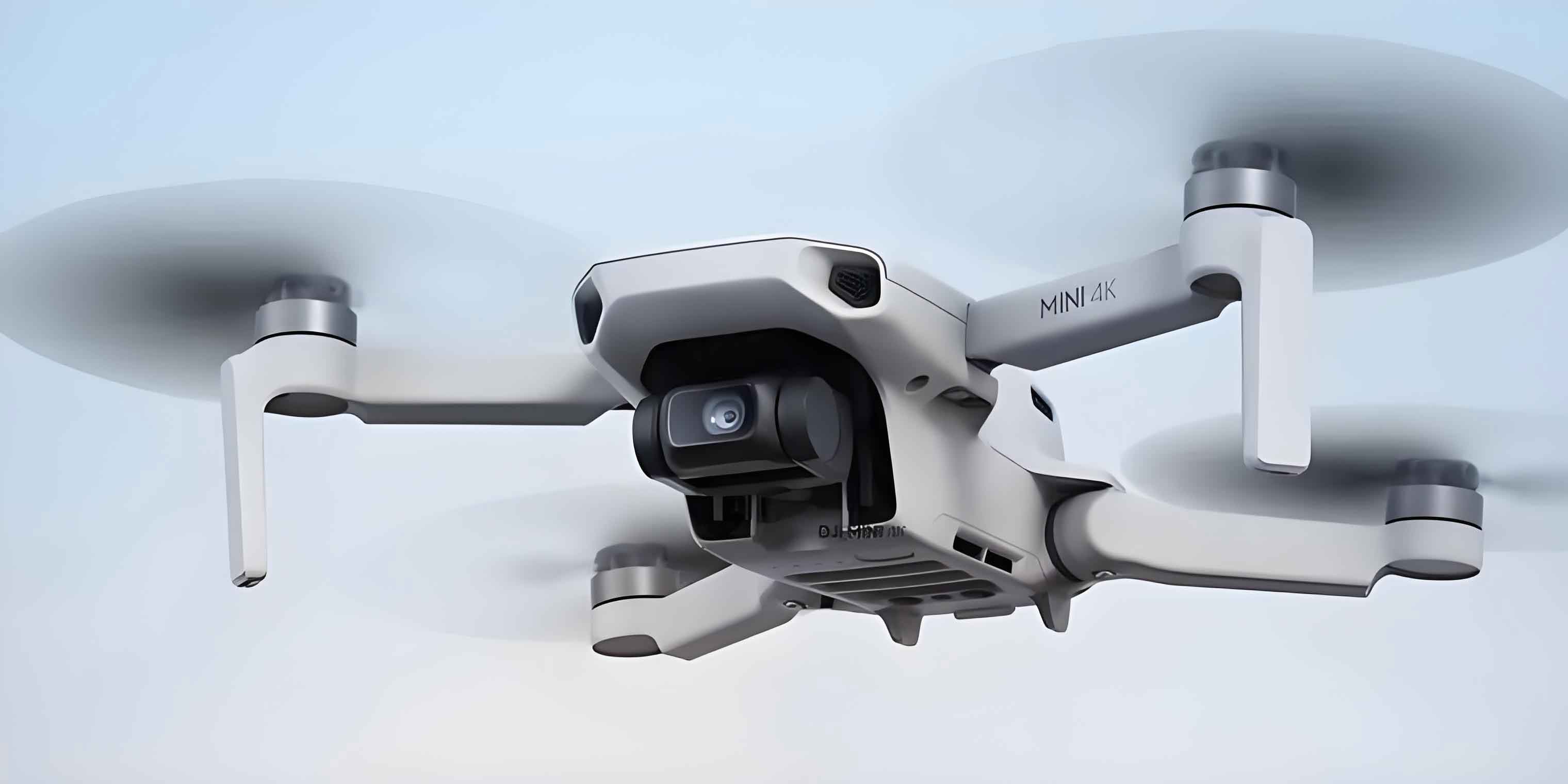
1. Research Background
In recent years, the rapid development of wireless communication technologies has fundamentally transformed the way we live and interact. From the emergence of artificial intelligence and cloud computing to the proliferation of smart devices, the demand for seamless connectivity has grown exponentially. As we transition toward the sixth-generation (6G) communication networks, the need for extreme flexibility, higher data rates, lower latency, and massive connectivity has become paramount. Traditional terrestrial communication infrastructures, while effective, struggle to meet these challenging demands in many scenarios, particularly in remote areas, disaster-stricken zones, or temporarily crowded events.
This is where unmanned aerial vehicles (UAVs) emerge as a transformative solution in wireless communications. With their unique characteristics such as cost-effectiveness, flexible deployment, and superior air-to-ground line-of-sight (LoS) communication links, unmanned aerial vehicles have the potential to significantly expand the coverage and enhance the capacity of wireless networks. Their high altitude provides a distinct advantage over terrestrial base stations by enabling reliable LoS connections to ground users, which is critical for achieving long-distance high-performance transmission. Moreover, unmanned aerial vehicles can be dynamically positioned to adapt to changing channel conditions, making them ideal for serving as aerial base stations, relay nodes, or data collection platforms.
The integration of unmanned aerial vehicles into wireless networks brings forth both opportunities and challenges. On one hand, their rapid deployment capability makes them invaluable in emergency scenarios such as natural disasters where existing infrastructure may be damaged. On the other hand, the energy constraints of unmanned aerial vehicles pose significant limitations given their low-power nature. This necessitates the development of energy-efficient communication techniques that can maximize spectral efficiency while minimizing power consumption. Furthermore, the jitter effects experienced by unmanned aerial vehicles during actual flight introduce unavoidable channel estimation errors, which can severely degrade communication quality and reliability. Addressing these challenges requires sophisticated approaches that combine advanced multiple access technologies with robust signal processing techniques.
| Type | Characteristics | Advantages | Typical Applications |
|---|---|---|---|
| Fixed-wing | Aircraft-like design; produces lift via fixed wings | High cruise speed; long endurance | Large-scale mapping; military reconnaissance; agriculture |
| Rotary-wing | Helicopter or multi-rotor; vertical takeoff/landing | High flexibility; hover capability; works in confined spaces | Search and rescue; urban surveillance; infrastructure inspection |
| High Altitude Platform (HAP) | Deployed above 17 km; near stationary | Wide coverage; long operational duration | Persistent surveillance; broadband relay |
| Low Altitude Platform (LAP) | Deployed from tens of meters to several kilometers | Rapid deployment; low cost; high maneuverability | Temporary hot spots; emergency response |
2. Related Technologies
2.1 UAV Communication Techniques
Unmanned aerial vehicles leverage various communication technologies based on their network architecture and mission requirements. The communication system typically comprises control links, which ensure the safe operation of the UAV system by transmitting control commands and status information, and data links, which provide mission-related data transmission services. The channel characteristics vary significantly between UAV-to-ground and UAV-to-UAV links, with the latter exhibiting predominantly LoS propagation characteristics. Modern UAV communication systems are exploring the integration of 6G technologies to achieve higher data rates, lower latency, and more reliable connections.
2.2 Rate-Splitting Multiple Access Technology
The evolution of multiple access technologies has witnessed several generations of development, from Frequency Division Multiple Access (FDMA) in the first generation, through Time Division Multiple Access (TDMA) and Code Division Multiple Access (CDMA), to today’s advanced schemes. The key difference between rate-splitting multiple access (RSMA) and previous approaches lies in how interference is managed. In space division multiple access (SDMA), interference is completely treated as noise, while non-orthogonal multiple access (NOMA) attempts to fully decode interference at the cost of increased complexity. RSMA provides a balanced approach by splitting user messages into common and private parts. The common part is encoded into a single stream that can be decoded by multiple users, while private parts are encoded separately for individual users. This approach enables a smooth transition between full interference decoding and treating interference as noise, offering greater flexibility and robustness.
For the RSMA-based downlink transmission, the transmit signal can be expressed as
$$
\mathbf{x} = \mathbf{w}_c s_c + \sum_{m=1}^{M} \mathbf{w}_m s_{p,m}
$$
where \(\mathbf{w}_c \in \mathbb{C}^{N \times 1}\) and \(\mathbf{w}_m \in \mathbb{C}^{N \times 1}\) are the beamforming vectors for the common signal \(s_c\) and the private signal \(s_{p,m}\) of user \(m\), respectively. Each user first decodes the common signal by treating all private signals as noise, then cancels it using Successive Interference Cancellation (SIC), and finally decodes its intended private signal by treating the remaining private signals as noise.
2.3 Physical Layer Security
The broadcast nature of wireless channels makes UAV communications particularly vulnerable to security threats. While traditional cryptographic methods provide some protection, the rapid advancement in computing power, especially quantum computing, challenges their effectiveness. Physical Layer Security (PLS) exploits the stochastic characteristics of wireless channels to achieve secure communication without relying on complex encryption algorithms. The secrecy capacity, defined as the difference between the main channel capacity and the eavesdropper channel capacity, serves as a key metric for evaluating security performance. In the context of unmanned aerial vehicles, PLS is especially promising due to the inherent randomness of air-to-ground channels and the possibility of leveraging UAV mobility and beamforming techniques to enhance security.
2.4 Robust Beamforming Techniques
Robust beamforming is essential for maintaining reliable communication in practical systems where Channel State Information (CSI) is imperfect. Two primary categories of error models are widely studied: deterministic error models where CSI errors are bounded within a known set, and probabilistic error models where errors follow a specific statistical distribution, often Gaussian. The former leads to worst-case robust designs, which are highly conservative but guarantee performance under all possible error realizations. The latter enables outage-based designs that provide probabilistic performance guarantees. For unmanned aerial vehicles, the jitter-induced angle errors make robust beamforming particularly challenging yet necessary to ensure quality of service (QoS) requirements are met.
3. Energy Minimization Design with RSMA Under UAV Jitter
In this section, I investigate the downlink transmission scenario where a multi-rotor UAV serves multiple ground users using RSMA protocol, while considering the angle errors induced by UAV jitter. The system model is illustrated conceptually below.
3.1 System Model
Consider a UAV equipped with a Uniform Linear Array (ULA) of \(N\) antenna elements serving \(M\) single-antenna ground users. The channel vector between the UAV and user \(m\) can be expressed as
$$
\mathbf{h}_m = \sqrt{\eta} d_m^{-2} \mathbf{a}_m
$$
where \(\eta = \left(\frac{c}{4\pi f_c}\right)^2\), \(d_m = \|\mathbf{q}_m – \mathbf{q}_u\|_2\), and \(\mathbf{a}_m \in \mathbb{C}^{N \times 1}\) is the array response vector at the signal direction angle \(\theta_m\):
$$
\mathbf{a}_m = \left[1, e^{-j\pi \cos(\theta_m)}, \ldots, e^{-j\pi (N-1) \cos(\theta_m)}\right]^T
$$
Due to UAV jitter, the actual direction angle can be modeled as \(\theta_m = \bar{\theta}_m + \Delta\theta_m\), where \(\bar{\theta}_m\) is the estimated angle and \(\Delta\theta_m\) represents the angle error.
3.2 Problem Formulation for Elliptic Angle Error Model (EAEM)
For the elliptic angle error model, the angle error is bounded by \(\|\Delta\theta_m\|^2 \leq \varepsilon_m^2\). The optimization problem for minimizing total transmit power while maintaining QoS constraints can be formulated as
$$
\begin{aligned}
\min_{\mathbf{w}_c, \mathbf{w}_m} \quad & \sum_{m=1}^{M} \left( \|\mathbf{w}_c\|^2 + \|\mathbf{w}_m\|^2 \right) \\
\text{s.t.} \quad & R_{c,m} \geq R_{c,m}^{\text{th}}, \quad \forall \Delta\theta_m, \; \forall m \\
& R_{p,m} \geq R_{p,m}^{\text{th}}, \quad \forall \Delta\theta_m, \; \forall m
\end{aligned}
$$
where \(R_{c,m}\) and \(R_{p,m}\) are the achievable common and private rates for user \(m\), with \(R_{c,m}^{\text{th}}\) and \(R_{p,m}^{\text{th}}\) being the corresponding rate thresholds.
3.3 Problem Transformation and Solution
To handle the infinitely many constraints due to continuous angle errors, I first reformulate the problem using rank-relaxed matrices \(\mathbf{W}_c = \mathbf{w}_c \mathbf{w}_c^H\) and \(\mathbf{W}_m = \mathbf{w}_m \mathbf{w}_m^H\). The key challenge lies in handling the beamforming gain expressions \(\mathbf{a}_m^H \mathbf{W} \mathbf{a}_m\), which are nonlinear functions of the angle error \(\Delta\theta_m\). To address this, I employ a Second-Order Taylor Series Expansion (STSE) approach to approximate the beamforming gain as a quadratic function of \(\Delta\theta_m\):
$$
\mathbf{a}_m^H \mathbf{W} \mathbf{a}_m \approx p \Delta\theta_m^2 + q \Delta\theta_m + r
$$
The coefficients in this approximation are derived from the partial derivatives of the array response vector with respect to the angle. Let me define the derivative vectors as follows:
$$
\mathbf{f} = \left[0, -j\pi\sin(\theta_m), \ldots, -j\pi(N-1)\sin(\theta_m)\right]^T
$$
$$
\mathbf{g} = \left[0, -\pi^2\cos(\theta_m), \ldots, -\pi^2(N-1)^2\cos(\theta_m)\right]^T
$$
The coefficients can then be expressed as:
$$
p = \mathbf{f}^H \mathbf{A} \mathbf{f} + \Re\{\mathbf{f}^H \mathbf{L}(\mathbf{B}) \mathbf{f}\}, \quad q = \mathbf{f}^H \mathbf{B} \mathbf{f}, \quad r = \sum_{k,l} [\mathbf{Z}]_{k,l}
$$
where \(\mathbf{Z} = \mathbf{W} \odot \mathbf{M}\), and the mapping functions are defined for linear algebra operations.
| Parameter Symbol | Description | Value |
|---|---|---|
| \(N\) | Number of ULA antennas | 8 |
| \(h_u\) | UAV flight height | 100 m |
| \(f_c\) | Carrier center frequency | 2 GHz |
| \(\varepsilon_m\) | Angle error bound | \(1^\circ\) |
| \(\sigma_m^2\) | Noise power | -110 dBm |
With the STSE approximation, the constraints become quadratic inequalities involving the angle error \(\Delta\theta_m\). Using S-Procedure, I transform these infinitely many constraints into linear matrix inequalities (LMIs), which can be efficiently handled by standard convex optimization solvers.
Lemma 1 (S-Procedure): For matrices \(\mathbf{A}_1, \mathbf{A}_2 \in \mathbb{C}^{N \times N}\), vectors \(\mathbf{b}_1, \mathbf{b}_2 \in \mathbb{C}^{N \times 1}\), and scalars \(c_1, c_2 \in \mathbb{C}\), the implication
\(\mathbf{x}^H \mathbf{A}_1 \mathbf{x} + 2\Re\{\mathbf{b}_1^H \mathbf{x}\} + c_1 \leq 0 \Rightarrow \mathbf{x}^H \mathbf{A}_2 \mathbf{x} + 2\Re\{\mathbf{b}_2^H \mathbf{x}\} + c_2 \leq 0\)
holds if and only if there exists \(\delta \geq 0\) such that
$$
\delta \begin{bmatrix} \mathbf{A}_1 & \mathbf{b}_1 \\ \mathbf{b}_1^H & c_1 \end{bmatrix} – \begin{bmatrix} \mathbf{A}_2 & \mathbf{b}_2 \\ \mathbf{b}_2^H & c_2 \end{bmatrix} \succeq \mathbf{0}
$$
After applying S-Procedure, the rank-one constraints are handled using a penalty-based approach. The penalty function exploits the property that for any positive semidefinite matrix \(\mathbf{W}\), \(\text{rank}(\mathbf{W}) = 1\) is equivalent to \(\text{Tr}(\mathbf{W}) – \lambda_{\max}(\mathbf{W}) = 0\), where \(\lambda_{\max}(\mathbf{W})\) denotes the maximum eigenvalue. Since \(\lambda_{\max}(\mathbf{W})\) is a convex function, I apply its first-order Taylor expansion to obtain a convex surrogate:
$$
\lambda_{\max}(\mathbf{W}) \geq \lambda_{\max}(\mathbf{W}^{(i)}) + \Re\{\mathbf{u}_{\max}^H(\mathbf{W}^{(i)}) \mathbf{W} \mathbf{u}_{\max}(\mathbf{W}^{(i)})\} – \lambda_{\max}(\mathbf{W}^{(i)})
$$
where \(\mathbf{u}_{\max}(\mathbf{W}^{(i)})\) is the eigenvector corresponding to the maximum eigenvalue of \(\mathbf{W}^{(i)}\) at the \(i\)-th iteration. The final convex optimization problem becomes:
$$
\begin{aligned}
\min_{\mathbf{W}_c, \mathbf{W}_m, \delta} \quad & \sum_{m=1}^{M} \left( \text{Tr}(\mathbf{W}_c) + \text{Tr}(\mathbf{W}_m) \right) + \mu \Phi(\mathbf{W}_c, \mathbf{W}_m) \\
\text{s.t.} \quad & \text{LMI constraints from S-Procedure}
\end{aligned}
$$
where \(\mu\) is the penalty factor and \(\Phi(\cdot)\) denotes the penalty function for rank-one relaxation.
3.4 Probabilistic Angle Error Model (PAEM)
Since the worst-case design based on the elliptic error model may be overly conservative due to rare extreme error realizations, I also consider a probabilistic angle error model where \(\Delta\theta_m\) follows a Gaussian distribution:
$$
\Delta\theta_m \sim \mathcal{N}(0, \zeta_m^2)
$$
The optimization problem includes outage probability constraints to provide probabilistic QoS guarantees:
$$
\Pr\left\{ \min_{m} R_{p,m} \geq R_{p,m}^{\text{th}} \right\} \geq 1 – \rho
$$
where \(\rho\) is the outage probability threshold. To handle these probabilistic constraints, I utilize the Bernstein-type Inequality, which provides a tractable conservative approximation for chance constraints involving quadratic forms of Gaussian random vectors.
Lemma 2 (Bernstein-type Inequality): For a function \(f(\mathbf{x}) = \mathbf{x}^H \mathbf{A} \mathbf{x} + 2\Re\{\mathbf{x}^H \mathbf{b}\} + c\) where \(\mathbf{x} \sim \mathcal{N}(\mathbf{0}, \mathbf{I})\), the probability constraint \(\Pr\{f(\mathbf{x}) \geq 0\} \geq 1 – \rho\) is guaranteed by the following conditions:
$$
\begin{aligned}
\text{Tr}(\mathbf{A}) – \sqrt{2\ln(1/\rho)} \|\text{vec}(\mathbf{A})\|_2 – \ln(1/\rho) a^+ + c &\geq 0 \\
\|\mathbf{A}\|_2 &\leq \upsilon \\
\upsilon \mathbf{I} + \mathbf{A} &\succeq \mathbf{0}
\end{aligned}
$$
where \(\upsilon \geq 0\) is a slack variable and \(a^+ = \max(\lambda_{\max}(\mathbf{A}), 0)\).
After applying the Bernstein-type Inequality, the probabilistic constraints are converted into a set of LMIs and Second-Order Cone (SOC) constraints, which can be jointly solved with the objective function using convex optimization tools such as CVX.
3.5 Complexity Analysis
The computational complexity of the proposed algorithms depends on the number of variables, iterations, and constraint types. For the EAEM-RSMA design, the complexity is given by:
$$
\mathcal{O}\left(4M (N+M) \left(16(N+M)^2 + 8(N+M) + 1\right) \ln(1/\epsilon)\right)
$$
For the PAEM-RSMA design, the complexity is:
$$
\mathcal{O}\left(10M n \left(n^2 + 20M n + 7M\right) \ln(1/\epsilon)\right)
$$
where \(n = N(M+1)\) reflects the influence of the number of users on the problem size.
3.6 Simulation Results and Analysis
The simulation results demonstrate the effectiveness of the proposed robust beamforming designs. I generated 2000 random angle error samples to validate the performance of the robust designs under both error models.
| Scheme | Private Rate Constraint Satisfaction Rate | Public Rate Constraint Satisfaction Rate | Transmit Power (dBm) |
|---|---|---|---|
| EAEM-RSMA (Robust) | ~100% | ~100% | 7-10 |
| PAEM-RSMA (Robust) | >90% | >90% | 5-8 |
| Non-Robust RSMA | <50% | <50% | 3-5 |
From the results, I observe that the PAEM-RSMA robust scheme achieves the constraint satisfaction probability exceeding 90%, significantly outperforming the non-robust baseline. The EAEM-RSMA scheme provides near-certain satisfaction of QoS constraints but requires slightly more transmit power due to the worst-case nature of the design. Both robust schemes maintain lower transmit power compared to benchmark schemes while guaranteeing user quality of service requirements.
4. Secrecy Capacity Maximization with RSMA Under UAV Jitter
In this section, I extend my research to address security concerns in UAV-assisted communications. I consider a scenario where a UAV uses Uniform Planar Array (UPA) to serve legitimate ground users while an eavesdropper attempts to intercept the confidential information.
4.1 System Model with Eavesdropper
The UAV is equipped with a UPA of \(N_x \times N_y = K\) antenna elements, serving \(M\) legitimate users and coexisting with one eavesdropper. The channel from the UAV to user \(m\) and the eavesdropper can be expressed as:
$$
\mathbf{h}_m = \sqrt{\eta} d_m^{-2} \mathbf{a}_m, \quad \mathbf{h}_e = \sqrt{\eta} d_e^{-2} \mathbf{a}_e
$$
For the UPA with the horizontal and vertical element spacing of half-wavelength, the array response vector at the azimuth angle \(\phi_i\) and elevation angle \(\theta_i\) is:
$$
\mathbf{a}_i = \left[1, e^{j\pi(n_x-1)\sin\theta_i \cos\phi_i} e^{j\pi(n_y-1)\sin\theta_i \sin\phi_i}, \ldots, e^{j\pi(N_x-1)\sin\theta_i \cos\phi_i} e^{j\pi(N_y-1)\sin\theta_i \sin\phi_i}\right]^T
$$
The angle error vector for user/evolving node \(i\) is defined as:
$$
\Delta\mathbf{e}_i = \left[\Delta\theta_i, \Delta\phi_i\right]^T, \quad \|\Delta\mathbf{e}_i\|^2 \leq \varepsilon_i^2
$$
where \(\varepsilon_i\) is the angle error bound and \(\Delta\theta_i, \Delta\phi_i\) are the elevation and azimuth angle errors, respectively.
4.2 Problem Formulation
With the presence of an eavesdropper, the achievable secrecy rates for the common and private signals of user \(m\) are:
$$
R_{c,m}^{\text{sec}} = R_{c,m} – R_{c,e}, \quad R_{m}^{\text{sec}} = R_{m} – R_{m,e}
$$
The total secrecy rate for user \(m\) is \(R_m^{\text{sec,tot}} = R_{c,m}^{\text{sec}} + R_{m}^{\text{sec}}\). The objective is to maximize the minimum achievable secrecy rate among all legitimate users:
$$
\begin{aligned}
\max_{\mathbf{w}_c, \mathbf{w}_m} \quad & \min_{m} \; R_m^{\text{sec,tot}} \\
\text{s.t.} \quad & R_{c,m}^{\text{sec}} \geq R_{c,m}^{\text{th}}, \quad \forall \Delta\mathbf{e}_m, \; \forall m \\
& \sum_{m=1}^{M} \left( \|\mathbf{w}_c\|^2 + \|\mathbf{w}_m\|^2 \right) \leq P_{\max}
\end{aligned}
$$
4.3 Two-Stage Iterative Algorithm
To solve this complex non-convex problem, I decompose it into a two-stage iterative algorithm. The outer stage employs the bisection method to search for the optimal secrecy rate value, while the inner stage solves a power minimization problem for a given secrecy rate target.
Outer Problem: The outer optimization problem is formulated as:
$$
\begin{aligned}
\max_{C_P} \quad & C_P \\
\text{s.t.} \quad & \min_{m} \; (R_m – R_{m,e}) \geq C_P
\end{aligned}
$$
The lower and upper bounds for the bisection search are:
$$
C_P^{\min} = \min_{m} \left[ \log_2\left(1 + \frac{\sigma_m^2}{\|\mathbf{h}_e\|^2}\right) \right], \quad C_P^{\max} = \min_{m} \left[ \log_2\left(1 + \frac{\|\mathbf{h}_m\|^2}{\sigma_m^2}\right) \right]
$$
Inner Problem: For a fixed secrecy rate target \(C_P\), the inner power minimization problem is:
$$
\begin{aligned}
\min_{\mathbf{W}_c, \mathbf{W}_m} \quad & \sum_{m=1}^{M} \left( \text{Tr}(\mathbf{W}_c) + \text{Tr}(\mathbf{W}_m) \right) \\
\text{s.t.} \quad & R_{c,m} – R_{c,e} \geq R_{c,m}^{\text{th}}, \quad \forall \Delta\mathbf{e}_m, \; \forall m \\
& R_m – R_{m,e} \geq C_P, \quad \forall \Delta\mathbf{e}_m, \; \forall m \\
& \text{(Rank-one constraints)}
\end{aligned}
$$
Since the rate expressions involve logarithms of SINRs, I introduce auxiliary variables to decompose the non-convex constraints into more tractable forms. For example, the constraint \(R_{c,m} – R_{c,e} \geq R_{c,m}^{\text{th}}\) can be decomposed into:
| Constraint | Decomposed Form |
|---|---|
| Logarithmic constraint | \(\ln(1+f_{c,m}) – \ln(1+g_{c,m}) + \ln(1+s_{c,m}) – \ln(1+t_{c,m}) \geq \ln(2) R_{c,m}^{\text{th}}\) |
| Lower bound for \(f_{c,m}\) | \(\sum_{m=1}^{M} \|\mathbf{h}_m^H \mathbf{w}_m\|^2 + \|\mathbf{h}_m^H \mathbf{w}_c\|^2 + \sigma_m^2 \geq f_{c,m}\) |
| Upper bound for \(g_{c,m}\) | \(\sum_{m=1}^{M} \|\mathbf{h}_e^H \mathbf{w}_m\|^2 + \|\mathbf{h}_e^H \mathbf{w}_c\|^2 + \sigma_m^2 \leq g_{c,m}\) |
| Upper bound for \(s_{c,m}\) | \(\sum_{m=1}^{M} \|\mathbf{h}_m^H \mathbf{w}_m\|^2 + \sigma_m^2 \leq s_{c,m}\) |
| Lower bound for \(t_{c,m}\) | \(\sum_{m=1}^{M} \|\mathbf{h}_e^H \mathbf{w}_m\|^2 + \sigma_m^2 \geq t_{c,m}\) |
For the non-convex logarithmic constraints, I apply the first-order Taylor series approximation:
$$
\ln(1+x) \approx \ln(1+x^{(i)}) + \frac{x – x^{(i)}}{1 + x^{(i)}}
$$
This converts the logarithmic constraints into linear constraints. For the channel gain expressions with angle uncertainty, I extend the STSE approach to the two-dimensional angle case (elevation and azimuth). The beamforming gain is approximated as a quadratic form of the angle error vector:
$$
\mathbf{a}_i^H \mathbf{W} \mathbf{a}_i \approx \Delta\mathbf{e}_i^T \mathbf{P}_{j,i} \Delta\mathbf{e}_i + \mathbf{Q}_{j,i}^T \Delta\mathbf{e}_i + r_{j,i}
$$
with the coefficient matrices derived from the gradients of the array response with respect to both elevation and azimuth angles.
The infinite constraints for all possible angle errors are then handled using S-Procedure, which transforms them into a set of LMIs:
$$
\begin{bmatrix}
\delta_{j,i} \mathbf{I} – \mathbf{P}_{j,i} & -\frac{1}{2}\mathbf{Q}_{j,i} \\
-\frac{1}{2}\mathbf{Q}_{j,i}^T & \delta_{j,i} \varepsilon_i^2 – r_{j,i} + \text{const}
\end{bmatrix} \succeq \mathbf{0}
$$
Finally, the rank-one constraints are handled through the penalty method with first-order Taylor approximation of the maximum eigenvalue function.
| Step | Operation |
|---|---|
| 1 | Input: \(\mathbf{h}_m, \mathbf{h}_e, R_{c,m}^{\text{th}}, P_{\max}\); set convergence coefficient \(\epsilon \geq 0\); |
| 2 | Initialize \(C_P^{\min}, C_P^{\max}\); while \(C_P^{\max} – C_P^{\min} \geq \epsilon\), execute Step 3; |
| 3 | Set \(C_P^{\text{mid}} = (C_P^{\min} + C_P^{\max})/2\); check feasibility of (4.20); |
| 4 | If feasible: solve (4.20) to obtain \(\mathbf{W}_c, \mathbf{W}_m\); check power constraint; If satisfied, \(C_P^{\min} = C_P^{\text{mid}}\); otherwise \(C_P^{\max} = C_P^{\text{mid}}\); |
| 5 | Repeat until convergence; output final beamforming matrices. |
4.4 Simulation Results
I conducted extensive simulations to validate the performance of the proposed secrecy capacity maximization scheme. The simulation parameters are summarized below.
| Parameter | Value |
|---|---|
| UPA antenna elements \(N_x \times N_y\) | 6 × 6 |
| Number of users \(M\) | 3 |
| Elevation angles \(\theta_m\) | 20°, 40°, 65° |
| Azimuth angles \(\phi_m\) | 95°, 140°, 210° |
| Eavesdropper angles \((\theta_e, \phi_e)\) | (50°, 60°) |
| Angle error bound \(\varepsilon_m\) | \(2^\circ\) |
I first verified the accuracy of the STSE approximation for the two-dimensional UPA array response. The approximation error was evaluated at different angle error bounds, as summarized in Table 7.
| Error Bound \(\varepsilon\) | Maximum Approximation Error | Typical Error Range |
|---|---|---|
| 1° | ~10⁻³ | ±0.001 |
| 5° | ~10⁻² | ±0.01 |
| 9° | ~0.1 | ±0.05 |
The beamforming patterns showed that the common signal beamformer directs its main lobe toward all legitimate users’ locations, while the private signal beamformer for each user directs its main lobe toward the intended user and places nulls toward the eavesdropper, achieving more than 20 dB attenuation at the eavesdropper location.
The performance comparison of average secrecy capacity versus maximum transmit power is shown in Table 8.
| P_max (dBm) | Robust RSMA | Non-Robust RSMA | Robust SDMA | Robust NOMA |
|---|---|---|---|---|
| 0 | 1.95 | 1.72 | 1.45 | 1.12 |
| 5 | 2.48 | 2.10 | 1.84 | 1.41 |
| 10 | 3.02 | 2.48 | 2.16 | 1.68 |
| 15 | 3.55 | 2.86 | 2.47 | 1.95 |
The results demonstrate that the robust RSMA design achieves superior secrecy performance compared to non-robust RSMA and other benchmark schemes. The robust design maintains the advantage across different power budgets, confirming its effectiveness in supporting secure communications for unmanned aerial vehicles under jitter conditions.
5. Conclusions and Future Work
In this research, I have investigated robust beamforming designs that integrate rate-splitting multiple access for unmanned aerial vehicles in jitter scenarios. The main contributions are summarized as follows:
First, I considered the multi-user downlink scenario with unmanned aerial vehicles and addressed the angle errors induced by jitter during actual flight. I established both elliptic and probabilistic angle error models based on uniform linear arrays, constructed power minimization problems with common and private rate constraints, and proposed a second-order Taylor series expansion approach to approximate the signal beamforming gain. The proposed method effectively reduces computational complexity while preserving acceptable solution performance. I employed S-Procedure and Bernstein-type Inequality to handle the infinite constraints, combined with penalty functions to obtain the optimal solution. Simulation results demonstrated that the proposed robust beamforming algorithm can effectively reduce system energy consumption while guaranteeing user QoS.
Second, considering the presence of an eavesdropper, I designed robust secure beamforming for the multi-user downlink scenario. The UAV was equipped with a uniform planar array, and an angle error model with azimuth and elevation angle errors was established. I formulated a secrecy capacity maximization problem and developed a two-stage iterative algorithm. The outer problem employed a bisection search to obtain effective user rate values, while the inner problem used second-order Taylor expansion to achieve a simpler, more tractable form. S-Procedure was used to process infinite inequality constraints, and the penalty method was combined to solve the problem optimally. Simulation results confirmed the effectiveness and superior security performance of the proposed design.
For future research, several directions deserve further exploration. The current study assumes a stationary UAV; extending the design to scenarios with moving unmanned aerial vehicles and jointly optimizing trajectories and beamforming would be valuable. The investigation of trade-offs between transmit power minimization and secrecy capacity maximization could provide insights for adaptive system design. More complex integrated satellite-air-ground networks with RSMA present new opportunities and challenges. The extension to secure designs under probabilistic angle error models for the secrecy capacity objective remains an open problem. The application of hybrid beamforming techniques to balance hardware complexity and spectral efficiency for unmanned aerial vehicles with large antenna arrays is also a promising avenue for future work.