
Unmanned aerial vehicles (UAVs) have become an essential component across various industries, including logistics, agriculture, surveillance, and mapping. The rapid proliferation of these aircraft, particularly in urban residential environments, has raised significant concerns regarding aerodynamic noise pollution. This issue represents a critical barrier to the widespread adoption and integration of UAVs into low-altitude economic activities. In my research, I employ numerical simulation methods to systematically investigate the aerodynamic noise generation mechanisms and electrical power consumption characteristics of unmanned aerial vehicles. I focus on understanding how rotor configurations and payload conditions affect both the acoustic signature and the energy efficiency of these aircraft.
The primary objective of my work is to develop a comprehensive computational framework that can accurately predict both aerodynamic performance and far-field noise radiation from UAV rotors. To achieve this, I implement a hybrid computational methodology that couples the high-fidelity Detached Eddy Simulation (DES) approach for flow field resolution with the Ffowcs Williams-Hawkings (FWH) acoustic analogy for far-field noise prediction. This combination allows me to capture the complex turbulent structures responsible for noise generation while maintaining computational efficiency suitable for engineering design applications.
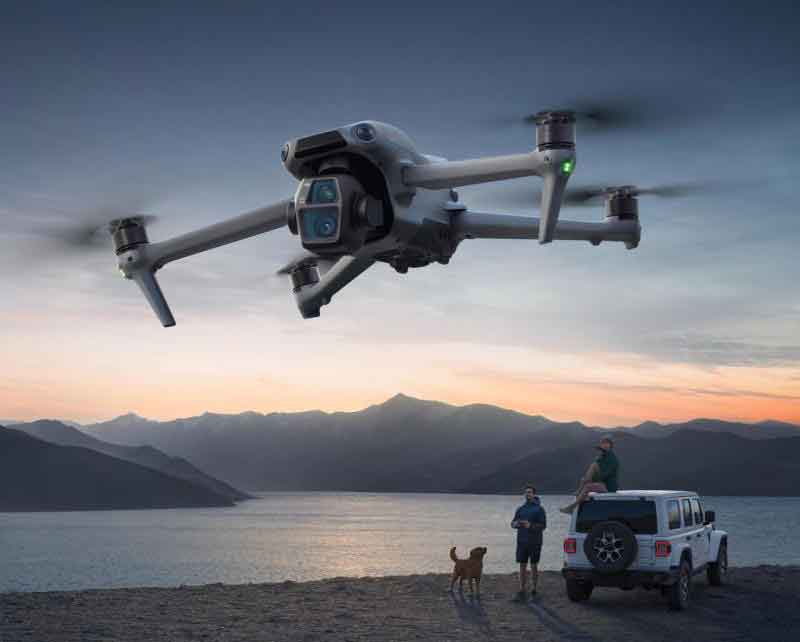
Introduction and Motivation
Unmanned aerial vehicles have transitioned from specialized military tools to ubiquitous civilian devices. Their versatility and operational efficiency make them invaluable for tasks ranging from package delivery to environmental monitoring. However, this widespread adoption introduces new challenges, particularly concerning noise emissions. The rotating blades of UAVs produce both tonal and broadband noise components that contribute to overall sound pressure levels. Tonal noise arises from periodic blade passage, while broadband noise results from turbulence interactions with the rotor blades. Understanding these acoustic mechanisms is essential for designing quieter UAVs that can gain regulatory approval and community acceptance.
Public anxiety regarding UAV noise has prompted regulatory bodies, including the Federal Aviation Administration and the European Union Aviation Safety Agency, to establish noise certification criteria. The sustainable growth of the UAV industry depends on developing accurate noise prediction models and effective mitigation strategies. Researchers have dedicated substantial effort to understanding rotor noise, but the complexity of rotor-environment interactions demands sophisticated numerical approaches. My research addresses these challenges by applying advanced computational techniques to study both aerodynamic performance and resulting acoustic emissions.
Review of Existing Methods
Experimental Approaches
Experimental methodologies have provided foundational knowledge about UAV rotor noise. Wind tunnel tests offer controlled environments where researchers can systematically vary rotor geometry, blade pitch, and airflow conditions. Field measurements complement these controlled experiments by capturing noise characteristics in realistic operating environments. Schäffer and colleagues conducted extensive wind tunnel experiments that identified how rotor geometry influences tonal noise production. However, these experimental methods carry substantial financial and logistical constraints. Testing facilities require significant investment, and real-world measurements face challenges from uncontrollable environmental variables such as wind velocity and background noise. Furthermore, experimental approaches struggle to isolate individual noise-generating mechanisms without sophisticated instrumentation.
Empirical Models
Empirical models have been developed to provide rapid noise predictions based on regression analysis of experimental data. These models relate acoustic emissions to essential design parameters, such as rotor diameter, blade tip speed, and operational altitude. Dimensionless parameters, including the Strouhal number and Reynolds number, enable generalized predictions across different operating conditions. Equation (1) defines the Strouhal number as:
$$St = \frac{fD}{V} \tag{1}$$
where f is the frequency of interest, D is the rotor diameter, and V is the flow velocity. Empirical models offer computational efficiency, making them useful for preliminary design screening. However, these models are limited by their underlying datasets and often fail to generalize to novel configurations. They also lack the ability to capture complex turbulence-noise interaction mechanisms.
Computational Approaches
Numerical methods have emerged as powerful tools for UAV noise analysis. Reynolds-Averaged Navier-Stokes (RANS) models provide computationally efficient steady-state solutions, making them suitable for preliminary design studies. However, RANS models oversimplify turbulence in rotor wakes, leading to inaccurate noise predictions. Large Eddy Simulation (LES) resolves larger turbulent structures directly, offering improved fidelity for noise prediction. The computational cost of LES, particularly at Reynolds numbers typical of UAV rotors, restricts its practical application. Direct Numerical Simulation (DNS) provides the highest fidelity by resolving all turbulence scales, but its extreme computational cost limits its use to canonical test cases.
To address these limitations, hybrid approaches have been developed. Detached Eddy Simulation combines the strengths of RANS and LES, using RANS near walls where computational efficiency matters and LES in detached flow regions where turbulence resolution is critical. This hybrid method achieves improved accuracy over RANS while maintaining computational efficiency compared to full LES. Coupled with the Ffowcs Williams-Hawkings (FWH) acoustic analogy, DES provides a practical framework for UAV rotor noise prediction.
Mathematical Framework
Governing Equations for Detached Eddy Simulation
My methodology builds upon the fundamental equations of fluid dynamics. The continuity equation ensures mass conservation throughout the computational domain:
$$\frac{\partial \rho}{\partial t} + \nabla \cdot (\rho \mathbf{u}) = 0 \tag{2}$$
where ρ represents fluid density, t is time, and u is the velocity vector. The momentum equation governs the conservation of momentum and includes forces acting on the fluid:
$$\frac{\partial (\rho \mathbf{u})}{\partial t} + \nabla \cdot (\rho \mathbf{u} \otimes \mathbf{u}) = -\nabla p + \nabla \cdot \boldsymbol{\tau} + \rho \mathbf{f} \tag{3}$$
In this equation, p denotes pressure, τ represents the viscous stress tensor, and f accounts for body forces such as gravity. For RANS formulations, the time-averaged momentum equation introduces the Reynolds stress tensor that characterizes turbulence effects:
$$\frac{\partial (\rho \bar{\mathbf{u}})}{\partial t} + \nabla \cdot (\rho \bar{\mathbf{u}} \otimes \bar{\mathbf{u}}) = -\nabla p + \nabla \cdot \boldsymbol{\tau}_{RANS} + \rho \mathbf{f} \tag{4}$$
The turbulent kinetic energy equation describes how turbulence evolves in the flow field:
$$\frac{\partial (\rho k)}{\partial t} + \nabla \cdot (\rho \mathbf{u} k) = \nabla \cdot (\mu_T \nabla k) + P_k – \epsilon \tag{5}$$
Here, k is the turbulent kinetic energy, μ_T represents turbulent viscosity, P_k is turbulence production, and ϵ is the dissipation rate. In the LES region, filtering operations separate resolved and subgrid scales:
$$\bar{f} = \int_V f W(\mathbf{r} – \mathbf{r}’) dV \tag{6}$$
The Smagorinsky subgrid-scale model parameterizes unresolved turbulent stresses as:
$$\tau_{ij}^{SGS} = -2 \rho C_s^2 \Delta^2 \left( \frac{\partial \bar{u}_i}{\partial x_j} + \frac{\partial \bar{u}_j}{\partial x_i} \right) \tag{7}$$
The hybrid nature of DES is expressed through a combined momentum equation:
$$\frac{\partial (\rho \mathbf{u})}{\partial t} + \nabla \cdot (\rho \mathbf{u} \otimes \mathbf{u}) = -\nabla p + \nabla \cdot (\boldsymbol{\tau}_{RANS} + \boldsymbol{\tau}_{LES}) + \rho \mathbf{f} \tag{8}$$
The eddy viscosity model closes the RANS equations:
$$\nu_T = C_\mu \frac{k^2}{\epsilon} \tag{9}$$
The energy equation accounts for thermal transport and viscous dissipation:
$$\frac{\partial (\rho e)}{\partial t} + \nabla \cdot (\rho \mathbf{u} e) = \nabla \cdot (\kappa \nabla T) + \Phi + \rho \mathbf{f} \cdot \mathbf{u} \tag{10}$$
Ffowcs Williams-Hawkings Acoustic Analogy
The FWH acoustic analogy provides the mathematical foundation for predicting far-field noise from near-field flow data. This method extends Lighthill’s acoustic analogy to account for moving solid boundaries, making it particularly suitable for rotor noise applications. The governing FWH equation is:
$$\frac{\partial^2 p}{\partial t^2} – \nabla^2 p = \rho_0 \frac{\partial^2}{\partial t^2} \left[ \frac{1}{\rho_0} \mathbf{1}(\mathbf{f} \cdot \mathbf{n}) \right] \tag{11}$$
The noise sources are decomposed into monopole, dipole, and quadrupole components. The monopole source arises from volume displacement and compressibility effects:
$$p_{monopole} = \frac{1}{4\pi} \frac{\ddot{Q}}{r} \tag{12}$$
The dipole source dominates rotor noise and results from unsteady pressure distributions on blade surfaces:
$$p_{dipole} = \frac{1}{4\pi} \left[ \frac{\hat{\mathbf{n}} \cdot \mathbf{v}}{r} \right] \tag{13}$$
The quadrupole source accounts for turbulence-generated noise:
$$p_{quadrupole} = \frac{1}{4\pi r} \frac{\nabla \cdot \mathbf{v} \otimes \mathbf{v}}{r} \tag{14}$$
The far-field pressure radiated by the rotor is:
$$p_{far-field} = \frac{1}{4\pi r} \int_S \left( \hat{\mathbf{n}} \cdot \frac{\partial \mathbf{u}}{\partial t} \right) dA \tag{15}$$
The sound propagation equation links near-field fluctuations to far-field pressure:
$$p_{sound} = \frac{1}{\rho_0} \frac{\partial}{\partial t} \left( \frac{\mathbf{f} \cdot \mathbf{n}}{r} \right) \tag{16}$$
The total acoustic power radiated from the rotor is:
$$P = \int_S \mathbf{f} \cdot \mathbf{u} \, dA \tag{17}$$
The blade-passing frequency component, which contributes tonal noise, is expressed as:
$$p_{BPF} = \frac{\rho_0}{4\pi} \frac{\omega_{BPF}}{r^2} \tag{18}$$
Finally, the noise spectrum accounting for both blade motion and turbulent interactions is:
$$S(\omega) = \frac{1}{4\pi} \int_S \left[ \frac{\mathbf{f} \cdot \mathbf{v}}{r} \right] dA \tag{19}$$
Simulation Setup and Methodology
I conducted my simulations using ANSYS Fluent 2022 R1 on a high-performance workstation. The computational domain was divided into static and rotating regions, with a sliding mesh interface connecting them. This approach accurately simulates the rotational motion of the blades while allowing proper wake development in the static domain.
| Parameter | Value / Description |
|---|---|
| Software | ANSYS Fluent 2022 R1 |
| Processor | Intel Core i9-12900K |
| RAM | 64 GB |
| GPU | NVIDIA RTX 3080 |
| Operating System | Windows 10 Pro 64-bit |
| Turbulence Model | DES (k-ω SST based) |
| Acoustic Analogy | Ffowcs Williams-Hawkings |
| Rotational Speed | 8500 RPM |
| Convergence Criteria | Residual stabilization |
The boundary conditions were carefully specified to replicate real operating conditions. The inlet boundary was defined as a velocity inlet, allowing air to enter the computational domain. The outlet was set as a pressure outlet to permit free airflow exit. The rotor blades were modeled as stationary walls relative to the rotating domain, with no-slip boundary conditions to capture surface friction and pressure gradients. Symmetry planes were imposed on far-field boundaries to minimize reflections and ensure proper simulation of open-air environments.
The DES methodology combines RANS modeling in attached flow regions near the blade surfaces with LES in detached flow regions where large-scale turbulence dominates. A switching function controls the transition between these two turbulence models:
$$\text{Switching Function} = \min \left( 1, \frac{\Delta_v}{\Delta_{LES}} \right) \tag{20}$$
This function enables LES in regions of high turbulence, such as the rotor wake, while employing RANS near the blade surfaces where attached flow conditions prevail. The switching mechanism provides excellent resolution of wake turbulence while maintaining computational efficiency.
Single Rotor UAV Aerodynamics and Noise Simulation
Aerodynamic Performance
My analysis of the single-rotor UAV began with a comprehensive aerodynamic performance evaluation at 8500 RPM. The lift and torque curves exhibited significant increases compared to lower RPM conditions, reflecting the enhanced aerodynamic loading at higher rotational speeds. The pressure distribution across the rotor surfaces showed a clear gradient from hub to tip. The suction surface experienced high negative pressure near the leading edge, while the pressure surface displayed high positive pressure near the trailing edge. This pressure differential is the primary contributor to lift generation.
| Parameter | Value at 8500 RPM |
|---|---|
| Lift | 6.362 N |
| Torque | 0.099 N·m |
| Angular Velocity | 890.12 rad/s |
| Power Consumption | 88.11 W |
The electric power consumption was calculated using the relationship between torque and angular velocity:
$$P = T \times \omega \tag{21}$$
where the angular velocity is determined from the rotational speed:
$$\omega = \frac{2\pi \times RPM}{60} = \frac{2\pi \times 8500}{60} = 890.12 \text{ rad/s} \tag{22}$$
With a torque of 0.099 N·m, the single-rotor power consumption was:
$$P_{single} = 0.099 \times 890.12 = 88.11 \text{ W} \tag{23}$$
Flow Field Analysis
The pressure distribution within the rotating domain at various axial planes revealed the complex flow structures generated by the rotor. Higher pressure regions developed near the rotor tips, corresponding to areas of maximum lift generation. The velocity distribution showed uniform flow downstream of the rotor with distinct wake formation. The velocity magnitude decreased with increasing distance from the rotor, indicating kinetic energy dissipation in the wake region. The axial velocity distribution clearly showed the induced flow effects from rotor rotation, with maximum velocities concentrated near the rotor tips.
Acoustic Analysis
The noise characteristics at various monitoring points revealed a consistent pattern of tonal noise dominance at low frequencies and broadband noise increasing at higher frequencies. The 1/3 octave band analysis showed that the peak sound pressure level occurred at approximately 500 Hz, followed by a gradual decrease in sound pressure at higher frequencies. This frequency breakdown provides valuable insight into the noise generation mechanisms of the rotor.
| Monitoring Point | Sound Pressure Level (dB) |
|---|---|
| 1 | 77.8684 |
| 2 | 75.0846 |
| 3 | 72.8449 |
| 4 | 70.9673 |
| 5 | 69.5030 |
| 6 | 46.7105 |
The Q-criterion iso-surface visualization showed vortex shedding near the rotor tip, which contributes significantly to noise generation. This finding suggests that noise reduction strategies should focus on disrupting coherent vortex structures through blade shape optimization or the incorporation of serrated trailing edges.
Quad Rotor UAV Analysis
Configuration and Simulation Setup
Expanding from the single-rotor analysis, I investigated the aerodynamic and acoustic characteristics of a quadrotor UAV. This configuration introduces additional complexity due to rotors interacting with each other’s wakes. The quadrotor configuration included four rotors with adjacent rotors rotating in opposite directions. The computational domain contained four rotating regions and one stationary region. Each rotating region was meshed with approximately 1.6 million cells, providing detailed resolution of the flow near the rotor blades.
| Domain Component | Mesh Elements |
|---|---|
| Each Rotating Region | ≈ 1.6 million |
| Stationary Region | ≈ 4.83 million |
| Total | ≈ 6.52 million |
Aerodynamic Performance
The aerodynamic performance of the quadrotor at 8500 RPM demonstrated significant force generation across all rotors. The lift curves for each rotor showed a similar trend, with lift increasing proportionally with rotational speed. Maximum lift was observed near the rotor tips, consistent with the highest pressure differences between suction and pressure surfaces. The pressure distribution across the rotor blades revealed high positive pressure on the pressure surface and high negative pressure on the suction surface. The velocity field downstream of the rotors exhibited clear wake formation and complex interaction patterns between adjacent rotor wakes.
Electric Power Analysis
The torque requirements for the quadrotor configuration were substantially higher than the single-rotor case due to the combined aerodynamic loading from four rotors. Using the power calculation formula with an angular velocity of 890.12 rad/s:
$$P_{quad} = T \times \omega = 0.409 \times 890.12 = 364.01 \text{ W} \tag{24}$$
The total power consumption of 364.01 W for the quadrotor reflects the increased aerodynamic demands of multi-rotor configurations while maintaining the same rotational speed as the single-rotor case.
Acoustic Characteristics
The acoustic analysis of the quadrotor UAV revealed noise levels consistently higher than the single-rotor configuration. The quadrotor aerodynamic noise was more intense than the single-rotor case, particularly near individual rotors. This increased noise intensity results from the complex interactions between rotor wakes and the cumulative acoustic output from multiple rotor systems operating simultaneously.
| Configuration | Lift (N) | Torque (N·m) | Electric Power (W) |
|---|---|---|---|
| Single Rotor | 6.362 | 0.099 | 88.11 |
| Quad Rotor | 24.547 | 0.409 | 364.01 |
| Quad Rotor with Goods | 25.835 | 0.422 | 375.58 |
As the receiving points move progressively farther from the UAV, the aerodynamic noise values decrease steadily. This observation confirms the expected spatial decay of acoustic signals and provides valuable data for predicting noise impact in different operational scenarios. Importantly, the quadrotor noise intensity was greater than the single-rotor case, but notably not four times greater, indicating that sound waves from multiple rotors do not simply add linearly. This phenomenon arises from phase interactions and partial acoustic cancellation effects between rotors.
Case Study: Effects of Goods Delivery on UAV Aerodynamics and Acoustics
Motivation
Unmanned aerial vehicles are increasingly adopted for logistics and goods delivery in urban environments. While this application offers efficiency advantages, the added payload significantly influences both aerodynamic performance and acoustic emissions. Understanding these effects is essential for developing quiet and efficient UAV delivery systems that can operate within regulatory noise limits.
Computational Setup
I simulated a quadrotor UAV carrying a cargo box with dimensions of 506 mm × 506 mm × 480 mm. The rotors operated at 8500 RPM, maintaining consistency with the baseline quadrotor analysis. The computational mesh included four rotating regions with approximately 1.6 million cells each and one stationary region with approximately 4.18 million cells, for a total of about 10.61 million cells.
Aerodynamic Analysis
The presence of the cargo box introduced significant changes to the aerodynamic characteristics of the UAV. The payload created an asymmetry in the lift distribution, resulting in variations in rotor efficiency and stability. The flow characteristics around the payload exhibited increased drag and altered wake structures. The velocity field simulations demonstrated higher turbulence levels in the wake region of the payload compared to conventional quadrotors without this additional load. The pressure distributions revealed that the cargo box increased local pressure gradients, affecting overall aerodynamic efficiency.
Acoustic Analysis
The FWH acoustic analysis revealed that the addition of the cargo box amplified low-frequency noise due to wake interactions. The 1/3 octave band analysis showed that noise levels were primarily concentrated in the low-frequency range, with peak sound pressure levels occurring near rotor tip vortices and turbulence regions. Compared to the baseline quadrotor without a payload, the loaded configuration exhibited notably higher noise emissions.
| Monitoring Point | Single Rotor (dB) | Quad Rotor (dB) | Quad Rotor with Box (dB) |
|---|---|---|---|
| 1 | 77.8684 | 102.1790 | 103.8080 |
| 2 | 75.0846 | 100.3270 | 100.2310 |
| 3 | 72.8449 | 98.9389 | 98.0788 |
| 4 | 70.9673 | 97.5866 | 96.3697 |
| 5 | 69.5030 | 96.3568 | 94.9115 |
| 6 | 46.7105 | 74.7176 | 72.4137 |
At monitoring points closer to the UAV, the presence of the cargo box increased noise levels compared to the unloaded quadrotor. However, at positions farther from the UAV, the aerodynamic noise from the loaded configuration decreased more rapidly than the unloaded baseline. This observation indicates that the cargo-induced wake disturbances alter noise propagation characteristics, resulting in higher near-field noise but stronger far-field attenuation.
Electric Power Analysis
The electric power analysis provided compelling evidence of the payload impact on the energy requirements of the UAV. The torque measurements indicated that the cargo box added load to each rotor, requiring greater power input to maintain stable flight conditions. The power consumption calculations using the relationship P = T × ω showed:
$$P_{with\ goods} = T \times \omega = 0.422 \times 890.12 = 375.58 \text{ W} \tag{25}$$
Compared to the baseline quadrotor without a payload, the cargo box addition increased the total power consumption from 364.01 W to 375.58 W, representing a 3.17% increase. This quantitative finding highlights the direct impact of payload integration on the energy efficiency of the unmanned aerial vehicle system.
Discussion and Findings
Rotor Configuration Effects
My research systematically compared single-rotor and quadrotor configurations at identical rotational speeds. The quadrotor generated approximately four times the lift of the single-rotor configuration, confirming the expected scaling of aerodynamic forces with rotor count. However, the power consumption did not scale proportionally, indicating interactions between rotors that affect overall efficiency. The torque distribution across the four rotors showed minor variations, reflecting the asymmetric aerodynamic loading inherent to the quadrotor design.
Noise Generation Patterns
The acoustic measurements revealed distinctive patterns in noise generation across different configurations. The single-rotor UAV produced tonal noise dominated by blade-passing frequency components, with broadband contributions from turbulent interactions. The quadrotor configuration showed more intense noise signatures, though not linearly four times the single-rotor levels. The near-field noise increase observed with the cargo box suggests that wake disturbances from the payload enhance sound generation in the immediate vicinity of the UAV. Conversely, the far-field noise reduction observed at distant monitoring points indicates that the altered wake structure may enhance acoustic attenuation over longer propagation distances.
Power Consumption Implications
The electric power analysis revealed important trade-offs in UAV design. The 3.17% increase in power consumption with the cargo box reflects the additional aerodynamic demands imposed by the payload. This finding emphasizes the need for efficient propulsion systems and optimized aerodynamic configurations, particularly for commercial delivery applications where payload variations are common. The power requirements scale with both rotor count and payload weight, suggesting that lightweight materials and streamlined cargo designs can contribute to improved energy efficiency.
Implications for UAV Design and Operation
The results of my research provide several important implications for UAV design and operational strategy. First, the significant impact of payload on both noise emissions and power consumption highlights the need for aerodynamic optimization in delivery drone designs. Second, the observed noise patterns suggest that mitigation strategies should focus on disrupting coherent vortex structures near rotor tips and managing wake-turbulence interactions. Third, the computational framework based on DES and FWH offers a powerful tool for evaluating UAV noise characteristics without expensive experimental testing.
The trade-offs between UAV performance, noise emissions, and power consumption require careful optimization. Traditional noise reduction strategies, such as altering rotor geometry or varying operational parameters, may have cascading effects on energy efficiency. Achieving the optimal balance between these competing factors is essential as UAV applications expand into commercial use cases, including urban package delivery.
Conclusion
In conclusion, my comprehensive numerical simulation study of unmanned aerial vehicle rotor noise and electrical power consumption has yielded important insights into the aerodynamic and acoustic behavior of these aircraft. From the numerical simulation results, I obtained the electric power of the single-rotor UAV at 8500 rad/min as 88.11 W, the quadcopter UAV as 364.01 W, and the quadrotor UAV carrying goods as 375.58 W. The results demonstrate that the cargo shape alters the aerodynamic performance of the quadrotor, resulting in a 3.17% increase in electric power consumption, from 364.01 W to 375.58 W.
The aerodynamic noise analysis across all three configurations revealed consistent trends in sound propagation. As receiving points moved farther from the unmanned aerial vehicle, aerodynamic noise values decreased steadily. The quadrotor exhibited greater noise intensity than the single-rotor configuration, though the increase was not proportional to the rotor count. Quadrotors carrying goods showed increased aerodynamic noise in the near field but exhibited weaker far-field noise propagation.
These findings provide a solid theoretical foundation for future rotor blade design and aerodynamic noise assessment. The research contributes to promoting the development and application of low-altitude economic UAVs by providing engineers with the tools and understanding necessary to design quieter, more efficient aircraft. The computational framework established in this study offers a valuable resource for ongoing UAV optimization efforts.
Future Work
While my research provides valuable insights into UAV noise and power consumption, several areas warrant further investigation. The current study focused on steady-state conditions at a constant rotational speed of 8500 RPM. Future research should explore transient effects, including variable rotor speeds and maneuvering conditions, to capture a broader range of real-world operational scenarios.
The incorporation of environmental factors, such as atmospheric turbulence, urban obstructions, and ground effects, represents a significant opportunity for future work. These factors can substantially influence UAV noise propagation and aerodynamic performance, particularly in complex urban environments. Including these elements in simulation frameworks will improve the accuracy of noise prediction for realistic operational conditions.
Experimental validation of the computational models remains essential for establishing credibility. Wind tunnel tests and real-world flight experiments that measure UAV noise and aerodynamic performance under controlled conditions will strengthen confidence in the simulation results. Systematic comparison between numerical predictions and experimental measurements will enable refinement and calibration of the current models.
Finally, the optimization of UAV rotor and payload configurations presents an important direction for future research. The application of machine learning and multi-objective optimization algorithms holds promise for developing UAV designs that achieve simultaneous improvements in aerodynamic efficiency, energy consumption, and noise reduction. Such advancements will prove invaluable for commercial UAV applications where regulatory compliance and operational efficiency are critical considerations.
My research provides the foundation for continued advancements in UAV aerodynamics, acoustics, and energy efficiency. As unmanned aerial vehicle technology continues to evolve, sustained research in these areas will be essential to enhance the performance and sustainability of UAV operations across all sectors.