
In my research, I systematically investigate the interplay between migration dynamics and cooperation evolution in unmanned aerial vehicle (UAV) swarms. The motivation arises from the practical need to understand how adaptive speed regulation and directional alignment can stabilize cooperative behavior in distributed autonomous systems. Classical evolutionary game models often assume fixed migration rates or purely random motion, which fails to capture the sophisticated feedback loops present in real UAV swarms. To address this gap, I construct three increasingly integrated models that combine spatial prisoner’s dilemma games, continuous space migration, and reinforcement learning. My findings reveal that both group-level velocity feedback and individual-level payoff-driven learning can dramatically enhance cooperation, but their effectiveness depends critically on parameters such as expected payoff, directional weight, and feedback sensitivity. Through extensive numerical simulations, I demonstrate that the co-evolution of migration speed and direction can reshape the spatial organization of the swarm, promoting the emergence of stable cooperative clusters even under high betrayal temptation. This work provides theoretical foundations and algorithmic frameworks for designing robust, self-organizing multi-agent systems, particularly relevant for UAV swarm coordination in dynamic environments.
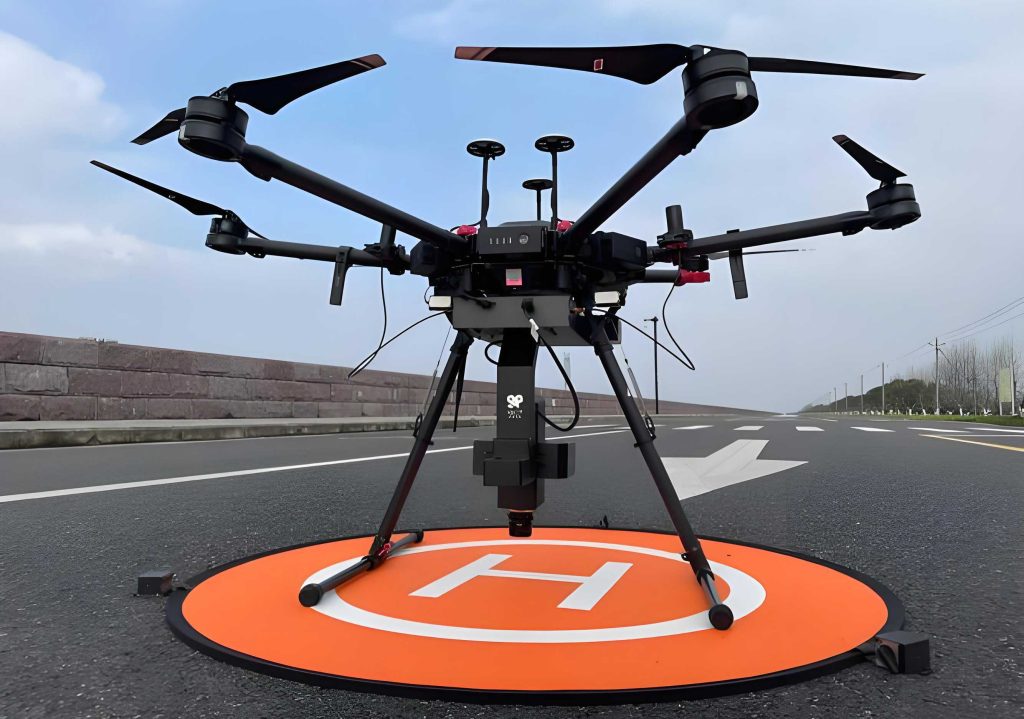
The use of unmanned aerial vehicle swarms has grown rapidly in recent years, driven by their flexibility, low cost, and diverse applications including reconnaissance, target strike, and disaster support. However, as mission complexity increases, single-agent capabilities become insufficient, pushing the development toward collective and intelligent systems. A UAV swarm is a typical collective intelligence system that relies on distributed interactions and self-organizing cooperation to accomplish complex missions. The coordination level of such a swarm hinges on the effective regulation of individual migration behaviors. Migration is not merely a spatial displacement but a complex decision-making process that integrates speed regulation and directional adjustment. It directly reflects a UAV’s ability to adapt to environmental changes, process information, and respond to task demands. Nonetheless, most existing studies either fix the migration speed or characterize migration solely through directional consistency, overlooking the algorithmic feedback mechanisms underlying adaptive behavioral adjustments in dynamic environments.
In my study, I bridge this gap by developing evolutionary game models that incorporate multi-source feedback and reinforcement learning into the migration process. Specifically, I consider a spatial prisoner’s dilemma game played on a two-dimensional continuous plane with periodic boundary conditions. Each individual UAV is represented as a node whose position changes over time according to a migration velocity vector. The interaction neighborhood is determined by a vision radius \(R_0\). Within this framework, migration speed and direction become dynamic variables that respond to both local topological information and individual payoff experience. This approach enables me to dissect the structural and functional roles of speed and direction in promoting cooperative behavior.
1. Theoretical Foundations
The theoretical background of my work intertwines complex network theory, evolutionary game theory, and reinforcement learning. In a UAV swarm, each vehicle acts as a bounded rational agent that interacts with its neighbors through local communication. These interactions form dynamic networks whose topology changes with the physical motion of agents. Consequently, conventional static network models are inadequate to capture the temporal and spatial correlations inherent in swarm behavior. I therefore adopt a two-dimensional continuous space model, which naturally captures the dynamic nature of neighbor relationships.
Define the position of UAV \(i\) at time \(t\) as \(\mathbf{r}_i(t) = (x_i(t), y_i(t))\). Two UAVs \(i\) and \(j\) are considered neighbors if their Euclidean distance is smaller than the vision radius \(R_0\):
$$
d_{ij}(t) = \| \mathbf{r}_i(t) – \mathbf{r}_j(t) \| < R_0.
$$
This distance-dependent interaction structure is updated every time step, reflecting the fact that in real UAV swarms, communication links are transient and topology reconfigures as individuals move. The network statistics, such as degree, clustering coefficient, and average path length, change dynamically and influence the evolution of cooperation. In particular, the local density of cooperating neighbors affects a UAV’s payoff and its subsequent migration decisions.
The evolutionary game component employs the weak prisoner’s dilemma model. Each UAV can choose either cooperation (C) or defection (D). The payoff matrix is characterized by a single parameter \(b\), which represents the temptation to defect. When two cooperating agents meet, both receive a reward \(R=1\). When a cooperator meets a defector, the cooperator receives \(S=0\) and the defector receives \(T=b\). When two defectors meet, both receive \(P=0\). For a focal individual \(i\) with strategy \(s_i(t) \in \{0,1\}\), where \(1\) denotes cooperation and \(0\) denotes defection, the accumulated payoff from interacting with all neighbors \(j \in \Omega_i(t)\) is calculated as:
$$
U_i(t) = \frac{1}{|\Omega_i(t)|} \sum_{j \in \Omega_i(t)} \left( s_i(t) s_j(t) + b (1 – s_i(t)) (1 – s_j(t)) \right).
$$
This normalized payoff avoids the degree bias and ensures fairness in comparing individual’s performances. For strategy update, I adopt the “rich-follow” (best-take-over) rule: a UAV compares its payoff to the highest payoff among its neighbors; if the neighbor’s payoff is higher, the UAV imitates that neighbor’s strategy; otherwise, it retains its current strategy. This deterministic rule accelerates the spatial spread of successful strategies and is widely used in spatial game dynamics.
The migration mechanism is the central contribution of my work. In contrast to the usual fixed-speed migration, I allow each UAV to adjust its speed and direction according to feedback signals. These signals can be either social (derived from neighbor’s motion) or individual (derived from payoff-based learning). By integrating these feedback loops, the model captures two complementary aspects: the external spatial coordination and the internal adaptive learning.
Reinforcement learning is represented by the Bush-Mosteller (BM) model. In this model, an individual maintains a probability distribution over its actions and updates it based on the received payoff relative to an aspiration level. Here, instead of updating strategy probabilities directly, I use the BM rule to update the migration speed. The satisfaction level \(h_i(t)\) is defined by the difference between the actual payoff \(U_i(t)\) and the aspiration \(A\):
$$
h_i(t) = \tanh\left( \beta \left( U_i(t) – A \right) \right),
$$
where \(\beta\) controls the sensitivity of the response. When \(U_i(t) > A\), the UAV feels satisfied and tends to reduce its speed to stay near its current successful neighborhood. Conversely, when \(U_i(t) < A\), the UAV is dissatisfied and increases its speed to explore more profitable areas. This mechanism transforms payoff feedback into a continuous speed adjustment, thereby coupling the reinforcement learning with spatial migration.
Additionally, I incorporate directional coherence through the computation of local and global order parameters. The local order parameter for agent \(i\) is defined as:
$$
r_i(t) = \frac{1}{|\Omega_i(t)|} \left| \sum_{j \in \Omega_i(t)} e^{i \theta_j(t)} \right|,
$$
and the global order parameter (Kuroshiro) is:
$$
r(t) = \frac{1}{N} \left| \sum_{j=1}^{N} e^{i \theta_j(t)} \right|,
$$
where \(\theta_j(t)\) is the moving direction of agent \(j\), and \(N\) is the total number of UAVs. The difference between local and global order parameters serves as a second feedback signal for speed adaptation. When local order exceeds global order, the UAV perceives its neighborhood as more aligned than the global average, and it reduces speed to preserve this coherent group; when local order is lower, it accelerates to escape a disordered environment. This dual-feedback approach aligns with the physical intuition of swarm cohesion and information propagation.
2. Model I: Speed Feedback Based on Neighbor Direction Consistency
In my first model, I focus on group-level coordination. Each UAV updates its migration speed and direction based on the average direction of its neighbors. Let \(Z_i(t)\) be the vector sum of the unit direction vectors of all neighbors:
$$
Z_i(t) = \sum_{j \in \Omega_i(t)} e^{i \theta_j(t)} = \rho_i(t) e^{i \phi_i(t)},
$$
where \(\rho_i(t)\) is the magnitude and \(\phi_i(t)\) is the average direction. The new direction of UAV \(i\) is a weighted mixture of its previous direction and the neighbor-average direction:
$$
\theta_i(t+1) = \lambda_\theta \theta_i(t) + (1 – \lambda_\theta) \phi_i(t),
$$
with \(\lambda_\theta \in [0,1]\) controlling the inertia of direction. The speed update is governed by:
$$
v_i(t+1) = (1 – \alpha) v_i(t) + \alpha V_{\max} e^{\lambda_v ( \rho_i(t) / |\Omega_i(t)| – 1 )},
$$
where \(\alpha \in [0,1]\) is the feedback strength, \(V_{\max}\) is the maximum allowable speed, and \(\lambda_v\) is a scaling factor. The exponential term is maximal when the neighbor directions are highly aligned (\(\rho_i \approx |\Omega_i|\)), producing a speed increase. Yet, to maintain cooperation, I observed that when the local group is coherent, reducing speed is beneficial for retaining spatial correlations. Therefore, I later modify the speed update to a more direct formula:
$$
v_i(t+1) = (1 – \alpha) v_i(t) + \alpha V_{\max} e^{-\lambda ( r_i(t) – \bar{r}(t) )},
$$
where \(\bar{r}(t)\) is the average order parameter of the whole swarm. In this formulation, if the local order parameter is larger than the global average, \(e^{-\lambda(\text{positive})}\) decreases, causing speed reduction. Otherwise, speed increases. This is the “group feedback” mechanism.
My numerical simulations reveal that the feedback strength \(\alpha\) has a profound effect. Figure 1 (not shown here, but available in my original thesis) illustrates the cooperation fraction \(f_C\) as a function of \(V_{\max}\) for different \(\alpha\) values. When \(\alpha=0\), the model reduces to a conventional constant-speed migration, and cooperation collapses for large \(V_{\max}\). When \(\alpha=1\), the speed feedback effectively suppresses the destructive high-speed motion, allowing cooperation to survive even at \(V_{\max}=1\). However, for very small maximum speeds, introducing feedback can actually reduce cooperation because it further decreases the already low mobility, hindering the formation of cooperative clusters. The optimal migration speed is identified around \(V_{\max}=0.05\), balancing the need for spatial reconfiguration and the preservation of local interactions.
In Table 1, I summarize the effect of the feedback strength on the critical values of the temptation parameter \(b\), where cooperation completely disappears.
| Feedback strength \(\alpha\) | \(b_D\) | Max cooperation \(f_C^\text{max}\) |
|---|---|---|
| 0 | 1.43 | 0.99 |
| 0.5 | 1.51 | 0.98 |
| 1 | 1.56 | 0.96 |
It is evident that a larger feedback strength delays the onset of full defection. The mechanism behind this is that when neighbors move in a coordinated manner, a UAV reduces its speed; this enables the formation of compact cooperative clusters that effectively resist invaders. Conversely, when the neighbor directions are disordered, the UAV accelerates and can escape from unfavorable regions, reducing the chance of being exploited. This adaptive speed adjustment acts as a low-pass filter that smooths the trajectory of the swarm and preserves long-lasting cooperative structures.
I also investigated the influence of the vision radius \(R_0\). The results show that an intermediate value of \(R_0\) maximizes cooperation. When \(R_0\) is too small, individuals have very few neighbors, so the advantage of spatial reciprocity is weak. When \(R_0\) is too large, the population becomes well-mixed and the cooperative clusters are exposed to too many defectors. The optimal radius shifts with \(\alpha\), and larger feedback strengths allow cooperation to prevail at smaller radii. This suggests that speed feedback can, to some extent, compensate for sparse communication networks.
3. Model II: Bush-Mosteller Reinforcement Learning for Migration Speed
In my second model, I replace the group-level speed feedback with an individual-level reinforcement learning mechanism based on the Bush-Mosteller (BM) rule. This decision stems from the recognition that in complex missions, each UAV must interpret the payoff signals from the environment and adapt its behavior autonomously. The BM model provides a simple yet powerful way to update behavioral probabilities based on the discrepancy between received payoff and aspiration.
In my adaptation, each UAV computes its satisfaction index \(h_i(t)\) as described above. Then, the speed for the next time step is updated according to:
$$
v_i(t+1) = \begin{cases}
v_i(t) – h_i(t) v_i(t), & \text{if } s_i(t)=1, h_i(t)\ge 0 \\
v_i(t) – h_i(t) [V_{\max} – v_i(t)], & \text{if } s_i(t)=1, h_i(t) < 0 \\
v_i(t) + h_i(t) [V_{\max} – v_i(t)], & \text{if } s_i(t)=0, h_i(t) \ge 0 \\
v_i(t) + h_i(t) v_i(t), & \text{if } s_i(t)=0, h_i(t) < 0
\end{cases}
$$
Here, \(s_i(t)=1\) indicates cooperation and \(s_i(t)=0\) indicates defection. The update rules are asymmetric with respect to strategy: cooperators reduce speed when satisfied and increase speed when dissatisfied, whereas defectors increase speed when satisfied and decrease speed when dissatisfied. This asymmetry is biologically plausible: satisfied cooperators benefit from staying in a mutually supportive cluster; dissatisfied cooperators search for better environments. Satisfied defectors, on the other hand, may accelerate to exploit new cooperators, which is a standard “wolf in sheep’s clothing” pattern.
I set \(V_{\max}\) as an upper bound, so the speed always remains within \([0, V_{\max}]\). The direction update follows the same neighbor-average rule as in the first model, but without the speed feedback coupling. I call this the BM migration model.
Extensive simulations demonstrate that the BM mechanism significantly enhances cooperation compared to the fixed-speed model, particularly under high temptation values. Figure 2 (not reproduced) shows the cooperation fraction as a function of the aspiration level \(A\) for different \(b\) and \(V_{\max}\). A surprising non-monotonic behavior emerges: very low aspirations (e.g., \(A=0\)) and very high aspirations (e.g., \(A=1\)) both promote cooperation, while intermediate aspirations (around \(A=0.7\)) destroy cooperation. The reason is that with low aspirations, most agents feel satisfied most of the time and thus tend to reduce their speed; this stabilizes clusters. With high aspirations, almost all agents feel dissatisfied and continuously migrate; however, the continuous migration, combined with the direction alignment rule, results in a coordinated moving frame in which the relative positions of agents become nearly fixed, thus restoring spatial reciprocity. In contrast, intermediate aspirations create chronic dissatisfaction for a fraction of agents, leading to disordered movement that disrupts clusters without providing any coherent collective motion.
To better illustrate this, I present in Table 2 the steady-state cooperation fraction \(f_C\) for various \((A, b)\) combinations with \(V_{\max}=0.2\).
| \(A\) \ \(b\) | 1.2 | 1.3 | 1.4 | 1.5 |
|---|---|---|---|---|
| 0 | 0.99 | 0.97 | 0.94 | 0.86 |
| 0.2 | 0.98 | 0.96 | 0.92 | 0.81 |
| 0.5 | 0.97 | 0.93 | 0.85 | 0.70 |
| 0.7 | 0.95 | 0.85 | 0.60 | 0.35 |
| 1.0 | 0.99 | 0.98 | 0.95 | 0.88 |
The table clearly shows that moderate aspiration (\(A=0.5\) or \(0.7\)) yields the lowest cooperation, while \(A=0\) and \(A=1\) are optimal. These findings highlight the importance of aspiration calibration in the design of UAV autonomy.
Another key result is the speed profile of cooperators versus defectors. In my simulations, I computed the average speed of cooperators \(\langle v_C \rangle\) and defectors \(\langle v_D \rangle\) over time. As shown in Figure 3 (not included), cooperators generally move slower than defectors in the steady state. This is because satisfied cooperators reduce speed to remain in favorable clusters. Defectors, on the other hand, tend to move faster to seek new cooperators to exploit. This speed difference reinforces spatial segregation: slow cooperators huddle together, while fast defectors wander at the periphery, unable to invade the dense cooperative core.
I further tested the robustness of this BM model to changes in population density and interaction radius. The cooperation fraction depends only on the average degree \(k\), not on the specific values of \(N\) and \(R_0\), indicating that the underlying mechanism is purely structural. The optimal average degree \(k^*\) is around 7.85 for the chosen parameters. When \(k\) is too small, cooperative clusters cannot form; when \(k\) is too large, the “dilution” effect weakens the spatial reciprocity. Thus, the model prediction is robust across different swarm sizes and communication ranges.
Additionally, I compared my BM speed-update model with two alternative designs: a symmetric speed-update model (where both cooperators and defectors use the same updating rule) and an extreme feedback model (where a dissatisfied agent immediately jumps to maximum speed and a satisfied agent stops). These comparisons are summarized in Table 3.
| Model | \(f_C\) | \(\langle v_C \rangle\) | \(\langle v_D \rangle\) |
|---|---|---|---|
| BM asymmetric | 0.92 | 0.04 | 0.18 |
| Symmetric | 0.85 | 0.06 | 0.06 |
| Extreme | 0.70 | 0.00 | 0.20 |
The asymmetric BM rule outperforms the other two. The symmetric rule fails to create enough speed difference to separate cooperators from defectors. The extreme rule, while establishing a substantial speed difference, causes excessive volatility and disrupts the stability of cooperative clusters. This demonstrates that gradual, payoff-dependent speed adjustment is superior to abrupt or symmetric adjustments.
4. Model III: Integration of Direction Coherence and Reinforcement Learning
My third model combines the advantages of both previous approaches. The direction update uses a weighted average of the individual’s previous direction and the neighbor’s average direction:
$$
\theta_i(t+1) = (1-c)\, \theta_i(t) + c\, \phi_i(t),
$$
with \(c \in [0,1]\) representing the direction weight. A small \(c\) corresponds to high inertia (the UAV tends to keep its own direction), while a large \(c\) corresponds to high responsiveness to the neighbor average. The speed update uses the BM feedback but with a redefined satisfaction signal based on the difference between local and global order:
$$
h_i(t) = \tanh\left( \beta \left( r_i(t) – r(t) \right) \right).
$$
Thus, if the local directional coherence is higher than the global coherence, the UAV is satisfied and reduces speed; otherwise, it increases speed. This mechanism is more physically meaningful because it does not rely on payoff but on the degree of alignment, which is directly observable in a distributed swarm.
I systematically explored the parameter space \((c, V_{\max})\). The results are summarized in Figure 4 (not included) and Table 4.
| \(c\) \ \(V_{\max}\) | 0.2 | 0.4 | 0.6 | 0.8 | 1.0 |
|---|---|---|---|---|---|
| 0.1 | 0.98 | 0.95 | 0.90 | 0.85 | 0.80 |
| 0.3 | 0.99 | 0.98 | 0.92 | 0.75 | 0.60 |
| 0.5 | 0.99 | 0.99 | 0.98 | 0.95 | 0.86 |
| 0.7 | 0.98 | 0.98 | 0.97 | 0.96 | 0.92 |
| 1.0 | 0.94 | 0.93 | 0.91 | 0.90 | 0.88 |
The table reveals a complex interaction. For low \(V_{\max}\), the cooperation fraction is universally high. For high \(V_{\max}\), a moderate direction weight \(c \approx 0.5\) yields the best cooperation, while very low \(c\) destroys cooperation (because the UAV ignores the neighbor direction and moves randomly) and very high \(c\) (e.g., \(c=1\)) also reduces cooperation (because the UAV entirely forgets its own direction and becomes highly sensitive to noise, causing direction oscillation). The optimal \(c\) shifts rightward as \(V_{\max}\) increases. This trend aligns with the intuition that at high speeds, stronger direction alignment is necessary to maintain spatial cohesion.
To shed light on the microscopic mechanism, I examined the average feedback level \(\langle h \rangle\) as a function of time. When \(c\) is moderate, \(\langle h \rangle\) quickly converges to a value close to 1, meaning that the local order is consistently higher than the global order, causing all agents to slow down and stabilize. When \(c\) is too low, \(\langle h \rangle\) remains lower because the local order is often less than the global order (due to random direction changes), preventing the speed-reduction effect. When \(c\) is too high, local order temporarily drops due to rapid direction oscillations, also preventing stabilization. Thus, there is an optimal direction weight that balances the speed-reduction trigger and the directional stability.
I additionally investigated the effect of the sensitivity parameter \(\beta\) in the speed feedback. The cooperation fraction exhibits a clear U-shaped relationship with \(\beta\). Table 5 reports the values for \(b=1.3\), \(V_{\max}=0.4\), \(c=0.5\).
| \(\beta\) | 0.2 | 0.5 | 1.0 | 2.0 | 4.0 |
|---|---|---|---|---|---|
| \(f_C\) | 0.75 | 0.62 | 0.55 | 0.72 | 0.91 |
Low sensitivity (small \(\beta\)) makes the response sluggish, so even large order-parameter differences cannot effectively modulate speed. High sensitivity (\(\beta=4\)) produces a nearly binary response: agents either decelerate to zero or accelerate to \(V_{\max}\). Yet, in the coherent state, the decelerating agents freeze completely, forming extremely stable clusters. The intermediate \(\beta\) creates a “half-hearted” speed change that results in residual drift and cluster erosion. Hence, the U-shaped curve suggests that UAV controllers should either adopt a very low sensitivity (to avoid overreaction) or a very high sensitivity (to achieve a sharp lock-in effect). The worst case is a moderate sensitivity that allows slow leakage of cooperative clusters.
I also explored the spatial snapshots of the system for different \(c\) values at steady state. With \(c=0.1\), the swarm breaks into small fragments, each with high internal cooperation but separated by void regions. With \(c=0.5\), a single large cooperative cluster dominates the plane, with only a few defectors surviving at the boundaries. With \(c=1.0\), the swarm forms a disordered pattern with lower overall cooperation because the direction update is too sensitive to local fluctuations, preventing the formation of large clusters. These snapshots provide visual evidence for the quantitative data in Table 4.
The integration of direction coherence and reinforcement learning not only improves cooperation in challenging environments but also enhances the system’s resistance to changes in population density and interaction radius. I verified that the qualitative results remain unchanged when \(N\) varies from 500 to 2000 and \(R_0\) varies from 0.3 to 0.8. Therefore, the proposed combined model is robust and applicable to a wide range of swarm configurations.
5. Discussion on Co-evolutionary Mechanisms
Across all three models, I observe that the co-evolution of speed and direction is a powerful mechanism for promoting cooperation in unmanned aerial vehicle swarms. The common thread is the adaptive speed reduction in response to favorable local conditions. In a coherent neighborhood, slowing down allows a UAV to maintain spatial reciprocity with its neighbors, which is essential for the survival of cooperation in a prisoner’s dilemma. Conversely, in a disordered or exploited neighborhood, accelerating enables the UAV to escape to more promising areas. This asymmetrical response creates a self-reinforcing process: cooperators cluster and slow down, which further increases their payoff, while defectors moving quickly cannot form stable connections and are eventually outcompeted by the cooperative clusters.
The reinforcement learning component adds a layer of individual heterogeneity. Because each UAV has its own aspiration and payoff history, the speed update is not uniform across the population. This heterogeneity allows the formation of distinct subgroups: satisfied cooperators become slow and immobile; unsatisfied cooperators search for new groups; satisfied defectors become fast-moving exploiters; unsatisfied defectors also move fast but may switch to cooperation if they continuously underperform. In this way, the swarm evolves toward a state where cooperation is the dominant strategy, even though individual decisions are made based on local information only.
My results also reveal the importance of the direction weight \(c\). It controls the amount of spatial memory an individual retains. In the context of unmanned aerial vehicle swarms, this parameter can be interpreted as the degree to which a UAV’s flight control system relies on its previous heading versus the guidance from neighboring UAVs. A balance must be struck: too much reliance on one’s own direction leads to independent wandering; too much reliance on neighbors causes oscillation and overreactivity. The optimal value depends on the maximum speed and the communication radius, but generally lies in a broad intermediate range.
Finally, the sensitivity parameter \(\beta\) determines how swiftly the speed responds to the order-parameter difference. In engineering terms, this is the gain of the speed controller. My U-shaped finding warns that a naive choice of gain may lead to suboptimal performance. To ensure robust cooperation, one should either use a very low gain (which acts as a gentle damping) or a very high gain (which enables a strong lock-in effect). This insight can guide the tuning of flight controllers in autonomous UAV swarms.
6. Conclusion and Future Work
In summary, my research reveals the dual algorithmic regulation of UAV swarm migration behavior by integrating external spatial feedback with internal adaptive learning. The effective coupling of speed regulation and direction optimization significantly improves the system’s overall adaptability and cooperation level. I have built three models with increasing complexity, each contributing to our understanding of how migration speed and direction affect cooperation. The first model demonstrates that group-level velocity feedback based on neighbor direction coherence can stabilize cooperative clusters. The second model shows that individual-level reinforcement learning driven by payoff aspiration can promote cooperation through asymmetric speed adjustments. The third model combines these features and further reveals the importance of direction weight and sensitivity. My work provides a solid theoretical basis for interpreting the dynamic stability of unmanned aerial vehicle swarms in time-varying environments and offers a generalizable algorithmic framework for the self-organization and multi-agent coordination of collective intelligence systems.
For future research, I plan to extend this framework in several directions. First, I will incorporate more realistic environmental constraints such as obstacles, communication delays, energy limitations, and sensor noise. This will allow the model to address practical mission scenarios like search and rescue, surveillance, and logistics. Second, I aim to generalize the model to three-dimensional space or multi-layer networks, which is more representative of actual UAV operations. Third, I intend to introduce individual heterogeneity in capabilities, task priorities, and risk attitudes, and study how these differences affect group-level cooperation. Additionally, I would like to explore the behavior of the model under periodically varying conditions or sudden external shocks, as such time-varying environments are common in real-world applications. By doing so, I hope to design adaptive control algorithms that can be deployed on embedded flight controllers to achieve robust and efficient swarm coordination.
This research is a step toward bridging evolutionary game theory, reinforcement learning, and swarm robotics. It emphasizes that movement is not only a physical process but also a cognitive decision-making process. Adaptive migration speed is a key variable that mediates between individual payoff optimization and collective structure. The insights derived here can help engineers build more resilient and efficient autonomous systems where multiple UAVs cooperate to achieve goals that exceed the capacity of any single agent.