
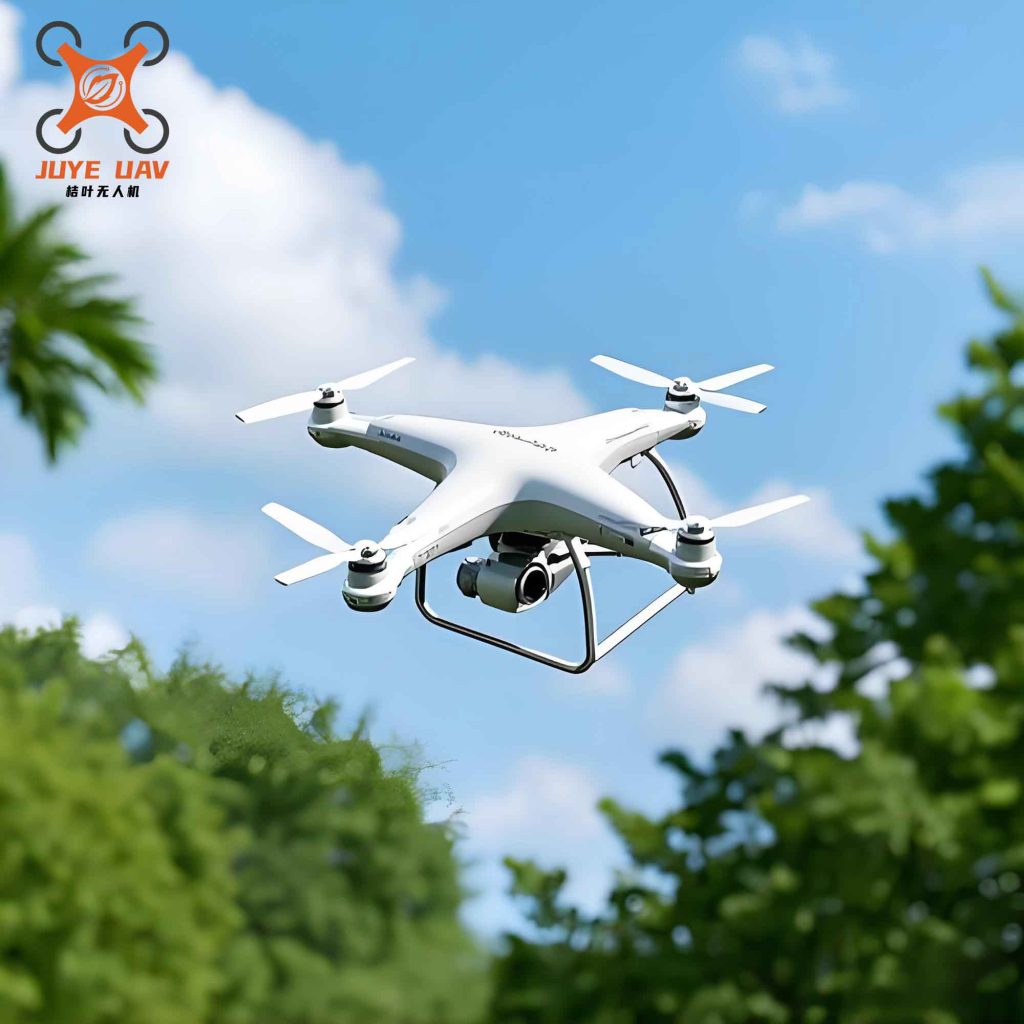
In the rapidly evolving landscape of sixth-generation mobile communications and low-altitude intelligent networking, the China UAV drone emerges as a pivotal aerial node for supplementing terrestrial cellular coverage, enhancing network access resilience, and fortifying emergency communication capabilities. Particularly in regions where ground base stations struggle to penetrate mountainous terrain, densely built-up urban areas, disaster-stricken zones, or large-scale event venues, the China UAV drone can rapidly establish an aerial communication relay, providing stable data access and transmission services to ground users. However, the burgeoning growth of low-altitude business has created a severe bottleneck for radio frequency (RF) spectrum resources, limiting the performance of China UAV drone relay systems. To address this, I integrate free-space optical (FSO) communication, which offers enormous bandwidth, immunity to electromagnetic interference, and license-free spectrum, as a powerful complement to RF links. I propose a hybrid RF/FSO China UAV drone relay communication method based on non-orthogonal multiple access (NOMA).
My work specifically tackles the instability of FSO links caused by frequent blockage in obstacle-dense low-altitude environments. By introducing an onboard buffer at the China UAV drone relay, I effectively decouple the RF access and FSO backhaul processes. Furthermore, I formulate a joint optimization problem for energy-efficient power allocation and obstacle-avoiding trajectory planning, considering user power constraints, China UAV drone flight dynamics (velocity and acceleration), and obstacle avoidance. The proposed algorithm significantly enhances the system throughput per unit energy consumption while satisfying all safety and flight mechanics constraints.
My research demonstrates that the China UAV drone, when acting as a relay, must navigate complex urban environments where buildings and other obstacles frequently block communication links. This is particularly detrimental to the fragile FSO link, which can suffer complete outage. The proposed buffer mechanism acts as a shock absorber, allowing the China UAV drone to continue receiving data from users via the RF link even when the FSO backhaul is temporarily unavailable, and then rapidly transmit the buffered data when the link is restored.
Table 1. Key System Parameters for China UAV Drone Relay
| Parameter | Symbol | Value |
|---|---|---|
| RF Channel Bandwidth | B_RF | 50 MHz |
| FSO Channel Bandwidth | B_US | 100 MHz |
| Max. China UAV Drone Velocity | V_max | 18 m/s |
| Max. China UAV Drone Acceleration | A_max | 5 m/s² |
| Max. User Transmit Power | P_max | 0.08 W |
| Noise Variance (RF) | σ² | 1e-11 W |
| Attenuation Factor (FSO) | α_w | 0.43 dB/km |
| Max. Buffer Capacity (China UAV Drone) | S_max | 3000 Mbit |
My system model considers a China UAV drone providing uplink relay service for M ground users within a three-dimensional space. The China UAV drone is tasked with flying from a starting point to an end point while avoiding obstacles. The channel gain for the RF link between the m-th user and the China UAV drone in time slot n is given by:
$$ g_m[n] = \begin{cases} \beta_1 d_m[n]^{-\alpha_{\text{LoS}}}, & b_m[n] = 1 \\ \kappa \beta_1 d_m[n]^{-\alpha_{\text{NLoS}}}, & b_m[n] = 0 \end{cases} $$
Here, b_m[n] = 1 indicates a Line-of-Sight (LoS) link and b_m[n] = 0 indicates a Non-Line-of-Sight (NLoS) link. d_m[n] is the distance between the user and the China UAV drone. The FSO link between the China UAV drone and the base station is subject to atmospheric loss, turbulence, and pointing errors, which are modeled comprehensively. The achievable rate for the FSO link is:
$$ R_{US}[n] = \frac{B_{US}}{2} \log_2 \left[ 1 + \frac{\eta^2 h_{\text{FSO}}^2[n] P^2_U}{\sigma^2_U} \right] $$
To maximize energy efficiency, defined as the ratio of total transmitted data to total propulsion energy consumption, I formulate my optimization problem as:
$$ \max_{\{q_{\text{UAV}}[n], P_m[n], S[n]\}} \frac{\sum_{n=1}^{N_T} D_{\text{FSO}}[n]}{\sum_{n=1}^{N_T} P_{\text{prop}}[n] \delta_t} $$
This problem is subject to a comprehensive set of constraints: C1 ensures the China UAV drone trajectory q_UAV[n] stays within the obstacle-free airspace; C2 and C3 limit velocity and acceleration; C4 and C5 define the kinematic motion equations; C6 and C7 describe the buffer dynamics, where the actual FSO transmitted data D_FSO[n] is the minimum of the backhaul capacity and the available data in the buffer S[n]; and C8 and C9 limit the buffer and user transmit powers. This is a highly non-convex problem due to the coupling of trajectory and power variables, as well as the interference from NOMA.
I decompose my main problem into two sub-problems. First, for a fixed China UAV drone trajectory, I solve the NOMA user power allocation problem using Successive Convex Approximation (SCA). By introducing slack variables and performing a first-order Taylor expansion on the non-convex rate expressions, I transform the problem into a series of convex sub-problems that can be solved efficiently.
Second, for fixed transmit powers, I solve the China UAV drone trajectory planning problem. I employ a hybrid approach combining Particle Swarm Optimization (PSO) for global search and Quadratic Programming (QP) for local projection onto the feasible set. The PSO algorithm searches for promising trajectories, and its fitness function incorporates penalties for violating dynamics constraints and for proximity to or collision with obstacles:
$$ f(q) = -\eta_{EE}(q) – \beta_{LOS} \psi(q) + \lambda_v \phi_v(q) + \lambda_a \phi_a(q) + J_{obs}(q) $$
After each PSO iteration, the best candidate trajectories are projected onto the constraint set using a convex QP formulation. This ensures that the final China UAV drone trajectory strictly adheres to all flight dynamics and obstacle avoidance constraints. The overall joint optimization algorithm iterates between power allocation and trajectory planning until convergence.
My simulation results validate the effectiveness of the proposed methodology. The China UAV drone’s optimized trajectory demonstrates clear obstacle avoidance behavior, navigating around buildings in the low-altitude environment. The system energy efficiency converges to a stable value within a few iterations, confirming the efficiency of the alternating optimization framework.
Table 2. Performance Comparison of Different Strategies for China UAV Drone Relay
| Strategy Description | Energy Efficiency (Mbits/J) at P_max = 0.08 W |
|---|---|
| Proposed Joint Optimization | 8.9 |
| Trajectory Optimization Only (SCA) | 7.2 |
| Power Allocation Only (PSO+QP) | 5.8 |
| Non-Optimized Baseline | 4.1 |
The introduction of an onboard buffer is critical for the China UAV drone. At the start of the mission, when the FSO link is blocked, the buffer quickly accumulates data from the RF access link. Once the China UAV drone moves to a location with a clear FSO line-of-sight, the buffered data is rapidly transmitted, significantly boosting the overall throughput and energy efficiency. In contrast, a China UAV drone without a buffer is forced to wait for the FSO link to be available, leading to idle periods and wasted energy.
The key finding is that trajectory optimization plays a more dominant role than power allocation in this obstacle-dense scenario. A well-planned China UAV drone trajectory improves the geometric configuration of both the RF access and FSO backhaul links, while also mitigating the negative impact of FSO link blockage. The joint optimization of power and trajectory yields the highest energy efficiency, demonstrating the synergistic benefit of my integrated approach for the China UAV drone relay system.
In conclusion, my research on hybrid RF/FSO communication for China UAV drone relays provides a robust and energy-efficient solution for low-altitude networks. By jointly optimizing NOMA power allocation and three-dimensional obstacle-avoiding trajectories, and by incorporating a buffering mechanism, I effectively address the twin challenges of spectrum scarcity and link vulnerability. The proposed framework ensures safe and efficient data relay for China UAV drone in complex urban environments, significantly surpassing conventional methods in terms of system energy efficiency.