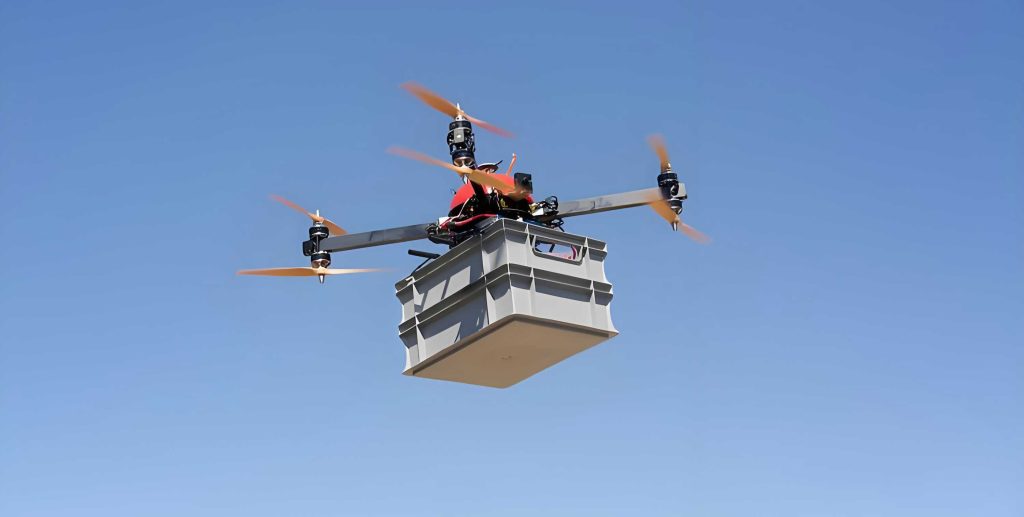
In the field of modern surveying and mapping, the paradigm is shifting from traditional coarse-grained operations toward high-precision, efficient, and intelligent methodologies. Fine mapping has become a critical foundation for urban planning, ecological monitoring, and disaster assessment. Conventional surveying methods often suffer from high costs and extended operational periods. As a key supplement to remote sensing, UAV drones offer distinct advantages such as flexible deployment, low-altitude high-resolution imaging, and rapid data acquisition. These capabilities have enabled widespread adoption in large-scale topographic mapping and three-dimensional modeling, providing a novel pathway for restructuring surveying workflows and advancing technological systems. In this paper, I present a comprehensive technical analysis of UAV drones applied in fine mapping, covering system architecture, operational workflow, data processing algorithms, and practical validation through multiple application scenarios.
System Architecture and Workflow of UAV drones
Flight Platforms and Sensor Configurations
A typical UAV drones surveying system comprises an integrated airborne-ground collaborative data acquisition framework. The core modules include the flight platform, aerial imaging sensor, position and orientation system (POS), mission planning control unit, and data storage module. Based on operational environmental conditions and required mapping accuracy, flight platforms can be categorized into fixed-wing, multi-rotor, and vertical takeoff and landing (VTOL) hybrid types. Fixed-wing platforms offer extended endurance and wide coverage, making them suitable for large-area mapping. Multi-rotor platforms provide low-altitude maneuverability and stable hovering, ideal for complex urban environments. In my experiments, both multi-rotor and VTOL fixed-wing UAV drones were employed to suit different terrain and accuracy demands. The core sensor is a high-resolution digital aerial camera, often supplemented by LiDAR, thermal infrared imagers, or oblique photography modules to enrich data types and enhance accuracy. The inertial navigation system combined with differential GPS forms a high-accuracy POS that ensures each image carries precise spatial-temporal coordinates. The mission planning system finely controls parameters such as overlap, flight height, and ground sample distance (GSD) to optimize flight line design and field efficiency. Table 1 summarizes the typical system components of UAV drones used in fine mapping.
| Module | Function | Common Specifications |
|---|---|---|
| Flight Platform | Carries sensors, executes flight trajectory | Multi-rotor (e.g., DJI M600), VTOL (e.g., fixed-wing) |
| Aerial Camera | Captures high-resolution images | Sony Alpha 7RIII, 42 MP; or Phase One iXM |
| POS (INS+GNSS) | Records camera position and attitude | NovAtel SPAN, Applanix; typical accuracy: 2-5 cm |
| Mission Planning | Designs flight parameters (overlap, height) | Pix4Dcapture, DJI Pilot, UgCS |
| Data Storage | Stores images and logs onboard | SSD, SD cards; capacity up to 1 TB |
Operational Workflow and Key Parameters
The operational workflow of UAV drones for fine mapping consists of five core stages: mission design, flight line planning, aerial data acquisition, data processing, and quality inspection. Mission design clarifies the required map scale, coverage area, and target accuracy, dynamically adjusting flight parameters based on terrain undulation and obstacle distribution. During flight line planning, the forward overlap and side overlap are typically set to 70%-85% and 40%-60%, respectively, ensuring favorable stereo intersection conditions. Image acquisition must be conducted under stable weather conditions, with real-time monitoring of GPS signal quality, battery level, and imaging status. The flight height is linearly related to the ground sample distance (GSD), defined as:
$$ GSD = \frac{H \cdot P}{f} $$
where \( H \) is the flight height above ground (in meters), \( P \) is the pixel size of the camera sensor (in meters), and \( f \) is the focal length (in meters). For fine mapping projects, the GSD is generally set between 2 cm and 5 cm, while flight speed and line spacing are synchronously adjusted to maintain stable image overlap. Table 2 lists the critical flight parameters employed in my case studies.
| Parameter | Urban Old District | Hilly Region | Industrial Park |
|---|---|---|---|
| Flight Height (m) | 85 | 120 | 70 |
| GSD (cm) | 2.3 | 3.8 | 2.1 |
| Forward Overlap (%) | 85 | 80 | 80 |
| Side Overlap (%) | 65 | 50 | 55 |
| Imaging Sensor | Sony Alpha 7RIII | Sony Alpha 7RIII | Sony Alpha 7RIII |
Accuracy Control in Data Acquisition
To meet the high spatial data requirements of fine mapping, systematic quality control must be implemented throughout the acquisition process. Ground control points (GCPs) and checkpoints are deployed based on the terrain characteristics and flight line orientation, with coordinates precisely measured using high-accuracy GNSS receivers. The accuracy of POS data directly influences image spatial positioning; thus, the system must undergo calibration in a test field and participate in solving together with the interior and exterior orientation elements of the camera. Key control indicators include image overlap effectiveness, flight attitude stability, and exposure timing synchronization. The flight control system incorporates an automatic early-warning mechanism to adjust or abort the mission when parameters exceed thresholds. Immediately after field acquisition, a preliminary check verifies image clarity, overlap compliance, and GNSS data integrity, removing invalid data to ensure a reliable foundation for subsequent aerial triangulation and product generation. The quality of acquisition directly determines the final accuracy of orthophotos and 3D models, as well as the applicability of results to high-grade engineering surveying and infrastructure modeling.
Data Processing and Generation of Refined Products
Aerial Triangulation and POS Data Fusion
Aerial triangulation (AT) is the core step in geometric reconstruction of images from UAV drones. Due to the low flight height, high resolution, large number of images, and complex overlap relationships of UAV drones, traditional AT algorithms often struggle to meet fine mapping demands. In my approach, the high-precision position and attitude data collected by the POS are embedded into the image files to generate images with initial geographic parameters. Feature extraction algorithms such as SIFT or SURF are then used to build correspondences between overlapping images. The collinearity equation forms the basis for solving:
$$ x – x_0 = -f\frac{a_1(X-X_S) + b_1(Y-Y_S) + c_1(Z-Z_S)}{a_3(X-X_S) + b_3(Y-Y_S) + c_3(Z-Z_S)} $$
$$ y – y_0 = -f\frac{a_2(X-X_S) + b_2(Y-Y_S) + c_2(Z-Z_S)}{a_3(X-X_S) + b_3(Y-Y_S) + c_3(Z-Z_S)} $$
where \((x,y)\) are image coordinates, \((x_0,y_0)\) are principal point coordinates, \(f\) is the focal length, \((X_S,Y_S,Z_S)\) are the camera projection center coordinates, \((X,Y,Z)\) are object point coordinates, and \(a_i,b_i,c_i\) are elements of the rotation matrix. Bundle adjustment with supporting control points minimizes matching residuals and solves for interior and exterior orientation parameters. To prevent error accumulation, a weighted bundle adjustment is applied, dynamically adjusting point weights using a sliding window to suppress the influence of image distortion on overall accuracy.
Point Cloud Accuracy Enhancement Algorithms
The dense point clouds generated from AT are often affected by illumination differences, image blur, and uniform textures, resulting in holes, noise, and surface discontinuities. To improve point cloud accuracy and structural continuity, I employ spatial weighted filtering combined with multi-view reconstruction algorithms. The widely used PMVS (Patch-based Multi-View Stereo) and MVS (Multi-View Stereo) deep-fusion methods are adopted. A local reconstruction weight function is defined as:
$$ w_{ij} = \frac{\exp\left(-\frac{\|x_i – x_j\|^2}{2\sigma^2}\right)}{\sum_{k=1}^{n}\exp\left(-\frac{\|x_i – x_k\|^2}{2\sigma^2}\right)} $$
where \( w_{ij} \) represents the spatial weight of point \( x_j \) relative to point \( x_i \) during reconstruction, and \( \sigma \) is the density adjustment parameter. This weighting mechanism dynamically adjusts the contribution of each region, automatically down-weighting noise points while enhancing edge details of ground features. The optimized point cloud exhibits superior spatial continuity and surface consistency, providing a stable geometric foundation for orthophoto rectification and DEM generation.
Orthophoto and DEM Generation Workflow
After high-precision point cloud optimization, image correction and terrain mapping are performed to produce 2D and 3D fine mapping products. The orthophoto generation process includes image dodging, distortion correction, geometric rectification, and terrain projection. The core step is to accurately map the image to the actual ground surface location. In areas with terrain relief, specialized correction using elevation information from the dense point cloud is applied to avoid artifacts such as floating objects or stretched building edges. The digital elevation model (DEM) is generated by interpolating point cloud elevations, combining methods like TIN (Triangulated Irregular Network) and Inverse Distance Weighting (IDW) to ensure smooth slope transitions and clear feature boundaries. The overall refinement process is summarized in Table 3.
| Step | Description | Output |
|---|---|---|
| 1. Aerial Triangulation | Image matching, bundle adjustment with POS fusion | Refined camera parameters, sparse point cloud |
| 2. Dense Point Cloud | MVS generation, weighted filtering optimization | High-density colored point cloud |
| 3. Orthophoto Generation | Geometric rectification, terrain correction, mosaicking | True orthophoto (GSD 2-5 cm) |
| 4. DEM / DSM | Point cloud interpolation (TIN, IDW), terrain mapping | Gridded elevation model |
| 5. Quality Check | Compare with checkpoints, error statistics | RMSE report |
Application Examples and Performance Evaluation
High-Resolution Modeling in Urban Built-Up Areas
Urban built-up areas are characterized by dense buildings, significant height variations, and dynamic disturbances, imposing stringent requirements on image clarity, data continuity, and 3D modeling accuracy. I selected a typical old urban district in a southern Chinese metropolis as the test site, covering approximately 1.2 km². A multi-rotor UAV drones system equipped with a Sony Alpha 7RIII camera was used, with a flight height of 85 m, GSD of 2.3 cm, forward overlap 85%, and side overlap 65%. Oblique photography combined with POS-assisted aerial triangulation was employed, acquiring a total of 1,843 valid images. Seven GNSS control points were deployed to unify the spatial coordinate system. The aerial triangulation results showed plane errors of ±0.013 m in X and ±0.015 m in Y, and elevation error of ±0.021 m. After voxel filtering and normal vector optimization of the surface model, a 1:500 scale digital terrain model and a realistic 3D building model were generated. Field verification indicated that building ridge and facade deviations were all within 2 cm, meeting the requirements for urban status modeling, underground pipeline integration, and old building renovation assessment.
Topographic Map Accuracy Verification in Complex Terrain
Complex hilly regions present severe terrain undulation and surface obstructions, which can cause image distortion, sparse point clouds, and model misalignment. To verify the vertical accuracy of UAV drones under such conditions, I selected a hilly region in southwestern China spanning 1.6 km² with a maximum elevation difference of 83 m. A VTOL fixed-wing UAV drones system was used, flying at 120 m altitude, achieving a GSD of 3.8 cm. Ten control points and six checkpoints were deployed, and 1,984 valid images were captured. After bundle adjustment, a contour map with 1 m interval was generated. Table 4 compares the measured and modeled elevations at six checkpoints.
| Checkpoint ID | Measured Elevation (m) | Model Elevation (m) | Difference (m) |
|---|---|---|---|
| CP01 | 467.82 | 468.03 | 0.21 |
| CP02 | 472.56 | 472.41 | -0.15 |
| CP03 | 459.31 | 459.46 | 0.15 |
| CP04 | 480.13 | 480.09 | -0.04 |
| CP05 | 469.27 | 469.36 | 0.09 |
| CP06 | 474.88 | 474.67 | -0.21 |
All elevation deviations at checkpoints were within ±0.21 m. The root mean square error (RMSE) calculated from these six points is:
$$ RMSE_z = \sqrt{\frac{1}{n}\sum_{i=1}^{n} (Z_{model,i} – Z_{measured,i})^2} = \sqrt{\frac{0.21^2 + 0.15^2 + 0.15^2 + 0.04^2 + 0.09^2 + 0.21^2}{6}} \approx 0.163 \, \text{m} $$
This RMSE value meets the standard for 1:1000 scale topographic mapping. In areas with slope greater than 25°, the model remained continuous and complete, with clear transitions at hilltops and valleys, demonstrating strong terrain adaptability of the point cloud reconstruction and elevation interpolation algorithms. These results confirm that UAV drones can be reliably used for landslide monitoring and ecological restoration surveying.
Adaptability Analysis Across Different Application Scenarios
In various fine mapping scenarios, UAV drones exhibit differences in resolution, modeling accuracy, and data completeness. I compared three typical scenes: the urban old district described above, the hilly region, and an industrial park in eastern China (GSD=2.1 cm, area 0.7 km²). Table 5 presents a comparative analysis of key technical parameters.
| Parameter | Urban Old District | Hilly Region | Industrial Park |
|---|---|---|---|
| Point Cloud Density (pts/m²) | 872 | 636 | 945 |
| Modeling Error (m) | 0.018 | 0.21 | 0.011 |
| Processing Time (h) | 6.2 | 5.8 | 3.9 |
| Number of Valid Images | 1,843 | 1,984 | 1,127 |
| Number of Control Points | 7 | 10 | 5 |
Urban and industrial park areas achieved higher point cloud density and better modeling accuracy, while the industrial park, with its regular structures and fewer obstructions, reached a point cloud density of 945 pts/m² and a modeling error of only 0.011 m. The hilly region produced lower point cloud density due to vegetation cover and terrain undulation, with an elevation error of 0.21 m, though overall operational efficiency remained comparable. Industrial parks require fewer control points and yield faster processing, making them suitable for routine urban surveying, as-built mapping, and periodic high-frequency data collection. In contrast, the hilly terrain model is more appropriate for macro-scale terrain analysis and disaster trend assessment, where fine geometric detail is less critical.
Conclusion
Through systematic technical investigation and practical validation, this study demonstrates that UAV drones possess comprehensive advantages in fine mapping, including high data acquisition efficiency, excellent spatial resolution, and precise 3D modeling capability. The technology exhibits strong adaptability and stability across diverse scenarios such as urban built-up areas, complex mountainous terrains, and industrial parks. By integrating a complete workflow from platform selection, field flight, and indoor processing to accuracy evaluation, this work forms a reliable technical reference for the intelligent and refined transformation of the surveying industry. The experimental results confirm that with proper parameter settings and quality control, UAV drones can deliver products meeting strict standards for high-grade engineering mapping and infrastructure modeling. Future advancements in sensor miniaturization and real-time processing will further expand the application scope of UAV drones in fine mapping.